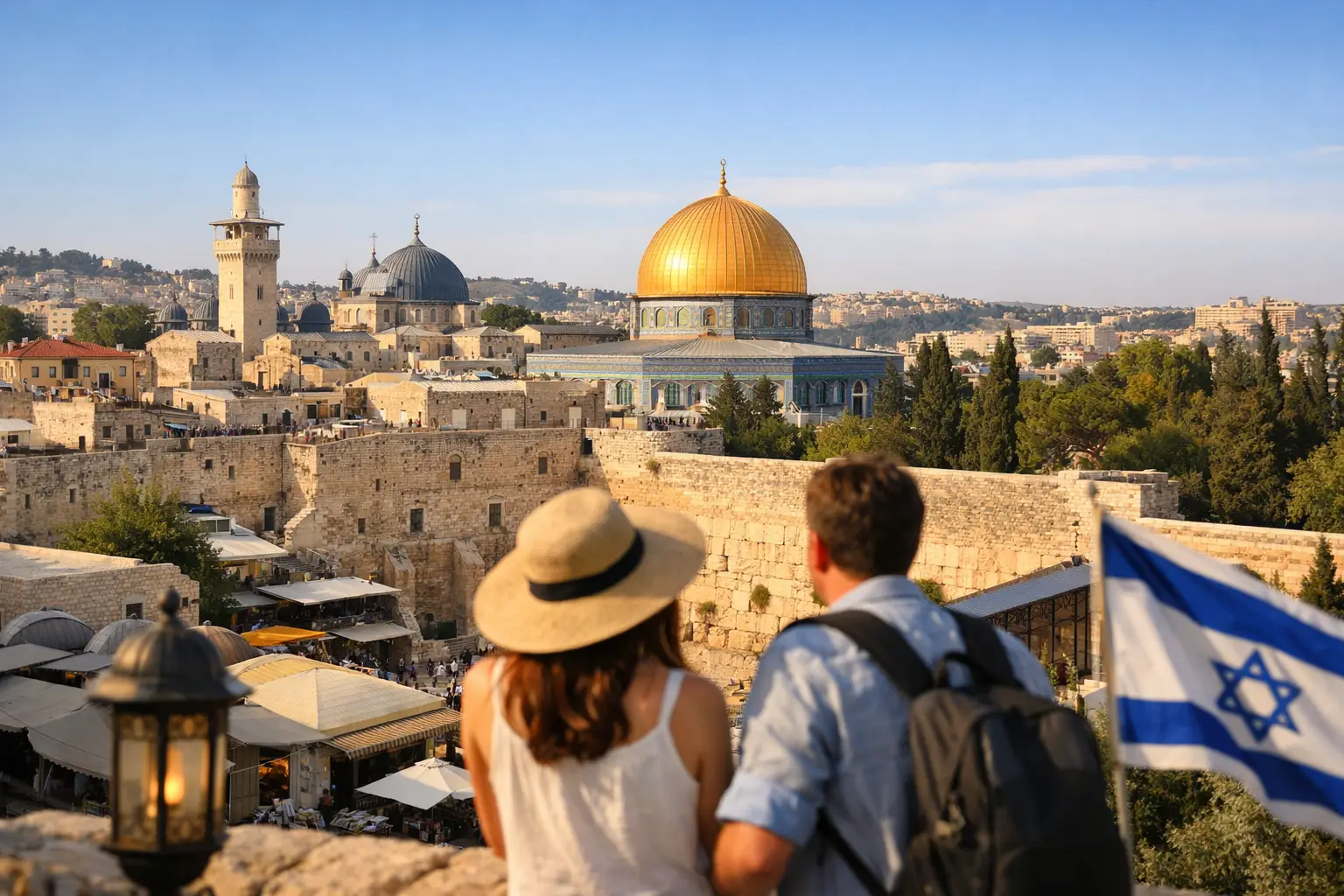
Some cities ask to be ticked off. Jerusalem resists that completely. A good jerusalem cultural trip itinerary is less about racing between landmarks and more about understanding how faith, food, history and daily life sit side by side – sometimes easily, sometimes not.
That is what makes the city so compelling for culturally curious travellers. You can spend a morning inside one of the world’s most contested and revered historic spaces, then find yourself by lunchtime in a market where the loudest debate is whether the best hummus should be silky or defiantly rustic. Jerusalem rewards pace, patience and a willingness to let one neighbourhood change your reading of the next.
This itinerary is designed for three days, which is enough time to see the headline sites without reducing the city to a checklist. It suits first-time visitors who want meaningful context, strong hotel-booking logic and room for a guided tour or two where they genuinely add value.
How to approach a Jerusalem cultural trip itinerary
The smartest way to organise Jerusalem is by geography and emotional bandwidth. The Old City is dense, intense and essential, so give it proper time early in your stay. Pair it with quieter afternoons in museums or neighbourhoods where the city’s layers become easier to process.
Where you stay matters more here than in some cities. If you want atmosphere and easy access to restaurants, look around the city centre, Mamilla or the German Colony. If being able to walk quickly to the Old City is your priority, that convenience can be worth the higher room rates. Jerusalem is hilly, and taxis are useful after long days, so a slightly better-located hotel often pays for itself in comfort.
If you enjoy planning trips through conversation rather than bland listicles, the Destination Unlocked podcast is worth packing into your pre-trip research. It is as useful as a guidebook and as personal as a chat with your most well-travelled friend, with each 40-minute episode giving you the context you need for a great trip.
Day 1: The Old City, done properly
Start early at Jaffa Gate. Arriving before the largest tour groups gives you a very different experience of Jerusalem’s most famous quarter. The Old City is not huge on a map, but it is mentally and emotionally large, divided into Armenian, Christian, Jewish and Muslim Quarters, each with its own rhythm and significance.
Begin with a broad walk rather than rushing straight to one site. Let yourself notice the changing street patterns, the shift from devotional calm to market bustle, and the way pilgrimage and ordinary life overlap. The Church of the Holy Sepulchre deserves unhurried time, even if you are not travelling for religious reasons. Architecturally, politically and spiritually, it is one of those places where the atmosphere does much of the explanatory work.
From there, continue towards the Western Wall. Even seasoned travellers can underestimate the emotional force of the plaza and the ritual life around it. Dress respectfully and expect security checks. If you want deeper understanding rather than surface-level observation, this is one place where a good guided tour earns its keep.
Many visitors also want to see the Temple Mount or Haram al-Sharif area, including the Dome of the Rock and Al-Aqsa Mosque compound from the exterior if access is limited. Opening arrangements and entry rules can change, so build flexibility into the day. This is a recurring theme in any realistic Jerusalem cultural trip itinerary: certainty is helpful, but rigidity is not.
For lunch, keep it simple inside or just outside the Old City. A light meal is enough, because this is a day for walking rather than lingering over a drawn-out lunch reservation.
Spend the afternoon on the Ramparts Walk or in the Tower of David Museum near Jaffa Gate. The museum is particularly useful on a first trip because it helps orientate you historically after the sensory overload of the morning. You leave with a clearer timeline, which makes the rest of the city easier to read.
In the evening, head to Mamilla or the city centre for dinner. This is a good moment for a comfortable restaurant and a slower meal. After a heavy first day, there is no prize for over-scheduling yourself.
Day 2: Markets, memory and modern Jerusalem
Day two shifts the lens. Start at Mahane Yehuda Market, which tells you as much about contemporary Jerusalem as any monument can. Go in the morning if you want to see it as a working market rather than a nightlife zone. Traders, spice stalls, bakeries and small food counters create the sort of street-level energy that immediately makes a city feel lived in.
Breakfast here is an easy win. Pastries, coffee, something savoury, something sweet – you will manage. The key is not to turn it into a competitive eating event. Save room for the rest of the day.
From the market, make your way to Yad Vashem. It is one of the most significant museums in Israel and not something to squeeze into a random gap. Give it proper time and emotional space. The architecture, curation and testimony are powerful, and for many travellers it becomes the most affecting part of the trip.
This is also where trade-offs matter. If your visit is short and your focus is specifically on art, urban culture and neighbourhood life, you might choose the Israel Museum instead. But if your aim is a rounded cultural understanding of Jerusalem and the wider country, Yad Vashem is difficult to leave out.
If you have the energy afterwards, spend late afternoon in the city centre or along Ben Yehuda Street and the surrounding lanes. This is not the city at its most monumental, but it is useful for seeing how residents actually spend their time. Browse bookshops, stop for coffee, and notice the mix of secular and religious life.
Dinner in the German Colony works well this evening. The area feels calmer and greener than the centre, with an attractive run of restaurants that suit travellers who want a pleasant final stretch rather than another intense cultural hit.
Day 3: Museums and neighbourhood texture
For the final day, choose between a museum-heavy approach and a neighbourhood-led one. The best version depends on your interests, and Jerusalem is not a city that rewards pretending all travellers want exactly the same thing.
If you lean towards art, archaeology and design, spend the morning at the Israel Museum. It is one of the country’s major cultural institutions and easily deserves several hours. The collections range widely, and the site gives you room to think in a city that can otherwise feel relentlessly dense.
If neighbourhoods are more your thing, begin in Ein Kerem instead. On the south-western edge of the city, it has a softer feel – stone houses, church sites, small galleries and a more village-like pace. It is a welcome counterpoint to the compressed intensity of the centre and the Old City. This is where a slower breakfast or a long coffee feels entirely justified.
By lunchtime, head back towards town and spend your afternoon in the Armenian Quarter or just beyond the walls in areas you may have rushed past on day one. Jerusalem often improves on second contact. Streets that first felt bewildering begin to make sense, and details you missed suddenly become memorable.
If you want one final big-view moment, finish at the Mount of Olives viewpoint in the late afternoon. The panorama over the Old City is the kind of scene that appears in guidebooks for obvious reasons. Yet after two or three days on the ground, it lands differently. You are no longer admiring a postcard. You are looking at a place you have started to understand, at least a little.
Practical choices that improve the trip
A jerusalem cultural trip itinerary works best when you avoid trying to “do” Bethlehem, Tel Aviv and Jerusalem all at once in a long weekend. It is possible, yes. It is also a very efficient way to flatten three distinctive places into one blur. If Jerusalem is your base, let it be your focus.
Guided excursions are most useful in three cases: navigating the political and religious context of the Old City, visiting sites where access rules are not always intuitive, and adding specialist depth if you care about archaeology or sacred history. Otherwise, Jerusalem is very walkable in sections and rewarding to absorb independently.
Be realistic about Friday evenings and Saturdays. Shabbat affects transport, restaurant openings and the general pulse of the city. For some travellers, that is a complication. For others, it becomes part of the experience. Either way, it is better to plan around it than be surprised by it.
Hotel choice deserves one more mention because it shapes the trip so much. If this is your first visit, staying central is usually worth the premium. You will appreciate being able to return easily for a rest before dinner, especially after long hours in the Old City or at museums.
Jerusalem is rarely a city people describe as easy, but that is part of its pull. The most rewarding trips here are not built around bragging rights or perfect photo stops. They come from giving the city enough time to challenge your assumptions, sharpen your curiosity and send you home with more questions than you arrived with. That is not a flaw in the itinerary. It is the point.