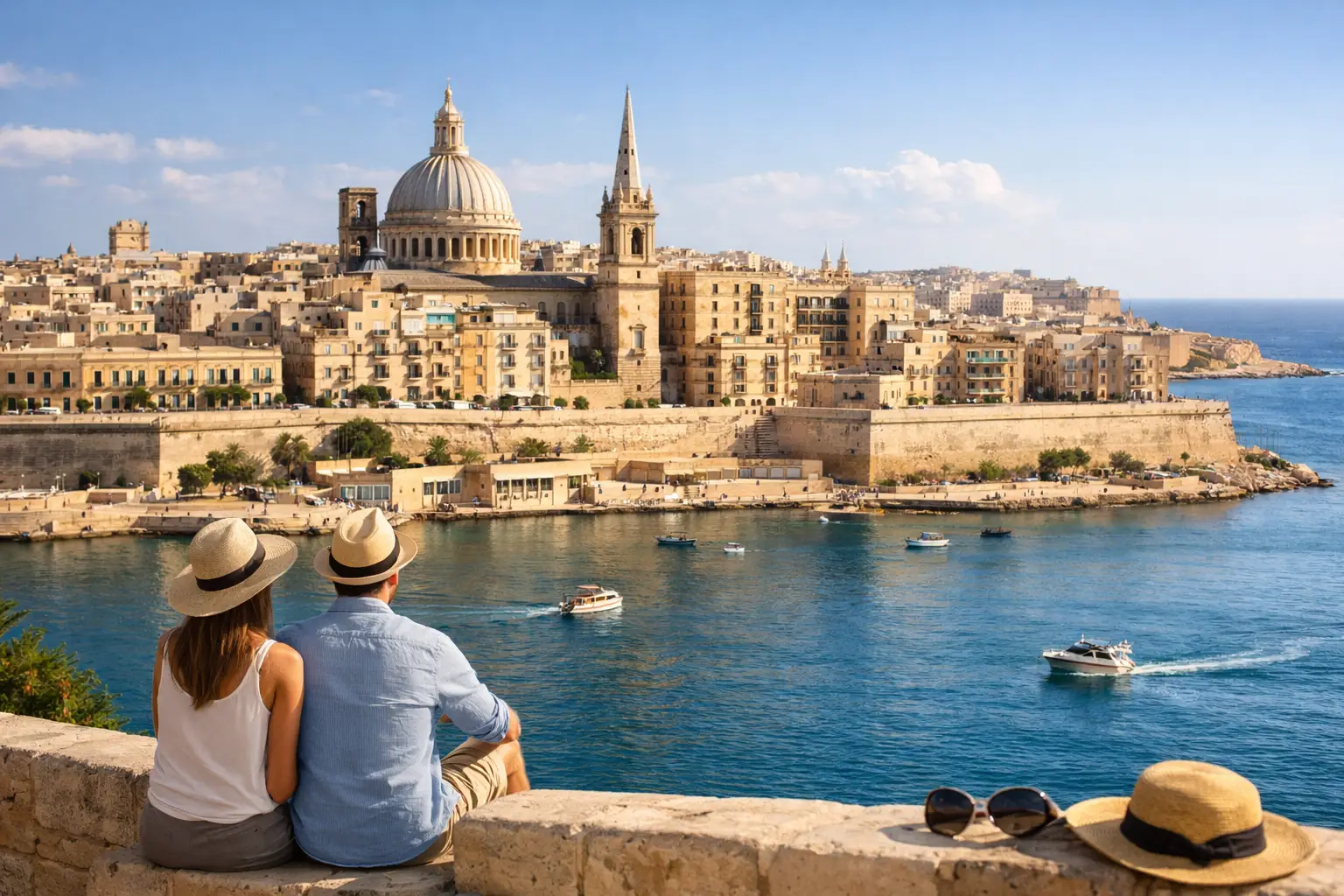
You notice Malta before you properly understand it. The honey-coloured stone, the tightly packed balconies, the bright water that seems determined to distract you from whatever you were meant to be doing – it all creates the sort of first impression that can make a long weekend feel longer, in the best way. If you are weighing up whether this island works as a short escape, this Malta city break review should help: it is compact, culturally rich, easy to fill, and occasionally a little more complicated than the postcard version suggests.
For travellers in the UK, Malta has obvious appeal. Flight times are manageable, English is widely spoken, and the weather gives you a decent shot at sunshine when much of Europe feels unreliable. But Malta is not simply a warm-weather fallback. A good city break here mixes historic streets, sea views, strong food, and enough variety to stop three or four days feeling repetitive.
Malta city break review: who will enjoy it most?
Malta suits travellers who like a city break with texture. If your ideal trip means museums, wandering handsome streets, stopping for a glass of wine, and adding one boat trip or swim when the mood takes you, it is a strong option. Valletta in particular gives you that satisfying feeling of being somewhere compact but layered, where a short walk can take you from grand architecture to a quiet backstreet and then out to a harbour view.
It is especially good for couples, solo travellers, and friends who want culture without the pace of a much larger city. If you like Rome, Lisbon or Dubrovnik but would not mind something smaller and easier to get your head around, Malta makes sense.
Where it depends is if you are chasing a classic big-city feel. Valletta is a capital, yes, but it is tiny. That is part of its charm. It also means that if your favourite city breaks rely on endless neighbourhood-hopping, late-night restaurant scenes and major gallery circuits, Malta may feel more like a concentrated mini-break than a full urban immersion.
What Malta does brilliantly on a short break
The first win is scale. You can see a lot without spending half your trip on public transport. Valletta is highly walkable, and many of the island’s highlights are close enough for straightforward taxi or bus journeys. That matters on a city break, where losing hours to logistics is the quickest route to irritation.
The second is atmosphere. Valletta has real presence – baroque facades, steep streets, café tables spilling into sunlit corners, and harbour panoramas that can make an ordinary coffee stop feel faintly cinematic. Mdina offers something different: quieter, more enclosed, and almost theatrically beautiful after dark. The Three Cities add another side of Malta altogether, with a lived-in maritime character that many visitors find more memorable than the island’s busier resort areas.
Then there is the weather. Malta’s climate extends the city-break season far beyond the usual spring and early autumn sweet spots. Even outside peak summer, it can feel like a very good idea.
Valletta is the heart of it
If you are planning a Malta city break, Valletta is usually the smartest base. It is handsome, practical and full of places that reward aimless wandering. St John’s Co-Cathedral is the obvious heavyweight sight, and deservedly so. From the outside, it is relatively restrained. Inside, it is gloriously over the top.
The Upper Barrakka Gardens are another essential stop, not because they take long, but because the views across the Grand Harbour help you orientate yourself. From there, it becomes easier to understand Malta as an island shaped by defence, trade and seafaring, not just sunshine.
The city also works because it is manageable. You can fit in major sights without turning the trip into a checklist. Mornings can be cultural, afternoons can slide into long lunches, and evenings can be as simple as a harbourfront drink and dinner in a side street that looked promising half an hour earlier.
The trade-off: charming, yes, but not always peaceful
Malta is popular, and in peak periods you will feel it. Valletta’s narrow streets can get busy, restaurant terraces fill quickly, and prices in the most central spots are not exactly bargain-level. If you come in July or August, you also need to make peace with real heat. That can be glorious by the sea, but less glamorous when climbing uphill in the middle of the afternoon.
The island’s traffic is another wrinkle. Distances are short, but journeys can occasionally feel longer than they look on a map. Buses are cheap and useful, though not always swift. Taxis and ride-hailing apps can save time, especially on a short stay, but the costs add up if you rely on them for everything.
And while Malta can certainly be relaxing, not every part of it is pretty in a polished, effortless way. There are built-up areas, patches of overdevelopment, and stretches where the urban fabric feels practical rather than romantic. That does not ruin the trip. It simply means Malta is best appreciated as a place with character, not a flawless backdrop.
Beyond Valletta: what earns a place in your itinerary
Mdina is an easy yes. The old capital is compact, elegant and ideal for a half-day outing. Go early for quieter streets or stay into the evening if you want that hushed, lantern-lit atmosphere people tend to remember.
The Three Cities are just as worthwhile and, for some travellers, even more rewarding. Vittoriosa, Senglea and Cospicua have history in abundance, but they also feel less staged than some headline sights. A harbour boat trip or a simple ferry journey can be one of the best-value experiences of the break.
If the weather is good, build in time by the water. That does not have to mean a full beach day. A swim at St Peter’s Pool or a boat excursion to the Blue Lagoon can give the trip a holiday edge without derailing the city-break rhythm. The caveat is that the Blue Lagoon is no secret. In peak season, beautiful can quickly become crowded.
Gozo is tempting if you have four nights rather than two or three. It is calmer, greener in parts, and gives you a different sense of the Maltese islands. But if your time is tight, trying to squeeze it in can leave the whole break feeling rushed.
Food, drink and evening pace
Malta eats well as a city-break destination. You will find strong seafood, good pasta, plenty of Mediterranean comfort, and a mix of Maltese and Italian influence that works naturally rather than theatrically. Rabbit still appears on menus as a traditional favourite, although it is far from compulsory eating. Pastizzi, meanwhile, are the low-commitment snack you should absolutely try at least once.
There is enough restaurant variety to keep a long weekend interesting, particularly in Valletta and around the harbour areas. The best approach is a balanced one: perhaps one smarter dinner, one seafood lunch, and one deliberately unfussy stop where you order whatever looks local and popular.
Nightlife depends on where you stay and what you want. Valletta evenings tend to suit travellers who prefer conversation, wine and a handsome setting over all-out revelry. If you want more of a party scene, St Julian’s and Paceville offer it, though they can feel disconnected from the kind of cultured short break many visitors come for.
Is Malta expensive for a city break?
It can be good value, but it is not automatically cheap. Flights from the UK are often competitive, particularly outside school holidays. Accommodation is where your budget can swing quite sharply. A well-located hotel in Valletta or a stylish stay with harbour views can feel worth every penny, but prices rise quickly in high season.
Food is mixed. You can spend modestly if you are happy with casual cafés and local bakeries, or very comfortably if you lean into smart restaurants and sea-view terraces. Activities are generally reasonable, which helps Malta’s case. Historic sites, ferry trips and guided excursions do not usually feel wildly overpriced compared with many European city-break rivals.
One final Malta city break review verdict
So, is Malta worth it for a city break? Yes – particularly if you want sunshine, heritage and sea air without sacrificing the pleasures of an urban base. It works best when you let the island be itself: a little scruffier than the glossy brochures suggest, but richer, more characterful and more interesting because of it.
If you like preparing properly before you book, the Destination Unlocked podcast is worth your time. It is as useful as a guidebook and as personal as a chat with your most well-travelled friend, with each 40-minute episode giving you the detail you need for a better trip.
Malta is not the sort of break that relies on one headline sight or one perfect beach. Its appeal is cumulative. A cathedral here, a harbour crossing there, dinner in a limestone square, a swim the next morning – and suddenly a short trip feels surprisingly full.