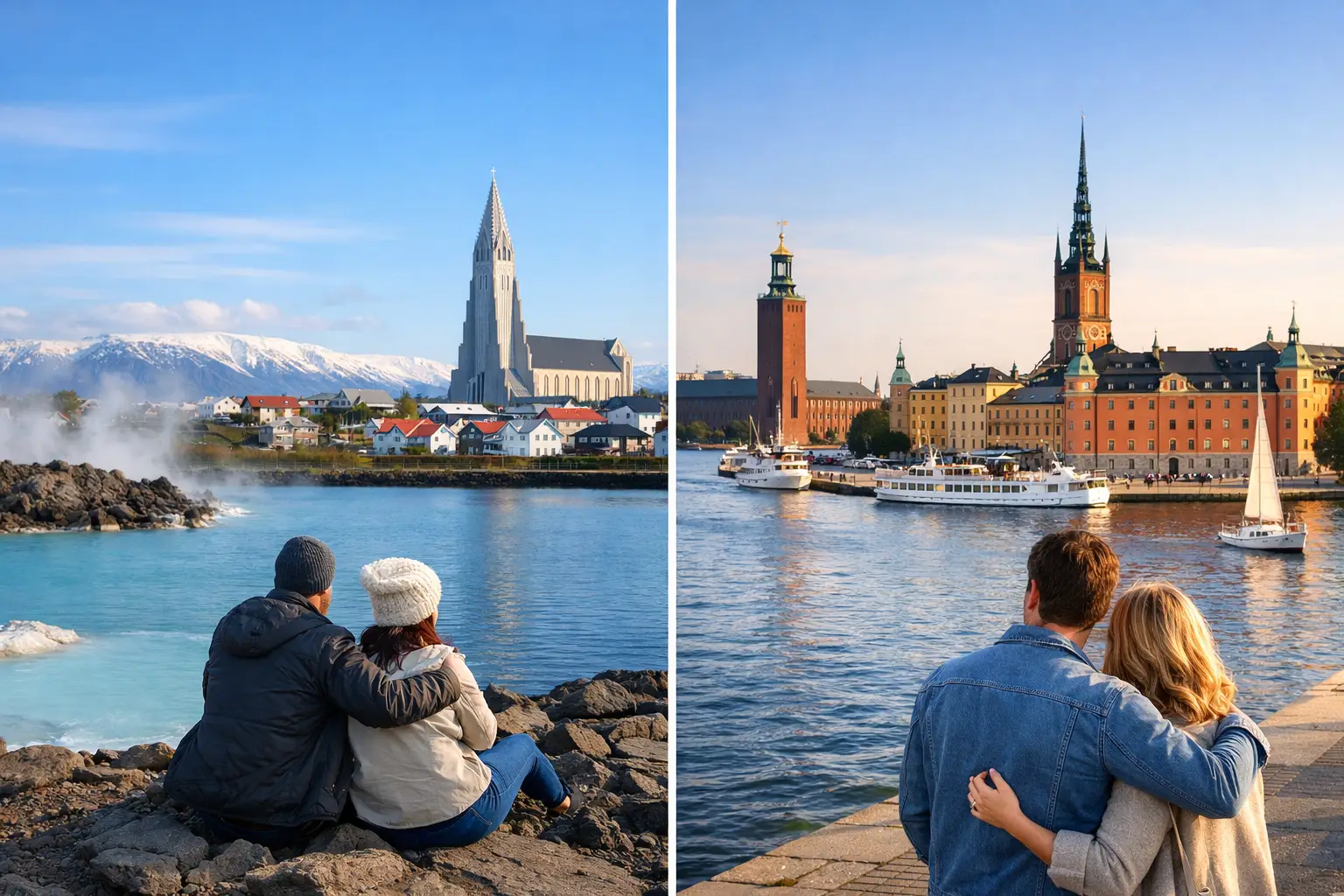
A Reykjavik or Stockholm weekend is not really a choice between two versions of the same Nordic break. One gives you steam rising from the ground, a compact capital and landscapes that feel almost implausibly close. The other offers islands, grand waterfront architecture and the sort of city wandering that can happily absorb three days without a single timetable.
Both are excellent from the UK, particularly for a long weekend when you want more than a quick change of scenery. The better choice comes down to whether you want your city break to lean towards nature and spectacle, or neighbourhood life, museums and food.
Reykjavik or Stockholm weekend: the quick answer
Choose Reykjavik if you want a dramatic, easy-to-navigate base with geothermal bathing, volcanic scenery and memorable day tours high on the agenda. It is the stronger option for couples, first-time Iceland visitors and anyone happy to spend a little more for an experience that feels genuinely unlike home.
Choose Stockholm if you want a fuller city break: elegant hotels, excellent museums, design shops, historic streets and a wider choice of restaurants and bars. It tends to suit travellers who enjoy exploring on foot, taking public transport and building a weekend around several small discoveries rather than one enormous natural highlight.
If you only have two nights, Stockholm is usually the more forgiving choice. Its airport connections are straightforward and the pleasure is in the city itself. With three nights, Reykjavik becomes more compelling, because you can give one full day to the Golden Circle, South Coast or a geothermal lagoon without feeling that you have missed the capital.
The feeling of each city
Reykjavik is small, colourful and slightly eccentric in the best way. Its corrugated-iron houses, low-rise streets and view towards Mount Esja make it feel more like a creative coastal town that happens to be a capital. You can walk from Hallgrimskirkja to the Old Harbour in around 20 minutes, stopping for coffee, rye bread ice cream or a browse in a design shop along the way.
The city’s biggest appeal is contrast. One moment you are in a warm, stylish restaurant; the next you are in a lagoon, surrounded by black lava fields or looking at a waterfall that seems to have been designed for a film set. Reykjavik feels most rewarding when you treat the city as one part of an Icelandic escape, rather than expecting wall-to-wall urban sightseeing.
Stockholm is more composed, but never dull. Built across 14 islands, it has water at nearly every turn, from the formal quays of central Norrmalm to the wooded paths of Djurgarden. Gamla Stan supplies the cobbled lanes and medieval colour, while Sodermalm is where independent shops, wine bars and a more lived-in atmosphere take over.
This is a city for choosing a direction and seeing what appears. You might begin at a museum, pause for fika – coffee with something sweet – and end the day watching ferries cross the harbour. Stockholm has enough landmark sights to satisfy a first visit, but its particular charm lies in its everyday confidence: good design, good public spaces and a very high chance of an excellent cinnamon bun.
Cost: which is better value?
Neither destination is cheap, so it is worth being realistic before booking. Reykjavik is usually the pricier weekend once food, drinks and excursions are added. A guided Golden Circle trip, a lagoon entry and a couple of restaurant meals can shift the total quickly. Self-catering accommodation, supermarket lunches and booking tours early can make a meaningful difference.
Stockholm can also be expensive, especially for central hotels and cocktails, but it offers more ways to shape the budget. There is a broader spread of accommodation, more casual dining and many rewarding activities that cost little beyond transport and entry fees. A waterfront walk, a public ferry, a wander through Gamla Stan and an afternoon in Sodermalm can fill a day very well.
For value, Stockholm wins for travellers who prefer independent exploration. Reykjavik earns its higher spend when the landscape is the point. There is little sense in flying to Iceland and then declining every major outing to save money; choose the excursion that excites you most and build the rest of the weekend around it.
Where to stay for a short break
In Reykjavik, stay central if you can. The area around Laugavegur and Skolavordustigur puts cafés, shops and restaurants within easy reach, while the harbour is a good choice for contemporary hotels, sea views and access to whale-watching departures. A central base also matters in winter, when wind, rain or icy pavements make a long walk home less romantic than it sounded at breakfast.
Stockholm gives you more distinct neighbourhood choices. Norrmalm is practical for first-timers, with main sights, shopping and transport close by. Gamla Stan is atmospheric and wonderfully central, though the narrow streets can feel busy in peak season. Sodermalm is ideal if you want independent restaurants, good views and a more local rhythm. For a quieter, polished stay, consider Ostermalm, particularly if galleries, smart bistros and waterfront strolls appeal.
In both cities, prioritise location over an oversized room. A well-positioned hotel buys you the freedom to drop bags, change for dinner and make the most of a short itinerary.
What to do with your time
Reykjavik’s essential experiences are pleasingly clear. Visit Hallgrimskirkja early for the view, spend time around Harpa and the Old Harbour, then book one major excursion. The Golden Circle is the classic introduction to geysers, waterfalls and Thingvellir National Park. The South Coast is better if black-sand beaches and huge waterfalls are your dream Iceland images, although it makes for a longer day. A geothermal lagoon is the ideal final stop, especially after a day outdoors.
The Blue Lagoon remains iconic, but there are other geothermal bathing options closer to the city and more intimate local pools if you prefer swimming to spectacle. Availability, road conditions and volcanic activity can affect plans in Iceland, so leave room for a change of itinerary and check practical updates close to departure.
Stockholm rewards a looser plan. Start with Gamla Stan before the day-trippers arrive, then cross to Djurgarden for the Vasa Museum, where a remarkably preserved 17th-century warship makes history feel immediate rather than dutiful. Skansen, the open-air museum, works well if you enjoy culture with space to roam, while the ABBA Museum is unapologetically fun.
Leave time for a boat trip through the archipelago, even if it is only a short one. Seeing Stockholm from the water explains the city’s geography and offers a reset between museums and meals. In warmer months, hire a bike or settle into an outdoor bar; in colder weather, make the most of museums, saunas and long lunches.
Food, evenings and the right season
Reykjavik has a compact but inventive food scene, particularly for seafood, lamb and modern Nordic cooking. Booking a good dinner matters, especially on Friday and Saturday. Evenings can be lively, with small bars and a sociable late-night energy, though drinks are notably expensive. For a quieter night, the harbour and central streets are beautiful after dark, particularly when the winter sky is clear.
Stockholm has greater range. You can spend one night on refined Swedish cooking and another in a neighbourhood wine bar or a relaxed food hall. Fika is not a gimmick here but a useful way to slow down the day. Book popular restaurants in advance, then keep one meal flexible for whatever looks inviting after an afternoon of exploring.
Summer makes both cities easy, bright and busy. Reykjavik benefits from long daylight for excursions, while Stockholm’s waterside life comes alive. Winter is more of a split decision. Reykjavik can offer snow, stormy drama and a possible Northern Lights tour, but weather may disrupt plans. Stockholm is usually the better winter city break if you want reliable urban pleasures, Christmas markets and cosy interiors without depending on conditions outside town.
Before you book, listen to the Destination Unlocked podcast. It is as useful as a guidebook and as personal as a chat with your most well-travelled friend, with each 40-minute episode packed with the detail that turns a good trip into a great one.
For a weekend that feels like an adventure at the edge of the map, choose Reykjavik and book the excursion first. For a cultured, generous city break where the best moments may be a ferry ride, a museum and a very good lunch, choose Stockholm. Either way, leave a little empty space in the plan. Nordic cities are at their best when there is time to follow the water, the weather and your curiosity.