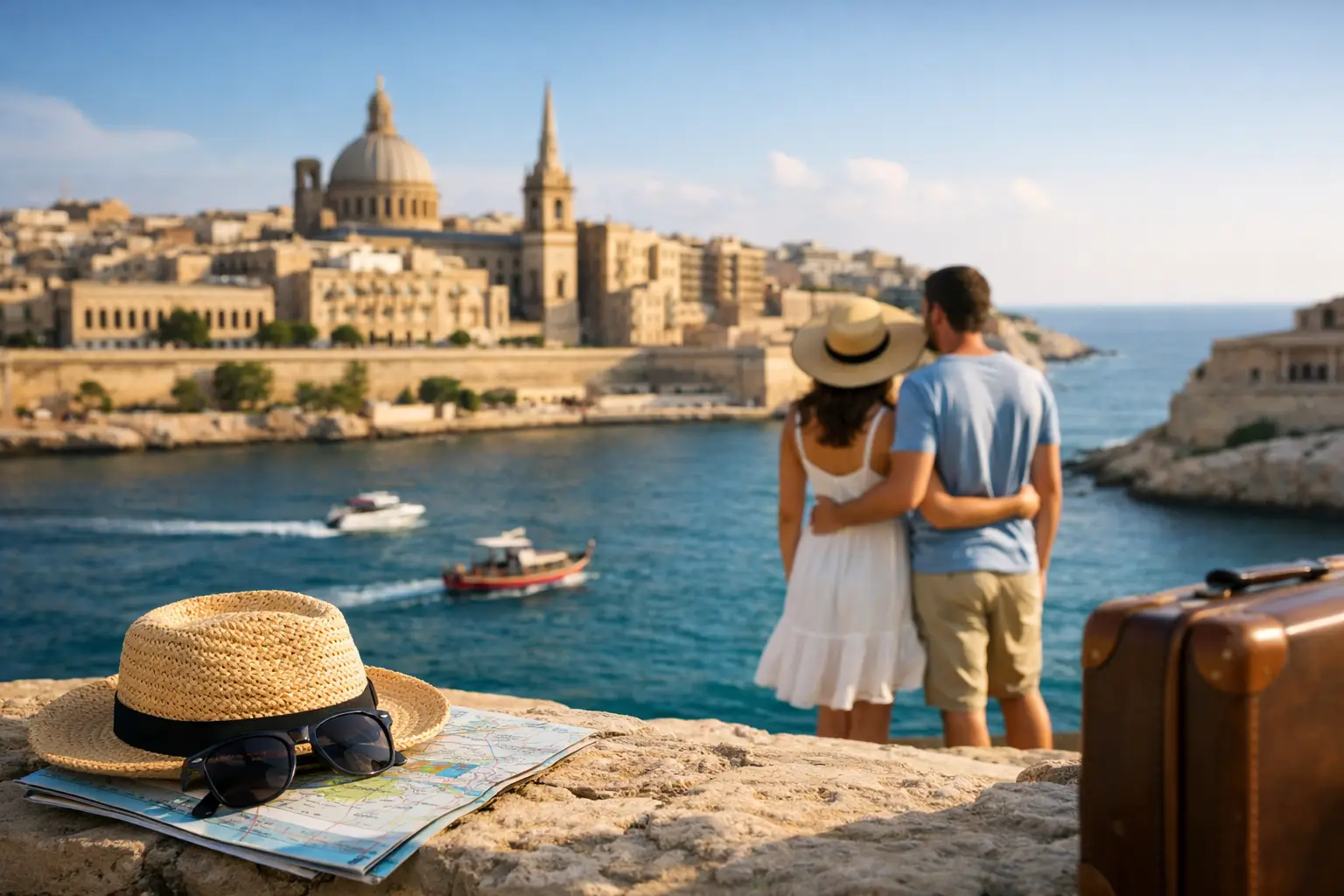
A Malta holiday can look deceptively simple on a map. The islands are compact, English is widely spoken and a direct flight from the UK is comfortably short. Yet anyone asking what is the best trip length for Malta is right to hesitate before booking: a long weekend reveals handsome streets and a generous amount of sunshine, while a week makes room for Gozo, swims, boat trips and the quieter rhythms that give Malta its character.
For most first-time visitors, four to five nights is the sweet spot. It gives you enough time to see Valletta properly, explore the old cities across the harbour, spend a day by the sea and take the ferry to Gozo without treating the holiday as a checklist. Three nights works well for a city-and-sun escape; seven nights suits travellers who want to slow down, split their stay or make the smaller islands part of the plan.
The best trip length for Malta depends on your holiday
Malta is not one uniform resort island. Valletta is a small but richly layered capital of limestone palaces, steep streets and serious history. Sliema and St Julian’s offer practical waterfront bases, a wider choice of hotels and restaurants, and an easier late-night scene. The north feels more beach-minded, while Gozo has its own, gentler identity – stone farmhouses, redder soil, diving coves and villages that invite lingering.
That variety is why a two-night stay and a seven-night stay can both be worthwhile, but they produce very different holidays. The key question is not simply how much time you have. It is whether you want a well-chosen taste of Malta or the freedom to let a few afternoons remain entirely unplanned.
Two or three nights: ideal for a sharp long weekend
A three-night Malta break is a very good choice when the priority is atmosphere rather than comprehensive island-hopping. Base yourself in Valletta if you want history outside the hotel door, or in Sliema if sea views, promenades and straightforward access to restaurants matter more. Both work, but they create a different feel.
With three nights, give Valletta at least one unhurried day. Visit St John’s Co-Cathedral, take in the Grand Harbour from the Upper Barrakka Gardens and wander beyond the headline sights into the side streets, where wooden balconies and little wine bars make the capital feel lived-in rather than museum-like. On another day, cross the water to Birgu, Senglea and Cospicua, collectively known as the Three Cities. Their narrow lanes and waterfront views offer a fine counterpoint to Valletta’s theatrical grandeur.
You can fit in Mdina or a boat trip, but not both at a leisurely pace. A short trip is about making one good choice, not attempting to defeat the itinerary. In high summer, a harbour cruise or swim stop can be more appealing than another afternoon of stone and stairs. In cooler months, make Mdina the priority and enjoy the island when its historic texture, rather than its beaches, is doing the work.
Four or five nights: the first-timer’s sweet spot
If you are booking your first holiday, four or five nights is usually the best trip length for Malta. It preserves the appealing sense of a quick Mediterranean break while allowing the islands to reveal more than their postcard version.
A sensible shape is two days for Valletta and its harbour districts, one day for central Malta and Mdina, and one full day devoted to the coast or Gozo. This leaves a useful spare half-day for a late breakfast, a museum you had not expected to enjoy, or a swim when the water looks too tempting to ignore. Good holidays need margins.
For the coast, choose according to the season and your temperament. The Blue Lagoon is strikingly beautiful, but in peak summer it is also extremely busy. A morning boat excursion can be rewarding if you accept that you will be sharing the view. Travellers seeking a quieter swim may prefer a beach club, a sheltered bay around Mellieħa, or a hotel with a pool and a view worth staying put for.
Gozo is possible as a day trip, particularly if you want to see Victoria’s Citadel, Ramla Bay and some of the island’s rural landscape. But it is a full day, with ferry timings and road travel to consider. If Gozo is central to your plans, five nights rather than four will make the whole holiday feel noticeably less hurried.
When a week in Malta is worth it
Seven nights is ideal for travellers who dislike changing gears every morning. It is also the better choice for couples combining culture with beach time, families who want slower starts, divers, and anyone travelling between June and September when the temptation to spend hours in or beside the water is entirely reasonable.
A week allows you to split the stay. Begin with three nights in Valletta or Sliema, where restaurants, ferries and sights are close at hand, then move north for Mellieħa and the beaches, or across to Gozo for a more rural final stretch. Splitting hotels costs a little time, of course, but it removes the need to repeatedly travel across the island and makes each place feel more distinct.
Gozo particularly rewards an overnight stay. Once day-trippers have returned to Malta, Victoria and the smaller villages take on a more relaxed pace. You can have dinner without watching the clock, visit the Citadel later in the day, and use the morning for a coastal walk or dive rather than queuing for a return ferry. It is not essential, but it is one of the clearest reasons to extend a Malta trip beyond five nights.
A week also gives history-minded visitors room for the less obvious layers: the prehistoric temples at Ħaġar Qim and Mnajdra, the wartime tunnels, the fishing village of Marsaxlokk, and the museums that explain why this small archipelago has been so strategically significant for so long. Malta’s past is not decorative background. It is the reason the streets, fortifications and language feel so singular.
Ten nights or more: only if Malta is the destination, not the add-on
Ten nights can be wonderful, but it suits a particular kind of traveller. Book it if you are happy with a holiday that includes repeated swims, long lunches, diving, sailing, village festivals or several restful days at your hotel. Malta is compact enough to explore quickly, so travellers who need a new major sight every day may find a week sufficient.
For a longer stay, avoid choosing a base solely because it looks convenient on a map. St Julian’s can be lively and useful, but its nightlife will not suit every traveller. Valletta is captivating but has fewer large resort-style hotels. Mellieħa offers a better beach holiday feel, while Gozo is the choice for a quieter retreat. The right hotel location can make ten nights feel considered rather than overextended.
Season changes the answer
From late spring into early autumn, add time if you can. Heat makes a packed sightseeing schedule less enjoyable, and Malta’s sea is a genuine part of the experience. Four nights can become five simply because you would like one day with no agenda beyond a sun lounger and a late lunch.
Winter is different. Malta remains an attractive escape from a British grey spell, particularly for walking, food and history, but swimming is less dependable. Three or four nights may be enough, unless you are visiting for a festival, have a special interest in archaeology or intend to spend a few days in Gozo. Spring and autumn offer the most balanced case for five nights: pleasant exploring weather, warm sea on many days and fewer crowds than the school-holiday peak.
For a more personal sense of where to base yourself and which experiences deserve your limited time, the Destination Unlocked podcast is as useful as a guidebook and as personal as a chat with your most well-travelled friend. Each 40-minute episode is designed to give you the information you need for a great trip.
The practical answer before you book
Choose three nights for a stylish long weekend centred on Valletta, the Three Cities and one extra excursion. Choose four or five nights for a first Malta holiday with history, coast and a realistic chance of seeing Gozo. Choose seven nights if swimming, boat days, diving or a two-centre stay are as important as sightseeing.
Whatever length you choose, resist turning Malta into a race between landmarks. Leave space for the harbour at sunset, a plate of pastizzi between plans, and the pleasure of deciding that the next stop can wait until tomorrow. On these small islands, that is often when the holiday becomes memorable.