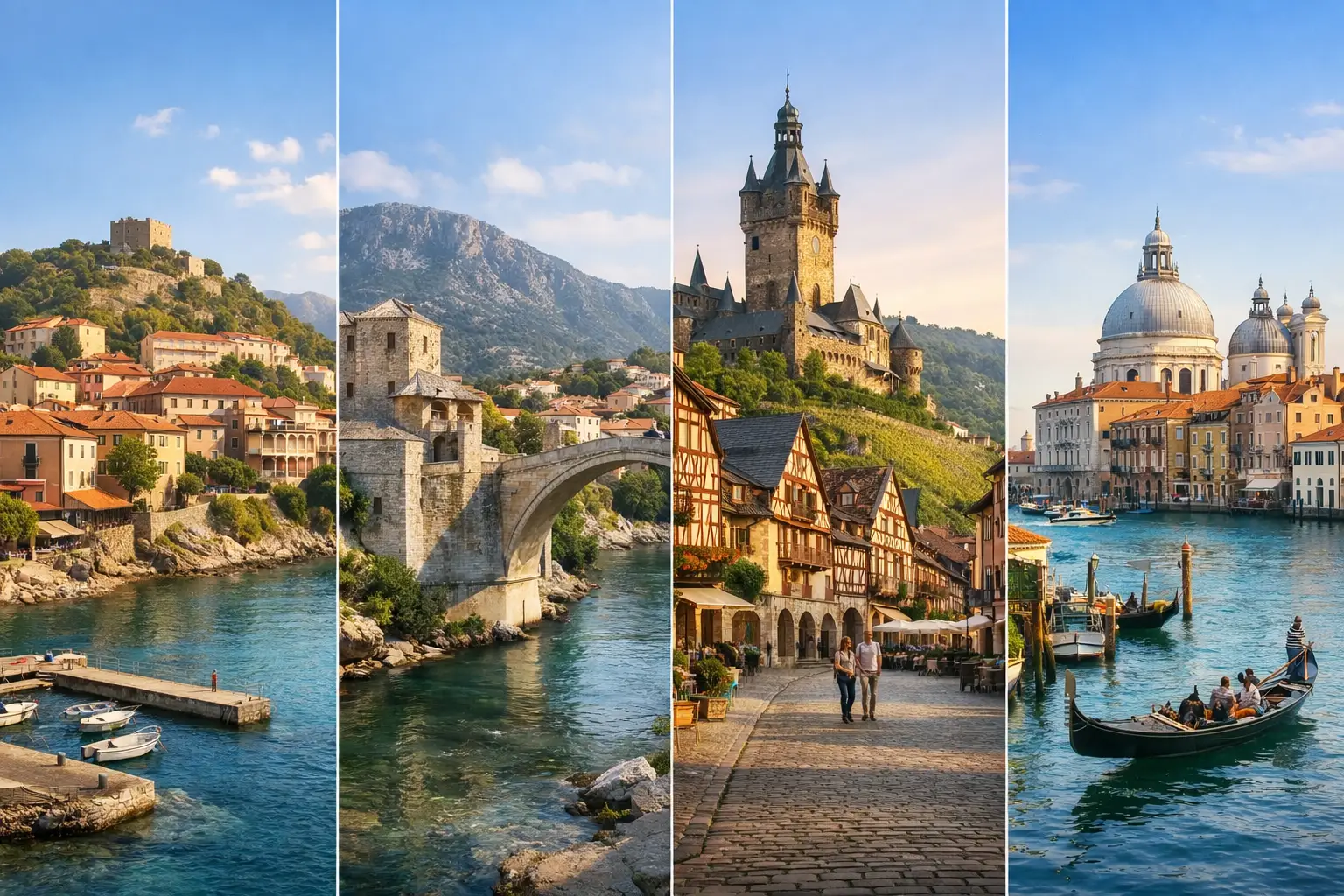
A great city break is not always about finding somewhere nobody else has heard of. The best lesser known European cities are usually places with a strong sense of themselves: handsome old streets, excellent food, enough culture for a long weekend and far fewer queues than Europe’s headline acts. They also tend to reward travellers who book a little more thoughtfully, whether that means a hotel in the right neighbourhood or one well-chosen local tour.
These are cities for travellers who have already done, or happily skipped, the obvious itinerary. Some work best for a Friday-to-Sunday escape; others deserve four unhurried nights and a train journey out into the surrounding region.
12 best lesser known European cities for a city break
Trieste, Italy
Trieste feels unlike the Italy sold on postcards. It is a former Habsburg port on the Adriatic, with grand coffee houses, neoclassical squares and a distinctly Central European mood. Spend a morning around Piazza Unità d’Italia, then take the number 6 bus or a taxi to Miramare Castle, whose white façade sits dramatically above the sea.
Stay near the pedestrianised centre if cafés, museums and evening walks are the priority. Barcola, on the waterfront, is a better choice in warm weather, when locals swim from the promenade. Trieste is particularly good for a cultured long weekend in spring or early autumn, but it is less suited to travellers expecting Tuscan warmth or a beach resort.
Gdańsk, Poland
Gdańsk’s rebuilt old town is one of Europe’s most handsome urban scenes, with richly decorated merchant houses running along the Royal Route. Yet its real strength is range. You can move from amber shops and Gothic churches to shipyard history, contemporary museums and the wide Baltic beaches of Sopot in a single weekend.
A guided walk focused on Solidarity and the shipyards adds context that the pretty façades alone cannot provide. Book a central hotel around the Motława waterfront for atmosphere, or choose Wrzeszcz for a more local feel and easier access to the airport. Summer brings long days and busy terraces; December is quietly appealing if you like festive markets and crisp waterfront walks.
Ghent, Belgium
Bruges may have the postcards, but Ghent has the lived-in confidence. Its medieval skyline is extraordinary, the canals are handsome, and the city has enough students to keep the restaurant and bar scene from becoming overly formal. The Gravensteen castle, St Bavo’s Cathedral and a boat trip through the waterways make a fine first day.
Ghent is a particularly easy choice for a car-free break, with frequent rail connections from Brussels and a compact historic core. Look for a hotel in the Patershol or Korenmarkt area if you want to walk everywhere. For a less polished evening, cross into the artsy neighbourhood around Dok Noord. It is not a secret, especially among Belgian travellers, but it remains wonderfully underbooked compared with Bruges.
Timișoara, Romania
Timișoara has the broad boulevards, pastel façades and café culture of a city once nicknamed Little Vienna, without the capital-city price tag. Its three principal squares – Victory, Union and Liberty – make an easy route between Orthodox churches, Habsburg-era buildings and relaxed terraces.
The city is also central to Romania’s modern history: the 1989 revolution began here. A locally led history tour gives the trip real depth, particularly around Opera Square. Base yourself near Piața Unirii for the most atmospheric stay, or close to the Bega Canal for newer hotels and pleasant walks. Timișoara is best as a two- or three-night break, perhaps paired with the wine country and villages of western Romania if you have more time.
Cádiz, Spain
Cádiz is an Atlantic city rather than a Mediterranean one, and that distinction matters. The sea is never far away, the light is brilliant, and the old town is a maze of narrow lanes opening suddenly onto palm-lined squares. It has the energy of Andalusia but a breezier, saltier character than Seville.
Climb the Torre Tavira for a sense of the city’s geography, visit the cathedral, then leave time for fried fish and a late walk along La Caleta beach. A hotel in the old town puts everything at your doorstep, while the newer area by Playa de la Victoria suits travellers who want a proper beach within the city. Go in May, June, September or October if you prefer warm weather without the fiercest heat.
Brno, Czechia
Brno is the Czech Republic’s second city, but it does not behave like a runner-up. It has Modernist architecture, excellent beer, a young food scene and a compact centre built for wandering. Villa Tugendhat is the essential booking for architecture lovers – reserve ahead, as entry is limited – while the old town’s underground passages and Špilberk Castle offer a more traditional counterpoint.
For a smart weekend base, stay close to Freedom Square or the Vegetable Market. Brno is also a useful launch point for the Moravian wine region, so a small-group wine trip can turn a city break into something more rounded. It lacks Prague’s grand sweep, admittedly, but that is precisely why its restaurants and bars feel more like places people actually use.
Bergen, Norway
Bergen is hardly unknown in Norway, but many British travellers still overlook it in favour of Oslo or a fjord-only itinerary. That is a mistake. The city has colourful wooden wharves, a compelling maritime history and mountains that begin virtually at the edge of town.
Ride the Fløibanen funicular early or late in the day, when the views over the harbour are clearest and the crowds thinner. A fjord cruise is a worthwhile splurge if Bergen is your only Norwegian stop, while food-minded visitors should allow time for the fish market and the independent cafés around Nordnes. Hotels around Bryggen are convenient but can be busy; Nordnes provides a calmer, more residential base. Bergen is expensive, so booking accommodation and key excursions early makes a noticeable difference.
Ljubljana, Slovenia
Ljubljana is small enough to feel immediately manageable and lively enough to fill three days. Its riverside centre is made for lingering: outdoor tables beside the Ljubljanica, bridges designed by Jože Plečnik and a castle perched above the rooftops. The car-light core helps, too. You notice conversations, market stalls and the rhythm of the river rather than traffic.
Stay around the Old Town or the riverside for the easiest evenings, and take the funicular to Ljubljana Castle close to sunset. The strongest reason to choose Ljubljana is how easily it extends beyond the city. A day trip to Lake Bled, the Škocjan Caves or the wine country can be booked without the fatigue of changing hotels. In high summer, however, those headline day trips get busy, so consider May, June or September.
Thessaloniki, Greece
Thessaloniki is Greece’s most rewarding answer to travellers who want ancient history without an all-day archaeological itinerary. Roman remains sit among busy streets, Byzantine churches appear almost casually between shops, and the waterfront has been transformed into one of the country’s best evening promenades.
The food is reason enough to come. Order meze in Ladadika, seek out bougatsa for breakfast and leave an evening free for the bars around Valaoritou. Choose a hotel near Aristotelous Square for first-time convenience, or Ano Poli for a quieter, characterful setting with views. Summer can be intensely hot, while autumn brings gentler temperatures and the city’s most sociable mood.
León, Spain
León deserves a place on any list for travellers who judge a city partly by how well it feeds them. In the Barrio Húmedo, a drink commonly arrives with a tapa, and the streets become a relaxed evening circuit of old bars and new kitchens. The Gothic cathedral is magnificent, while Casa Botines and the contemporary MUSAC museum show the city’s range.
León works beautifully as a stop on a wider northern Spain itinerary, but it has enough character for a dedicated weekend. Stay close to the cathedral or Plaza Mayor, then book a guided food tour if you want help navigating the local specialities rather than settling for the first crowded terrace. Winter is cold but atmospheric; late spring and early autumn are the sweet spots.
Kotor, Montenegro
Kotor’s walled old town and mountain-ringed bay have made it increasingly popular, particularly on cruise days. Still, an overnight stay reveals a different place: quiet lanes before breakfast, church bells in the evening and a bay that looks at its best once day visitors have gone.
The climb to San Giovanni Fortress is demanding in heat but unforgettable in the early morning. Choose a small hotel inside the walls for romance and convenience, or stay in Dobrota for water views and more space. The key trade-off is timing. Kotor is at its most pleasant in April, May, late September and October; July and August are glorious but busy, hot and often more expensive.
Bologna, Italy
Bologna has excellent name recognition among food lovers, yet it remains overshadowed by Florence, Venice and Rome when it comes to city-break bookings. Its kilometres of porticoes make it unusually forgiving in rain or summer sun, while the university lends the centre a lively, conversational feel.
Book a cooking class or market-led food tour if you want more than a plate of tagliatelle al ragù. The Quadrilatero is central and atmospheric, though accommodation there can be noisy; the streets around Santo Stefano offer a more restful compromise. Bologna is also one of Europe’s best rail hubs, making Ravenna, Modena and Parma realistic day trips.
How to choose the right lesser-known city
Start with the shape of holiday you actually want. For food, Bologna, León and Thessaloniki are hard to beat. For history with a strong local narrative, choose Gdańsk or Timișoara. Bergen and Kotor are for travellers who want landscape as much as city life, although both reward advance planning more than a spontaneous weekend does.
The best hotel is rarely simply the cheapest central option. In a compact city such as Ljubljana or Ghent, location lets you return for a rest before dinner and makes late evenings feel effortless. In Bergen or Kotor, paying a little more for views or walkability can make the trip. Book one defining activity as well – a history walk, food tour, castle visit or fjord cruise – then leave the rest of the schedule loose enough for a promising wine bar or a square you had not planned to find.
For more destination detail, the Destination Unlocked podcast is as useful as a guidebook and as personal as a chat with your most well-travelled friend. Each 40-minute episode gives you the information you need for a great trip. The right city is not necessarily the one with the fewest visitors; it is the one that leaves room for your own small discoveries.