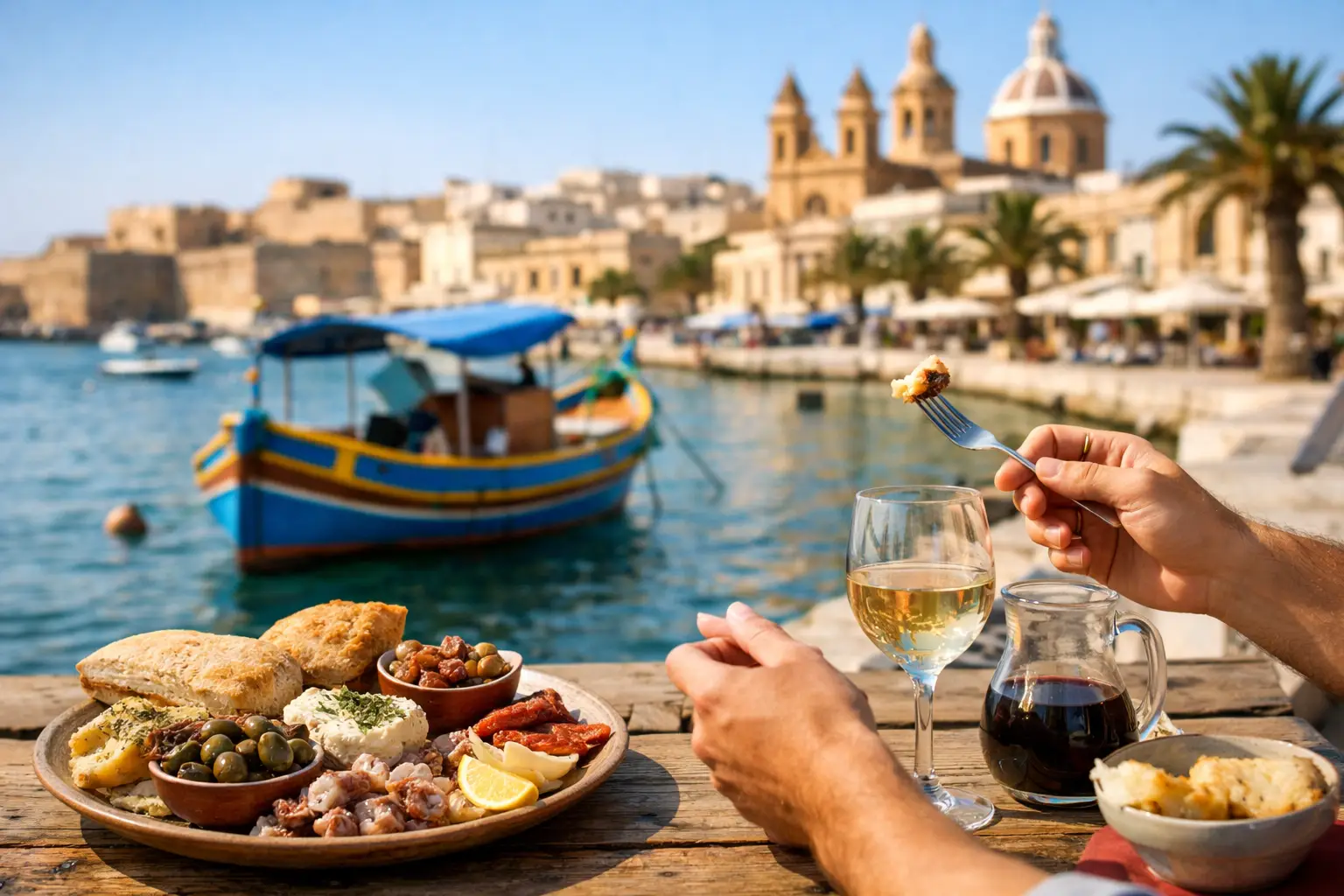
Malta rewards hungry travellers who look beyond the most polished waterfront menus. Knowing how to find local food in Malta is less about tracking down one famous restaurant than noticing the places where the island’s everyday habits are still visible: a queue outside a pastizzeria, trays of bread arriving at a village bakery, or a lunch menu that follows the morning catch.
The good news is that Maltese food is generous, distinctive and easy to enjoy once you know what to look for. The slight complication is that Malta is a busy, multilingual holiday destination, so a restaurant can look traditional while serving a rather interchangeable Mediterranean greatest-hits menu. A little curiosity goes a long way.
Start with the foods Malta does best
A useful way to spot local cooking is to arrive with a few dishes in mind, then order them where they make sense. Pastizzi are the obvious first stop: crisp pastry parcels, usually filled with ricotta or mushy peas, sold cheaply from dedicated pastizzeriji. They are a snack rather than a formal meal, best eaten hot, ideally before a ferry, a swim or a long wander through Valletta’s streets.
For something more substantial, look for ftira, Malta’s round, chewy bread. It may arrive as a simple sandwich or as ftira biz-zejt, dressed with olive oil, tomato paste, capers, tuna, onions and whatever else the cook considers essential. The quality of the bread matters, which is why a bakery or modest café can be a better bet than a restaurant with a glossy international menu.
At dinner, rabbit is the traditional headline act. Fenkata is a sociable rabbit meal, often braised with wine, garlic and herbs, and sometimes served as part of a leisurely gathering rather than a quick two-course supper. You may also see bragioli, beef olives stuffed and braised in a rich sauce, or timpana, a baked pasta pie that feels pleasingly uncompromising.
Fish is equally central, though it should be treated as seasonal rather than guaranteed. Lampuki, or mahi-mahi, is particularly associated with late summer and autumn. If it is not in season, ask what was landed locally that day instead of ordering it by default. That small question usually produces a more interesting meal.
How to find local food in Malta by following daily life
The strongest local-food experiences often happen before dinner. Start at a bakery in the morning, particularly in a residential town or village rather than the busiest visitor zones. Look for people buying bread to take home, not just tourists choosing pastries from a display. Ask for the day’s speciality, and do not be surprised if the answer is straightforward: fresh bread, a savoury pie or a couple of pastizzi is a very Maltese breakfast or mid-morning pause.
Markets can be worthwhile, but timing and expectations matter. Marsaxlokk’s Sunday market is famous and enjoyable, especially if you want to combine a harbour walk with lunch. It is also popular with visitors, so think of it as a lively introduction rather than a secret local ritual. Go early, browse the fish and produce, then choose a restaurant that is busy with Maltese families rather than one relying solely on someone waving a laminated menu at the promenade.
For a more everyday feel, seek out town markets during the week and keep an eye on village shops. Malta is compact enough that a short taxi ride or bus journey can shift the atmosphere considerably. Towns such as Rabat, Żebbuġ, Naxxar and Siġġiewi can offer a more neighbourhood-led food scene than the main resort areas, while Gozo is particularly good for slower lunches, farmhouse produce and food connected to the island’s agricultural rhythm.
A village festa can be another excellent moment to eat locally. These saint’s-day celebrations bring band clubs, street decorations and food stalls to towns across Malta and Gozo, especially in summer. The quality varies, as it does at any large public event, but it is a fine place to try local sweets, grilled snacks and traditional treats in a setting that has nothing to do with a hotel buffet. Check the dates once you have chosen where to stay, rather than trying to build an entire itinerary around one event.
Read a restaurant before you book a table
There is no need to distrust restaurants in Valletta, Sliema or St Julian’s. Plenty are excellent, and staying in these areas can make a short break wonderfully easy. But the most central locations have higher rents and a more international audience, which can make menus broader and less rooted in Maltese cooking.
Look for a short menu with recognisable Maltese dishes alongside a few seasonal specials. A restaurant that states the provenance of its fish, bread, cheese or vegetables is generally more promising than one offering every cuisine from sushi to steak to carbonara. That does not make a wide menu automatically poor, but it is rarely where you will find the clearest expression of the island’s cooking.
Ask two simple questions: what is local today, and what would the person serving you order for a traditional meal? Good staff will usually answer happily, and the response can tell you more than an online description. If the recommendation is rabbit, fresh fish or a particular pasta, you are on the right track. If the answer is a generic burger, save the restaurant for another evening.
Booking ahead is sensible for Friday and Saturday dinners, and essential if you have your heart set on a small, family-run place. Maltese meals can be delightfully unhurried, particularly outside the resort strip. Make space for that. A long lunch with a view over a fishing harbour or a village square is not an interruption to the itinerary; it is often the point of it.
Make your hotel choice work harder
Where you sleep shapes the food you are likely to encounter. Valletta suits travellers who want easy access to restaurants, wine bars and excellent evening atmosphere, with ferries and buses for wider exploration. Sliema and St Julian’s offer plentiful accommodation and dining, but you will need to be more selective if traditional cooking is a priority.
For a food-focused stay, consider splitting your time. Spend a couple of nights in Valletta for its energy and range, then move to a quieter base in the south, around Marsaxlokk, or across on Gozo. A farmhouse stay in Gozo can make it easier to seek out local cheese, olive oil, wines and slower, seasonal cooking, though a car is useful if you want maximum freedom.
Rabat and Mdina are another appealing choice for travellers who prefer historic streets and a more central position on the island. They are less convenient for late-night resort life, but that is often precisely the attraction. Choose your base according to the kind of evenings you want, not merely the lowest room rate.
Take one food experience, then leave room to improvise
A guided food walk can be a smart first-day booking, particularly in Valletta. It gives you context for Maltese ingredients and a shortlist of places to revisit independently, while helping you avoid spending the first afternoon comparing menus on your phone. Look for small-group experiences led by someone who can explain the cultural mix behind Maltese food: Sicilian, North African, British and Arabic influences all appear, but the result is unmistakably its own.
After that, resist scheduling every meal. The best pastizzi may be found when you are simply hungry near a bus stop. A promising lunch may emerge after a morning at the Blue Grotto, a walk through Victoria in Gozo or a visit to the Three Cities. Leave a little room for a recommendation from a shopkeeper, hotel host or taxi driver, then use your judgement when you arrive.
For planning beyond the plate, the Destination Unlocked podcast is as useful as a guidebook and as personal as a chat with your most well-travelled friend. Each 40-minute episode brings together the practical details and local perspective that can turn a good holiday into a properly memorable one.
Finally, do not treat local food as a box to tick with one rabbit dinner and a pastizz. Eat the bread, ask about the catch, return to the bakery you liked and accept an unhurried lunch when the day allows it. Malta’s most satisfying flavours tend to appear when you follow the island’s pace rather than trying to rush past it.