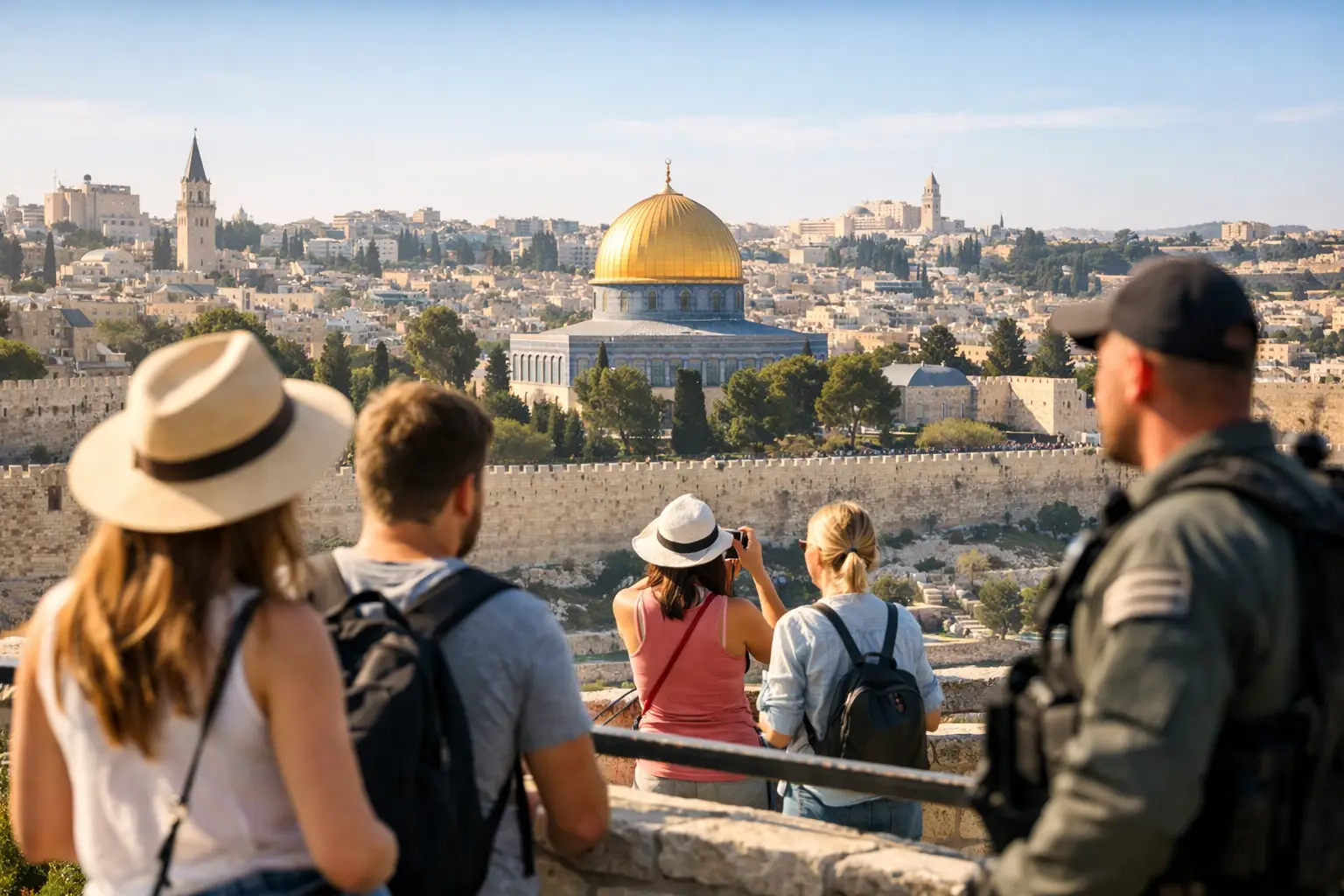
Jerusalem is one of those cities that can make a trip feel bigger than a holiday. A morning might begin beside the Western Wall, continue through the lanes of the Old City and end over dinner in a busy West Jerusalem restaurant. But is Jerusalem safe for tourists? The honest answer is that it depends on the date you travel, the areas you visit and, above all, the latest security situation.
This is not a destination for switching off before you have checked the facts. It can, however, be a deeply rewarding place to visit when conditions allow, with ordinary daily life, excellent hotels and remarkable cultural sites sitting alongside very real political and religious tension. Treat current official advice as part of your booking process, rather than a dry administrative detail.
Is Jerusalem safe for tourists? The practical answer
Jerusalem receives international visitors in normal travel periods, and the main visitor areas are generally well used, well staffed and easy to navigate in daylight. Yet the city’s security picture can change quickly. Demonstrations, police operations, religious festivals, incidents in and around the Old City, or escalation elsewhere in Israel and the Palestinian Territories can alter what is sensible from one week to the next.
Before booking flights or choosing a non-refundable hotel, check the latest Foreign, Commonwealth & Development Office advice for Israel and the Occupied Palestinian Territories. Read the regional detail, not just the headline. Follow local authorities and take hotel advice seriously once you arrive. If guidance advises against travel, do not assume a carefully planned itinerary or a good deal on a room makes an exception.
For travellers who can go, Jerusalem is less about feeling frightened than being alert. You are visiting a living, intensely significant city, not an open-air museum. The small decisions matter: avoid crowds when tensions are high, know how you will return to your hotel after dark, and give sensitive religious and political conversations a wide berth unless they arise naturally with someone you know and trust.
Where to stay for a calmer base
Choosing the right hotel does more than improve your view at breakfast. It makes the city easier to enjoy without spending every day negotiating transport, heat and hill climbs.
West Jerusalem, particularly around Mamilla, the German Colony, Rehavia and the city centre near Jaffa Street, is often the simplest base for first-time visitors. These areas have a broad choice of hotels, cafés and restaurants, plus straightforward access to the light rail and the Old City. Mamilla is especially convenient for travellers who want to walk to Jaffa Gate, while the German Colony has a more residential, café-lined feel.
Near the Old City is compelling if your priority is early access to its religious sites, but consider the trade-off. The lanes can become crowded, some streets are uneven, and movement can be restricted or uncomfortable during major religious observances or periods of tension. A hotel just outside the walls gives you proximity with a little more breathing room.
East Jerusalem has important historic and cultural sites, but it calls for more careful, current local judgement. Neighbourhood conditions vary. If you are considering a stay there, speak directly with your accommodation about access, transport and the atmosphere in the immediate area, then compare that advice with official travel guidance.
The Old City: extraordinary, crowded and sensitive
For most visitors, the Old City is the heart of Jerusalem. It is also the place where confidence and consideration go furthest. Its compact quarters contain sites sacred to Judaism, Christianity and Islam, alongside busy markets, schoolchildren, worshippers, tour groups and security personnel.
Visit early in the day where possible. You will have cooler temperatures, lighter crowds and more time to take in the detail rather than simply following the human current through narrow passageways. Keep valuables close, use a cross-body bag or zipped daypack, and do not leave phones on café tables or in open pockets. Opportunistic theft is more likely to affect a visitor than serious crime.
Dress respectfully at religious sites. Shoulders and knees should be covered in many places, and requirements can be stricter at particular shrines. Carrying a light scarf or overshirt is an easy solution. Photography rules also vary, particularly during prayer times and on Shabbat, so pause and look for signs before raising a camera.
Temple Mount, known to Muslims as Haram al-Sharif, is especially sensitive. Opening arrangements, entry rules and security conditions can change. Never build an entire day around a visit without a second plan. If access is limited, use the time for the Church of the Holy Sepulchre, the Jewish Quarter, the Mount of Olives viewpoint or a slower walk through West Jerusalem instead.
Getting around safely and sensibly
Walking is one of Jerusalem’s pleasures, provided you plan for its steep streets and summer heat. In the central areas, daytime walking between West Jerusalem and Jaffa Gate is common. After dark, stick to well-lit routes and choose a taxi or trusted ride service if you are unsure of the route or the mood of a particular area.
The light rail is useful for central journeys, and taxis are plentiful. Agree on the use of the meter, or confirm a fare before setting off if that is not practical. As in any major city, use official taxi ranks at transport hubs and avoid getting into an unmarked car offered by a persistent stranger.
Shabbat changes the rhythm of the city. From Friday evening until Saturday evening, many businesses close and public transport is reduced or unavailable in much of West Jerusalem. It is not a danger issue, but it catches out poorly prepared visitors. Book dinner, arrange airport or hotel transfers, and stock up on water and snacks before Friday afternoon. East Jerusalem and some other areas may operate differently.
Four habits that make a Jerusalem trip easier
- Check official travel advice again 24 hours before departure, not only when you first book.
- Save your hotel address, emergency contacts and a few offline maps on your phone.
- Avoid demonstrations, security incidents and confrontational crowds, even if they seem to be drawing curious onlookers.
- Be thoughtful with photographs, flags and political statements. Jerusalem is not the place to turn a complicated reality into a holiday prop.
Travel insurance deserves particular attention. Policies differ on cancellation, disruption and events connected to conflict or civil unrest. Read the wording before you pay the balance, and make sure it covers the activities and areas in your itinerary. Flexible hotel rates can cost a little more, but in a destination where circumstances can shift, they may be money well spent.
When should you reconsider or postpone?
If official advice changes to advise against travel, if your airline cancels or significantly alters service, or if trusted local contacts say conditions are unsettled, postpone. There will be another opportunity to see Jerusalem properly. A short break is not improved by spending it anxious, confined to a hotel, or unable to visit the places that inspired the trip.
The same judgement applies to religious holidays and peak pilgrimage periods. They can be wonderful times to witness the city’s spiritual life, but they also bring dense crowds, altered access and higher prices. Travellers looking for a calmer cultural stay often find ordinary weekdays outside the hottest summer months more manageable.
For a more personal sense of how to shape a meaningful city break, the Destination Unlocked podcast is as useful as a guidebook and as personal as a chat with your most well-travelled friend. Each 40-minute episode is designed to give you the practical context and local texture that turns a good itinerary into a great trip.
Jerusalem rewards travellers who arrive curious, well prepared and willing to adjust the plan. Book with flexibility, listen to current advice on the ground, and leave enough unstructured time for a city that rarely reveals itself on schedule.