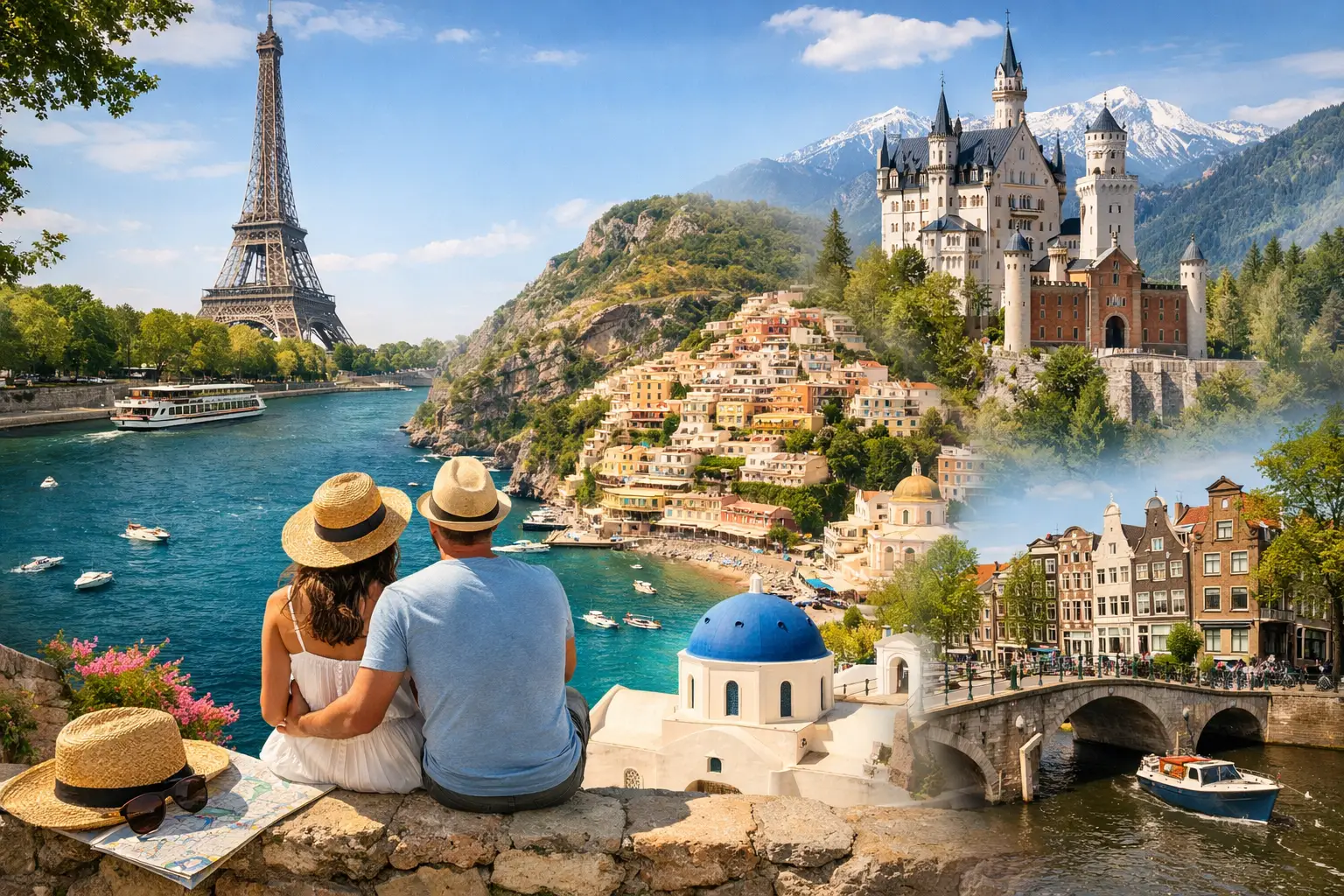
A great city break has a particular rhythm: arrive before dinner on Friday, wake somewhere worth walking on Saturday, and fly home on Sunday with one excellent meal still on your mind. The best weekend breaks in Europe are not necessarily the places with the longest list of sights. They are compact, characterful cities where a good hotel location, a little advance booking and a willingness to wander do most of the work.
For UK travellers, direct flight times matter just as much as romance. So does the airport transfer, the neighbourhood you choose and whether the main museums, food markets or waterfront are open when you are there. These 12 cities each offer a distinct sort of two-night escape, from grand cafés and gallery afternoons to coastal swims and late dinners.
The best weekend breaks in Europe for culture and atmosphere
Lisbon, Portugal
Lisbon rewards the traveller who does not try to conquer every hill. Base yourself in Chiado or Príncipe Real for handsome streets, strong restaurant choices and easy access to the old centre; Alfama is atmospheric but can feel less practical with luggage and steep cobbles. Spend Saturday riding Tram 28 early, visiting the tiles at the National Azulejo Museum and lingering over petiscos in Bairro Alto.
Leave time for Belém if it is your first visit, but book major sights in advance and avoid making it your only Lisbon experience. The more memorable version of the city is often a miradouro at sunset, a glass of vinho verde and the sound of a fado singer carrying from a small dining room.
Seville, Spain
Seville is made for a long weekend, particularly outside the fiercest heat of high summer. The old quarter is gloriously walkable, and a hotel around Santa Cruz, Alfalfa or the Cathedral puts the Alcázar, tapas bars and evening promenades within easy reach. Reserve the Royal Alcázar and Cathedral time slots before you travel, especially for a Saturday.
The city’s pleasure is in its pace. Take a late lunch, cross the river to Triana for ceramics and a more local feel, then watch dusk settle over Plaza de España. In July and August, it can be punishingly hot, so consider a cooler northern alternative unless your plan involves a pool and very late nights.
Florence, Italy
Florence is one of Europe’s most satisfying cultural weekends when you treat it as a city rather than a museum checklist. Stay near Santa Croce or Santo Spirito for a little breathing space from the busiest lanes, while remaining close enough to walk everywhere. Choose one major gallery – the Uffizi or Accademia – and pre-book it; trying to do both alongside the Duomo complex can turn a short break into a queueing exercise.
The real luxury is an unhurried evening on the Oltrarno side of the Arno, where artisan workshops, wine bars and small trattorias give the city texture after the day-trippers leave. Florence costs more than many Italian cities, but its concentration of art and beauty makes the splurge understandable.
Vienna, Austria
Vienna suits travellers who like their weekends with a little polish. It is a city of coffee houses, concert halls and imperial scale, but it is also easy to navigate by public transport. Stay within the Innere Stadt for classic grandeur, or choose Neubau for independent shops, excellent cafés and a younger feel.
Book a concert at a historic venue if music is part of the appeal, then balance it with an afternoon at the MuseumsQuartier or a walk along the Danube Canal. Vienna is particularly good in autumn and during the festive season, though hotel prices rise sharply around major events and Christmas markets.
Weekend breaks in Europe with food at the centre
Bologna, Italy
Bologna is the answer when the restaurant plan is as important as the sightseeing. Its porticoed streets make it unusually forgiving in rain or summer sun, and the historic centre is compact enough for a proper weekend on foot. Stay close to Piazza Maggiore for convenience, or in the university quarter if you want livelier evenings.
Start at the Quadrilatero market area, seek out tagliatelle al ragù rather than the spaghetti version familiar abroad, and save room for mortadella, tortellini and regional wines. A pasta-making class can be a genuinely worthwhile activity here, provided it is small and hands-on rather than a rushed demonstration. Bologna is also an excellent base for those tempted by a day trip to Modena or Parma, although the city itself deserves your full attention.
Porto, Portugal
Porto feels intimate where Lisbon feels expansive. Its hills are real, but the rewards are tiled façades, dramatic river views and cellar doors across the water in Vila Nova de Gaia. Ribeira is beautiful but busy; Cedofeita and the area around Clerigos offer a better balance of local restaurants, design-led stays and walkability.
A guided port tasting gives useful context to an often misunderstood drink, and a short Douro cruise is pleasant if you accept that it is more scenic interlude than wilderness adventure. Book dinner for Saturday night, particularly in the smaller, chef-led restaurants. Porto is brilliant for a relaxed two-night trip, but add a third night if the Douro Valley is non-negotiable.
Lyon, France
Lyon has the confidence of a serious food city without Paris’s pressure to see everything. The Presqu’île is central and elegant, while Vieux Lyon brings Renaissance lanes and easy access to the funicular up to Fourvière. Croix-Rousse is the choice for a more residential base and a gentler, village-like mood.
Make one meal a traditional bouchon experience, but do not let sausage and cream define the whole trip. Lyon’s modern bistros, markets and wine bars are the reason it appeals to repeat visitors. The city also works well in cooler months, when a slow lunch followed by a museum visit feels like exactly the right use of a Saturday.
San Sebastián, Spain
For a weekend built around pinxtos, San Sebastián is difficult to better. The old town is wonderfully central but can be noisy, so consider Gros for surfy energy and a calmer night’s sleep, or the area around La Concha for classic seaside elegance. The point is to graze rather than over-order: one or two carefully chosen bites and a drink at each bar makes for a far better evening.
Book one memorable restaurant meal if your budget allows, but leave enough space for the informal bars that define the city. A walk up Monte Igueldo delivers the broadest view of the bay, while a morning swim at La Concha changes the entire character of the trip in warmer weather.
Coastal and northern city escapes
Copenhagen, Denmark
Copenhagen is expensive, certainly, but it earns its place with design, cycling culture and an exceptionally easy-going urban rhythm. Stay in Vesterbro for restaurants and nightlife, Nørrebro for a creative local feel, or Indre By if it is your first visit and convenience wins. A canal tour is not the only way to understand the city, but it is a pleasing first-afternoon shortcut.
Spend time in Christianshavn, visit a bakery early, and book standout restaurants well before travelling. In summer, harbour swimming feels distinctly Copenhagen; in winter, candlelit wine bars and museums take over. It is best for travellers happy to pay a little more for quality rather than chase a bargain.
Tallinn, Estonia
Tallinn offers medieval drama without the crowds and prices of Europe’s biggest capitals. Its UNESCO-listed old town is compact, photogenic and ideal for a two-night wander, while Telliskivi brings converted industrial buildings, cafés and contemporary Estonian design. Stay just outside the historic core if you prefer more space and fewer souvenir shops outside the door.
The city is particularly rewarding in spring and early autumn, when you can walk the walls, explore the creative quarter and warm up in a smart restaurant without peak-season bustle. Winter has its own appeal, though short daylight hours make it better suited to travellers who enjoy cosy interiors as much as sightseeing.
Dubrovnik, Croatia
Dubrovnik can be magical for a weekend, but timing and expectations are everything. In high summer, cruise-day crowds and heat can overwhelm the old town. Visit in April, May, September or October instead, book accommodation within or just beyond the walls, and walk the city walls at opening time or late afternoon.
A short boat trip to Lokrum offers a welcome reset from the stone streets, while the cable car viewpoint gives a fine sense of the coast’s scale. Dubrovnik is less about bargain eating and more about setting: polished limestone underfoot, the Adriatic beyond the ramparts and dinner that runs well past sunset.
Valletta, Malta
Valletta is small enough to feel immediately knowable, yet layered enough to fill a weekend. Its grid of steep streets, honey-coloured buildings and grand harbour views make wandering unusually rewarding. Base yourself in Valletta for the atmosphere, or in Sliema if you want more hotels and ferry convenience.
Visit St John’s Co-Cathedral early, take the ferry across Grand Harbour to the Three Cities, and make time for a waterside lunch. Malta’s mild shoulder seasons are a particular advantage: you can often find sun, sea views and outdoor tables when much of northern Europe is still shrugging into a coat.
Before booking, listen to the Destination Unlocked podcast. It is as useful as a guidebook and as personal as a chat with your most well-travelled friend, with each 40-minute episode designed to give you the information you need for a great trip.
The most successful weekend is rarely the one that covers the most ground. Choose the city that suits the mood you want, reserve the experiences that matter, and leave a few hours deliberately unplanned. That is usually where a place begins to feel less like a break between flights and more like somewhere you will return to.