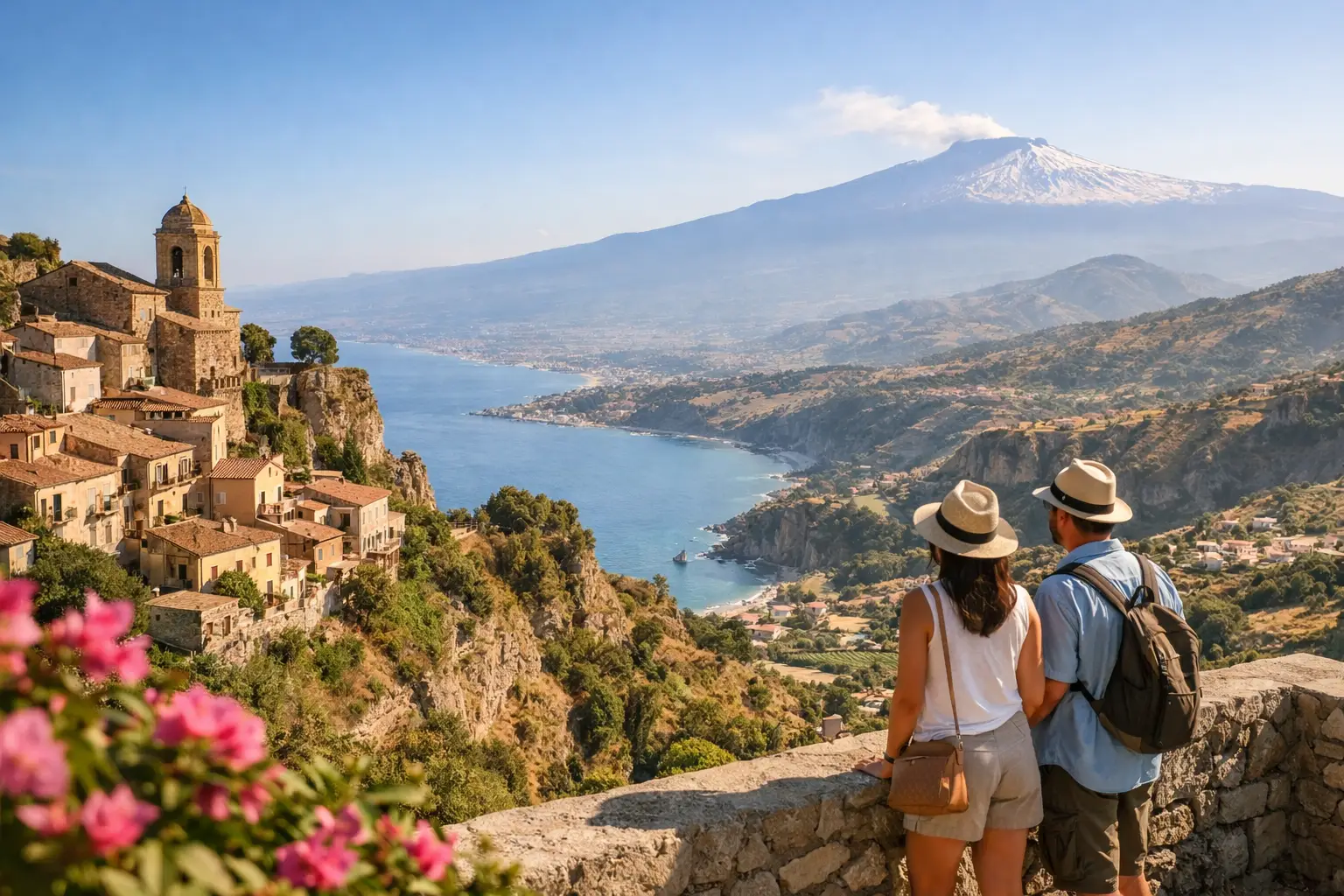
A resort pool has its place, particularly after a late flight into Catania or Palermo. But Sicily’s most memorable moments tend to happen elsewhere: over a pistachio granita in a town square, on a road curling towards Mount Etna, or at a market stall where lunch is decided by what looks best that morning. This guide to exploring Sicily beyond resorts is for travellers who want the island’s beaches and sunshine, but also its theatre, cooking, landscapes and wonderfully strong sense of place.
Sicily is large, proud and not especially interested in being hurried. Treating it as one destination risks spending a great deal of time in the car and seeing very little properly. A better holiday usually begins by choosing one or two contrasting bases, then booking the experiences that give each place its texture.
Choose a corner of Sicily, not the whole island
The most common planning error is attempting Palermo, Taormina, Syracuse, Etna and the south-east in one week. On a map, it can look plausible. In August traffic, summer heat and the reality of checking in and out, it becomes a rather expensive road trip.
For a first visit, the east is the easiest option. Fly into Catania and pair the baroque streets and sea-facing restaurants of Ortigia, Syracuse’s historic island quarter, with a few nights on Etna or around Taormina. You can add a beach stay near Avola, Marzamemi or the Vendicari reserve if swimming is central to the plan. This route suits couples, food-minded travellers and anyone who wants a manageable mix of city, coastline and countryside.
Western Sicily is more spacious and less polished in the best possible way. Palermo rewards a proper three-night stay, rather than a hurried afternoon between airport and hotel. From there, head to Trapani, Marsala or the smaller towns near the Zingaro coast. This is a compelling choice for market culture, Arab-Norman architecture, salt pans, fishing towns and dramatic coastal walks.
The south-east, around Noto, Modica, Ragusa and Scicli, makes a particularly good slow holiday. The towns are close enough to combine without constantly packing, and the countryside is dotted with masserie, converted farmhouses and small hotels with pools. It is less about ticking off landmarks and more about long dinners, chocolate in Modica and late-afternoon drives through limestone valleys.
Where to stay for a more local Sicilian holiday
The right hotel can do much of the work. Rather than booking a large resort simply because it has a beach, consider what you would like to step into before breakfast and after dinner.
In Palermo, stay within walking distance of the historic centre, ideally around the Teatro Massimo, Kalsa or the quieter streets near the waterfront. You will be able to walk to restaurants and markets, though noise is part of central-city life. For a calmer night, look towards Mondello, the beach suburb, but accept that you will be travelling into Palermo for the best evenings.
In Syracuse, Ortigia is the atmospheric choice. Its honey-coloured lanes, waterfront promenades and restaurants make it ideal for a car-free few days. Parking can be awkward, so book accommodation with clear arrangements if you are hiring a car. Staying on the mainland is often better value and easier for drivers, but it lacks that delicious feeling of wandering home through an old port at midnight.
Around Etna, choose a vineyard hotel or country estate on the northern or eastern slopes. These stays offer cooler evenings in summer, views of the volcano and a useful distance from the busiest Taormina crowds. The trade-off is that a car is almost essential. For the south-east, a restored farmhouse outside Noto or Ragusa gives you room, a pool and access to the coast, but town-centre hotels are better if you want to walk to dinner and sample local wines without assigning a driver.
Make Mount Etna an experience, not a photograph
Etna is one of Europe’s great landscapes, but it is not a theme-park excursion. Conditions change, summit access depends on volcanic activity, and the best route depends on your fitness, interests and the time of year.
A guided half-day trip from Catania or Taormina is a sensible introduction if you are short on time. You will see lava fields, craters and caves while avoiding the complications of navigating mountain roads. A small-group guide is usually more rewarding than a large coach tour, particularly if the itinerary includes a winery or a walk through woodland at a lower altitude.
For a fuller day, stay on the volcano itself and book a morning hike, followed by a relaxed vineyard lunch. This is where Etna becomes more than black rock and cable cars. The mineral-rich soil produces distinctive wines, while villages such as Linguaglossa and Randazzo offer a cooler, greener Sicily that surprises first-time visitors.
Wear proper trainers, take a layer even in high summer and resist the urge to treat the summit as mandatory. A lower-level walk can be just as interesting, especially for families or anyone uneasy with altitude. The point is to understand the scale and unpredictability of the mountain, not merely to collect the highest possible viewpoint.
Eat according to the town you are in
Sicilian food is not one fixed menu. Coastal towns excel at seafood; Catania has its own street-food rhythm; the south-east leans into ricotta, tomatoes, almonds and olive oil. A little regional curiosity goes further than hunting for an identikit restaurant with a sea view.
In Palermo, start early at Ballarò or Capo market, where stalls spill onto the pavement with citrus, herbs, fried snacks and the occasional energetic sales pitch. Try arancine, the city’s fried rice parcels, and sfincione, a thick, soft pizza-like bread topped with tomato, onion and breadcrumbs. In Catania, pasta alla Norma is the classic order: aubergine, tomato, ricotta salata and basil, named after Bellini’s opera.
In the east, give yourself permission to have granita for breakfast. It is less a dessert than a local ritual, usually eaten with a brioche. Pistachio is a fine place to begin, but almond and coffee versions are equally persuasive. Around Noto and Modica, look for almond pastries and Modica chocolate, which has a grainier, more intense texture than the usual bar.
A market tour or cookery class can be worth booking early in the trip. Beyond teaching you a recipe, it gives you confidence with ingredients and makes the rest of your restaurant choices more informed. Book one with a small group and a host who explains the season, the producers and the dishes rather than simply moving everyone briskly towards lunch.
Build beach time around the coast, not a sunbed row
Sicily’s best beaches are rarely secret, especially in July and August, but they can still feel wonderfully wild if you choose the right time and base. The reserve at Vendicari offers clear water and a protected, low-key setting, though facilities are limited. Bring water, shade and something to eat. San Vito Lo Capo has a beautiful sweep of sand and excellent swimming, but it is lively and busy in peak season.
Near Taormina, Isola Bella is visually spectacular but pebbly, compact and crowded. It works well as an early morning swim before exploring town, rather than a full-day escape. For quieter coves, consider the east coast near Aci Trezza or head south of Syracuse towards Fontane Bianche and the smaller beaches around Marzamemi.
If you are travelling in high season, book a lido for one or two days and leave the rest flexible. A reserved umbrella is useful with children or during a heatwave; it is less appealing if your ideal beach day involves a remote path, a packed lunch and no music louder than the cicadas.
Give the island enough time after dark
Sicily changes pace in the evening. Passeggiata, the gentle pre-dinner stroll, is not a tourist performance but a useful cue to slow down. In Noto, Ragusa Ibla or Ortigia, reserve dinner late, take the long route there and keep room for a final gelato or amaro.
This is also when a well-chosen base pays off. A hotel with a view is lovely, but a place from which you can walk to the square, hear a concert drifting from a church or decide on one more glass of wine without thinking about roads is often lovelier still.
For planning that feels less like reading a brochure, the Destination Unlocked podcast is as useful as a guidebook and as personal as a chat with your most well-travelled friend. Each 40-minute episode brings together the practical detail and local perspective that can make a trip feel properly yours.
Leave at least one afternoon unplanned. Sicily is at its best when a signed detour, a shaded bar or an unexpectedly good plate of pasta is allowed to change the day’s agenda.