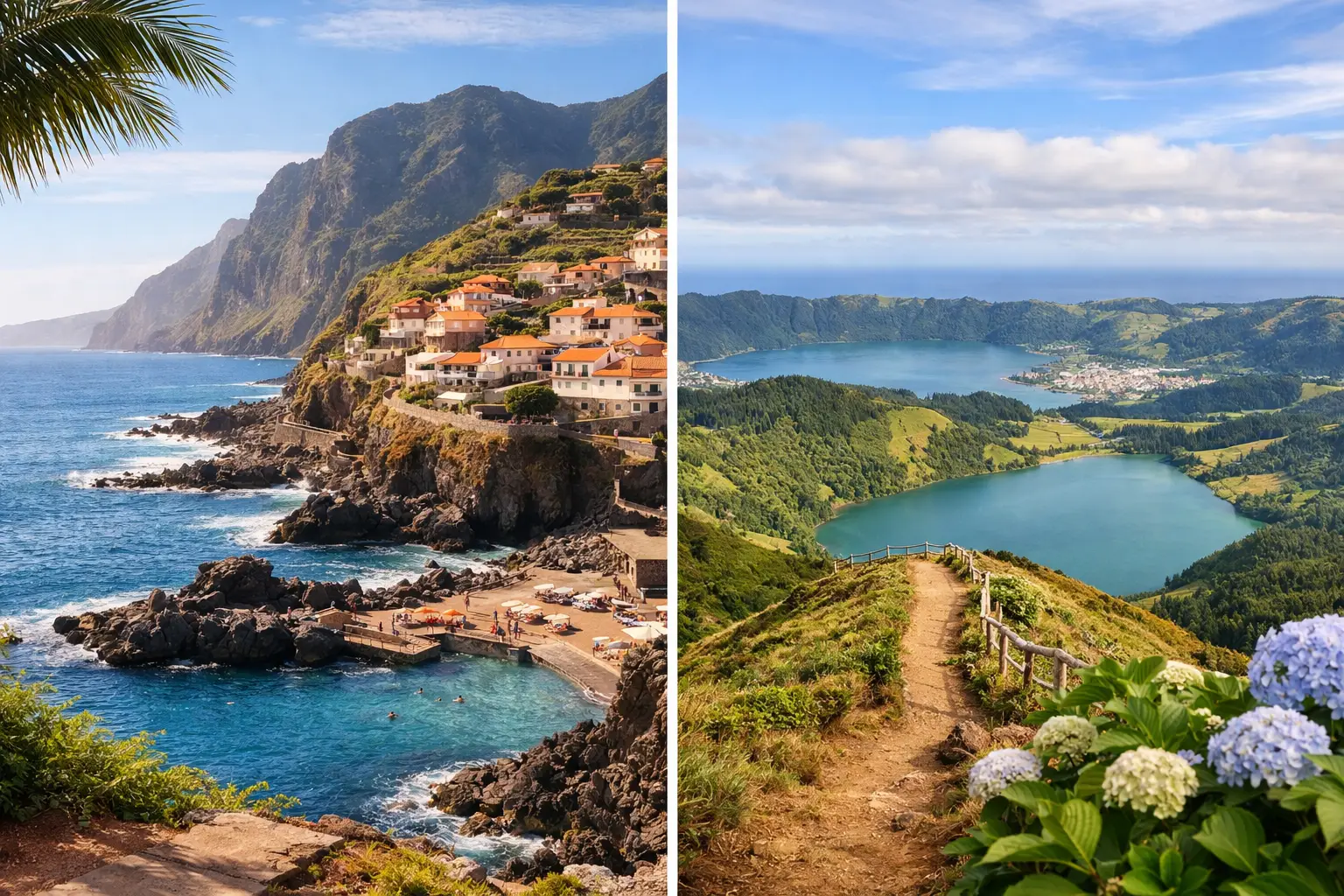
A Madeira versus Azores holiday is not really a contest between two interchangeable Portuguese island breaks. Madeira is a dramatic, polished Atlantic escape with cliff-edge roads, lush levada walks and a handsome capital. The Azores are a far-flung archipelago of volcanic lakes, hot springs, dairy farms and whale-rich seas. Choose well and either can be extraordinary. Choose on the strength of a single sunny photograph and you may book the wrong sort of island.
For most British travellers, the decision comes down to one question: do you want one easy, scenic base with excellent hotels and reliable restaurant choices, or a more elemental adventure spread across several islands? Madeira usually wins the first argument. The Azores make a persuasive case for the second.
Madeira versus Azores holiday: the essential difference
Madeira feels concentrated. Funchal is a proper city, with an old town, market, museums, wine lodges and a broad choice of places to stay, while much of the island can be reached on a day trip. Its steep terrain is part of the theatre: terraces tumble down to the Atlantic, roads thread through tunnels, and viewpoints appear with almost unreasonable regularity.
The Azores are less a single destination than nine distinct islands, scattered far out in the Atlantic. São Miguel is the natural first choice, combining the best range of hotels, restaurants and excursions with crater lakes, geothermal pools and green pastures. But Pico, Terceira, Faial and the smaller islands all have their own character. That variety is the point, although it demands more planning.
Madeira is the better fit for a first-time island holiday where you would like culture, comfort and big scenery without constantly changing plans. The Azores suit travellers who enjoy weather watching, road trips and the sense that the day might take an interesting turn.
Choose Madeira for a stylish base and spectacular walking
Madeira’s appeal is its confident mix of nature and ease. You can spend the morning on a high ridge above the clouds, return to Funchal for lunch, then take a cable car to Monte or settle in with a glass of Madeira wine by the harbour. There are very few wasted days here, particularly if you hire a car or book guided excursions.
The island’s famous levadas – irrigation channels with paths alongside them – make walking unusually accessible. Routes range from gentle woodland strolls to serious hikes on exposed mountain trails. The 25 Fontes area, the dramatic Pico do Arieiro to Pico Ruivo route and the misty laurel forest are among the big draws, though popular paths can be busy and closures occasionally follow bad weather. Check conditions rather than assuming a route shown on social media is open.
Funchal is also a strong base for travellers who do not want to drive every day. It has everything from simple guesthouses to resort hotels with pools and sea views, plus enough restaurants for a week or more. Stay in the old town for atmosphere, along the Lido for resort convenience, or in quieter Câmara de Lobos if you prefer a fishing-village feel within easy reach of the capital.
Madeira is not, however, a classic beach destination. There are lidos, hotel pools and a handful of pebble or dark-sand beaches, but the island is better for swimming with a view than long, lazy days on golden sand. Porto Santo, Madeira’s smaller neighbour, is the exception, with a long sandy beach and a much slower rhythm. It works well as an add-on for travellers with time to spare.
Choose the Azores for volcanic landscapes and wild Atlantic days
The Azores have a quieter, greener and more remote mood. On São Miguel, you can stand above the twin lakes of Sete Cidades in the morning, eat a geothermal-cooked stew in Furnas at lunch, and soak in iron-rich thermal water by late afternoon. It is a holiday built around landscapes that feel active rather than merely scenic.
Whale and dolphin watching is one of the archipelago’s standout experiences, especially from São Miguel, Pico and Faial. Sightings are never guaranteed, which is exactly how responsible wildlife encounters should be, but the Azores are among Europe’s most compelling places to get out on the water. Pick an operator that treats distance, boat speed and animal welfare seriously, and leave room in your itinerary to reschedule if the sea is rough.
São Miguel offers the easiest introduction, with Ponta Delgada providing a useful base and a growing selection of smart hotels, rural stays and good restaurants. Rent a car if you can: the island’s viewpoints, tea plantations, waterfalls and hot springs reward independent exploring. Roads are generally manageable, but fog can arrive swiftly in the highlands and the weather has little interest in your carefully planned picnic.
For a multi-island trip, Pico is the obvious choice for vineyards, volcanic drama and climbing Portugal’s highest mountain. Faial has Horta’s famous marina and a windswept volcanic peninsula at Capelinhos. Terceira adds colourful historic streets and distinctive local festivals. Inter-island flights can make this wonderfully varied, but do not try to collect islands like passport stamps. Two islands in a week is plenty; one island can be even better.
Weather, season and sea conditions
Both destinations offer mild temperatures year-round, but neither promises wall-to-wall Mediterranean sunshine. Madeira is generally warmer and drier, particularly around Funchal on the south coast. Its microclimates are real: one side of the island can be bright while another is wrapped in cloud, which makes flexible days a sensible approach.
The Azores are wetter, more changeable and cooler, especially outside summer. That is why they are so intensely green. From May to September, you have the strongest chance of pleasant walking weather and calmer seas, with July and August the busiest months. Spring brings hydrangeas and fresh landscapes, while autumn can be rewarding for those happy to pack waterproofs alongside swimwear.
Madeira is a very good choice for winter sun, festive breaks and a reliable dose of warmth from the UK. The Azores are better treated as a nature-first trip: a little rain is not a flaw in the holiday, but part of the atmosphere. If your priority is a sunbed and effortless sea swimming, Madeira’s resort hotels are more dependable, though the Canary Islands may suit that brief better than either Portuguese destination.
Food, hotels and the shape of your days
Madeira has the more cosmopolitan dining scene. Expect black scabbardfish, espetada beef skewers, bolo do caco bread and poncha, along with polished modern Portuguese cooking in Funchal. It is easy to alternate sightseeing, walks and long dinners without much logistical effort.
Azorean food is more rural and regional. Furnas stew, local cheeses, pineapple, fresh fish and excellent beef are part of the pleasure, often served without fuss. There are good restaurants in Ponta Delgada and across the larger islands, but the experience is less about chasing a new opening every night and more about eating close to the landscape that produced the meal.
For hotels, Madeira has more choice at every level, particularly for couples seeking a sea-view stay, a spa or an adults-oriented retreat. The Azores shine in converted manor houses, farm stays, boutique properties and places where the view of a crater lake or grazing cattle does much of the decorative work. Book early for summer, Easter and Christmas in Madeira, and for peak whale-watching months in the Azores.
Which island holiday should you book?
Book Madeira if you want a week that mixes handsome hotels, dramatic walks, a city base, good food and straightforward day trips. It is particularly strong for couples, first visits to Portuguese islands, winter escapes and travellers who prefer not to gamble too heavily on the weather.
Book the Azores if volcanic scenery, hot springs, whale watching and a wilder sense of place matter more than urban buzz. It is ideal for curious road trippers, walkers and repeat visitors to Portugal looking for somewhere less polished and more surprising.
If you are still torn, listen to the Destination Unlocked podcast before booking. It is as useful as a guidebook and as personal as a chat with your most well-travelled friend, with each 40-minute episode giving you the practical detail needed for a great trip.
Whichever you choose, resist the temptation to fill every hour. Madeira’s mountains and the Azores’ weather both reward a little slack in the plan – time for a viewpoint cleared by the clouds, a hot pool after rain, or an unhurried lunch that becomes the memory you bring home.