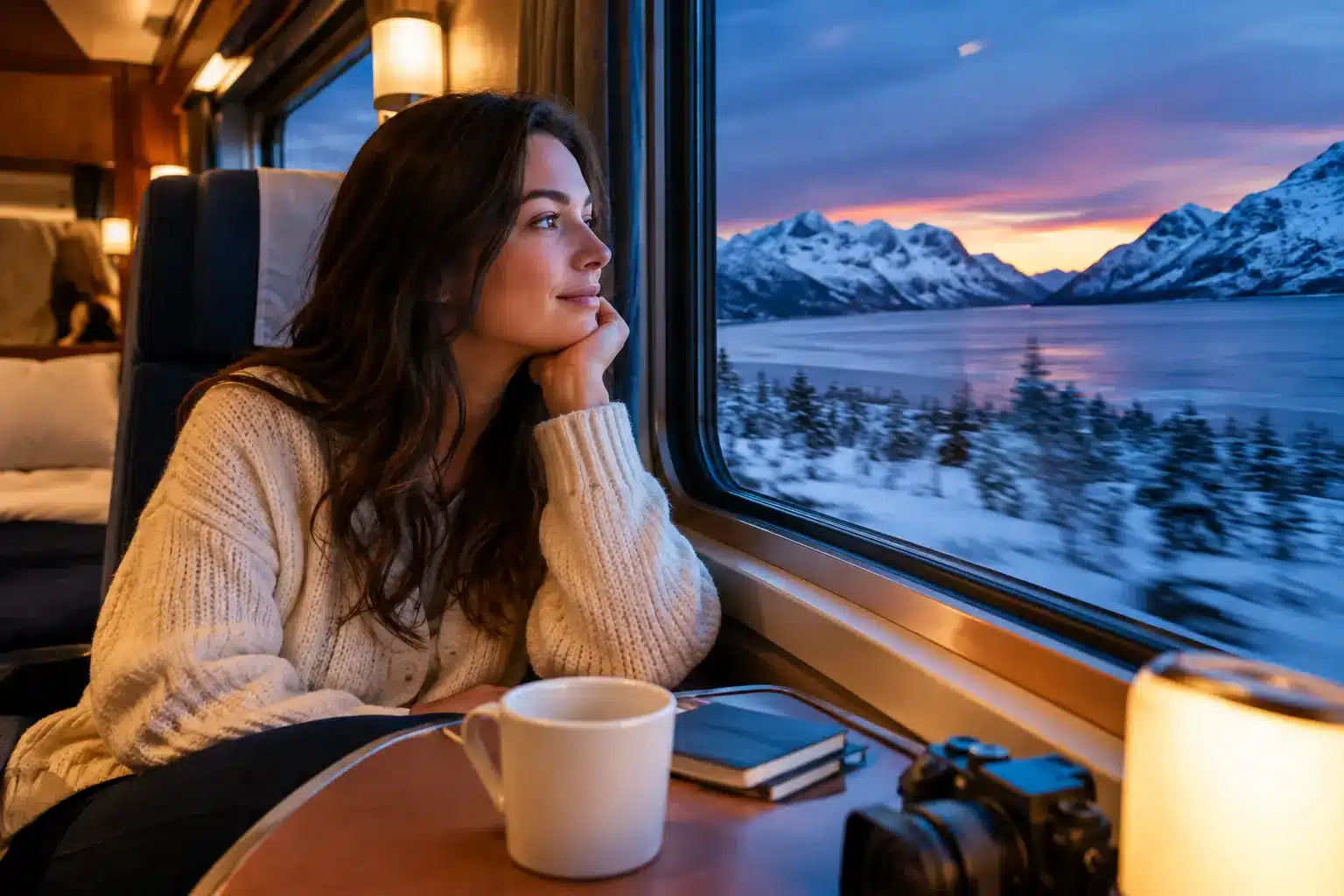
At 9pm, a city platform feels very different from an airport gate. There is time for a drink, a book and the pleasing prospect of waking up somewhere else. That is the appeal behind the night train holiday trend: it turns a necessary transfer into the opening night of the trip.
For British travellers, the renewed interest in sleepers is not simply about swapping flying for rail. It is about arriving in Vienna for breakfast rather than sacrificing a holiday day to airports, or making a long weekend in Berlin feel like an adventure from the moment the front door closes. The experience has its compromises, certainly, but for the right itinerary a night train can be one of the most rewarding bookings you make.
Why the night train holiday trend feels different
Travel has become more considered. Many of us are happy to spend a little longer getting somewhere if the journey has character and the destination earns more than a hurried 48 hours. Sleeper trains answer that mood neatly. You board in one city, settle into a compact cabin, and wake up with a new landscape outside the window.
There is also a practical logic. A night on the train can replace a hotel night, particularly on an itinerary built around expensive European capitals. The calculation is not always favourable – a private cabin can cost as much as a good central hotel, especially at weekends and during school holidays – but it is worth pricing the whole journey rather than treating the rail fare in isolation.
Then there is the simple pleasure of a proper arrival. You step into a city centre in the morning, rather than joining a queue for baggage and then calculating the transfer from an out-of-town airport. For travellers who like to start with a coffee in a local square, an early museum visit or a guided walking tour, that matters.
The best sleeper journeys for a European holiday
The most useful route depends on the holiday you actually want, not the romance of the train itself. For travellers departing from Britain, a daytime rail connection via London and the Channel Tunnel is usually part of the plan. This makes a one-night stop in Paris or Brussels an intelligent addition rather than an inconvenience.
Vienna for culture after dark
Vienna is perhaps the classic night-train city. It rewards an unhurried stay: grand cafés in the morning, the Kunsthistorisches Museum or Belvedere by day, and a concert, wine tavern or excellent dinner in the evening. A sleeper connection from western Europe can make an Austrian city break feel far more joined-up than a flight itinerary.
Book a hotel in the Innere Stadt if this is a first visit and you want to walk to major sights, though Neubau and Leopoldstadt often offer more space, stronger restaurant choices and a less formal sense of the city. Plan at least three nights. Vienna has the rare ability to make a carefully planned weekend feel restorative rather than rushed.
Berlin for a long weekend with range
Berlin suits the night train holiday trend because it does not demand a single version of itself. One traveller will spend the weekend in museum collections and historic neighbourhoods; another will book a food tour, seek out contemporary galleries and stay out late in Kreuzberg. An overnight rail journey enhances the feeling that Berlin is a proper break, not a whistle-stop city ticked off between flights.
Choose Mitte for first-time convenience, Prenzlauer Berg for cafés and a residential rhythm, or Kreuzberg for bars, independent shops and easy access to the city’s more creative side. A guided introduction on your first morning can be money well spent, especially if you want the history to make sense before you roam independently.
Prague and Budapest for a two-city rail break
Central Europe is where rail itineraries become especially compelling. Prague and Budapest are separated by an enjoyable daytime train journey, and both have the sort of evening life that makes an overnight arrival or departure feel fitting rather than disruptive. Think river views, old-town walks after the day crowds have thinned, thermal baths and a table booked somewhere local.
The trade-off is that these cities deserve time. Trying to squeeze both into a three-night escape can turn the railway into a packing exercise. Give each at least two full days, or pick one and add a smaller nearby city instead. The most memorable rail holidays leave room for an unplanned afternoon.
The Highlands for a sleeper closer to home
You do not have to cross Europe to try sleeper travel. An overnight journey between London and Scotland can be a striking way to begin a Highland or island-bound holiday, particularly when an early onward connection, car hire collection or organised day trip is waiting the next morning.
Here, the case is less about replacing an airport and more about gaining time. A cabin means you can leave after work and be ready for lochs, distilleries, coastal walks or a few days in Edinburgh and the Highlands without losing a day in transit. It is a smart option for travellers looking for a lower-fuss British break with a touch of ceremony.
How to book a sleeper without losing the romance
The key is to treat the train as accommodation with wheels. The cheapest seat may be acceptable for a short overnight journey if you sleep easily, but it is rarely the route to a restful first day. A couchette offers a berth in a shared compartment, while a private sleeper cabin gives greater privacy, storage and usually a more comfortable night. Couples and friends should compare the price of a private compartment with two or more berths before deciding.
Book early if your dates are fixed. Sleeper capacity is limited, private cabins go first, and Friday and Sunday nights are predictably popular. It is also wise to allow a generous connection when joining an overnight service after a train from Britain. Rail is generally straightforward, but a missed sleeper is much more consequential than a delayed local service.
Check what your fare includes. Some cabins come with bedding, breakfast or access to station lounges; others are simpler than their glossy photographs suggest. Look at the compartment layout, whether there is a washbasin or private bathroom, and the likely number of people sharing. For a first sleeper trip, paying a little more for comfort can be the difference between a charming story and a day spent hunting for coffee.
Pack for the cabin, not just the destination. Keep your toothbrush, sleepwear, phone charger, medication and a clean top in a small bag you can reach easily. Luggage space is limited, corridors can be narrow and nobody wants to unpack a suitcase at midnight. Earplugs and an eye mask are sensible too: trains are wonderfully atmospheric, but they are not silent hotels.
Build a holiday around the arrival
The most successful sleeper itineraries begin gently. Do not book a timed museum entry for 9am or a demanding cycle tour before lunch. Even a comfortable cabin can mean interrupted sleep, and arrival times can change. Instead, choose a hotel that will hold your bags, identify a good breakfast nearby, and book an activity with a little flexibility for later in the day.
This is where staying centrally pays dividends. A hotel within walking distance of the main station or a well-connected tram line gives you somewhere to freshen up and reset before you start exploring. After that, reserve the experiences that benefit from local knowledge: a small-group food tour, an architectural walk, a concert in a historic venue, or a guided visit that puts a famous landmark in context.
For the kind of detail that turns a rail itinerary into a well-chosen holiday, the Destination Unlocked podcast is as useful as a guidebook and as personal as a chat with your most well-travelled friend. Each 40-minute episode gives you the information you need for a great trip, including the local angles that are easy to miss when you are booking from home.
Is a night train right for your next break?
It depends on your priorities. If your only aim is the lowest possible fare or the shortest door-to-door journey, flying may still win. Families with very young children may prefer a daytime train, while light sleepers should be honest about whether a moving cabin will leave them refreshed. Routes, timetables and rolling stock also vary, so the experience is not identical from one operator to another.
But if you value a more leisurely rhythm, want to reduce the dead time around a city break, or simply fancy waking up in a place you have been looking forward to, a sleeper is worth considering. Choose a destination that deserves a few days, reserve the cabin you will actually enjoy sleeping in, and leave the first morning open enough for the journey to land properly.