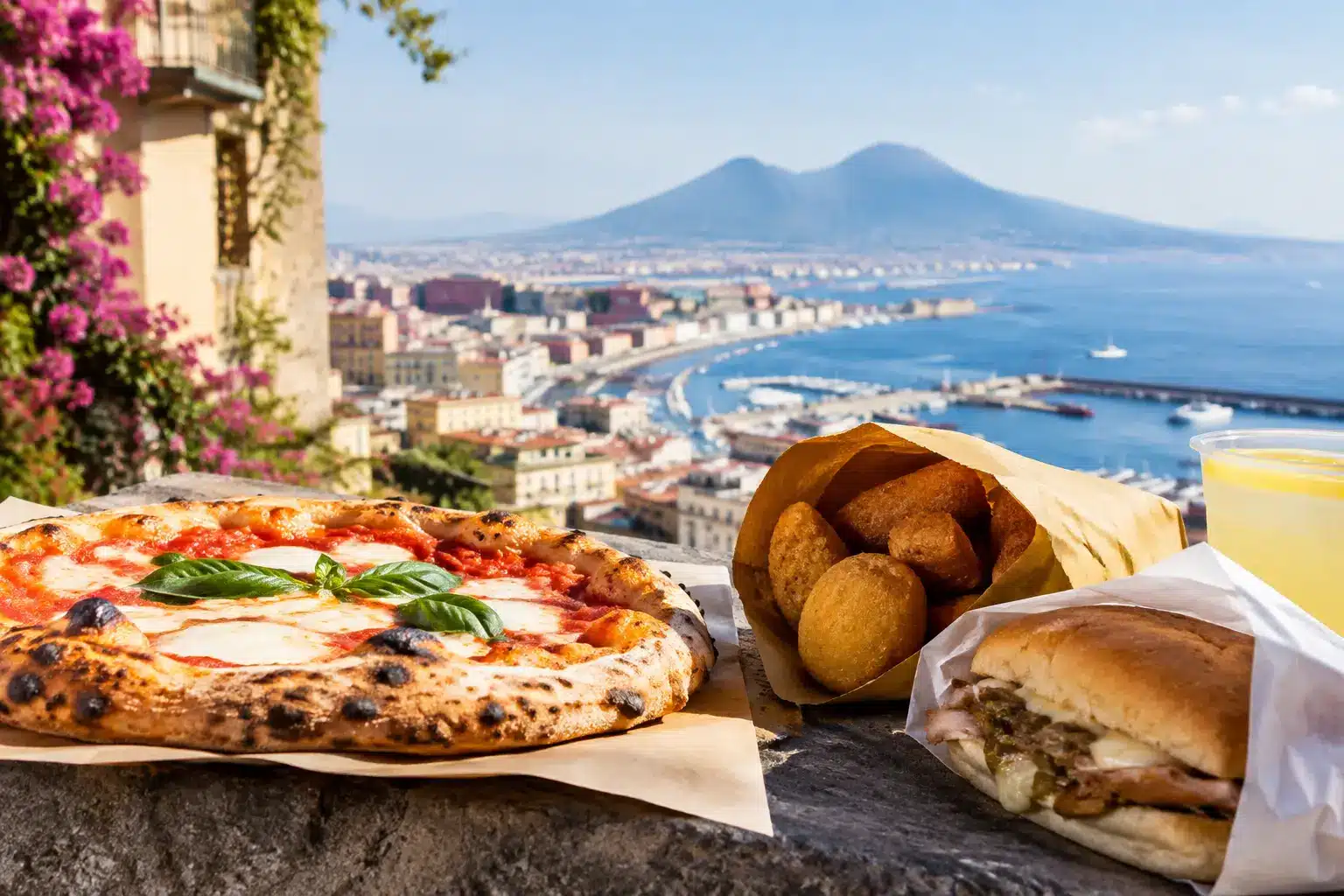
Naples is one of those cities where lunch can begin with the smell of frying oil on a side street and end with a still-warm pastry eaten beside a bar counter. This Naples street food guide is for travellers who want to eat brilliantly between museums, waterfront walks and a late-afternoon espresso – without turning every meal into a formal sitting.
The city’s best quick bites are not novelty snacks designed for visitors. They are part of daily life: inexpensive, deeply regional and often made by specialists who have been doing one thing exceptionally well for generations. Arrive hungry, accept that you may get a little flour on your coat, and leave room for dessert.
Naples street food guide: what to eat first
If you only have a day in Naples, begin with pizza a portafoglio. This is a small, soft pizza folded into quarters like a wallet, hence the name, and eaten standing up. It is less theatrical than the famous sit-down Neapolitan pizza, but no less revealing: good dough, bright tomato, a light hand with cheese and a blistered edge. It makes an ideal first lunch after arriving at Napoli Centrale or before setting off through the historic centre.
Pizza fritta is its more indulgent cousin. Dough is deep-fried rather than baked, then filled with combinations such as ricotta, cicoli – small pieces of pork – tomato and provola. The result is hot, filling and gloriously untidy. It is best shared if dinner is part of the plan, though that advice is frequently ignored for understandable reasons.
Then there is the cuoppo: a paper cone full of fried seafood, vegetables or a mixture of both. A classic mare version may include tiny fish, squid and prawns; a terra cone leans towards croquettes, arancini-like rice balls, fried pasta and vegetables. Choose a busy counter where each batch is coming out fresh. Fried food is at its best in the first few minutes, not after a leisurely lap of the neighbourhood.
For something smaller, look for frittatina di pasta. These compact discs of pasta, béchamel, peas, minced meat and cheese are breaded and fried. They sound like the contents of a comforting Sunday lunch repurposed for the street, which is more or less the point. A crocchè, Naples’s potato croquette, is another dependable choice, especially alongside an aperitivo.
Save space for Naples’s sweet side
Sfogliatella is the pastry to plan around. The riccia has a crisp, layered shell that shatters delicately, while the frolla is smoother and shortcrust-like. Both are usually filled with sweetened ricotta, semolina and citrus. Order one with a coffee in the morning or mid-afternoon, preferably fresh enough that the centre is still gently warm.
Babà is softer, richer and soaked in rum syrup. It can be wonderfully light when made well, but it is not a pastry to eat while trying to preserve a pristine white shirt. A small babà is usually enough after a substantial savoury lunch; a large one can easily become the afternoon’s main event.
You may also see graffa, a sugar-dusted fried doughnut, and fiocco di neve, a soft bun filled with milk cream. The latter is more bakery treat than traditional pavement snack, but it earns its place on a food-focused itinerary. Naples has never been overly concerned with rigid boundaries between breakfast, dessert and a perfectly reasonable 11am treat.
The coffee stop that makes sense
A quick coffee is part of the rhythm, not an afterthought. At a traditional bar, order at the counter and drink your espresso standing up. It is fast, inexpensive and gives you a useful pause between bites. If you prefer something sweeter, ask for caffè alla nocciola, an espresso-based hazelnut coffee that sits somewhere between a coffee and a dessert.
Where to eat by neighbourhood
The historic centre is the easiest place to graze. Around Spaccanapoli and Via dei Tribunali, bakeries, pizzerias and fry shops sit within a few minutes’ walk of churches, workshops and tiny lanes. It is busy, especially around lunch and early evening, but that energy is part of the appeal. Use the queues intelligently: a line of local customers at a focused, no-frills counter is generally more persuasive than an elaborate menu with photographs of everything.
Forcella, just east of the central lanes, has long been associated with excellent pizza and fried food. It is worth considering if you are staying near the station or heading towards the old town, although the pleasure lies in following your appetite rather than racing between internet-famous addresses.
The Quartieri Spagnoli offers another strong street-food circuit, particularly convenient if your hotel is near Toledo, Chiaia or the port. The streets are tighter and louder, with scooters, laundry and conversation providing the soundtrack. It is a good area for an early-evening wander before a proper dinner, but it can feel overwhelming at peak times. Families or travellers seeking quieter streets may prefer to eat here by day and return to their hotel before the late-night bustle gathers pace.
Down by the seafront, the focus shifts towards views and longer meals. There are still snack options, but the historic centre is usually the better choice for a concentrated street-food afternoon. If food is central to your trip, stay within walking distance of the old town, Toledo or the station rather than choosing a distant hotel solely for a lower nightly rate. Naples rewards the ability to pop out for one more pastry.
How to order without overthinking it
Street food in Naples is refreshingly direct. Pointing is acceptable, a few Italian words are appreciated, and cash remains useful at smaller counters, although card payments are increasingly common. Ask for one item at a time if you are unsure: a hot frittatina followed by a sfogliatella from a bakery ten minutes later is more enjoyable than carrying a bag of cooling fried food around all afternoon.
Timing matters. Bakeries are strongest in the morning, while fried snacks come into their own from late morning onwards and again in the early evening. A popular counter may sell out of a particular item, which is usually a good sign rather than a disaster. Naples is not a city for a rigid tasting checklist. The best find may be the thing you notice being carried past you in a paper bag.
As with any busy city, use common sense around crowds and belongings, particularly near the station and on packed pedestrian streets. For food, favour places with a visible turnover and food cooked to order. There is no need to treat every humble counter with suspicion: some of Naples’s most memorable bites are served from the smallest spaces.
Make room in your itinerary
A food walk can be an excellent first-day activity, especially if you want context on local ingredients, neighbourhood history and the dishes that are genuinely worth ordering. It is also useful for solo travellers who would rather taste several things without committing to a full portion of each. On a short city break, book one guided food experience early, then leave the rest of your meals open for repeat visits and spontaneous stops.
For a companion while planning, the Destination Unlocked podcast is as useful as a guidebook and as personal as a chat with your most well-travelled friend. Each 40-minute episode brings together the practical details and local perspective that make a great trip feel less like a checklist.
Naples asks you to eat with curiosity rather than ceremony. Start with a folded pizza, follow the scent of fresh pastry, and allow enough time between plans for the counter you had not expected to find.