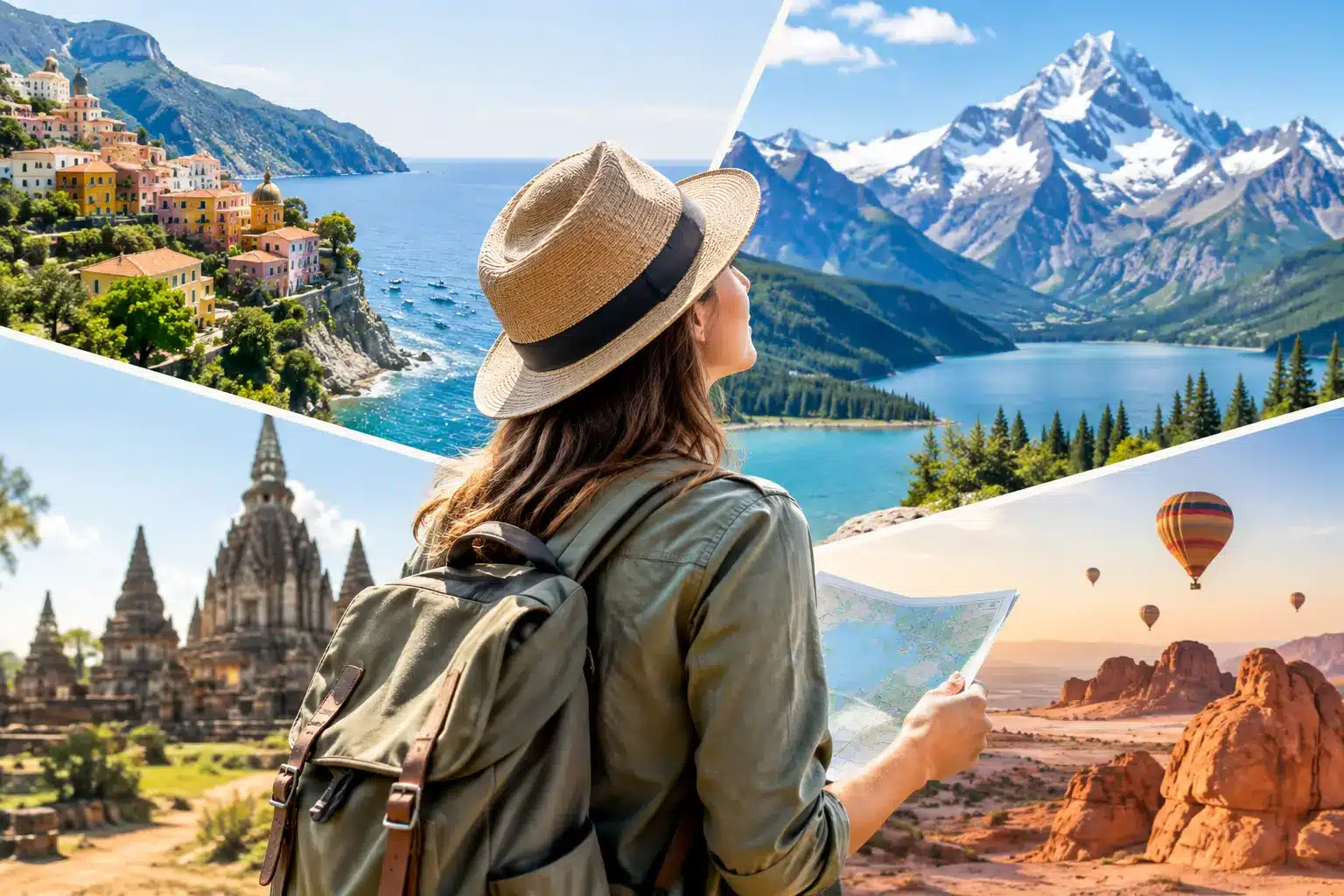
A curious traveller does not necessarily need to go further. They need to go somewhere that rewards looking twice. So, which destinations suit curious travellers? Usually, they are places where a morning market, a slightly eccentric museum and one well-chosen dinner can tell you more than a tick-list of headline sights ever could.
The right choice depends on what kind of curiosity is driving the trip. Some travellers want layers of history and street life within a long weekend. Others want landscapes that make them feel agreeably small. Then there are those who will happily cross an ocean for a food culture they have only read about. The common thread is a destination with texture: a place that offers more once you step beyond its most photographed corner.
Which destinations suit curious travellers best?
The best destinations for curious travellers tend to have three things in common: a strong local identity, enough ease to explore independently, and experiences that turn a booking into a story. They are not always obscure. A familiar city can be full of surprises when you stay in the right neighbourhood and book an activity led by someone who knows its workings.
For a short break, look for compact cities with distinct quarters, good public transport and restaurants worth planning around. For a longer holiday, choose a country or region where landscapes, history and daily life change noticeably as you move about. A trip that begins with a boutique hotel in a historic centre and ends in a rural guesthouse often delivers more perspective than staying put.
There is a practical point here, too. Curiosity is easier to indulge when the logistics are kind. An ambitious itinerary with three internal flights may look thrilling on paper, but can leave little room for the accidental pleasures: the gallery recommended by a bookseller, the train journey that proves more memorable than the arrival, the extra night you wish you had reserved.
Palermo for history, food and a little glorious disorder
Palermo is for travellers who like their cities vivid, generous and faintly unruly. Sicily’s capital has Norman palaces, Arab-influenced architecture, Baroque churches and markets where the day still announces itself at full volume. It is not polished in the manner of Florence, and that is part of its appeal.
Base yourself near the historic centre, where walking back to your hotel becomes an evening activity in its own right. The Ballarò and Capo markets are compelling, though a guided street-food tour can add context to the arancine, panelle and sfincione stalls. Book a visit to the Palazzo dei Normanni and its Palatine Chapel early, then leave time for the mosaics at Monreale, just outside the city.
Palermo suits a curious traveller who enjoys contrast. One hour might be spent in a chapel glittering with gold; the next, eating something hot and fried from a paper bag. It can feel intense in high summer, so spring and early autumn are often better for exploring on foot and finding a rooftop table without the fiercest heat.
Tbilisi for travellers who follow their appetite
Tbilisi has the particular charm of a city that refuses to fit a neat category. Georgia sits at a meeting point of Europe and Asia, and its capital shows that complexity in its food, architecture and social life. Wooden balconies lean over old lanes, Soviet modernism appears around an unexpected corner, and the sulphur baths remain a very good reason to put an afternoon aside.
For a first stay, the Old Town is atmospheric and close to key sights, while Vera and the streets around Rustaveli offer a more contemporary base with excellent cafés and wine bars. A private walking tour on your first morning is worthwhile here, not because Tbilisi is hard to navigate, but because the best details are easy to miss: a hidden courtyard, an independent gallery, a bakery with a single speciality.
Do not treat the city merely as a stop before the mountains. Tbilisi earns at least three nights, especially if you book a Georgian cooking class or a wine tasting focused on qvevri wines. Then consider a day trip to Kakheti, where the vineyard landscapes make the table feel even more central to Georgian life.
Oaxaca for craft, colour and food with a point of view
Oaxaca is a strong choice for travellers whose holiday planning begins with restaurants, markets and local makers. The city is known for its moles, mezcal and corn-based cooking, but its appeal runs deeper than a menu. Zapotec and Mixtec traditions shape the region’s art, textiles and festivals, while the colonial centre provides an easy, walkable base.
Stay near the Zócalo if you want to be close to the action, or in Jalatlaco for colourful streets and a quieter pace after dark. Reserve a market and food tour early in your stay. It is one of the best ways to understand ingredients that may be unfamiliar and to decide what you would like to order again later in the week.
The wider Oaxaca valley is where a curious itinerary becomes richer. Monte Albán offers the scale and setting of a major archaeological site, while village visits can introduce weaving, black pottery or alebrije carving. Choose these experiences carefully. The best are respectful of the maker’s time and expertise, and do not turn a working community into a backdrop for photographs.
Oaxaca asks for a little more planning than a European city break, particularly around transport and the best areas to stay. In return, it offers the kind of holiday where a single meal can send you home wanting to learn more.
Kyoto for patience, ritual and small discoveries
Kyoto rewards a slower form of curiosity. It has the famous temples, of course, but its real pleasure lies in noticing how much care is contained in ordinary things: a garden composition, a seasonal sweet, the arrangement of a shop window, the proper way to approach a bowl of tea.
The trade-off is popularity. Areas such as Gion and Arashiyama can be busy, particularly in cherry blossom and autumn foliage seasons. Book popular sites, tea ceremonies and restaurant tables in advance, then shape the rest of the day around quieter neighbourhoods. Early starts make a considerable difference.
Consider staying in Higashiyama for atmospheric lanes and access to eastern temples, or near Kyoto Station for convenience if you are making day trips. A guided cycling tour or small-group food walk can help connect districts that might otherwise feel separate. For a more restorative stay, reserve one night in a ryokan with dinner included. It costs more than a standard hotel, but it is one of those bookings that changes the tempo of the whole trip.
The curiosity test before you book
A destination is not automatically right because it is unusual, and there is no prize for choosing somewhere difficult. Before booking flights and accommodation, ask a more useful question: what do I hope to understand there?
If the answer is food, choose a place where markets, cooking classes and regional restaurants are part of daily life rather than visitor theatre. If it is history, look for a city where the past is still visible in neighbourhoods, not only behind museum glass. If it is nature, avoid treating a national park as a box to tick and allow time for a local guide, a quieter trail or a stay close enough to hear the landscape after the day visitors have gone.
It is also wise to book the anchor experiences first. A well-located hotel, an excellent food tour, a day with a knowledgeable guide or a special train journey can give a trip its shape. Leave the remaining time deliberately open. Curiosity needs a plan, but it also needs somewhere to wander.
For destination-specific ideas, the Destination Unlocked podcast is as useful as a guidebook and as personal as a chat with your most well-travelled friend. Each 40-minute episode brings together the details and local angles that can turn an appealing place into a genuinely great trip.
The most satisfying holiday is rarely the one where every hour has been accounted for. Choose a destination that makes you want to ask better questions, book the experiences that provide a way in, and leave enough space for the answer to surprise you.