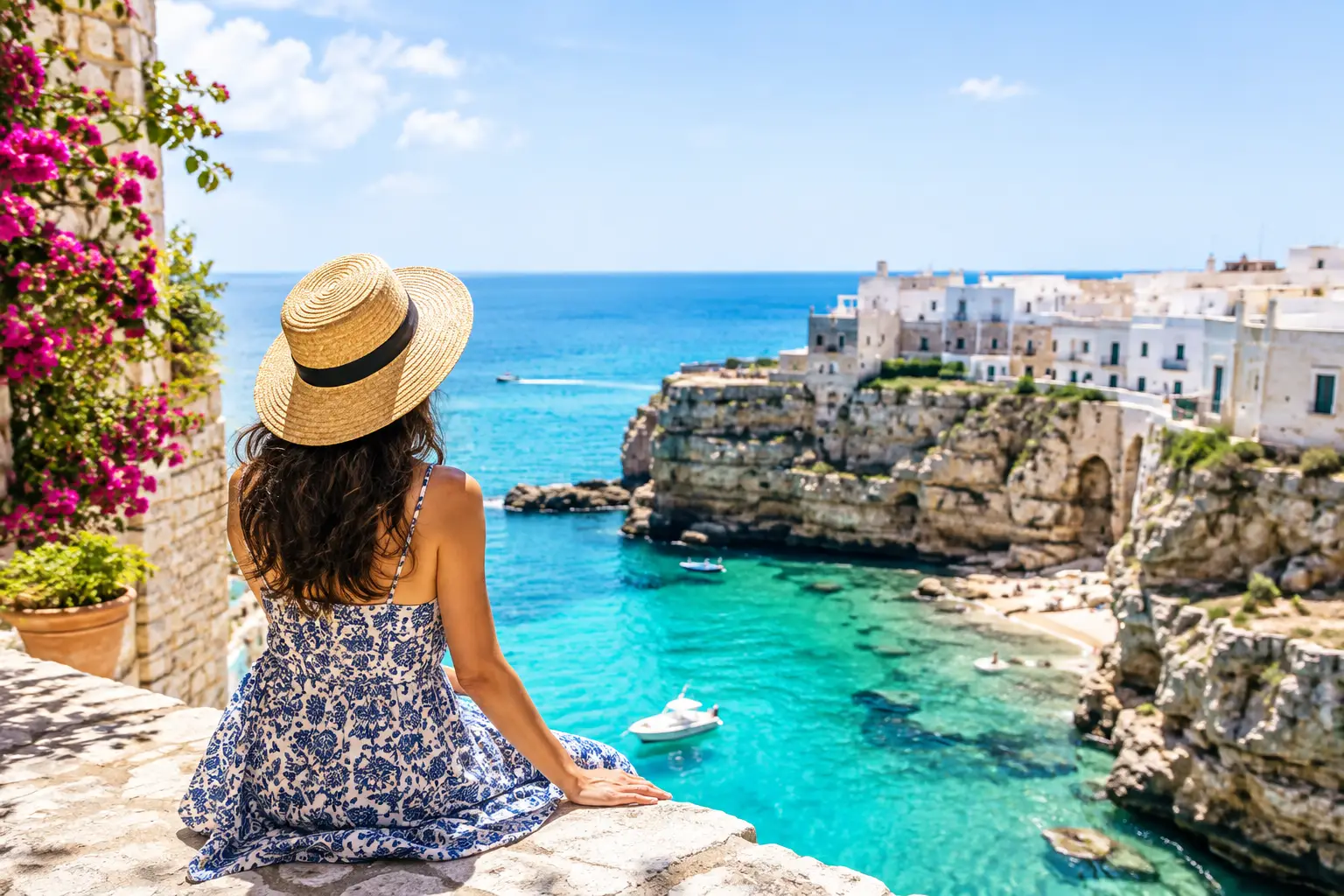
Puglia has a habit of making every month look tempting. April brings wild flowers around the trulli, July promises long days in the Adriatic, and October means olive oil, wine and warm stone towns without the queues. Deciding when to visit Puglia comes down to what you want most from the heel of Italy: serious beach time, baroque city breaks, food-led wandering, or a quieter road trip through villages that still feel gloriously lived-in.
For most travellers, May, June, September and early October offer the best balance. The weather is reliably pleasant, hotels are less pressured than in high summer, and you can move between Lecce, Ostuni, Alberobello and the coast without treating every car park as a competitive sport. But each season gives Puglia a distinctly different character.
When to visit Puglia for the best all-round trip
Late May to late June and September to early October are Puglia’s sweet spots. Days are generally warm enough for the beach, evenings invite long dinners outside, and the countryside looks more generous than it does at the height of summer. This is the window for travellers who want to combine a few nights in a masseria with swimming, town-hopping and proper meals rather than choosing one at the expense of the others.
May is especially good for a first visit. Fields are green, poppies and roadside flowers soften the landscape, and popular bases such as Polignano a Mare and Monopoli are lively without being overwhelmed. Sea temperatures can still be brisk early in the month, so think of swimming as refreshing rather than languid. By June, the water has warmed, beach clubs are in full rhythm and the long evenings make coastal stays feel wonderfully easy.
September is arguably the strongest answer if your dates are flexible. The sea holds its summer warmth, daytime heat is usually more manageable than in August, and many Italians have returned to work and school. You will still need to book sought-after hotels and restaurants, particularly at weekends, but the pace changes. A table overlooking the sea becomes plausible again.
Early October suits travellers who care more about culture, food and the pleasure of driving through the Valle d’Itria than guaranteed beach weather. It can be warm and bright, but rain becomes more likely and some seasonal beach businesses begin to close. Choose a town or countryside hotel with an excellent restaurant, a characterful room and easy access to Lecce, Martina Franca or Cisternino, rather than relying on a full programme of lidos.
Summer in Puglia: best for beaches, hardest for spontaneity
July and August are for travellers who want Puglia at full volume. The Salento beaches are at their most seductive, from the clear Adriatic coves near Otranto to the Ionian sands around Gallipoli and Porto Cesareo. The water is warm, beach clubs are buzzing and evening life spills into every piazza.
There is a trade-off. Temperatures can regularly rise above 30C, especially inland, and August brings the Ferragosto holiday period around 15 August. Italians holiday in force, roads slow down, accommodation prices peak and prized restaurant bookings disappear well before you arrive. The most photographed spots, including Polignano a Mare, can feel more like a summer event than a quiet southern Italian escape.
That does not mean avoiding high summer altogether. It means booking deliberately. Stay several nights rather than attempting a rapid loop, reserve a hotel with a pool or immediate beach access, and plan sightseeing for early morning or after sunset. A masseria in the countryside can be a clever base: you gain shade, space and a slower start, while the coast remains within reach for an afternoon swim.
If August is your only option, consider splitting time between a lively coastal base and an inland town. Lecce works well for evening passeggiate and baroque architecture, while the Valle d’Itria offers cooler-looking whitewashed lanes, though not necessarily cooler temperatures. Book popular boat trips, beach clubs and cooking experiences in advance. In Puglia in August, spontaneity is best saved for choosing your gelato flavour.
Where the heat matters most
Puglia is long, and its two coastlines behave differently. The Gargano peninsula in the north can feel a little greener and more rugged, while Salento in the south is the classic choice for crystalline water and beaches. Inland towns such as Alberobello, Locorotondo and Ostuni can become very hot at midday, with limited shade on bright white streets.
A hire car is useful beyond the main rail corridor, but summer parking can test even a very sunny disposition. Choose accommodation with parking if driving, and ask whether it lies inside a restricted-traffic zone before following your sat-nav into a historic centre.
Spring in Puglia: best for walking, towns and value
March and April offer Puglia at its most quietly appealing. Almond blossom appears early, the countryside is green and the light is kind to those limestone towns that are photographed so often for good reason. It is a rewarding time for a road trip through the Valle d’Itria, a food-focused stay in Lecce, or a few slower days in a restored farmhouse.
The limitation is simple: this is not dependable swimming weather. A warm April day may tempt you into the sea, but it is far better to regard coastal walks, seafood lunches and empty-ish viewpoints as the prize. Easter can also bring a sharp rise in demand, particularly in heritage towns and for religious processions, so prices and availability do not always follow the usual low-season pattern.
Spring is often better value for boutique hotels, trulli stays and masserie. It is also the sensible choice for travellers who find summer heat drains the pleasure from museums and long lunches. Build an itinerary around towns, vineyards, olive groves and cooking classes, then treat a beach afternoon as a bonus.
Autumn in Puglia: best for food and a slower rhythm
After the peak season recedes, Puglia becomes particularly good at the things it does naturally well: eating, drinking, wandering and making a modest town square feel like the centre of the universe. September has the strongest blend of beach conditions and local life, while October and November lean towards harvest season and inland exploration.
Olive harvesting begins in autumn, although exact timing varies by area and weather. Grape harvest activity, seasonal produce and fuller restaurant menus give the region a satisfying sense of place. This is the time to seek out an olive oil tasting, a market visit or a long lunch built around orecchiette, burrata, vegetables and seafood rather than chasing every famous cove.
November can be lovely for a short break, especially in Lecce or Bari, but it is not a resort holiday. Expect cooler temperatures, occasional rain and reduced opening hours in smaller coastal places. Choose a well-connected city hotel or a countryside property that remains open year-round, and enjoy Puglia as a culinary and cultural destination.
Winter in Puglia: choose cities, not beach resorts
December to February is the quietest and least expensive period, with a caveat: some coastal hotels, restaurants and activities close altogether. Bari and Lecce are your safest choices for a winter stay because they remain proper working cities, with transport, restaurants and year-round atmosphere.
Christmas brings a compelling reason to visit. Puglia takes nativity scenes seriously, and towns such as Alberobello and Locorotondo can feel especially atmospheric under winter lights. Days are cool rather than Arctic, but wind and rain are possible, so pack for city walks rather than sunshine. For travellers seeking a peaceful Italian break with good food and fewer crowds, it has genuine appeal. For beach devotees, wait.
How long to stay and when to book
A week is enough for a focused first trip: perhaps Lecce and Salento, or the Valle d’Itria with a few coastal days around Monopoli and Polignano a Mare. Ten days to two weeks allows you to combine the north, central towns and the far south without turning the holiday into a motorway exercise.
For July, August, Easter and school half-terms, book standout accommodation several months ahead. This matters most for hotels with pools, sea views, private parking or rooms in historic centres. In May, June and September, booking early still gives you the best choice, especially for small independent properties where the most appealing rooms are few. Shoulder season rewards flexibility, but Puglia’s finest places are no longer a secret.
For a little extra company while planning, the Destination Unlocked podcast is as useful as a guidebook and as personal as a chat with your most well-travelled friend. Each 40-minute episode is designed to give you the information needed for a great trip.
The best time to go is the time that matches your version of Puglia. Take September for warm water and unhurried dinners, May for green lanes and better value, or August if a sun-drenched beach club is non-negotiable. Then leave enough blank space in the itinerary for the place to do what it does best: turn a planned stop for coffee into the afternoon.