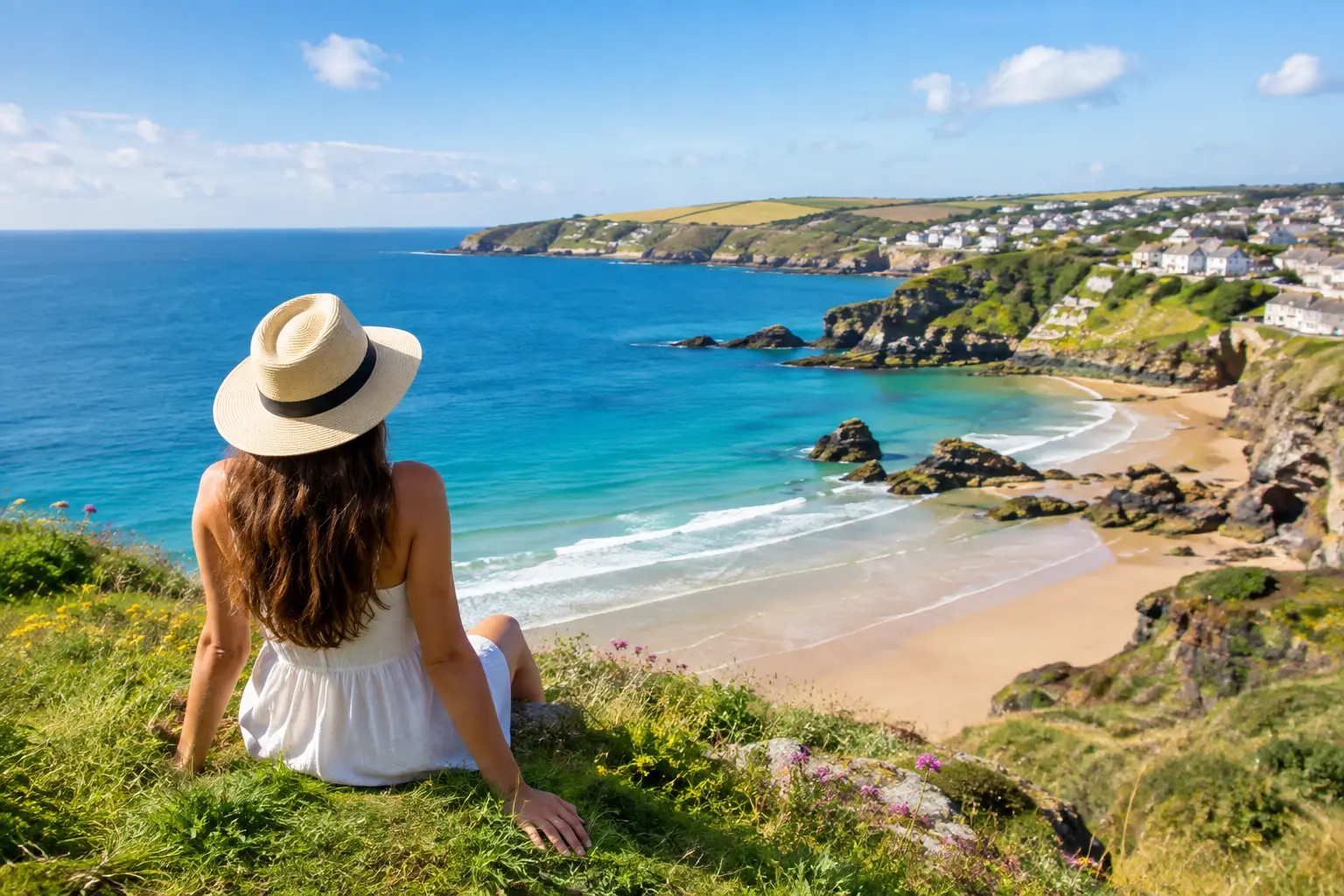
A beach break in the south-west can look deceptively simple on a map. Yet choosing Cornwall or Devon beaches changes the texture of the entire holiday: the town you stay in, the sort of sea you meet in the morning, and whether dinner means a harbour-side table or fish and chips on a wind-swept headland. Both counties deliver glorious coastline. The useful question is not which is universally better, but which fits the trip you actually want to book.
Cornwall feels more singular and dramatic, particularly on its Atlantic-facing north coast. Devon offers greater range within a manageable area, from big surf beaches to sheltered coves and handsome seaside towns. For a long weekend, that distinction can make planning far easier.
Cornwall or Devon beaches: choose your holiday mood
Choose Cornwall if you want the coast to be the main event. There is a pleasing sense of committing to the edge of the country: long drives become part of the journey, villages feel tucked away, and the landscape can be genuinely theatrical. The northern stretch from Bude through Padstow to St Ives has wide sands, pounding surf and cliff paths that make even a casual afternoon walk feel cinematic.
Choose Devon if you want to mix beach time with a broader south-west escape. North Devon has the rolling Atlantic beaches and surf culture many people associate with Cornwall, while South Devon becomes gentler, greener and more sheltered. You can spend one day on a broad sandy beach, another exploring an estuary town, then fit in a vineyard lunch, a moorland walk or a visit to Dartmouth without feeling that you have changed counties in spirit.
Neither choice is short on beauty. Cornwall is often the stronger pick for a deliberately coastal holiday, especially if surfing, cliff walks and small fishing villages are the priority. Devon is the better all-rounder for families, mixed-age groups and travellers who like several different kinds of day out on one break.
For surfing and big Atlantic sands, look north
The north coasts of both counties are serious beach territory. In Cornwall, Fistral at Newquay is the obvious name for surfing, with schools, hire shops and enough activity to suit first-timers who want an easy introduction. Watergate Bay has a more spacious, open feel, while Polzeath is a reliable family-friendly base where learners and more experienced surfers share the same broad sweep of sand.
Devon answers confidently with Woolacombe, Croyde and Saunton Sands. Woolacombe is particularly useful if your group has different priorities: it is long, sandy and backed by a proper holiday village, so one person can surf while another walks, reads or takes younger children to paddle at the shore. Croyde has a stronger surf identity and a compact village atmosphere. Saunton, with its enormous dune-backed beach, feels less built-up and gives walkers room to breathe.
For surf beginners, choose the beach with the most convenient lesson time rather than chasing a famous name. Conditions vary daily, and a good school will move or adapt a session to suit the tide and swell. Booking lessons ahead is sensible in school holidays, particularly around Newquay, Woolacombe and Croyde.
For sheltered swimming and family beach days
If the idea of Atlantic waves sounds more exhausting than exhilarating, look south. Cornwall’s south coast is softer in mood and usually more protected. Falmouth is a strong base, with Gyllyngvase Beach close to town and boat trips adding an easy alternative to a full day on the sand. Further west, Porthcurno is startlingly beautiful, though its popularity means early arrival is wise. On the Roseland Peninsula, smaller beaches around Portscatho and St Mawes reward those happy to trade facilities for tranquillity.
South Devon is exceptionally good for relaxed family beach days. Bigbury-on-Sea has shallow water and the wonderfully eccentric sight of Burgh Island just offshore. The sea tractor that crosses at high tide gives the place a little theatre without requiring much effort. Blackpool Sands, near Dartmouth, is a handsome shingle beach framed by pines, while Bantham combines a broad beach with an estuary setting that works well for paddleboarding.
For very young children, check the tide times before committing to a beach. Some of the south-west’s most beautiful coves shrink dramatically at high tide, and a seemingly easy access path can feel rather different with a buggy, beach bags and a tired toddler in tow. Large beaches with parking, toilets and nearby food are sometimes the more luxurious choice, even when a hidden cove looks better on social media.
Towns, stays and the evening after the beach
Cornwall’s appeal often lies in staying somewhere with a strong identity. St Ives has galleries, beaches within walking distance and exceptional light, but it is busy and accommodation commands a premium in summer. Padstow suits food-focused breaks and harbour walks, while Falmouth feels more lived-in, with a strong choice of restaurants, pubs and places to stay. Newquay offers the greatest concentration of beach-facing hotels and self-catering options, although its lively centre will not suit every traveller.
In Devon, Salcombe is the polished choice: sailing boats, smart independent shops and fine views, with prices to match. Dartmouth has more heritage and a lovely riverside setting, making it a compelling base for couples who want restaurants and day trips alongside beach time. For a simpler seaside stay, Woolacombe is practical and close to the sand, while Torquay and the wider English Riviera offer plentiful accommodation and a traditional resort feel.
Book coastal accommodation according to how you plan to use the car. A harbour town may be wonderfully atmospheric but have limited, costly parking. A hotel or cottage a mile inland can offer better value, easier arrivals and enough space to make a week away more comfortable. In peak summer, a sea view is lovely; a guaranteed parking space can be even lovelier.
The case for Cornwall’s coast path
Cornwall makes a persuasive case when walking is central to the trip. The South West Coast Path delivers short, satisfying sections as well as ambitious day hikes. Around St Ives, the walk towards Zennor gives you granite, gorse and Atlantic views. Near Padstow, the Camel Estuary offers gentler terrain, while the stretch around Tintagel brings cliffs, mythology and some of the most arresting coastal scenery in Britain.
Devon should not be underestimated. The path above Woolacombe offers expansive views across to Lundy, and the South Devon coast around Hope Cove and Bolt Head combines coves, fields and headlands in a gentler palette. It is often easier to pair a walk with a proper lunch in a nearby town, which may matter more than ticking off the wildest route.
Whichever county you choose, bring footwear with grip. Coastal paths can be muddy after rain and exposed in wind, even when the beach below is warm enough for a swim.
When Devon wins, and when Cornwall is worth the extra effort
Devon tends to win for flexibility. It is easier to build a holiday around beaches without making every day a beach day. A group with a keen surfer, a history lover and someone who simply wants a good lunch has plenty of room to compromise. The north-south contrast also means you can choose your coastline according to the forecast.
Cornwall is worth the extra effort when you want that unmistakable far-west feeling. Its best beaches and villages can feel like places you have travelled to rather than merely reached. The trade-off is demand: summer roads, popular car parks and premium rates are real. Travelling in May, June or September gives you a much better chance of enjoying its character without spending the day in a queue.
For destination planning with the detail of a good conversation, the Destination Unlocked podcast is as useful as a guidebook and as personal as a chat with your most well-travelled friend. Each 40-minute episode is designed to give you the information you need for a great trip.
If you want surf, stark scenery and a holiday that revolves around the sea, book Cornwall. If you want beaches woven into a varied, easy-going escape, book Devon. Either way, reserve the stay that puts you closest to the sort of morning you want: wetsuit and waves, coffee by a harbour, or a quiet swim before everyone else arrives.