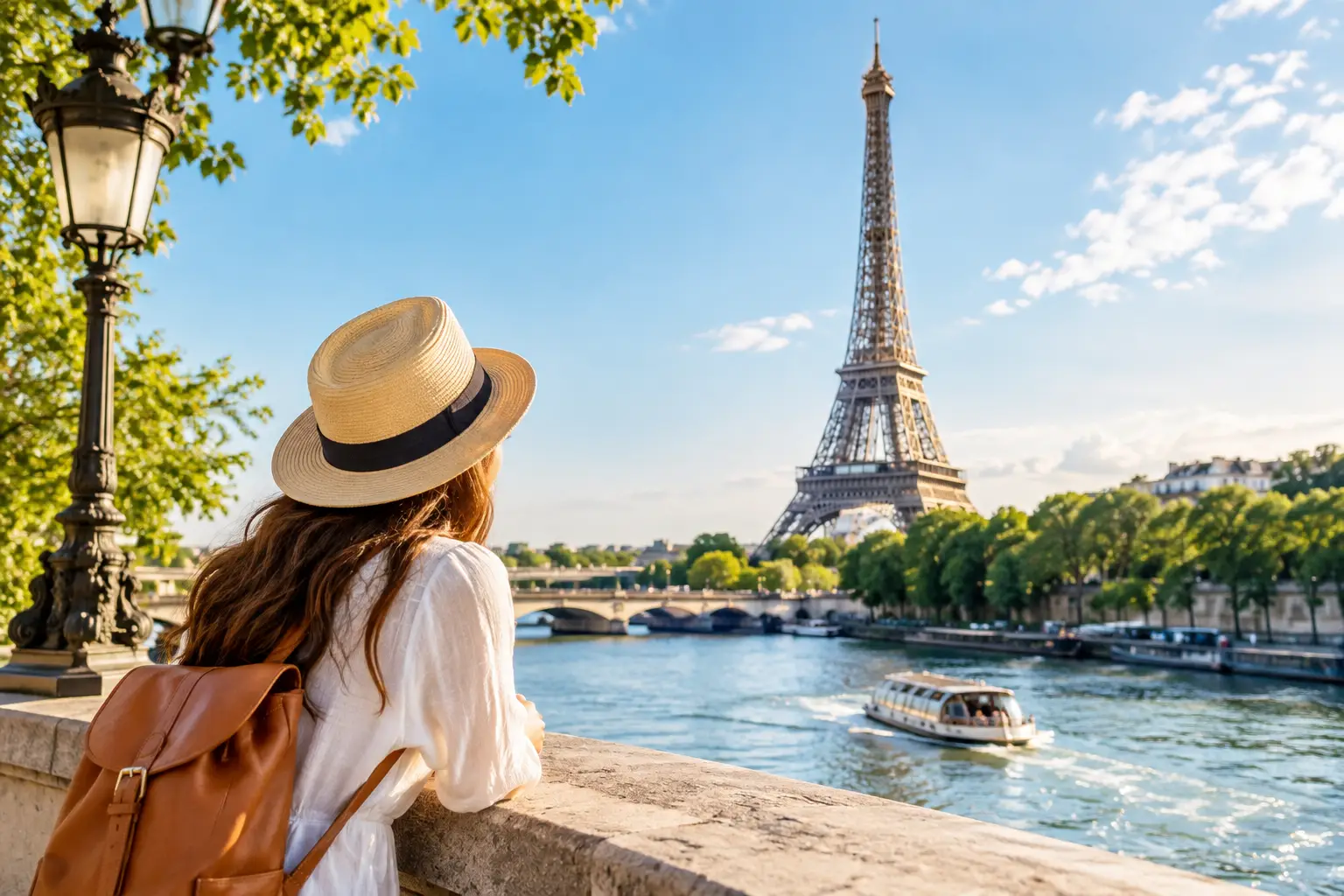
Paris rewards a little choreography. A good Paris itinerary is not about racing between every famous monument before lunch. It is about giving each part of the city enough room to reveal itself: an early walk beside the Seine, a long lunch in a neighbourhood you might otherwise have skipped, and an evening when the lights come on just as you reach the right viewpoint.
Four days is an excellent first introduction. It allows time for the classics, certainly, but also for the small pleasures that make a return visit feel inevitable. Book timed entry for the major sights before choosing restaurants, and pick a hotel near a Metro line rather than chasing the lowest nightly rate in a distant arrondissement. In Paris, location buys you time, and time is the luxury worth protecting.
Before you begin: choose the right Paris base
For a first stay, the 1st, 2nd, 4th, 5th, 6th and 7th arrondissements put much of Paris within an easy walk or short Metro journey. The 6th is a polished choice for Left Bank cafés and the Luxembourg Gardens; the 4th puts you close to the Marais and the Seine; the 2nd offers excellent food, handsome streets and a more lived-in pace. The 7th is wonderfully convenient for the Eiffel Tower, though it can feel quiet once office workers have gone home.
If you want better value without losing atmosphere, look at the 9th, 10th or 11th. These areas have a stronger evening life and often more interesting independent hotels. Montmartre is romantic and memorable, but its hills and slightly longer journeys can make it less practical if this is your first Paris holiday.
Paris is walkable in sections, not all at once. Use the Metro for the bigger jumps, wear shoes suitable for cobbles, and leave a little blank space in every day. A rainy hour in a bookshop or a lingering glass of wine should not feel like a failure of planning.
Day one: the Seine, the Louvre and Saint-Germain
Start on Île de la Cité, the island at the historic heart of Paris. Notre-Dame has reopened to visitors, but entry arrangements and queues can change, so reserve ahead where possible and arrive early. Even if you do not go inside, the approach along the Seine is one of the city’s great opening scenes.
From here, wander through the Latin Quarter towards the Panthéon, then take a late-morning stroll through the Luxembourg Gardens. This is Paris at a more human scale: green chairs, gravel paths and locals reading newspapers with heroic concentration. Stop for lunch in Saint-Germain-des-Prés rather than settling for the first menu beside a major landmark.
In the afternoon, cross towards the Louvre. Unless art museums are your principal reason for visiting, do not attempt the whole collection. Choose a timed ticket and give yourself two or three hours, concentrating on a few wings that genuinely interest you. The Louvre is magnificent, but it is also enormous. A focused visit is more enjoyable than a weary march towards the Mona Lisa.
Finish with an evening walk through the Tuileries and along the river towards Pont Alexandre III. For dinner, book somewhere in the 6th, 7th or 1st and take your time. Paris is at its best after dark when you are not checking museum opening hours.
Day two: the Eiffel Tower, museums and a proper Paris evening
Begin at the Eiffel Tower before the crowds thicken. If going up matters to you, book a timed slot well in advance, particularly for summit access and during school holidays. If it does not, save the money and admire it from the Trocadéro, Champ de Mars or across the Seine from Passy. The best view of the tower is often from a little distance.
Walk east through the 7th arrondissement to the Musée d’Orsay. Housed in a former railway station, it is one of the most satisfying museums for a first-time visitor, especially if you enjoy Impressionism. The collection is manageable, the building is extraordinary and the clock-window views alone justify a visit.
After lunch, choose between two very different experiences. The Musée Rodin is peaceful, sculptural and easily paired with the surrounding streets. Alternatively, take a Seine cruise in the late afternoon. It is an unabashedly popular activity, but popular for a reason: the city’s landmarks make far more sense when seen in sequence from the water. Choose a departure close to sunset if your schedule allows.
For the evening, head to the 11th arrondissement or Canal Saint-Martin for a livelier dinner scene than you will find around the Eiffel Tower. This is a useful rule throughout a Paris itinerary: eat near an attraction only when the restaurant is a destination in its own right.
Day three: the Marais, Montmartre and the city after sunset
Give the morning to the Marais. Start at Place des Vosges, then follow your curiosity through galleries, independent shops and narrow streets towards Rue des Rosiers. This is one of Paris’s most rewarding areas for an unhurried wander, with layers of Jewish history, aristocratic architecture and contemporary fashion all sharing the same few blocks.
The Musée Picasso is worth booking if you are interested in the artist, but do not force another museum simply because it is nearby. The Marais works best when you allow time for coffee, people-watching and an aimless turn down a side street. For lunch, this is also a stronger bet than the restaurant strips around several major monuments.
In the afternoon, take the Metro north to Montmartre. The Basilica of Sacré-Cœur is the obvious draw, but the real pleasure lies on the quieter slopes behind it. Rue de l’Abreuvoir, the vineyard and the smaller lanes near Lamarck-Caulaincourt retain a village-like character, especially once you step away from Place du Tertre.
Sunset from the steps of Sacré-Cœur is spectacular and crowded. If that sounds delightful, embrace it. If it sounds exhausting, have an aperitif in a nearby bar and enjoy the view on your own terms. A cab back to your hotel after dinner can be worth considering here, particularly if your feet have reached the end of their cultural programme.
Day four: choose your Paris
Your final day should reflect the kind of traveller you are, rather than adding another compulsory tick. If you enjoy grand interiors and formal gardens, make a half-day trip to Versailles. Reserve palace entry and transport in advance, start early and accept that you will not see every inch of the estate. It is an ambitious excursion, but a very good one.
If you would rather remain in Paris, spend the morning around the Canal Saint-Martin and the 10th arrondissement. It offers a less polished, more everyday version of the city, with waterside walks, bakeries and appealing small shops. Pair it with the nearby covered passages of the 2nd arrondissement, where glass roofs, old-fashioned signage and compact cafés make a fine rainy-day alternative.
For a more art-led finale, the Musée de l’Orangerie is small enough to feel restorative after the Louvre and Orsay. Monet’s Water Lilies are displayed in rooms designed for them, and the experience has a calm, contemplative quality that larger museums rarely manage.
Make your last evening one to remember. A dinner reservation is the sensible choice, but do not overthink the postcode. Find a restaurant with the atmosphere and cooking you want, then walk home along the Seine if the weather is kind. Paris has few better farewells than its bridges lit against the water.
Small decisions that improve a Paris itinerary
Book the Eiffel Tower, Louvre, Musée d’Orsay, Versailles and any major show or cabaret before departure. For everything else, retain some flexibility. Museum closures vary, with many shutting one day a week, so check opening days before fixing your itinerary in place.
Breakfast at your hotel may be convenient, but a local bakery is often a more Parisian and better-value start. Order a coffee at the counter if you are in a hurry; take a table when you want to linger. Tipping is modest compared with the UK or US, as service is included, though rounding up for good service is appreciated.
For a trip that feels more informed than a checklist, listen to the Destination Unlocked podcast before you go. It is as useful as a guidebook and as personal as a chat with your most well-travelled friend, with each 40-minute episode designed to give you the information needed for a great holiday.
The most memorable Paris days tend to contain one remarkable sight, one excellent meal and one unexpected detour. Leave room for all three, and the city will do the rest.