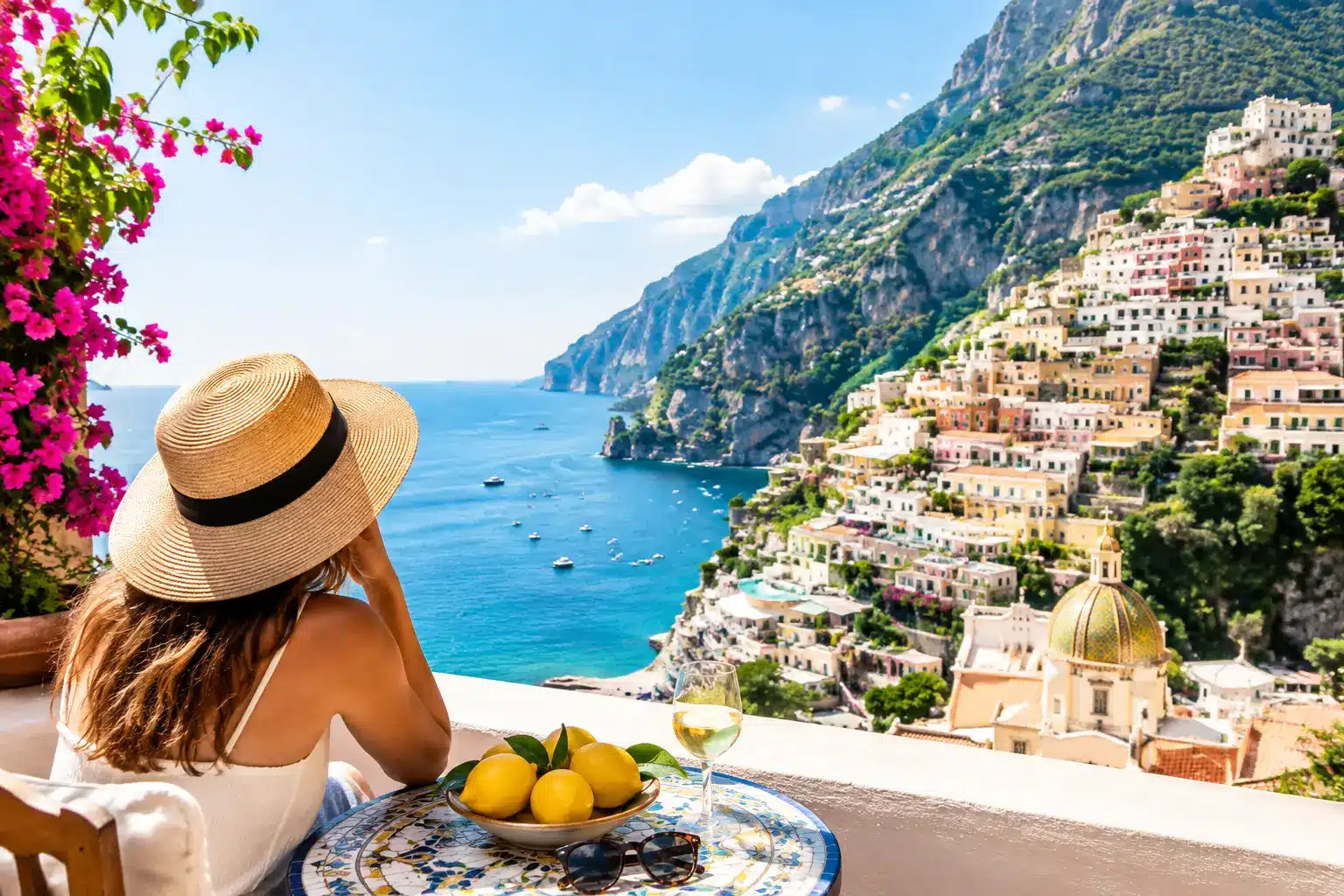
The Amalfi Coast travel guide most people need starts with one reassuring truth: you do not have to see every pastel village, beach club and clifftop restaurant to have a brilliant holiday. This small stretch of Campania rewards a slower plan. Pick the right base, reserve the things that genuinely sell out, and leave enough room for a long lunch when the view makes moving on feel like a mistake.
For British travellers, the coast is wonderfully achievable: fly to Naples, continue south, then let the scenery take over. But it is also a place where good decisions made before departure – especially around accommodation, transport and timing – can make the difference between cinematic and mildly chaotic.
When to visit the Amalfi Coast
May, June, September and early October offer the best balance of warm weather, open restaurants and manageable crowds. Sea conditions are generally favourable, ferries are running frequently and the heat is more forgiving for walking through Positano or up towards Ravello.
July and August are for travellers who want full summer energy: busy beaches, late dinners, packed boats and high room rates. It can be a glorious time to go, particularly if swimming is central to the trip, but book sea-view hotels and popular boat excursions well ahead. If your holiday dates are fixed in August, consider staying in a quieter base rather than trying to fight for space in central Positano.
April can be lovely but variable, while late October brings a calmer mood and lower prices, with the trade-off that some seasonal properties, beach clubs and boat services may be winding down. Winter is attractive for a peaceful Sorrento or Amalfi stay, but it is not the classic swimming-and-sailing version of the coast.
Where to stay on the Amalfi Coast
Choosing a base is the biggest decision in this Amalfi Coast travel guide. There is no single best town – it depends on whether you prioritise glamour, convenience, quiet or value.
Positano for the full postcard experience
Positano is the coast at its most theatrical: peach and terracotta houses rising from the sea, stylish boutiques, excellent restaurants and a beach that becomes more animated as afternoon approaches. It is the right choice for a honeymoon, special anniversary or a first visit where the hotel itself is part of the occasion.
The compromise is price and terrain. Rooms with balconies, pools or direct sea views command a premium, and the stairs are real. A hotel close to the main road can make arrivals easier, while one lower down offers a more immersive atmosphere but may involve porter services and plenty of climbing. Reserve early if you want to stay here in high season.
Amalfi town for easy connections
Amalfi is practical without feeling ordinary. Its ferry port puts Capri, Positano, Salerno and other coastal villages within easy reach, and there is more choice of restaurants and moderately priced accommodation than in Positano. The cathedral square is busy during the day, but evenings can feel pleasantly local once day visitors have gone.
This is a strong option for travellers who want to use public transport, take several boat trips and avoid changing hotels. Look just beyond the main square for a quieter night, or towards Atrani, a tiny neighbouring village with real character and a gentler pace.
Ravello for views and calm
High above Amalfi, Ravello is made for long breakfasts, villa gardens and sunset aperitivi. It does not have a beach, and getting there involves a bus, taxi or winding drive, yet that slight remove is exactly the point. Stay here if you would rather wake to broad sea views than beach-front bustle.
Ravello works beautifully for couples and for travellers happy to treat the hotel as a sanctuary. It is less suitable if you plan to take ferries every day or want to wander home from a late night in Positano.
Sorrento for value and flexibility
Sorrento sits just beyond the formal Amalfi Coast but is often the smartest base. It has direct links from Naples, a wider choice of hotels, restaurants and shops, plus easy ferries to Capri and buses towards Positano and Amalfi. It is also far easier for travellers arriving with luggage.
The trade-off is that Sorrento feels like a proper town rather than a cliffside village. For many first-time visitors, that is a benefit: stay three or four nights, make day trips by sea, and spend less of the holiday negotiating narrow roads.
Getting around without losing your patience
Hiring a car sounds romantic until you picture meeting a coach on a road barely wide enough for two vehicles. Parking is expensive and scarce, traffic can be slow, and driving after a leisurely Italian lunch is nobody’s finest idea. A car makes sense for confident drivers staying outside the busiest towns, or for a wider Campania itinerary that includes quieter inland villages.
For most visitors, ferries are the most enjoyable way to move around between roughly April and October. They are quick, scenic and remove the need to stare at hairpin bends from the back of a bus. Check services the day before, as wind and sea conditions can alter schedules.
Buses are cheaper and useful, particularly between Amalfi and Ravello, but they can be crowded in summer. Taxis and private transfers are worth considering for airport arrivals, late dinners or luggage-heavy hotel changes. Splitting a transfer between two or four people can be much less painful than it first appears.
The experiences worth booking ahead
A small-group boat trip is the clearest upgrade you can make to an Amalfi Coast holiday. Seeing the villages from the water gives the coastline its proper scale, and a good skipper knows where to stop for a swim when conditions allow. Choose a departure from Positano, Amalfi or Sorrento according to your base, rather than adding needless road time.
Capri deserves more than a rushed tick-box visit if your schedule permits. A boat tour that includes time ashore lets you combine the island’s famous coastline with an unhurried wander through Capri town or Anacapri. Those prone to crowds may prefer an early departure or a private boat, while travellers watching the budget can use public ferries and spend on a memorable lunch instead.
Book popular cooking classes, limoncello tastings and Pompeii tours in advance during peak season. Pompeii is particularly easy from Sorrento or Naples, and it becomes vastly more meaningful with a knowledgeable guide who can put its villas, bakeries and public spaces into human context. Herculaneum is smaller, better preserved in places and often less overwhelming, making it an excellent alternative for repeat visitors.
For active travellers, the Path of the Gods is a superb half-day walk, but it is not a casual promenade. Wear proper shoes, carry water and check the route and weather before setting off. A guided hike is a sensible choice if you want the logistics handled and the landscape explained.
Eat with a little strategy
The coast is not short of beautiful restaurants, but the most photogenic terrace is not automatically the most memorable meal. Seek out dishes that belong here: anchovies from Cetara, spaghetti with clams, grilled fish, aubergine parmigiana and lemons appearing in everything from salad dressing to sorbet.
Lunch is often the best time to book a celebrated restaurant. You get the view in clear light, spend less than at dinner and can linger without trying to navigate dark steps afterwards. For evenings, reserve a table with a view if it matters to you, but leave one night open for a simple neighbourhood trattoria. The pasta is likely to be excellent either way.
Plan less, enjoy more
The Destination Unlocked podcast is as useful as a guidebook and as personal as a chat with your most well-travelled friend. Each 40-minute episode is designed to give you the information you need for a great trip, with the kind of local perspective that helps a destination feel less like a checklist.
On the Amalfi Coast, the smartest luxury is time. Book the room that makes your mornings easy, choose one or two experiences you will talk about afterwards, and let the rest of the day unfold at the pace of the sea below you.