The souvenir question usually arrives near the end of a holiday: what can you buy that still feels connected to the place once it is home? Vietnam writer Joshua Zukas suggests starting earlier, with the country’s artists and designers.
In his conversation with Daniel Edward, he points travellers towards creative shops in Hanoi and Saigon. Prints, clothing and small design objects can offer something more individual than a last-minute purchase at the airport—and introduce you to a side of Vietnam that is being made now.
Look for a maker, not just a motif
A familiar landmark printed on an object tells you what place it represents. It does not necessarily tell you who created it or where it was made. Those are useful questions to ask before buying.
Look for an artist’s name, a studio label or an explanation of the work. Ask staff which pieces come from Vietnamese designers, how the shop selects them and whether there is more of that person’s work to see. You may find that the story changes your choice.
An object does not need to be handmade to carry a meaningful local connection. A carefully designed print or T-shirt can be just as personal a purchase as a ceramic bowl. What matters is understanding what you are buying, rather than relying on the word authentic.
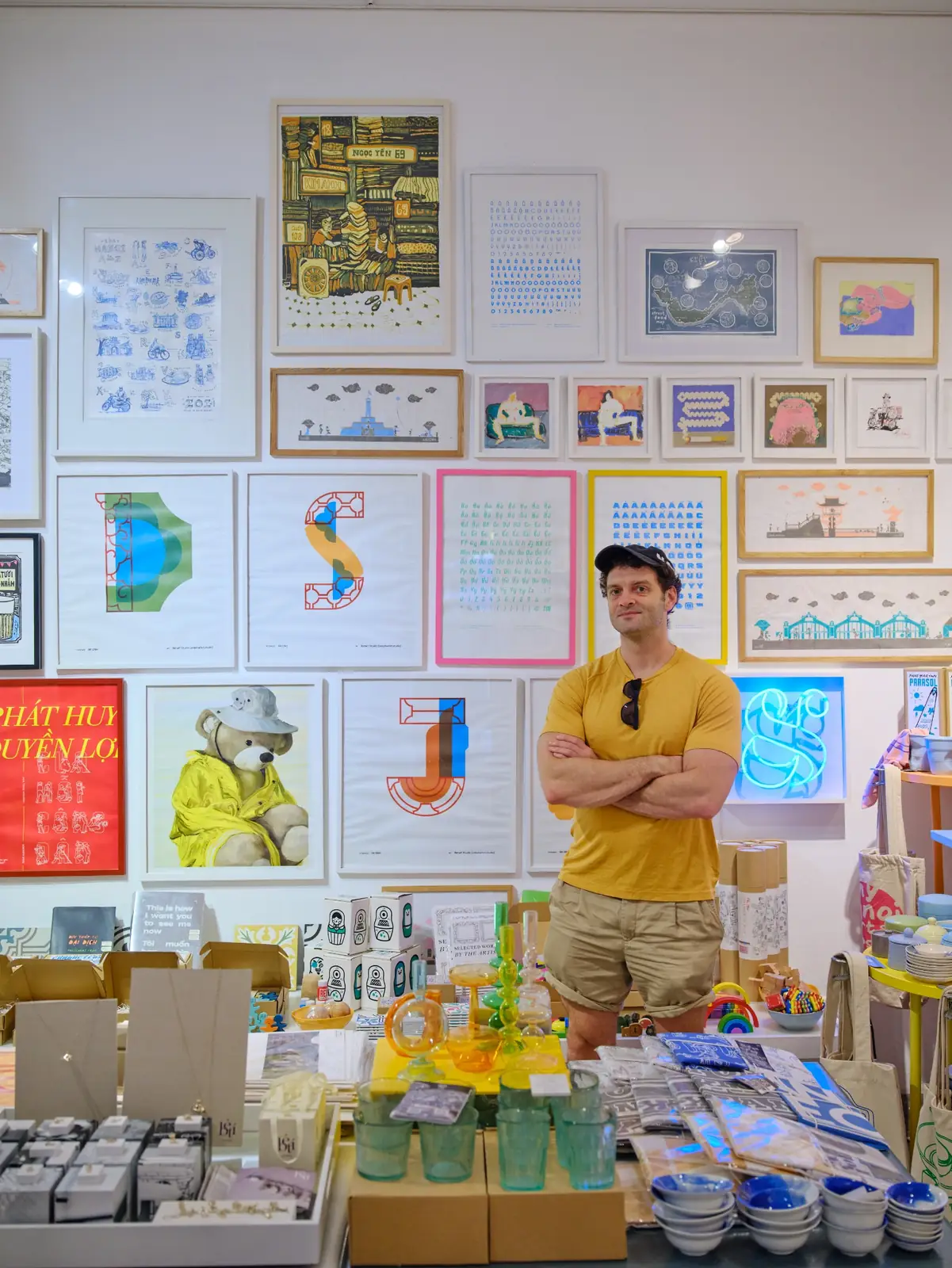
Let contemporary Vietnam into the suitcase
Joshua is drawn to the humour and energy of young Vietnamese creatives. His suggestions include art collective shops, fashion and everyday clothing—things that acknowledge the country’s present as well as its heritage.
That gives you a broad brief. You might choose a print because of its visual wit, a shirt because of its cut or a small object because it fits naturally into your home. Avoid choosing something solely because it looks like an obligation to prove where you have been.
Start in Hanoi or Saigon, then follow the work
In the episode, Joshua suggests looking around Hanoi’s Old Quarter and central Saigon, using the familiar former District One as a starting reference. Treat those as areas to explore rather than promises that every shop has the same local credentials.
Ask for recommendations at a gallery, café or shop whose taste you like. If a designer’s work catches your eye, look up their own channels before making the next stop. This is a pleasant kind of planning to do during the trip: one discovery suggesting another, with a coffee break in between.
One place to begin in Hanoi
As an independently researched starting point, Collective Memory brings art prints, homeware and other Vietnamese design together at 12 Nhà Chung Street, near St Joseph’s Cathedral. It is a useful place to put the questions above into practice: look at the credited makers, compare materials and see which objects speak to you. This is an editorial addition to Joshua’s broader advice, rather than a shop he names in the episode.
Try clothes on and ask about their care
Joshua sees exciting possibilities in Vietnamese fashion. You do not need to share every prediction about its future to enjoy seeing what designers are making.
For something you hope to wear regularly, the practical questions still matter. Check the fit, fabric and care label. If you are ordering alterations or a made-to-order piece, agree the collection time, final price and what happens if another fitting is needed. Leave enough time before departure for the work to be finished properly.
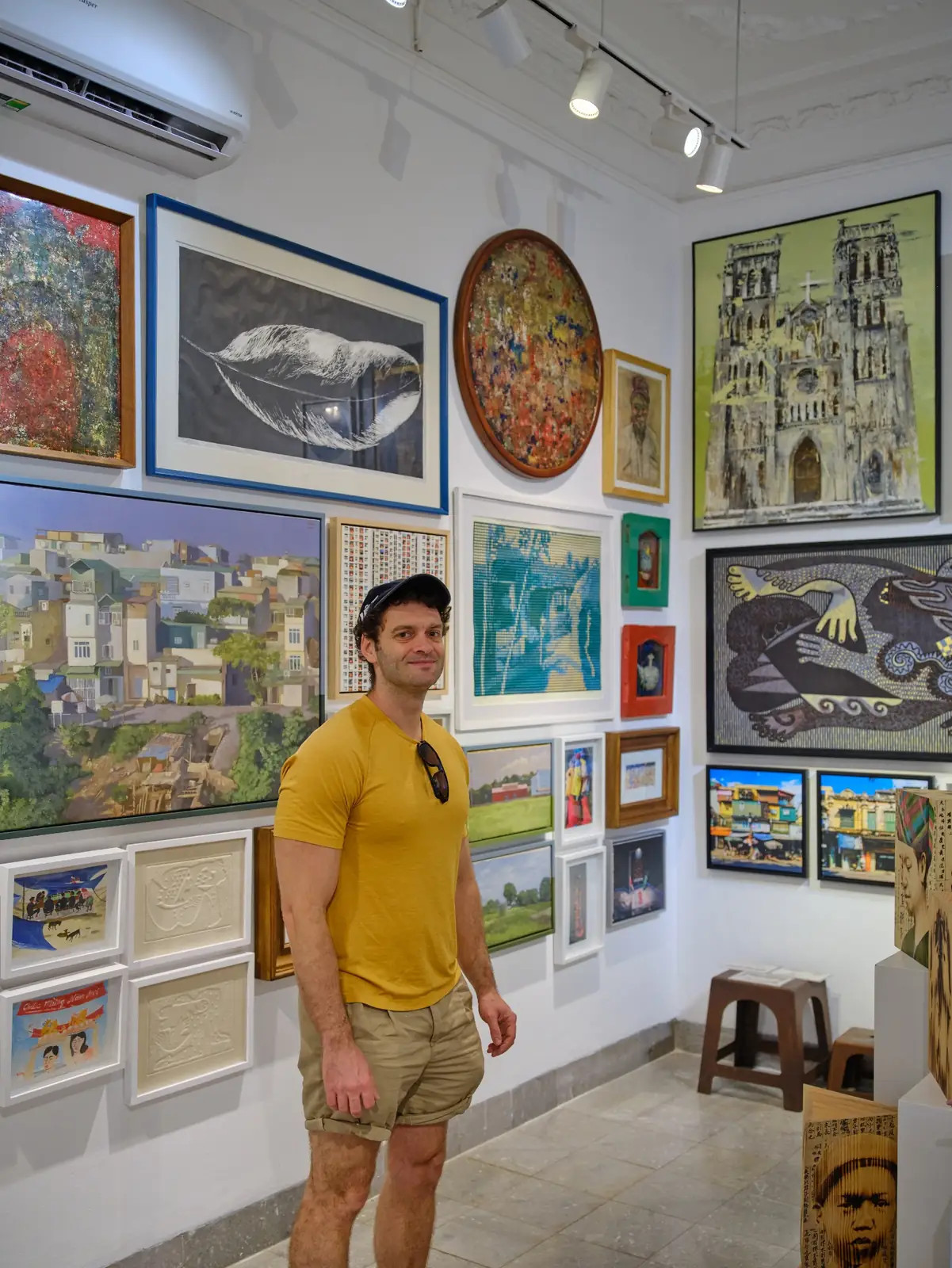
Choose something that can travel
A print can be a good purchase until you discover the frame will not fit your luggage. Ask about an unframed version, a protective sleeve or suitable packaging. For ceramics, check weight and wrapping before paying. If shipping is offered, establish the full cost and delivery arrangements.
Take a photograph of the maker’s details or keep a card with the receipt. Once you are home, it is much easier to find more of their work—or tell a friend where the object came from—if the name has not vanished into the journey.
Let the shop become part of the trip
There is a temptation to treat shopping as time stolen from sightseeing. A good creative shop or gallery can be a cultural visit in its own right. The displays show what people are making, which references they use and what they find funny or beautiful.
Joshua’s suggestion works because it shifts the question from what visitors are expected to buy to what you personally want to keep. A well-chosen object can bring back the conversation, the street and the afternoon around it. That is a much more satisfying souvenir brief.
Listen to Vietnam with Joshua Zukas on Destination Unlocked, hosted by Daniel Edward. Explore the Vietnam travel hub for the episode and all four guides.