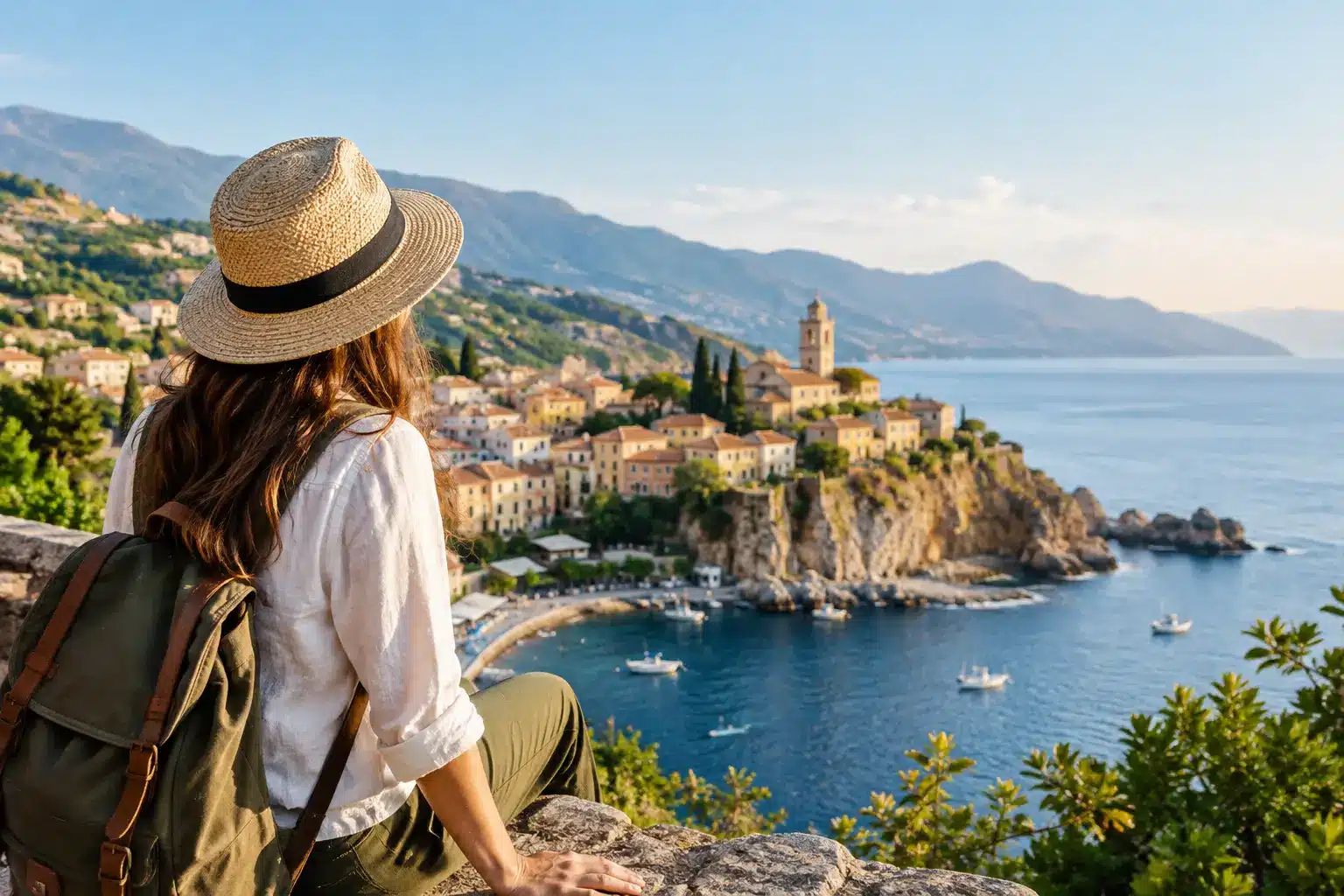
The best slow travel holidays often begin with a slightly unfashionable decision: choose one place, then resist the urge to leave it too quickly. Rather than collecting cities, airports and restaurant reservations at a punishing pace, you give a single destination time to become familiar. The bakery knows your usual order. The walk back to your hotel stops needing a map. A rainy afternoon becomes part of the story rather than a ruined sightseeing slot.
This is not about doing nothing, nor is it a case for rejecting the big sights. It is about leaving enough room for a place to surprise you. For travellers planning a meaningful long weekend, a week by the coast or a longer European escape, slowing down can make a holiday feel considerably fuller.
What slow travel holidays actually mean
Slow travel is sometimes mistaken for an extended trip available only to people with limitless annual leave. In practice, it is a way of organising time. A three-night break can be slow travel if you stay in one neighbourhood, walk or use local transport, and choose a handful of experiences with care. Equally, a fortnight can feel frantic if it involves five hotels and a suitcase that never quite gets unpacked.
The principle is simple: fewer bases, longer stays and a closer relationship with the destination. That might mean renting a small flat in a historic quarter rather than changing hotel every other night. It might mean booking a local food tour on your first morning, then using what you learn to eat well for the rest of the trip. Or it could be a rail journey with two well-chosen stops instead of a road trip built around daily mileage.
There is a practical upside, too. Staying put often makes better-value accommodation possible. A four- or five-night hotel stay may attract a lower nightly rate, while an aparthotel or self-catered stay can make breakfast, picnic lunches and the occasional evening in feel less like compromise and more like holiday life.
Choose a base with a life beyond the landmarks
The right base does more work than an ambitious itinerary. Look for somewhere with character close at hand: a market, independent cafés, a promenade, a park, a useful train station or a cluster of restaurants you would happily revisit. A hotel directly beside the headline attraction can be convenient, but it may leave you in a district that empties once day visitors go home. For a slower stay, a lived-in neighbourhood is often the better bet.
Before booking, consider the rhythm of the place. A compact old town may be perfect for a two- or three-night city break, while a coastal village can reward a week if there are beaches, walking routes and a few nearby towns within easy reach. In wine country, a small town with a railway connection or reliable taxis can be more enjoyable than an isolated rural retreat, unless complete seclusion is precisely what you want.
The accommodation itself matters. For a short stay, a well-located hotel with a good breakfast and comfortable communal spaces can make unstructured hours more appealing. For a week or more, prioritise a room with a balcony, terrace, kitchen facilities or at least a proper place to sit. Slow travel is difficult to enjoy if your only option between outings is perching on the edge of the bed.
Book fewer activities, but book the right ones
Slow does not mean leaving every day blank. The most memorable trips usually have one or two anchors: a guided walk led by a local historian, a cooking class, a boat trip, a vineyard visit, an architecture tour or a hike with someone who knows the landscape. These experiences give shape to a trip without turning it into a timetable.
Book the activity that helps you understand the destination early in your stay. A food tour on day one can steer you towards excellent neighbourhood restaurants. A walking tour can reveal districts you might return to later. A museum introduction can make the city’s streets, churches and public buildings more legible for the days that follow.
Be selective, though. The trade-off is that popular tours and intimate experiences can sell out, especially in school holidays and peak summer. Reserve the one thing you would genuinely regret missing, then protect the rest of the day from needless scheduling. You do not need a 9am tour, a 1pm tasting and a 6pm cruise simply because all three appeared on the same search page.
Build an itinerary around repeat visits
Traditional itineraries tend to treat every café, beach and gallery as a one-off. Slow travel works differently. It gives you permission to return. Have coffee twice at the place with the good pastries. Go back to the market after you have worked out what is in season. Revisit a viewpoint in the evening when the crowds have gone and the light has changed.
This approach is particularly rewarding in destinations with a strong daily culture. Mediterranean towns come alive at different hours from northern European cities; resort islands have a different pulse before breakfast than after sunset. If you are only passing through, you see the performance. If you stay a little longer, you start to notice the routine.
A useful rule is to plan only one main outing per day. Pair it with a loose second idea, such as a particular bookshop, swimming spot or neighbourhood to wander, rather than another timed ticket. That leaves room for weather, good advice from a bartender, an unexpected festival or the simple appeal of a long lunch.
Travel more slowly when it adds something
Trains, ferries and scenic drives are natural companions to a slower holiday, but they are not morally superior in every circumstance. A direct flight may be the sensible choice when time is tight, when connections are poor or when travelling with children. The point is not to turn the journey into a test of virtue. It is to avoid treating the destination as an obstacle between you and the next destination.
Where rail is convenient, it can transform the tone of a trip. You arrive in the centre, see the changing landscape and skip the usual airport rituals. Ferries can do the same for island breaks, giving the crossing a sense of occasion. If you hire a car, use it for day trips from one base rather than as a reason to pack up every morning.
For a useful planning companion, the Destination Unlocked podcast is as useful as a guidebook and as personal as a chat with your most well-travelled friend. Each 40-minute episode brings together the practical detail and local perspective needed to shape a great trip, without reducing a place to a checklist.
Make room for the ordinary pleasures
The difference between a packed holiday and a restorative one is rarely a single grand moment. More often, it is the ordinary space around the plans: buying fruit for tomorrow’s breakfast, reading on a square after the museum, taking the longer route home because a side street looks promising.
That space can feel uncomfortable at first, especially if you are used to measuring a city break in attractions completed. Give it a chance. You may find that the restaurant recommended by your hotel receptionist, the neighbourhood wine bar visited twice, or the afternoon spent watching a harbour become the detail you remember most clearly.
Slow travel holidays are also kinder to group trips. Instead of negotiating a new plan every hour, friends or family can split up for an afternoon and reconvene somewhere familiar. One person can visit the gallery, another can browse shops, and nobody has to pretend they are equally interested in either.
A better way to return home
A well-planned slow holiday still benefits from advance booking. Secure your transport, choose accommodation you will be pleased to come back to, and reserve the experiences that genuinely matter. Then leave a little empty space around them.
You will not see everything. That is the point, and it is no failure. Leave with a reason to return, a favourite table to seek out again, and the pleasant sense that you briefly lived somewhere rather than simply passed through it.