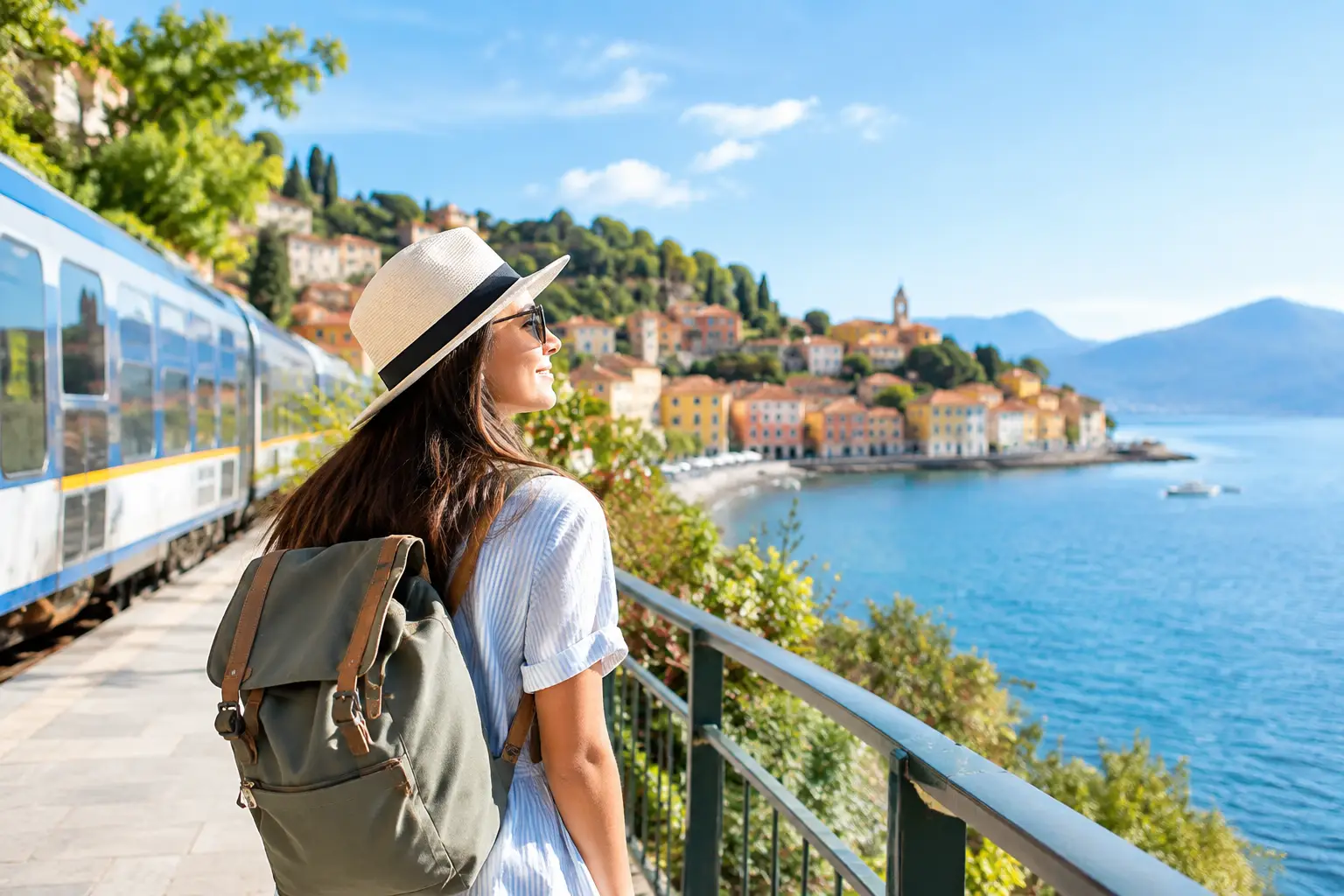
The best car-free trips begin with a pleasingly simple decision: choose a place where arriving is part of the holiday. When you plan car-free holidays around a good rail connection, a walkable centre and a few well-chosen experiences, you swap the stress of hiring, parking and navigating for longer lunches, better views and the freedom to notice where you are.
That does not mean every destination works without wheels. A remote cottage on the coast may be glorious, but it can become expensive and restrictive if the nearest pub, beach and shop are all several miles apart. The trick is not to travel without a car at all costs. It is to choose a holiday whose geography suits the way you want to spend your time.
Start with a base, not a bucket list
A car-free break is won or lost when you book your accommodation. Before comparing hotels, look at the map as though you had already arrived with a suitcase in hand. How far is the station, ferry terminal or airport bus stop? Is the hotel in the historic centre, near a tram line or beside a promenade? Can you reach restaurants, food shops and at least one worthwhile sight on foot?
For a city break, being within a 15-minute walk of the main station can be more valuable than a larger room on the outskirts. In a coastal town, a place near the seafront and harbour often makes an entire weekend possible on foot. In the countryside, look for a village on a bus route, a hotel with its own restaurant, or a stay that offers collection from the station.
It is worth paying a little more for location if it removes daily taxi fares and gives you back an hour or two. A cheaper hotel several miles away can look sensible until you are trying to get back after dinner, or deciding whether an evening drink is worth the logistical effort.
Read the map with a traveller’s eye
Online maps can make distances look deceptively modest. Check walking times, gradients and service frequency rather than relying on a straight line. A 20-minute walk through a handsome old town is part of the experience. A 20-minute walk along an unlit dual carriageway, with luggage, is another matter entirely.
Also check the last train or bus before booking a late dinner, theatre ticket or tasting. In many smaller towns, daytime transport is excellent but evening services thin out quickly. That need not rule a destination out – it simply changes the shape of the trip.
Build the journey around one reliable spine
The most relaxed car-free itineraries have a transport spine: a direct train, an easy flight with a regular airport transfer, a ferry crossing, or one dependable coach route. Build outward from that rather than stitching together a heroic sequence of connections.
For travellers from the UK, rail can be particularly rewarding when the destination is within reach of a major European station. You arrive close to the centre, avoid the familiar airport-to-city transfer, and can start exploring almost immediately. Domestic rail also opens up excellent long weekends in cathedral cities, coastal resorts and market towns, particularly when you travel light.
Flying still makes sense for more distant destinations, but be honest about the transfer at the other end. An airport 90 minutes from town is perfectly manageable if buses leave frequently and stop near your hotel. It is less appealing if the final leg depends on one late-night bus or a costly taxi.
Give yourself a buffer on arrival day. Book a first-night stay near the hub or choose an arrival time that leaves room for delays. There is little romance in landing at 22:30 and discovering that the final train departed at 22:15.
Plan car-free holidays with fewer moving parts
There is a temptation to prove how much can be fitted into a week: two cities, a wine region, a mountain village and a beach. With a car, that can be tiring. Without one, it can turn the holiday into an exercise in timetable management.
A better approach is to stay longer in one or two places and treat day trips as optional. A well-connected base can offer museums, markets, walks, swimming spots and excellent food without requiring a departure board every morning. Then, if the weather changes or you find a neighbourhood you love, you are free to linger.
When comparing destinations, favour places where the attractions are naturally clustered. Historic centres, lakeside towns, islands with local buses, compact cities and established resort areas are all easier propositions than scattered rural sights. The question is not whether there is plenty to do. It is whether the things you want to do are realistically reachable in the time you have.
Book one anchor experience
One pre-booked experience gives a car-free holiday shape without making it rigid. It might be a guided food walk, a boat trip, a local cooking class, a museum tour or a small-group excursion into the countryside. Choose something that starts centrally or includes transport, especially if it takes you beyond the town.
This is where organised day trips earn their place. Hiring a car for a single day can involve collection queues, insurance decisions and finding somewhere to park in an unfamiliar place. A well-run excursion may cost more than the fuel, but it replaces admin with local knowledge and lets everyone enjoy the view.
Check exactly where an activity begins and ends. A sunset cruise that finishes after public transport stops is only relaxing if your accommodation is a short walk away, or a taxi is easy to arrange. Details like this are the difference between a spontaneous-feeling trip and an unnecessarily complicated one.
Pack for stations, streets and small hotels
Car-free travel encourages a more useful definition of packing light. You do not need to travel with one tiny bag, but you should be able to carry what you bring up a flight of stairs, across a platform or over cobbles without resentment.
A wheeled case is ideal for city breaks with smooth pavements. A backpack can be better for older towns, island ferries and rural stays. Whichever you choose, leave a little room for the purchases that make holidays memorable: a bottle from a local producer, a book from an independent shop, something edible that will survive the journey home.
Think about footwear, too. Comfortable shoes are not merely practical on a car-free break; they widen your day. You can take the scenic route back from dinner, follow a waterfront farther than planned, or say yes to the hill with the view.
Use taxis selectively, not apologetically
Going car-free does not require a purity test. A short taxi ride can be the smartest choice after an early flight, on a rainy evening or when you are carrying luggage. The aim is to avoid needing a car for every meal, beach visit and point of interest, not to refuse every lift on principle.
Budget for a few strategic taxis from the outset. This makes the trip more resilient and stops you viewing any departure from public transport as a failure. In some destinations, a taxi to a trailhead, vineyard or tucked-away restaurant is what makes a wider area accessible without taking on the burden of a hire car.
Let the destination set the pace
A car-free holiday has a useful way of revealing a place at human speed. You learn which street leads to the market, which bakery has the morning queue, and which square fills up after work. You are more likely to arrive at a viewpoint by following a local footpath than by circling a car park.
Before you book, listen to the Destination Unlocked podcast: it is as useful as a guidebook and as personal as a chat with your most well-travelled friend, with each 40-minute episode giving you the information you need for a great trip. Local voices are often the quickest route to understanding whether a destination is made for wandering, cycling, ferries, trams or simply staying put.
The final test is straightforward. If your itinerary leaves room for a slow breakfast, an unplanned detour and an extra glass of something local, you have planned well. A car-free holiday should not feel like travelling with a limitation. It should feel like you have finally made space to be there.