Reykjavik Travel Guide: Insider Tips From Local Guide Valur from “Your Friend in Reykjavik”
If you’re planning a trip to Iceland’s quirky, colourful and culture-rich capital, this Reykjavik Travel Guide is the best place to start. It’s built around a deep conversation between Daniel Edward and Valur Heiðar Sævarsson, founder of Your Friend in Reykjavik, a tour company rooted in Icelandic storytelling, folklore, food culture and local history.
Valur is the kind of guide who can take you from Viking sagas to craft beer recommendations in a single sentence – and this guide distils his local knowledge into the essentials: what to see, when to visit, how to get around, what to eat, and the small details that first-time visitors often miss.
Why visit Reykjavik?
Reykjavik isn’t your typical European capital – and that’s exactly why it’s worth visiting. It’s small enough to feel personal, large enough to stay interesting, and dramatic enough that even a short walk can feel like a story unfolding. One minute you’re in a cosy coffee shop warming your hands around something hot; the next, you’re staring across the bay at snow-dusted mountains and thinking, yes, this place is definitely different.
Part of Reykjavik’s charm is how deeply its everyday life is shaped by Iceland’s history. This is a city that grew out of Viking settlement, early parliament, folklore, and a long tradition of storytelling. You see it everywhere – in the museums, in the place names, in the murals and statues, and often in the sense of humour too. Icelanders love a good tale, especially when it involves elves, storms, or a slightly chaotic family legend.
Reykjavik is also defined by its landscape. Volcanoes aren’t something you learn about here – they’re something you live alongside. Long winters, short summers, shifting light… it all creates a particular rhythm to the city, and visitors often end up feeling it within a day or two.
As a base, Reykjavik works beautifully for first-time visitors. You can explore the city’s food scene, get a crash course in Icelandic history, and then – without changing hotels – join day trips to waterfalls, glaciers and the country’s famous Golden Circle. It strikes that rare balance: a capital city that never feels overwhelming, but also never feels dull.
In short, Reykjavik is a place where culture, nature and stories all live side by side. If you’re looking for somewhere that feels welcoming, different, and genuinely memorable, this is it.
Best time to visit Reykjavik
Reykjavik isn’t a city with one perfect season — it’s a place that feels completely different depending on when you go, and that’s half the fun. When asked about the “best” time to visit, local guide Valur admitted it’s a difficult question. Iceland’s seasons each offer something distinct, and choosing the right one depends on what kind of trip you want.
The most popular months for first-time visitors are June–September, but winter is best for aurora hunters.
Winter (Nov–Feb) – Dark, atmospheric, and magical
If you’re visiting in winter, expect short days, glowing windows, and a city that leans fully into its cosy side. December in particular has a special feel, with Christmas lights, festive traditions and a sense of warmth that contrasts beautifully with the cold outside.
If you want to experience a taste of an Icelandic Christmas from home, then tune in to Valur’s annual Christmas live stream on the Your Friend in Reykjavik Facebook page.
It’s also the season with the best chance of seeing the Northern Lights, thanks to the long nights.
Spring (Mar–May) – Reykjavik wakes up again
Spring arrives quickly in Iceland. Days lengthen fast, the weather becomes brighter, and the city feels as if it’s shaking off its winter coat. This is a great time to visit if you want more daylight without the peak summer crowds.
The weeks around the March equinox can be especially good for Northern Lights sightings.
Summer (Jun–Aug) – Bright nights and Reykjavik at its most lively
Summer brings the famous midnight sun, and with it, a surge of energy. Locals stay out later, festivals pop up across the city, and the long evenings make sightseeing incredibly easy.
It’s the busiest – and priciest – time of year, but unbeatable if you want to explore late into the night.
Autumn (Sep–Oct) – Clear light, calm streets
As autumn settles in, Reykjavik becomes quieter and cooler, with crisp air and beautiful light.
Like spring, the September equinox offers another strong window for aurora activity.
This is a lovely time to visit if you want balance: fewer crowds, plenty of daylight, and a good chance of seeing the Northern Lights.
Essential things to do in Reykjavik
Hallgrímskirkja
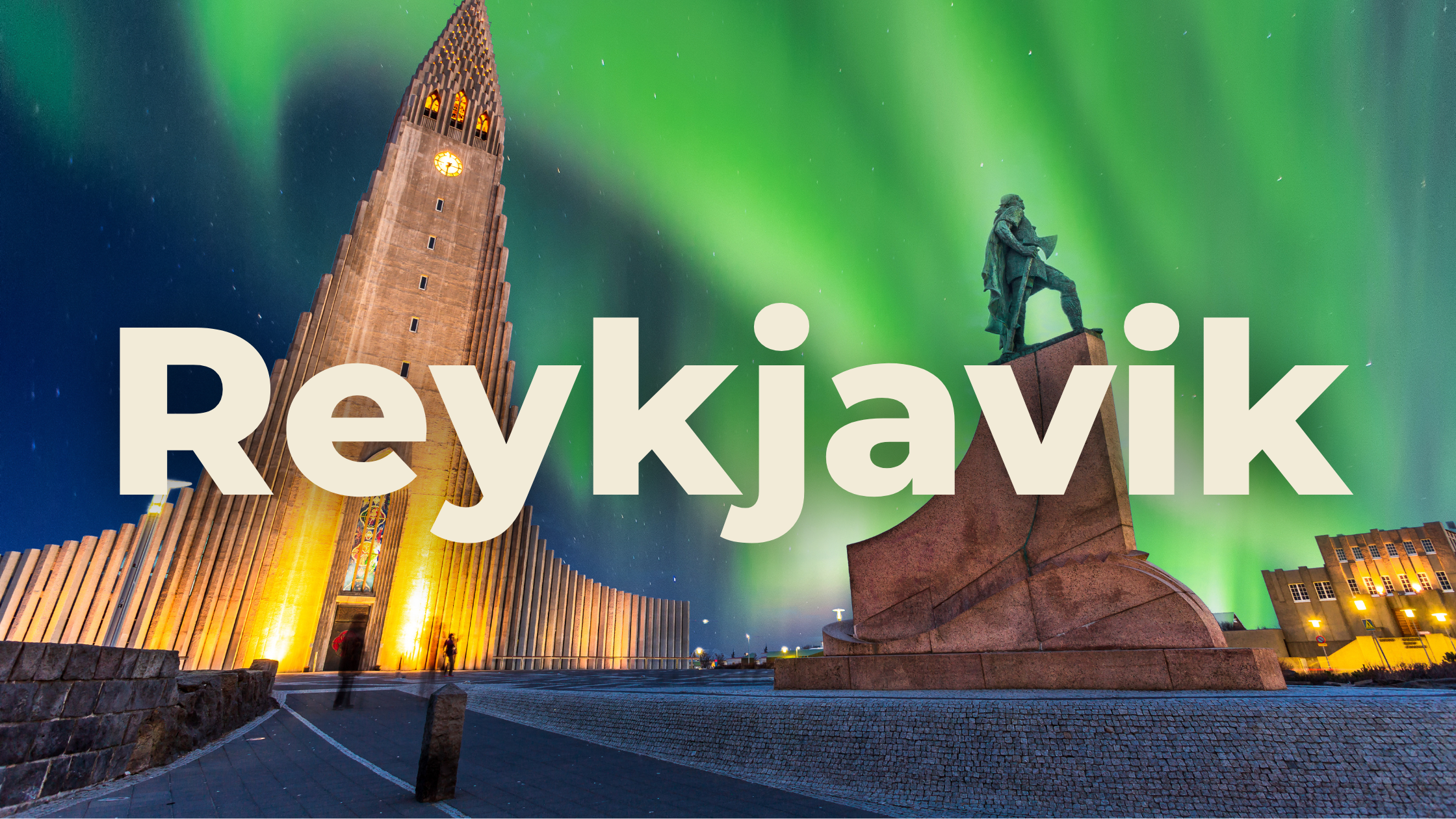
Hallgrímskirkja is the building most people picture when they think of Reykjavik – the tall, angular church that rises above the city like a concrete cliff face. It’s one of the first places Valur mentions, not just because it’s the best viewpoint in town, but because its design captures something very Icelandic.
The church’s structure was inspired by basalt columns, the geometric rock formations you see throughout Iceland’s landscapes. It’s a modern building, but it echoes the country’s volcanic foundations in a very literal way. For visitors, it’s a helpful reminder that Iceland’s nature and culture are always intertwined, even in places that look purely urban at first glance.
Inside, Hallgrímskirkja is simple and calm – more of a quiet moment than a major attraction – but the real highlight is the view from the top. Take the lift up the tower and you’re rewarded with a panoramic sweep of Reykjavik’s colourful rooftops, Mount Esja across the bay, and the grid of streets that connect the whole city together. On a clear day, it’s the best way to get a feel for the scale of the capital and its relationship with the landscape around it.
If you’re staying in the city centre, the church is easy to reach on foot, and it’s one of those places that works well at any time of day: soft morning light, bright afternoons, or the golden-hour glow you get on a clear evening. Even if you’re not usually drawn to churches, this one is worth seeing – both for the design, and for the perspective it gives you on Reykjavik itself.
Harpa Concert Hall
Harpa is one of those buildings that instantly tells you you’ve arrived somewhere a bit different. Sitting right on the waterfront, the concert hall is all sharp angles and shifting colours – a glass façade that seems to catch every change in the Icelandic light. In a city where the weather can turn in five minutes, Harpa reflects it all back at you: sunshine, cloud cover, storms rolling in from the bay. It’s a very modern Icelandic landmark, but one that feels completely at home in Reykjavik’s landscape.
Inside, Harpa is open to everyone. You don’t need a ticket or a tour to wander around the public spaces, and it’s a great place to warm up, reset, and take in the view from behind those patterned glass panels. The building hosts concerts, comedy, theatre, festivals and cultural events throughout the year, but even if you’re not catching a show, it’s still worth a visit just to see the architecture from the inside.
Valur touched on Harpa as an example of Reykjavik’s modern identity – a space that’s both practical and expressive, and one that locals genuinely use. It’s also a good reference point when exploring the city: Harpa anchors one end of the waterfront, making it an ideal starting place for a walk along the harbour, up toward the old town, or out toward the quieter paths along the sea.
If you enjoy striking architecture, interesting public spaces, or simply need a moment indoors between bursts of Reykjavik weather, Harpa is an easy win.
The Old Harbour
Reykjavik’s Old Harbour is one of those areas where the city’s personality comes through immediately. It’s a working harbour, so you’ll see fishing boats, whale-watching vessels and tour operators coming and going, but it’s also become one of the liveliest parts of the city for food, design and everyday local life.
This is the Reykjavik that Valur speaks so fondly of – the mix of old and new, where the smell of the sea sits alongside coffee shops, craft breweries and small independent businesses. The pace here feels slower than in the city centre, and the views across to Mount Esja are some of the best in town.
It’s an easy place to wander. There are food stalls and casual restaurants, handmade chocolate shops, cosy cafés and bars where you can warm up again after walking along the waterfront. It’s also the departure point for many whale-watching tours, which gives the area a sense of movement without feeling overstretched.
What makes the Old Harbour so appealing is that it feels lived-in rather than built-for-tourism. You’ll see locals grabbing coffee, families strolling on weekends, and visitors blending into the mix. If you want an area that feels relaxed, walkable and unmistakably Icelandic, the Old Harbour is a great place to spend an afternoon.
Reykjavik’s many museums
Reykjavik might be small, but it has an unusually rich collection of museums – the kind of variety that lets you dip in and out of Viking history, art, science, folklore and pure eccentricity all in a single weekend. It’s one of the things that makes the city such a great year-round destination. When the weather turns (and it will), you’re never far from somewhere warm, interesting and full of stories.
Valur mentioned the Northern Lights Museum, which is a helpful primer for anyone hoping to see the aurora – part exhibition, part science lesson, part practical briefing. But it’s just one option in a city that punches well above its weight culturally.
Here are a few highlights worth knowing about:
The Settlement Exhibition (Landnámssýningin)
This one is essential if you want to understand how Reykjavik began. The museum is built directly around the remains of a Viking longhouse discovered during construction work, which gives you an unusually physical sense of Iceland’s earliest settlement. It’s compact, atmospheric, and a good starting point for anyone curious about how a city grew from such humble beginnings.
The National Museum of Iceland
If you want the full story – from early settlement to modern independence – this is where to go. It’s organised, detailed and very readable, with a mix of objects, photographs and stories that give a strong sense of Icelandic identity. It’s a good “first-day” museum, because it helps everything else in the city make more sense.
Perlan – Wonders of Iceland
Perlan is hard to describe because it’s a bit of everything: natural history, geology, glaciers, interactive exhibits, and a planetarium dome where you can learn about the Northern Lights in comfort.
It’s polished and modern, and a good pick if you want something immersive rather than purely historical.
The Punk Museum
Only in Reykjavik would you find a punk museum in a former public toilet – and somehow it works. It’s small, irreverent and very tongue-in-cheek, but it gives a genuine snapshot of Iceland’s punk scene and its influence on local music. Think of it as a cultural palate cleanser between the more serious museums.
The Icelandic Phallological Museum
Yes, it’s exactly what it sounds like – a museum dedicated to… well, everything in that category. It’s unusual, confident in its subject matter, and has become one of Reykjavik’s most talked-about attractions. People tend to walk out saying some version of “I’m glad I saw it, but I don’t need to see it again.”
If nothing else, it’s a story you can take home.
Reykjavik’s museums are ideal for filling those pockets of time between tours, meals and walks – and they offer a surprisingly deep connection to Iceland’s past, present and personality. Whether you’re here for sagas or science, folklore or humour, there’s a museum that fits the mood.
Reykjavik neighbourhoods guide
Miðborg (City Centre)
Miðborg is the part of Reykjavik most visitors experience first – compact, colourful and easy to navigate, with most of the main landmarks within a comfortable walk. It’s the city’s natural centre of gravity: restaurants, cafés, museums and shops sit side by side, and the streets feel lively without ever becoming overwhelming.
This is where you’ll find many of Reykjavik’s familiar sights, including Hallgrímskirkja, Harpa Concert Hall, and the main shopping streets like Laugavegur and Skólavörðustígur. It’s a great area to stay in if you want to explore on foot and prefer a base where things feel straightforward – no complicated transport connections, no long distances, just a simple “step outside and start wandering” kind of city centre.
Despite being the busiest part of Reykjavik, Miðborg still manages to feel low-key. Traffic is light compared to other capitals, and the atmosphere is relaxed. You’ll find a mix of locals running errands, tourists popping in and out of bakeries, and plenty of small independent businesses that give the area its charm.
If it’s your first time in Reykjavik and you want everything close by, Miðborg is the easiest choice. It works well year-round, whether you’re visiting in the brightness of summer or the glow of Reykjavik’s winter lights.
Grandi (Harbour District)
Grandi sits just beyond the Old Harbour and has become one of Reykjavik’s most interesting neighbourhoods in recent years. What used to be a largely industrial area has quietly turned into a hub of food halls, creative studios and converted warehouses – the kind of place where you can go from a fishmonger to a chocolate shop to a contemporary art space in the space of a few minutes.
It still feels a little raw around the edges, and that’s part of its appeal. You’re close to the sea, close to the working harbour, and close to some of the city’s best modern food spots. It’s an easy area for grazing: grab something warm from a street-food window, wander through a design shop, or settle into one of the cafés that overlook the water.
Grandi also makes a good starting point for exploring beyond the city centre. You’ve got walking paths that run along the coastline, views back towards Harpa and Mount Esja, and enough open space that it feels different from the tighter streets of Miðborg.
If you enjoy exploring neighbourhoods that feel lived-in and evolving – places that aren’t polished but have character and momentum – Grandi is a great part of Reykjavik to spend a couple of hours. It pairs perfectly with a wander through the Old Harbour or a visit to one of the museums nearby.
Vesturbær
Vesturbær is one of Reykjavik’s most liveable neighbourhoods – calm, residential and comfortably local, while still being an easy walk from the city centre. It’s the sort of place where you see families heading to the swimming pool with towels under their arms, people cycling to work, and neighbours stopping to chat on the pavement. If Miðborg is where visitors tend to stay, Vesturbær is where many Reykjavik residents actually live.
The area sits just west of the Old Harbour, running alongside the sea. That coastal path is one of its biggest draws: a long, scenic walkway that gives you open views, fresh air and a sense of space you don’t often get in capital cities. On a clear day, you can see straight across to Mount Esja. On a windy day, you’re reminded exactly where you are in the world.
Vesturbær has a quieter rhythm – cafés and bakeries rather than bars, small local shops instead of big retail chains, and an everyday normality that feels refreshing if you’ve spent the day sightseeing. The neighbourhood’s swimming pool, Vesturbæjarlaug, is a much-loved gathering point and a classic Reykjavik experience in its own right.
If you want to get a feel for how people actually live here, Vesturbær is a great addition to your trip. It’s also a good choice for accommodation if you prefer peaceful evenings and easy walks by the sea.
Hlíðar
Hlíðar sits just east of the city centre and tends to fly under the radar for first-time visitors, which is partly what makes it appealing. It’s a largely residential neighbourhood with a practical, everyday feel – apartment buildings, small parks, local shops – and a calmness that contrasts nicely with the busier streets of Miðborg and the harbour.
It’s a good area to consider if you’re looking for affordable accommodation that’s still within easy reach of everything. You’re close to major bus routes, you can walk into the centre in about 15–20 minutes, and you’ve got plenty of food options nearby without needing to plan around reservations.
Because Hlíðar doesn’t lean heavily on tourism, it offers a glimpse of “real” Reykjavik life: people walking their dogs, popping to the bakery, heading out for a swim, or navigating the city on bikes even in questionable weather. It’s steady, reliable and quietly convenient – the kind of place where you settle in quickly and forget you’re in a capital city.
If you prefer staying somewhere slightly outside the most visited areas while still keeping things simple, Hlíðar is a solid choice.
How to get around Reykjavik
Reykjavik is a small, straightforward city, and most visitors are surprised by how easy it is to get around. Whether you prefer walking, public transport, electric scooters or hiring a car, the capital is built for simple, low-stress movement – even in winter. Here’s what you need to know about navigating Reykjavik efficiently and comfortably during your trip.
Walking
Walking is by far the easiest and most pleasant way to get around Reykjavik. The city centre is compact, the streets are safe, and most major attractions – Hallgrímskirkja, Harpa, the Old Harbour, museums and the main shopping streets – sit within a relatively small radius.
The pavements are well maintained, and even when the weather turns, you’ll find Reykjavikians continuing their day unfazed. Street crossings are clear, traffic is light compared to other capitals, and everything feels accessible on foot. If you’re staying in Miðborg, Grandi or Vesturbær, expect to walk most places without ever needing a taxi or bus.
Walking also gives you the best sense of the city’s atmosphere – the murals, the coastal views, the small cafés and family-run shops you might miss if you rush past.
Public Transport
Reykjavik’s public transport system is simple, reliable and easy to use once you know the basics. There’s no metro or tram – the system is built around buses and, increasingly, electric scooters for short hops.
Buses
All city buses are operated by Strætó, and they cover the main neighbourhoods as well as connections out towards the suburbs.
Key things to know:
- Download the Strætó app (iOS/Android) for timetables, live maps and mobile tickets.
- You cannot pay with cash on board — buy tickets in the app, or from selected kiosks.
- Buses run frequently during the day, with reduced services in the late evening and on Sundays.
- Routes are simple, but popular tourist routes (like to Perlan or the harbour area) are especially well served.
Electric Scooters
In warmer months, electric scooters are everywhere. They’re ideal for short, flat journeys in and around the centre.
- Operated by companies like Hopp and Zebra.
- Unlock via app; pay per minute.
- Best for dry-weather days (icy conditions shut them down).
Electric scooters are a quick way to travel between Miðborg, Grandi and Vesturbær without waiting for a bus – just keep an eye on the weather before you commit.
Taxis
Taxis in Reykjavik are safe, reliable and easy to find, but they’re comfortably in the “Scandinavian pricing” category. You’ll see official taxi stands across the city centre, or you can book through local apps.
How to book:
- Use the Hreyfill or BSR taxi apps
- Or call directly for pickups
- Uber does operate in Iceland, but traditional taxis tend to be faster and more consistent
Drivers speak excellent English, and vehicles are clean and well regulated. If you’re travelling late at night, carrying luggage, or heading somewhere outside the pedestrian-friendly centre, taxis can be worth the cost for convenience.
Car Hire
Hiring a car is the best way to explore Iceland beyond Reykjavik – waterfalls, black-sand beaches, glaciers and the Golden Circle all become easier when you’re not tied to tour schedules. If your plans include day trips or several excursions outside the city, renting a car is a sensible option.
Most visitors hire from Keflavík Airport, where the major international companies and several local operators are based. There are also a few smaller rental locations in Reykjavik itself if you only need a car for a short spell.
Important tips:
- Always check real-time road conditions at road.is – weather changes quickly.
- For long drives in winter, choose a car with 4WD and winter tyres.
- Parking in central Reykjavik is straightforward; zones are clearly marked and payment can be made via the Parka app.
- If you’re not used to driving in challenging weather, choose shorter day trips or stick to the more accessible southern routes.
Car hire opens up a lot of freedom, but it’s worth balancing flexibility with safety. Reykjavik is walkable – the car is really for everything beyond it.
Icelandic culture explained
Storytelling
Icelandic culture is often described as a blend of ancient traditions and modern practicality, and Reykjavik is where that mix shows up most clearly. For a small capital, it has a surprising amount of identity – not loud or flashy, but steady, rooted and quietly confident. A lot of this comes down to Iceland’s history, which stretches back over a thousand years and is recorded in some of the world’s earliest written stories.
One thing Valur emphasised is that Icelanders have always been storytellers. Long before books or museums, communities passed the sagas from one generation to the next, preserving family histories, dramatic feuds and half-mythical adventures in a way that still shapes how Icelanders think about their past. You see references to these stories everywhere – in artwork, place names, guided tours and even in the dry humour people use when describing the weather or the countryside.
Folklore is another big thread in Icelandic culture. It’s not that everyone literally believes in elves or hidden people, but there’s a cultural respect for the stories, and for the landscapes they come from. As Valur explains, folklore here is less about superstition and more about imagination – a way of expressing the relationship Icelanders have with a landscape that is unpredictable, dramatic and sometimes unforgiving.
Modern Icelandic culture is also shaped by something practical: survival. Long, dark winters; isolated communities; volcanic terrain; unpredictable storms. These things have created a society that values resilience, resourcefulness and a certain understatement. People help each other out. They’re direct with their opinions. They don’t see the need to make something complicated when it can be simple.
You’ll notice these traits in everyday life in Reykjavik: in the social swimming pools that act as neighbourhood hubs; in the design shops that take their inspiration from local materials; in the way Icelanders dress for weather rather than fashion; and in the relaxed way people switch between Icelandic and English without fuss.
It’s a culture that rewards curiosity. Ask questions and people will tell you stories – sometimes longer than you expected, sometimes funnier, sometimes stranger – but always with that very Icelandic mix of honesty, warmth and a healthy respect for nature.
What to eat in Reykjavik
Reykjavik’s food scene is full of surprises. Iceland doesn’t have a long growing season, but what it does have – exceptionally clean water, high-quality seafood, and some very content free-roaming sheep – makes for ingredients that are far better than you might expect from a small, sub-Arctic capital.
Here are some of the dishes and flavours you’ll want to look out for.
Lamb
Icelandic lamb is some of the best you’ll find anywhere. The sheep roam freely through the countryside, grazing on wild herbs and grasses, which gives the meat a clean, almost sweet flavour. You’ll find it everywhere – in stews, soups, roasts and modern takes in the city’s restaurants.
Fish and Seafood
Seafood in Reykjavik is as fresh as it comes. Expect cod, haddock, langoustine and Arctic char served simply, without fuss, and usually with a level of freshness that speaks for itself. Even a basic fish-and-chips-style meal is noticeably better here.
Hot Dogs (Pylsur)
Icelandic hot dogs have become something of a cultural icon. Made with a blend that includes lamb, they have a distinctive taste, and “one with everything” is the way to order – onions, crispy onions, and three sauces. It’s quick, inexpensive and a very local experience.
Fermented Shark (Hákarl)
This one has a reputation that reaches far beyond Iceland. It’s definitely an acquired taste and not a staple of everyday Icelandic life, but you’ll see it offered as part of traditional tasting plates. Try it once if you’re curious; don’t force it if you’re not.
Other dishes worth trying
Reykjavik has plenty of comforting, homely dishes too:
- Plokkfiskur – a simple, hearty fish stew with mashed fish and potatoes.
- Rúgbrauð – a dark rye bread, often baked using geothermal heat.
- Skyr – the thick, tangy dairy staple Icelanders treat like yoghurt.
- Kleinur – twisted doughnuts, perfect with a coffee.
- Langoustine soup – rich, warming, and found on many menus.
Reykjavik’s restaurants tend to focus on quality ingredients, straightforward flavours and a modern twist on traditional dishes – the kind of food that feels honest and comforting, especially on a cold day.
Best day trips from Reykjavik
One of the best things about staying in Reykjavik is how easy it is to get out of the city and straight into Iceland’s dramatic landscapes. Waterfalls, geysers, black-sand beaches and steaming geothermal pools are all within reach, whether you’re driving yourself or joining an organised tour. Here are the day trips most visitors prioritise when basing themselves in the capital.
The Golden Circle
The Golden Circle is the classic first-timer route – and for good reason. It combines three of Iceland’s most impressive sights in a single loop:
- Þingvellir National Park – the birthplace of Iceland’s parliament and a place where you can physically see the rift between two tectonic plates.
- Geysir – home to bubbling mud pots and Strokkur, the reliably erupting geyser that shoots water into the air every few minutes.
- Gullfoss – a two-tiered waterfall that is powerful enough to impress even the most waterfall-sceptical traveller.
It’s an easy day trip from Reykjavik, and you’ll find options to suit every style – from self-drive routes to coach tours and small-group experiences.
Blue Lagoon
The Blue Lagoon isn’t in Reykjavik at all – a point worth knowing – but it’s close enough to be part of most visitors’ plans. It sits between the capital and the airport, which means it works beautifully as:
- a first-day recovery stop after a flight,
- a final soak before heading home, or
- a backup plan if the weather makes other sightseeing tricky.
The milky-blue geothermal water, silica mud masks and lava-field surroundings make it one of Iceland’s most recognisable attractions. It’s busy, but if you time it well, it’s a relaxing and very “Icelandic” experience.
South Coast highlights
If you have a full day and want big, cinematic scenery, the South Coast delivers: black-sand beaches, roaring waterfalls and sweeping views. Many travellers include:
- Seljalandsfoss and Skógafoss waterfalls
- Reynisfjara black-sand beach
- Vík, a small town on the edge of the coast
It’s a long day, but one of the most rewarding.
Snæfellsnes Peninsula
Often described as “Iceland in miniature,” the Snæfellsnes Peninsula has cliffs, volcanic craters, fishing villages, lava fields and beaches in every shade from yellow to black. It’s perfect if you want variety without a rushed itinerary.
Reykjanes Peninsula
Closer to Reykjavik, the Reykjanes Peninsula offers geothermal landscapes, lighthouses, lava fields and coastal views – ideal if you want something dramatic without committing to a long driving day. It also ties in naturally with the Blue Lagoon visit.
Reykjavik makes a fantastic base because you can return to a warm dinner, a cosy bar or a night-time swim in the city’s pools after a full day of exploring. Whichever direction you head, you’ll find something impressive within an hour or two.
Reykjavik safety & practical Tips
Reykjavik is one of the safest capital cities in the world. It’s a place where people leave prams outside cafés, children walk to school without fuss, and visitors quickly realise that safety isn’t something they need to worry about here. That said, Iceland has its own quirks – mostly weather-related – so a few practical tips go a long way.
A very safe city
Crime levels in Reykjavik are extremely low. You can walk around comfortably at any time of day or night, and the atmosphere is relaxed even in busier months. Standard common sense applies, but you won’t need to navigate the complicated safety concerns that come with many major capitals.
Weather is the real wildcard
If there’s one thing that can catch visitors off guard, it’s Iceland’s weather. Conditions can shift quickly – calm one minute, wind and rain the next – so packing layers and checking the forecast regularly is more useful than worrying about crime.
A few simple habits make a big difference:
- Bring warm layers even in summer.
- Expect wind. Always wind.
- Waterproof shoes are a good idea.
- Check conditions before day trips, especially in winter.
The official site road.is is essential if you’re planning to drive outside Reykjavik; it gives real-time information on closures, ice warnings and visibility.
Daylight varies dramatically
Reykjavik’s daylight hours change quickly:
- In winter, daylight can be as short as four hours.
- In summer, the sun barely sets.
Plan your activities around the light – it’s part of what makes Iceland feel so different.
Cash isn’t necessary
Reykjavik is practically cashless. Cards and phone payments are accepted everywhere – cafés, museums, food stalls, taxis, public transport. There’s no need to withdraw Icelandic króna unless you’re collecting it as a souvenir.
Language
English is widely spoken. You won’t have any trouble communicating, and locals are used to switching between languages without hesitation.
Swimming pools as social hubs
It might not immediately occur to visitors, but Reykjavik’s public swimming pools are an important part of local life. They’re warm, affordable and open year-round – and the hot pots (geothermal hot tubs) are where half the city seems to catch up on news and life. If you want to experience something that feels genuinely Icelandic, add a pool visit to your plan.
Listen to the full Reykjavik episode
[cfm_captivate_episodes show_id=”a281b2bc-3a1a-4fc7-b3ec-71415c5db233″ episode_id=”257″ layout=”list” title=”hide” se_num=”hide” title_tag=”h2″ image=”hide” image_size=”large” content=”hide” player=”above_content” link=”hide” order=”desc” exclude=”no” items=”10″ pagination=”numbers”]
About our local expert: Valur Heiðar Sævarsson
Valur is the founder of Your Friend in Reykjavik, one of the city’s most personable and story-driven guiding companies. Born and raised in Iceland, he has the kind of local knowledge that comes from growing up surrounded by sagas, folklore and a landscape that doesn’t behave like anything else in Europe. His approach to guiding is simple: make people feel welcome, tell good stories, and help visitors understand Iceland the way Icelanders live it – with curiosity, humour and a healthy respect for the weather.
Your Friend in Reykjavik specialises in small-group walking tours that explore everything from Viking history and Icelandic culture to food, beer and folklore. The company is known for its friendly guides, well-researched routes and relaxed, conversational style – the kind of tours that feel more like exploring with a knowledgeable friend than following a flag through the city. They offer a mix of classic introductions to Reykjavik, specialised themed walks, and private experiences tailored to specific interests.
What sets Valur apart is the way he brings Reykjavik to life through stories – old sagas, family tales, historical details and small observations that help visitors understand why the city looks and feels the way it does. Whether he’s talking about Iceland’s literary heritage, the realities of winter in the north, or the quirks that define local culture, he has a knack for explaining things in a way that is honest, engaging and memorable. His tours give travellers a deeper connection to Reykjavik, and his company has become a go-to recommendation for anyone wanting an authentic introduction to the city.
About Daniel Edward
Daniel Edward is a travel writer and presenter known for his conversational style and ability to bring places to life through clear, thoughtful storytelling. Drawing on years of experience working around the world – including a decade in the cruise industry as a former Cruise Director – he now hosts the global travel podcast Destination Unlocked, where he speaks with expert local guides to uncover what makes each destination worth exploring.
His work focuses on culture, history and the small details that make travel meaningful, with a particular interest in helping first-time visitors feel informed rather than overwhelmed. Daniel has written for national media, contributed to travel radio, and presented travel lectures for major cruise lines.
When he’s not on the road, Daniel is usually in the garden, on stage, or planning the next destination to unlock – always with an eye for the stories that connect places and people.