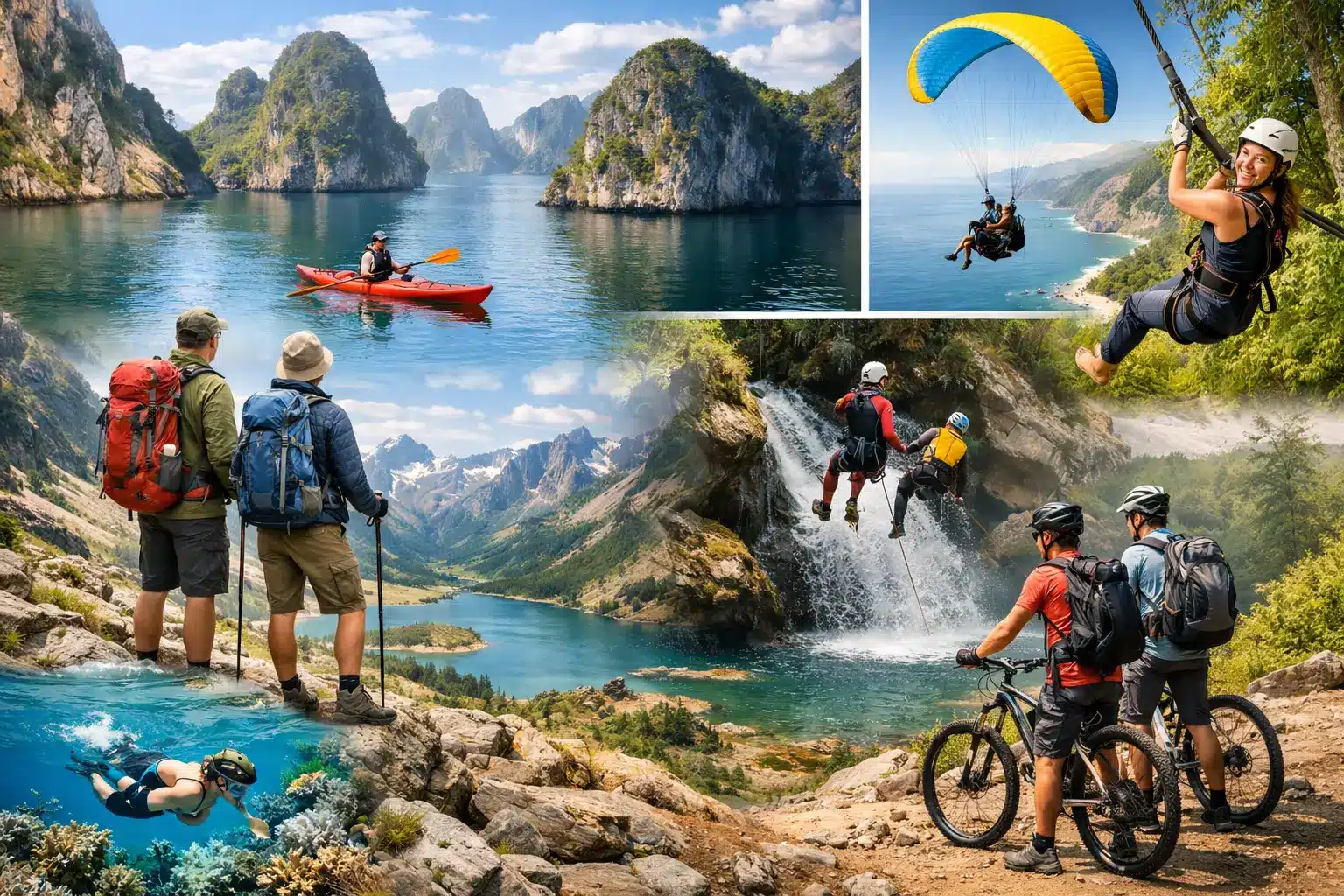
An adventure holiday need not begin with a survival course, a summit bid or the purchase of alarming amounts of technical clothing. The best adventure holidays for beginners pair a little healthy challenge with excellent guiding, comfortable bases and enough unscheduled time to enjoy where you are. The aim is to return home with a new story, not an impressive collection of blisters.
For a first active escape, the destination matters as much as the activity. Look for places where walking trails are well marked, local operators run small guided groups and there is a good choice of hotels close to the action. That leaves you free to try something unfamiliar – whether that is kayaking, cycling, rafting or a first proper hike – without turning every practical detail into an expedition of its own.
What makes an adventure holiday beginner-friendly?
Beginner does not mean unfit, timid or uninterested. It usually means you are new to a particular activity, uncertain about the kit, or keen to test the waters before committing to a week of eight-hour days. A well-designed first adventure holiday builds confidence gradually. There should be clear briefings, guides who can adapt a route or pace, and a realistic way to sit out an activity if the weather or your energy has other ideas.
It is worth reading activity descriptions closely before booking. “Easy” can mean very different things in the Dolomites and on a coastal path in Cornwall. Check distance, ascent, terrain, group size and whether transfers, equipment and lunch are included. For water activities, ask about the grade of river, expected sea conditions and the swimming ability required. These details are less glamorous than a dramatic photograph, but they are what make a holiday feel exciting rather than overwhelming.
A hotel with a pool, a decent breakfast and a nearby restaurant is not an admission of defeat. It is sensible holiday design. Recovery is part of the pleasure, particularly when you are discovering how much you enjoy being active.
The best adventure holidays for beginners
1. Madeira for levada walks and a gentle dose of drama
Madeira makes walking feel wonderfully theatrical. Its levadas – historic irrigation channels – trace green hillsides, forests and valleys, creating routes with relatively modest gradients and constantly changing views. Choose guided half-day walks at first, particularly on exposed paths, then leave an afternoon for Funchal, a swim or a long lunch with Atlantic views.
Stay in Funchal if you want restaurants and easy transfers, or choose a quieter hotel around Ponta do Sol for a slower rhythm. Madeira is a strong choice for couples and friends who want an active holiday without changing accommodation every night. Conditions can shift quickly in the mountains, so a local guide adds genuine value rather than mere hand-holding.
2. Slovenia for lakes, easy cycling and mountain scenery
Slovenia is remarkably good at making an outdoors holiday feel civilised. Base yourself near Lake Bohinj for clear-water kayaking, low-key cycling and walks in the Julian Alps, with Lake Bled and Ljubljana within reach for a change of scene. The landscapes have alpine grandeur, but the distances are manageable and the atmosphere is unshowy.
A guided e-bike tour is an especially good first-day activity. It lets you cover more ground without turning the holiday into a test of stamina, while a guide can point out villages, swimming spots and local food stops you might miss independently. Book a hotel near the lake if mornings on the water appeal; stay in Bled if you prefer more dining choice and a livelier evening.
3. Croatia for sea kayaking and island-hopping
The Croatian coast is an excellent place to try sea kayaking because the reward arrives quickly: clear water, small coves and lunch in a harbour that may only be reachable from the sea. A half-day guided paddle from Dubrovnik, Hvar or one of the quieter Dalmatian islands is enough for most newcomers. You will learn basic strokes and safety procedures, but this is not a military exercise.
For a fuller adventure holiday, combine day trips with a few nights on two islands rather than attempting a hurried sweep of the whole coast. Ferry timetables, July and August heat, and the scarcity of shaded routes all matter. May, June, September and early October often offer a more forgiving balance of warm water, manageable crowds and better hotel availability.
4. Costa Rica for wildlife with a side of adrenaline
Costa Rica works brilliantly for travellers who like the idea of adventure but also want the reassurance of established tourism infrastructure. Around Arenal, you can combine rainforest walks, hanging bridges, hot springs and beginner-friendly rafting on gentler stretches of river. The variety means nobody has to spend every day doing the same thing, a useful feature when travelling with friends of mixed confidence.
This is a holiday where guided excursions are worth booking in advance, especially in peak season. They remove the friction of transport, equipment and safety planning, leaving you to focus on the thrill of spotting a sloth or negotiating your first rapid. Spend at least three nights in the Arenal area rather than treating it as a rushed stop between airport and beach.
5. Scotland for a guided Highlands multi-activity break
You do not need a long-haul flight to find a proper adventure. The Scottish Highlands offer walking, canoeing, gorge walking, wildlife watching and, for the willing, a first taste of climbing or coasteering. A guided multi-activity break is ideal if you are unsure which sport will click, since the programme provides variety and the local knowledge is part of the experience.
The trade-off is the weather, which can be glorious, atmospheric or both within an hour. Bring waterproof layers and treat flexibility as part of the bargain. A cosy inn or small hotel near Fort William, Aviemore or Pitlochry gives the trip a reassuringly comfortable centre after a day outdoors.
6. Tenerife for volcanic walks and warm-water confidence
Tenerife is much more than a winter-sun resort. Beyond the beach towns, the island has volcanic trails, pine forests, dramatic viewpoints and calm-water excursions along sections of its coast. A guided walk in Teide National Park is a particularly memorable introduction to hiking on varied terrain: you get the lunar landscape and big views without needing alpine experience.
The island is well suited to a first solo adventure holiday, too. Transfers are straightforward, day tours are plentiful and there are hotels for every budget. Avoid assuming warm weather means easy conditions, however. High-altitude paths can be cold and windy, and good footwear matters more than a fashionable holiday wardrobe.
7. Portugal’s Algarve for coastal walking and surf lessons
The Algarve offers a very approachable combination of cliff walks, sheltered beaches and beginner surf schools. Base yourself around Lagos for access to coastal paths, caves and a sociable restaurant scene, or choose quieter Salema or Tavira for a more relaxed stay. A first surf lesson is humbling, usually hilarious and, with the right instructor, far less intimidating than watching experts from the sand suggests.
The Atlantic has real power, so choose a reputable school that groups students by ability and provides the board and wetsuit. Pair surfing with a guided coastal hike or kayak trip, rather than booking activities every day. This is one of the best adventure holidays for beginners who want activity to be the highlight of a proper beach break, not the entire agenda.
Book the trip around your confidence, not somebody else’s itinerary
The most satisfying first adventure holiday has one or two anchor activities, not an overfilled timetable. If you are keen on rafting, for example, book that for day two or three, once you have slept well and found your bearings. Keep the arrival day light, especially after a flight, and build in a weather contingency for hikes, boating or anything on the water.
When comparing hotels, prioritise location over a marginally larger room. Being within walking distance of a marina, trailhead shuttle, town centre or activity meeting point changes the whole feel of the trip. It reduces early starts, taxi negotiations and the temptation to skip something because the logistics look tiresome. Breakfast, luggage storage and an outdoor space to dry kit are small details that become surprisingly valuable.
For guidance that is as useful as a guidebook and as personal as a chat with your most well-travelled friend, the Destination Unlocked podcast is a smart companion before you book. Each 40-minute episode brings together the practical texture of a place – where to stay, what to prioritise and how to spend your time well – through informed conversations with people who know it properly.
Choose the activity that makes you slightly nervous in the best possible way, book it with people who know the landscape, and leave enough room in the plan to linger afterwards. That is usually where a beginner becomes an adventurer.