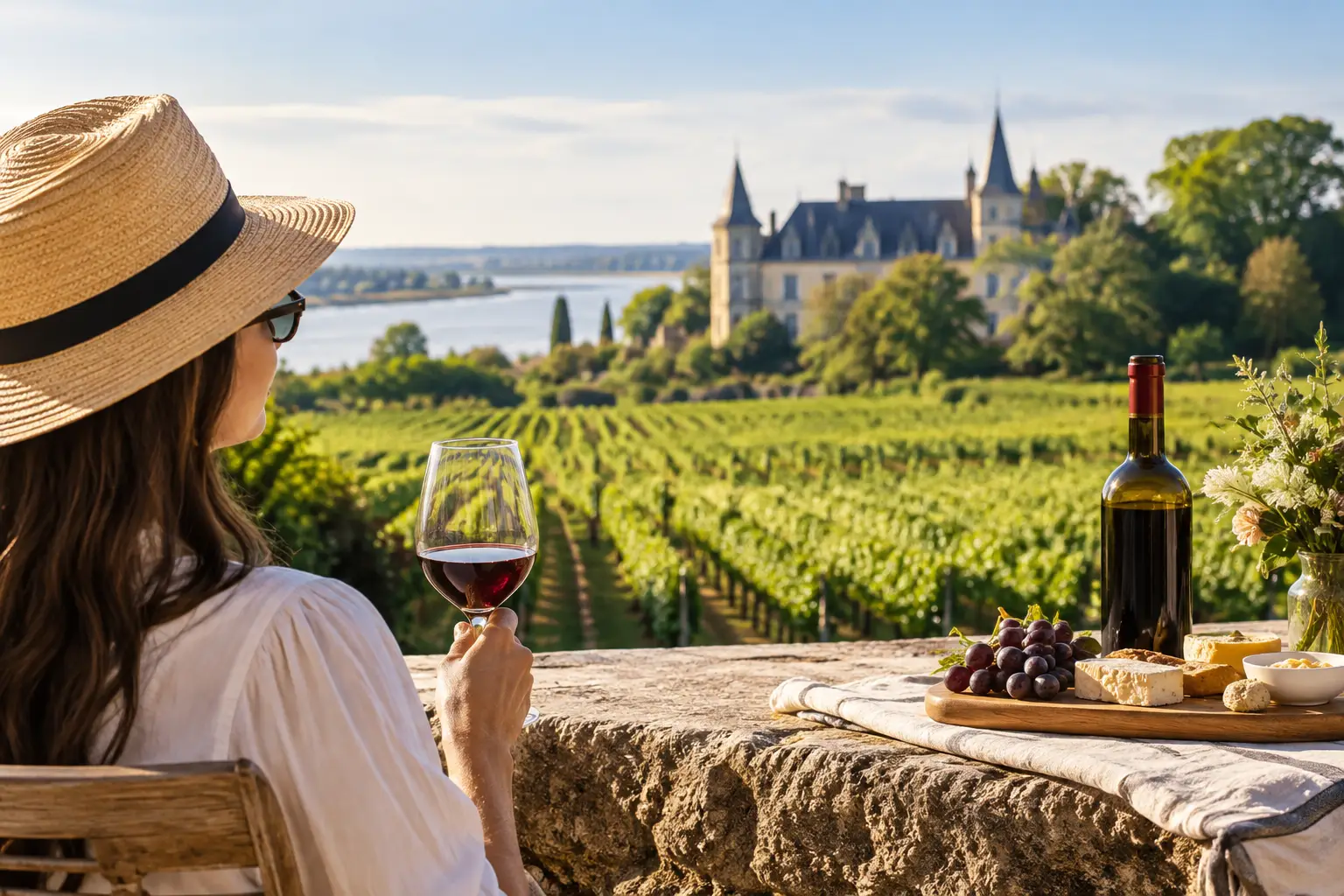
Bordeaux is often approached as a wine list rather than a place. That is a mistake. This Bordeaux wine region guide is for travellers who want to turn famous labels into a memorable French break: riverfront dinners in the city, handsome château hotels, vineyard lanes and lunches that seem to stretch agreeably into the afternoon.
The region is large, varied and far less formal than its grand reputation suggests. You can spend a long weekend based in Bordeaux city, or slow things down with a few nights among the vines. The best plan depends on whether you are chiefly here to taste, to eat, or simply to enjoy a beautiful corner of south-west France at a civilised pace.
Start with Bordeaux city, then choose a wine country
Bordeaux city is the sensible first base for most visitors. It has a handsome 18th-century riverside, excellent restaurants, a tram network that removes the need for a car on arrival, and enough bars to compare wines before committing to a full day of tastings. Stay around the Triangle d’Or or near the Garonne for polished central hotels and easy evening walks. Saint-Pierre has more of the old-town buzz, with narrow streets and independent places to eat.
Give the city at least two nights. Visit the Cité du Vin, not as a substitute for the vineyards but as a useful introduction to the region’s styles and history. Then take a riverfront walk from the Place de la Bourse towards the Chartrons district, where former wine warehouses now hold wine bars, galleries and restaurants. It is an elegant way to begin, particularly if you have arrived on a river cruise and only have limited time ashore.
For the vineyards, think in terms of banks and directions rather than attempting to see all of Bordeaux. The Garonne and Dordogne rivers shape the region, as well as its geography. Médoc and Graves lie to the west and south of the city. Saint-Émilion, Pomerol and the wider Libournais sit to the east. Each makes a distinctly different day out.
Which Bordeaux wine area suits your trip?
Médoc for famous châteaux and cabernet lovers
North-west of Bordeaux, the Médoc is the postcard version of the region: long avenues, gravelly soils and celebrated estates behind gates and carefully clipped hedges. Margaux, Saint-Julien, Pauillac and Saint-Estèphe are the names that draw collectors, and Cabernet Sauvignon is generally the dominant grape.
This is the right choice if seeing prestigious châteaux matters to you. It is also one of the better regions for a guided day trip from the city, since tastings at leading estates usually need arranging in advance and driving after them is plainly not the point. A knowledgeable guide can provide context that a quick tasting alone cannot: why the soil changes from one commune to the next, and why a modest-looking plot may be treated with such reverence.
The trade-off is that some visits can feel polished rather than intimate. For a more relaxed experience, pair one headline estate with a smaller producer or a village lunch in Margaux or Pauillac.
Saint-Émilion for medieval lanes and merlot-led wines
Saint-Émilion is the easiest choice for a first wine weekend, particularly for couples or friends who want more than cellar doors. The hilltop town is beautiful, compact and full of restaurants, wine shops and stone buildings, while its surrounding vineyards are immediately accessible.
Merlot plays a leading role here, often blended with Cabernet Franc. The wines tend to feel softer and more generous in youth than many left-bank Bordeaux wines, although the serious examples can age for decades. You do not need a collector’s budget to enjoy them.
Stay overnight if you can. Day visitors leave in the late afternoon, and the town becomes far more atmospheric. Book a hotel or guesthouse in or near the village, then arrange a vineyard visit, a tasting in a family-run property and dinner without having to watch the clock. The underground monuments and views from the upper streets make a welcome break between glasses.
Pessac-Léognan and Graves for an easy city escape
South of Bordeaux, Pessac-Léognan and Graves are particularly useful when time is short. Several estates are within an easy drive of the city, and the area makes both red and dry white wines. That variety is valuable if everyone in your party does not want a full day of claret.
White Bordeaux can be a minor revelation: Sauvignon Blanc and Sémillon blended into wines with citrus, stone fruit and a subtle waxy texture. Ask for a tasting that includes both colours. Nearby, Sauternes offers the region’s celebrated sweet wines, rich with apricot and honey yet often balanced by vivid acidity. A visit here works especially well with lunch, foie gras or blue cheese, rather than treating sweet wine as an afterthought.
Entre-Deux-Mers for quieter lanes and better value
Between the Garonne and Dordogne, Entre-Deux-Mers is less about famous names and more about the pleasures of rural Bordeaux: villages, farm restaurants and smaller estates. It is a good choice for travellers with a car who would rather meet growers than tick off grand labels.
The area is known for fresh dry whites, though producers make reds too. Accommodation can be better value than in Saint-Émilion, with converted farmhouses and country guesthouses that make an appealing base for a slower four- or five-night stay.
How to plan tastings without making a nuisance of yourself
Bordeaux does not reward spontaneous vineyard hopping quite as readily as some wine regions. Many estates are working farms with limited visitor capacity, and even smaller properties may only receive guests by appointment. Book at least one or two weeks ahead for weekends and high season, and earlier for well-known châteaux.
A good tasting itinerary is two estates in a day, perhaps three if they are very close together and lunch is light. More than that and the wines blur, the conversation becomes rushed, and nobody remembers whether the third gravel terrace was in Pauillac or a neighbouring commune. Add a long lunch instead. It is France, after all.
If you are driving, nominate a driver or use a private guide. The local roads are easy enough, but tasting pours are generous and rural taxis cannot always be summoned at short notice. Guided small-group tours work well from Bordeaux city; a private tour is worth considering for groups who want to focus on a particular appellation or mix visits with a restaurant booking.
When reserving, ask what the visit includes. Some estates offer a straightforward cellar tour and tasting; others include vineyard walks, blending sessions, picnics or food pairings. These are not interchangeable experiences. A blending workshop suits curious beginners, while serious wine drinkers may prefer a seated vertical tasting that shows how vintage conditions alter the finished wine.
The best time to visit Bordeaux wine country
May, June, September and early October are the sweet spots. The vines are lively, the weather is generally pleasant, and restaurants and tours are fully operating. September can feel especially exciting as harvest approaches, though actual picking dates vary with weather and estate. It also means growers are busy, so appointments are essential.
July and August bring warmer temperatures and more visitors, particularly in Saint-Émilion. Book accommodation with air conditioning or a pool if that matters to you, and plan vineyard visits for the morning. Winter is quieter and can offer excellent city breaks, but vineyard activity is less visible and some properties reduce their visitor schedules.
Where to stay for the right sort of Bordeaux break
For a first visit, split your stay between Bordeaux city and wine country. Two nights in the city followed by two nights near Saint-Émilion makes an especially balanced itinerary: urban energy first, then slower vineyard days. It also means you can enjoy Bordeaux’s restaurants and bars without driving.
Château hotels deliver the full fantasy, but they range from genuinely historic estates to modern properties borrowing the name. Check the location carefully. A beautiful rural hotel may be perfect for tranquillity, yet inconvenient if you hope to dine out each evening. In Saint-Émilion, staying within walking distance of the centre gives you freedom after tastings. In the Médoc, a car is more useful and a country property can make greater sense.
Those travelling by cruise ship can still make a rewarding introduction in one day. Choose either Bordeaux city and the Cité du Vin, or a pre-booked shore excursion to Pessac-Léognan or Saint-Émilion. Trying to combine the city, a major château and a long lunch in a few hours is how a lovely day becomes a timetable.
For more destination planning in the spirit of a well-informed friend, the Destination Unlocked podcast is as useful as a guidebook and as personal as a chat with your most well-travelled friend. Each 40-minute episode is designed to give you the information you need for a great trip.
Bordeaux is at its best when you leave space between the bookings: time for a second glass on a terrace, a detour through a village, and the pleasing possibility that the wine you remember most will not be the famous one.