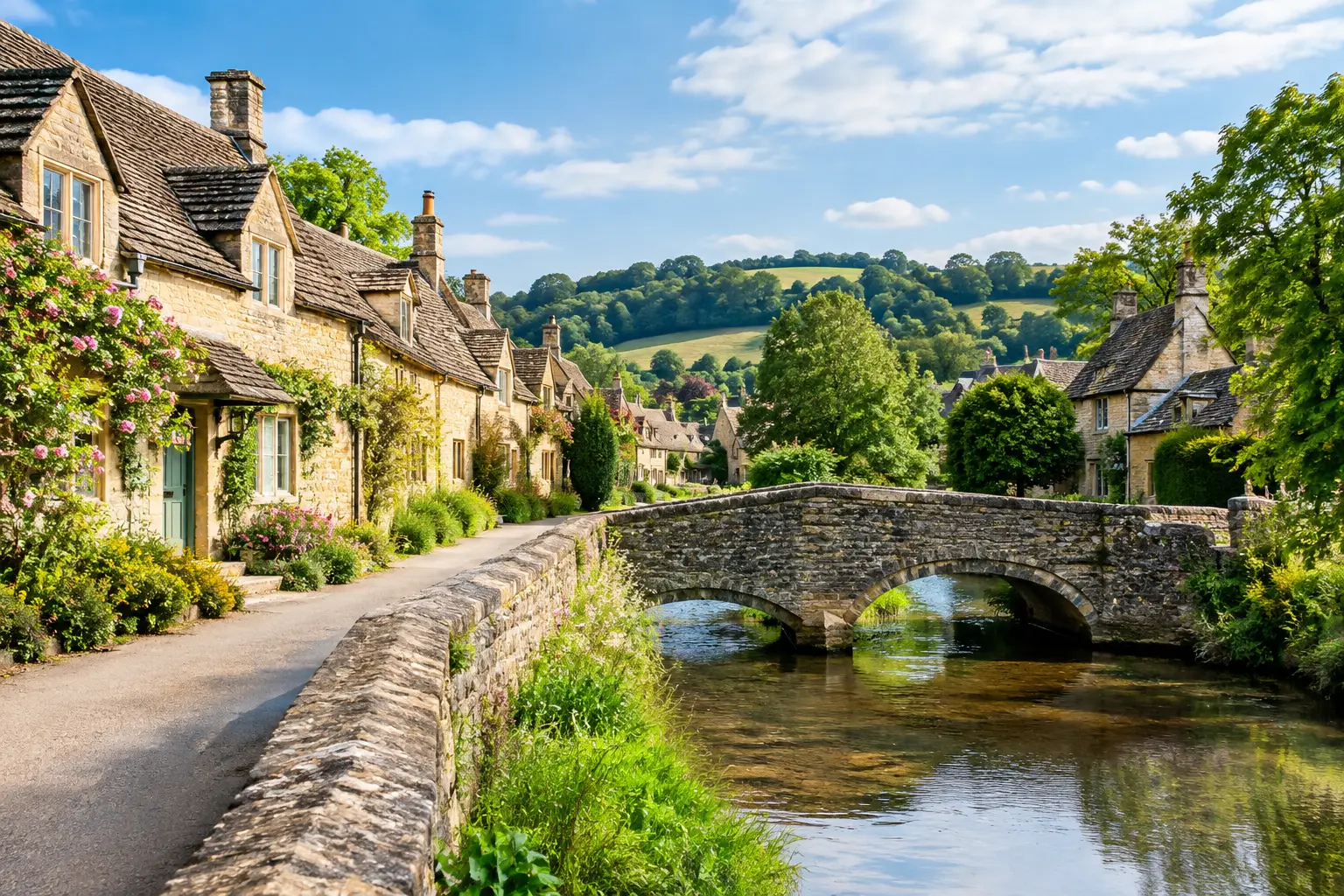
The Cotswolds rewards a little selectivity. This is not a region to tackle as a frantic tick-list of honey-coloured villages, however tempting the photographs may be. The best Cotswolds travel guide begins with a decision: do you want a car-free weekend in one handsome market town, a food-led escape with a country pub at its heart, or a road trip threading together the quieter corners?
The answer shapes almost everything, from where to book your hotel to how much of the countryside you will actually see. Give yourself two or three nights, choose one or two bases rather than five, and leave room for a long lunch, an unplanned footpath and the kind of village shop that sells both a good local cheese and an unexpectedly excellent postcard.
Choosing the right Cotswolds base
The Cotswolds spans six counties, so it is larger and less neatly contained than many first-time visitors expect. Staying in the north-west, around Chipping Campden, Broadway, Stow-on-the-Wold or Moreton-in-Marsh, puts you close to some of the most recognisable villages and excellent walking country. It is a fine choice for a first visit, particularly if picture-postcard lanes and traditional inns are high on the agenda.
For a more food-focused break, Cirencester makes an assured base. It has Roman history, a proper town centre, good restaurants and easy access to the southern Cotswolds. Nearby Tetbury suits travellers drawn to antiques, independent shops and a slightly more polished atmosphere. Neither gives you the instant fairy-tale effect of Bibury or Bourton-on-the-Water, but both are more practical for dinner, parking and spending an evening without feeling stranded after 6pm.
Broadway is handsome and convenient, with smart hotels, galleries and Broadway Tower nearby, but its popularity is reflected in prices. Stow-on-the-Wold has more bustle and a particularly useful position for exploring by car. Chipping Campden feels calmer, with beautiful stone buildings and access to the Cotswold Way. Moreton-in-Marsh is the sensible choice for rail travellers, thanks to direct services from London Paddington, though you will want taxis, a tour or a carefully planned bus timetable once you arrive.
If you are booking a special-occasion stay, a country-house hotel can make the break feel complete: fires, gardens, afternoon tea and a restaurant worth dressing for. For a more relaxed trip, a village pub with rooms is often the better bet. You can walk back from dinner, avoid a designated-driver debate and wake up already in the landscape you came to see.
A Cotswolds travel guide to the villages worth your time
Bibury is famous for Arlington Row, a short terrace of weavers’ cottages beside the River Coln. It is genuinely lovely, especially early in the morning, but it is also small and can be very busy. Treat it as a stop, not a whole day out, and pair it with a walk along the river or lunch in nearby Cirencester.
Bourton-on-the-Water has low stone bridges over the River Windrush and a lively, family-friendly feel. It works well if you enjoy attractions and cafés within easy reach, but those seeking peace may prefer to arrive for breakfast or later in the afternoon, then sleep elsewhere. Lower Slaughter, a short walk away, is quieter and especially appealing around its old mill and stream.
Castle Combe is one of the most photographed villages in England, and with good reason. Its cars-free-looking main street, stone cottages and church create an almost cinematic scene. The trade-off is that it can feel like a set when coaches arrive. Go early, wander beyond the central lane and book lunch rather than relying on a last-minute table.
Painswick, often called the Queen of the Cotswolds, is a graceful alternative for those exploring the south. Its churchyard yews, steep lanes and views over the Severn Valley give it a distinctive character. Winchcombe, meanwhile, is an excellent choice for walkers, with Sudeley Castle and the long-distance Cotswold Way close by.
The most satisfying days usually combine one well-known village with one less choreographed stop. Try Stow-on-the-Wold and the quieter lanes around Maugersbury, or Bourton-on-the-Water followed by a walk to Lower Slaughter. The Cotswolds is at its best when it feels lived in, not merely admired through a windscreen.
Build your days around walks, food and one good booking
Walking turns the region from pretty to memorable. You do not need to complete a heroic section of the Cotswold Way to earn a pub lunch. A two-to-four-hour circular route between villages is enough to find dry-stone walls, sheep fields, beech woodland and views that never quite appear from the main road.
The walk between Broadway and Broadway Tower is an easy classic, with a lofty viewpoint and a satisfying destination. The route from Chipping Campden into the surrounding hills offers a more rural feel, while the Windrush Valley provides gentler riverside scenery. In wetter months, proper walking shoes are not performative – paths can be muddy, uneven and surprisingly slippery.
Food is another reason not to rush. The region has serious country pubs, farm shops, bakeries and restaurants, but the best tables disappear at weekends. Book Saturday dinner before you book the rest of your itinerary, particularly in smaller villages where there may be only one or two credible options. Sunday lunch is equally competitive, especially in autumn and winter when a fireside table has obvious appeal.
For a full-day outing, choose one anchor experience: a garden, a castle, a distillery visit, a cookery class or a guided walk. Hidcote Manor Garden and Kiftsgate Court Gardens make an excellent pairing near Chipping Campden, although garden openings vary by season. Sudeley Castle near Winchcombe offers history and grounds in one stop. A guided walking tour can be worthwhile for first-timers who want context rather than simply another attractive lane.
Before you travel, the Destination Unlocked podcast is as useful as a guidebook and as personal as a chat with your most well-travelled friend. Each 40-minute episode brings together the practical detail and local perspective that can turn a decent holiday into one with a clearer sense of place.
Getting around without wasting the weekend
A car gives you the greatest freedom, particularly if you want to stay in a tiny village or cover both northern and southern areas. It also comes with two Cotswolds realities: narrow lanes and limited parking. Do not assume every village centre has easy spaces, and never stop on a roadside simply because a view looks good in a photograph. Use designated car parks, arrive early and expect popular places to be busiest between late morning and mid-afternoon.
Rail works well for a slower break. Moreton-in-Marsh is the most useful station for the northern Cotswolds, while Kemble serves Cirencester and the south. From either, taxis should be pre-booked for evening journeys, and bus services require patience rather than optimism. If you are travelling without a car, stay somewhere walkable with places to eat and arrange one or two guided excursions instead of trying to improvise daily transport.
Cycling is rewarding for confident riders, but the rolling terrain is more demanding than it looks on a map. E-bikes make the hills far friendlier, especially if the plan includes a long lunch. They are best reserved in advance in peak season.
When to go and how long to stay
Late April to June is excellent for gardens, fresh green fields and longer evenings. September and October bring softer light, harvest menus and fewer family crowds, making them arguably the finest months for an adults-only weekend. Summer is lively and beautiful, but accommodation costs rise, roads are busier and the best-known villages can feel overrun by midday.
Winter has its own case: lower rates, log fires and crisp walks followed by pub lunches. Some attractions reduce their opening hours, so it suits travellers happy to make the hotel or inn part of the experience. Christmas markets and festive decorations can be charming, though weekends remain busy.
Two nights is enough for a restorative introduction. Use the first afternoon to settle into your base and explore locally, devote the next day to one village cluster and a walk, then make a final stop on the way home. Add a third night if you want both the northern classics and Cirencester or Tetbury, or if your idea of a holiday includes lingering over breakfast rather than checking out with the rest of the weekend traffic.
Book the place that makes you want to put your mobile phone away, reserve one meal you are genuinely excited about, and let the rest of the Cotswolds reveal itself at walking pace.