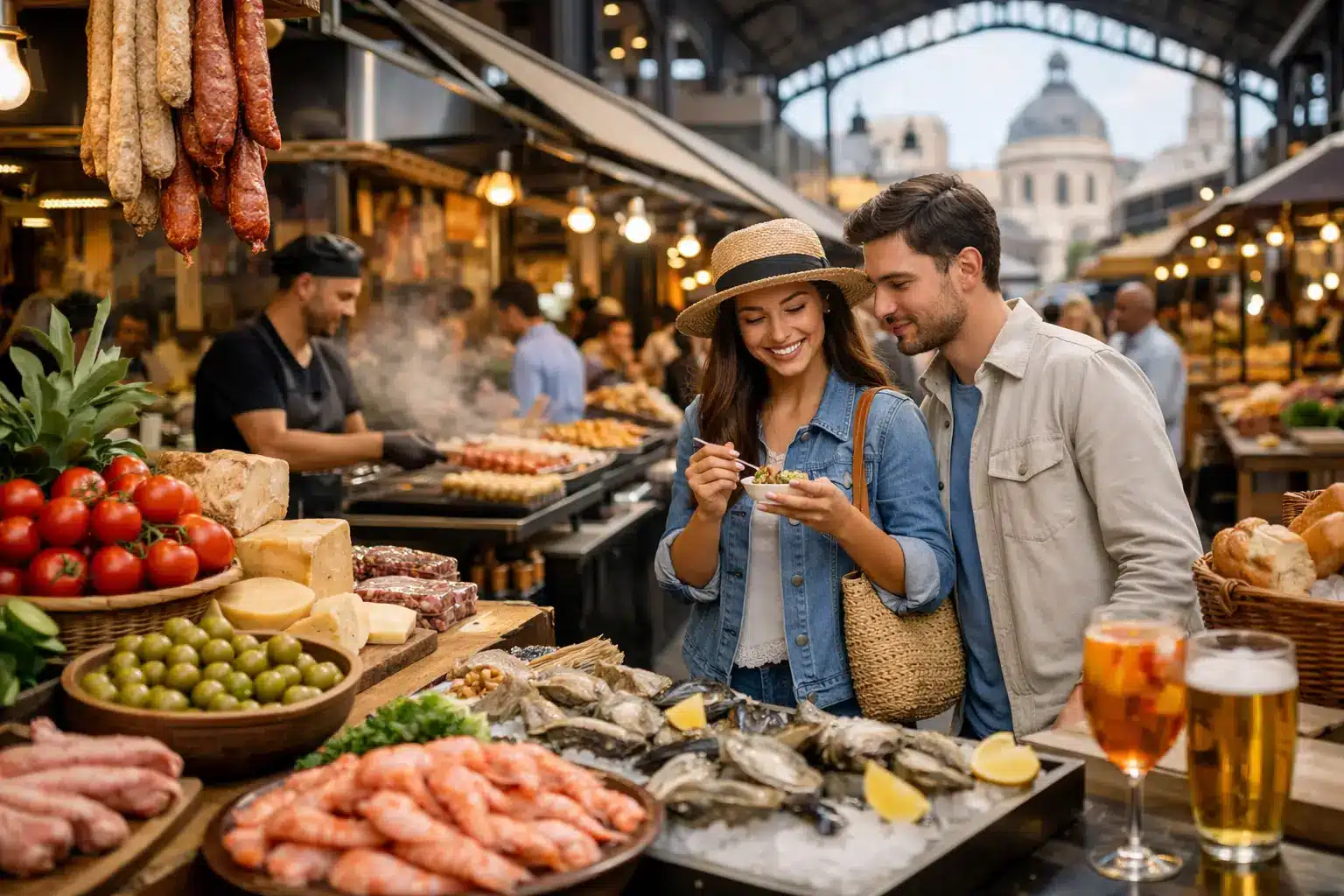
A great food market can change the shape of a city break. Instead of one polished dinner in a tourist district, you have a morning of coffee and pastries, a lunch assembled stall by stall, and a far clearer sense of how a place eats. This food market travel guide is for travellers who want that experience to feel like part of the holiday, rather than an expensive detour between museums.
The best markets are not always the oldest, largest or most photographed. They are the ones that suit your trip: close enough to visit at the right time, varied enough to return to, and embedded in a neighbourhood worth lingering in. Plan well and a market becomes an excellent anchor for choosing where to stay, which walking tour to book and how to spend a free afternoon.
Choose the right kind of market
Food markets are often grouped together, but they serve very different purposes. A covered daily market selling fish, meat, cheese and vegetables is usually where local life is most visible, particularly in the morning. A historic hall may offer excellent produce alongside cafés and wine bars, making it an easy choice for a first afternoon. A weekend street market can be lively and good value, though it may lean heavily towards ready-to-eat food.
Then there are night markets, which deserve their own planning. In cities where dinner starts late, a market can be the most enjoyable way to try several regional dishes without committing to one restaurant. The trade-off is that crowds, music and queues are often part of the package. Go hungry, but do not expect a quiet introduction to local cooking.
If your aim is to buy edible souvenirs, look for a market with specialist producers rather than a collection of souvenir stands. Olive oil, tea, spices, tinned fish, chocolate and cured goods can travel well, subject to customs rules and baggage restrictions. Fresh cheese and charcuterie are tempting, but may not be practical if you are flying home or moving between hotels.
Read the market’s rhythm before you go
Opening times can be misleading. A market advertised as open from 8am may not be at its best until 10am, while fish counters and bakeries can be most interesting before the city is fully awake. In southern Europe, some produce markets wind down after lunch, then the surrounding bars take over later in the day. Elsewhere, the busiest moment may be the post-work rush.
Check which days are devoted to food. Some famous squares host an excellent farmers’ market once or twice a week but become antiques, clothing or craft markets on other days. A little research prevents the classic disappointment of arriving to find candles where the oysters were meant to be.
Where to stay for a market-led city break
A market is a surprisingly useful tool for choosing your hotel. Staying within a 10 to 20-minute walk means you can visit twice: once early for breakfast and ingredients, then later for an aperitif or dinner nearby. It also gives you a natural route into an area that may be more residential, characterful and better connected than the postcard centre.
That said, being next door is not always the prize it sounds like. Markets that receive coach groups can be noisy from mid-morning, and a night market may bring late music and delivery lorries. Look for accommodation a few streets away, preferably on a quieter side street, rather than directly overlooking the main entrance. A room with a small fridge is genuinely useful if you are planning picnic supplies, though it is hardly essential for a two-night break.
For a first visit, pair the market neighbourhood with your wider itinerary. In Barcelona, a central market may be convenient but busy; a smaller local market can be a better fit if you are staying in a less visited district. In Bologna, Paris, Lisbon or Palermo, the pleasure lies as much in the walk there as in the purchase. The most sensible booking is the one that lets the market sit naturally alongside the galleries, waterfront, old town or evening restaurants you already want to see.
How to eat well without turning lunch into a queueing exercise
The instinct at a food market is to order the dish with the longest line. Sometimes that is correct. Often, it merely means a stall has become famous online. Take a first circuit without buying anything, notice where people are ordering with confidence, and keep an eye on what is actually being cooked or sliced. A short queue at a busy counter can be a better sign than a lengthy queue at a photogenic one.
Start with one local speciality, then leave room for a contrast. In a Spanish market that might mean a cone of fried seafood followed by a glass of vermouth and a few conservas. In an Italian market, perhaps a filled pasta dish before cheese and fruit for later. The point is not to sample everything. It is to understand a few things properly, in the setting where they make sense.
Standing at a counter is often the fastest and most convivial option, but sit-down tables have their place. If you are travelling with children, carrying shopping, or simply want a proper break from sightseeing, choose one stall and order a full plate. The most memorable market meals tend to happen when you stop treating the place as an attraction and allow it to become lunch.
A little market etiquette goes a long way
Watch how customers order before stepping forward. At some counters you take a ticket; at others you pay first and collect with a receipt. Photographs are usually welcome in the public aisles, but asking before photographing a vendor or a display is good manners. If you are buying produce, point confidently, say hello and be patient when the person serving you knows every regular by name.
Cash remains useful, especially for small purchases, although card payments are increasingly common. Bring a tote bag, napkins and hand sanitiser. More importantly, bring a little flexibility. The stall you had saved may be closed, sold out or simply less appealing than the place smoking a few metres away.
Turn the market into an activity, not just a meal
The strongest food-market trips combine browsing with a wider experience. A small-group tasting tour can give useful context on regional ingredients, particularly on the first day, and may introduce stalls you would otherwise walk past. A cookery class is a good choice if you want to turn market purchases into dinner, while a guided neighbourhood walk can explain why a particular cuisine developed in one district rather than another.
There is a balance to strike. A guided tour is worthwhile in a market that feels overwhelming, where language is a barrier, or where producers have stories you would not hear alone. If the pleasure is simply wandering, save the money for a longer lunch and go independently. Booking an activity early in the trip can be sensible, then use what you learn to revisit your favourite stalls on your final morning.
Before booking any food tour, check whether tastings constitute a meal, how much walking is involved, and whether the guide visits a working market or a purpose-built food hall. Both can be enjoyable, but they are different experiences. Dietary requirements also need more than a tick-box answer: tell the operator precisely what you can and cannot eat.
A food market travel guide for your first hour
Arrive with a loose plan rather than a rigid tasting list. Spend the first ten minutes walking the whole market, looking for the mix of shoppers, traders and food styles. Buy one thing that is difficult to find at home, then pause for a drink before deciding what comes next.
A simple market kit is worth packing, particularly on a warm-weather break:
- a reusable bag for bread, fruit and bottles;
- a refillable water bottle;
- wet wipes or hand sanitiser for quick meals;
- a light layer, as covered fish and meat halls can be chilly; and
- a small amount of local cash for low-value purchases.
Do not make the market your only food plan. A city deserves a good local restaurant as well, ideally one that shows what chefs do with the ingredients you saw earlier. Ask a vendor where they eat, but accept that the answer may be a rapid-fire recommendation in a language you only partly understand. That is part of the fun.
For destination-specific planning, the Destination Unlocked podcast is as useful as a guidebook and as personal as a chat with your most well-travelled friend. Each 40-minute episode offers the practical local detail that can help turn a promising market visit into a great trip.
Leave enough space in your itinerary for the market you did not plan to love. The best find may be a bakery counter before a train, a bowl of something unfamiliar on a rainy afternoon, or the stallholder who points you towards the neighbourhood’s best table for supper.