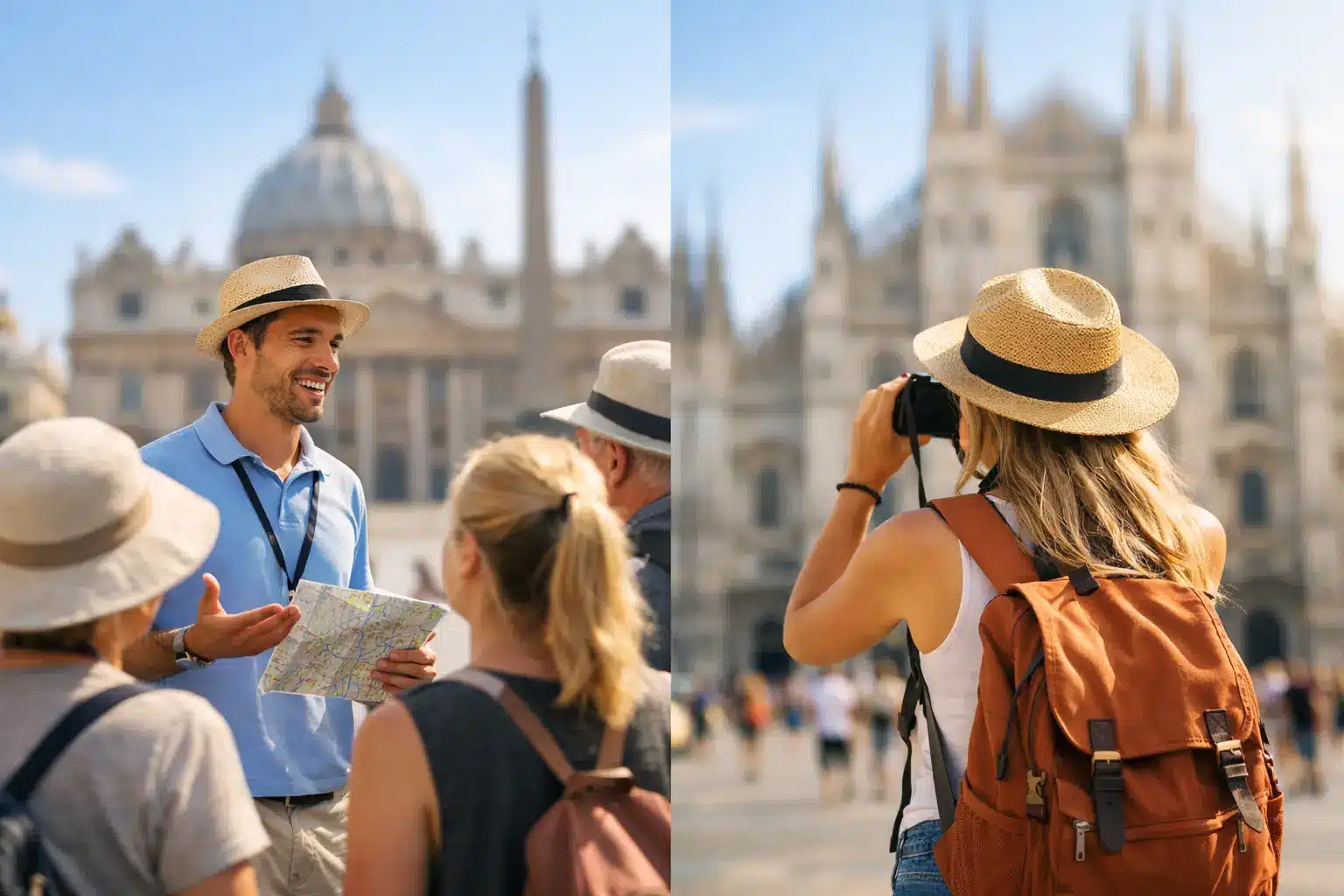
A guided tour or self guided travel decision tends to arrive just after the exciting bit: you have chosen the country, spotted a promising hotel and begun imagining dinner somewhere with tables on the pavement. Then comes the practical question. Do you hand the logistics to someone who knows the place, or build the trip around your own instincts?
Neither option is inherently more adventurous, cultured or sensible. The better choice depends on how much time you have, how confident you feel getting around, and whether the parts of a destination that matter most to you are difficult to access alone. A week in Rome is not the same proposition as a first visit to Jordan, nor is a city break with friends the same as a solo wildlife holiday.
Guided tour or self guided travel: start with the trip you want
The most useful distinction is not between independent travellers and tour people. It is between holidays where your time is plentiful and flexible, and those where every day needs to earn its place.
Self-guided travel is ideal when the pleasure lies in choosing your own rhythm. You can linger over breakfast, change neighbourhood after seeing it in person, book a late museum slot, or spend an entire afternoon in a bar because the conversation next door becomes more interesting than the itinerary. It works particularly well in destinations with reliable public transport, clear visitor infrastructure and a wide choice of accommodation.
A guided tour earns its keep when local knowledge removes genuine friction. That might mean navigating the alleyways of a medina, visiting a vineyard with transport included, understanding the layers of a historic site, or reaching a national park before the crowds. A good guide does not merely recite facts. They interpret what you are seeing, set a pace that makes sense and often introduce the small practical details that turn a good day out into a memorable one.
There is also a middle ground, and for many holidays it is the sweet spot. Book your own flights and hotel, then add a guided food walk on your first evening, a full-day trip beyond the city, or a specialist experience that would be hard to arrange independently. You retain freedom without spending half a precious holiday deciphering bus timetables.
When a guided tour is worth booking
The strongest reason to book a tour is access. In some places, a guide can get you beyond the obvious sights and into the context that makes them matter. A small-group walking tour can help you understand why one quarter of a city developed differently from another. A local guide in a market can make ordering lunch feel like a pleasure rather than a performance. On a wildlife excursion, their experience may be the difference between a distant glimpse and knowing where, when and how to look responsibly.
Tours also reduce the hidden costs of complex travel. Consider a day trip involving an early train, a rural taxi, timed entry and a return before dark. The independent version may look cheaper on paper, but the saving can disappear once transfers, missed connections and last-minute tickets are included. A well-reviewed small-group excursion bundles the awkward bits and leaves you with the view, the meal or the ruins you came for.
For first-time visitors, guided touring can be especially useful during the first 24 hours. An orientation walk provides a working mental map of the destination: which districts feel lively after dark, where to return for dinner, what needs booking, and which famous attraction may be less compelling than it appears on social media. That knowledge improves the rest of a self-planned stay.
Group size matters. A coach tour with a tightly fixed schedule suits travellers who want ease, company and broad coverage. It may frustrate anyone who wants to photograph every doorway or wander off for an hour in a bookshop. Small groups are generally more conversational and flexible, though they often cost more. Private guides offer the greatest control, making sense for families, multigenerational groups and travellers with specific interests, from architecture to regional cooking.
Do not assume guided means rushed. The best itineraries build in breathing room and choose fewer meaningful stops over a frantic checklist. Before booking, look for practical details: maximum group numbers, walking distance, pick-up point, whether entrance fees are included, and how much of the day is genuinely at leisure. Vague descriptions are rarely a good sign.
The case for planning your own holiday
Self-guided travel has a particular kind of luxury: you can follow the mood of the place rather than the timetable. You might book a hotel in a residential district, use the first morning to find the bakery everyone queues for, and shape the day around whatever catches your attention. In cities such as Lisbon, Copenhagen or Edinburgh, this can be the whole point.
It can also offer better value, particularly if you are comfortable comparing transport options and travelling outside peak dates. Booking accommodation independently lets you decide what matters most. A central hotel may save hours of commuting on a two-night break, while a countryside stay with a car may be better value for a longer holiday. The right property is not simply the lowest nightly rate; it is the one that supports the sort of days you want to have.
The trade-off is research. Independent travel rewards preparation, especially around opening days, local transport, restaurant reservations and sites with limited entry. A loose plan is usually better than no plan at all. Choose one anchor activity per day, book the items that sell out, and leave the spaces between them available for wandering.
There are moments when self-guided travel is not the cheaper option. If you are travelling solo in a destination where private transfers are essential, joining a day tour can be significantly better value. Equally, driving yourself through unfamiliar mountain roads may not feel like freedom if everyone spends the day worrying about parking and navigation. Independence should make a holiday feel lighter, not turn it into a second job.
Choose by destination, not travel identity
It is easy to become attached to a travelling persona: the person who always does things independently, or the person who prefers everything arranged. A destination deserves a more thoughtful approach.
For a compact European city, self-guided travel with one or two expert-led experiences often gives the best balance. Pick a well-located hotel, pre-book the major sight you care about and reserve a guided tour for an area where stories and local introductions add real value. Food tours, neighbourhood walks and evening history tours are particularly good ways to start a stay.
For a road trip, consider whether the journey itself is the attraction. Self-driving allows for detours, village stops and the occasional change of plan. But a guided trip can be a wiser choice where weather, remote roads or driving conditions make the route demanding. The same applies to hiking, desert landscapes and wildlife areas, where local expertise supports both safety and a more respectful visit.
Cruise passengers face a related choice. Ship excursions offer timing certainty and a clear route back to the port, which can be reassuring in destinations with longer transfer times. Independent shore days can be more personal and often less expensive, but only if you allow a generous margin for return. The port is not the place to test a heroic interpretation of ‘just enough time’.
A smarter way to combine both
A thoughtfully mixed itinerary often produces the most rewarding holiday. Keep your accommodation and most meals independent, then spend money on the experiences that change your understanding of a place. That could be a guide-led visit to an archaeological site, a boat trip with a knowledgeable skipper, a cookery class, or transport to a landscape that is otherwise difficult to reach.
Book the tour early if it has limited capacity, then let it inform the rest of your plans. A local guide may point you towards a district worth revisiting or a restaurant to reserve. Conversely, leave at least one unstructured day after a guided experience. It gives you time to return to the places that caught your imagination without an umbrella-toting group moving on ahead.
The Destination Unlocked podcast is as useful as a guidebook and as personal as a chat with your most well-travelled friend. In each 40-minute episode, Daniel Edward and his guests share the sort of local perspective that can help you decide what to book, where to base yourself and which experiences deserve a place on your itinerary.
If you are weighing up guided travel because you fear missing the ‘real’ destination, remember that no single tour can deliver a complete place. If you are resisting it because you value freedom, remember that a few well-chosen hours with an expert need not compromise it. Book the help that opens doors, keep the time that lets a destination surprise you, and leave room for the unplanned lunch that becomes the story you tell when you get home.