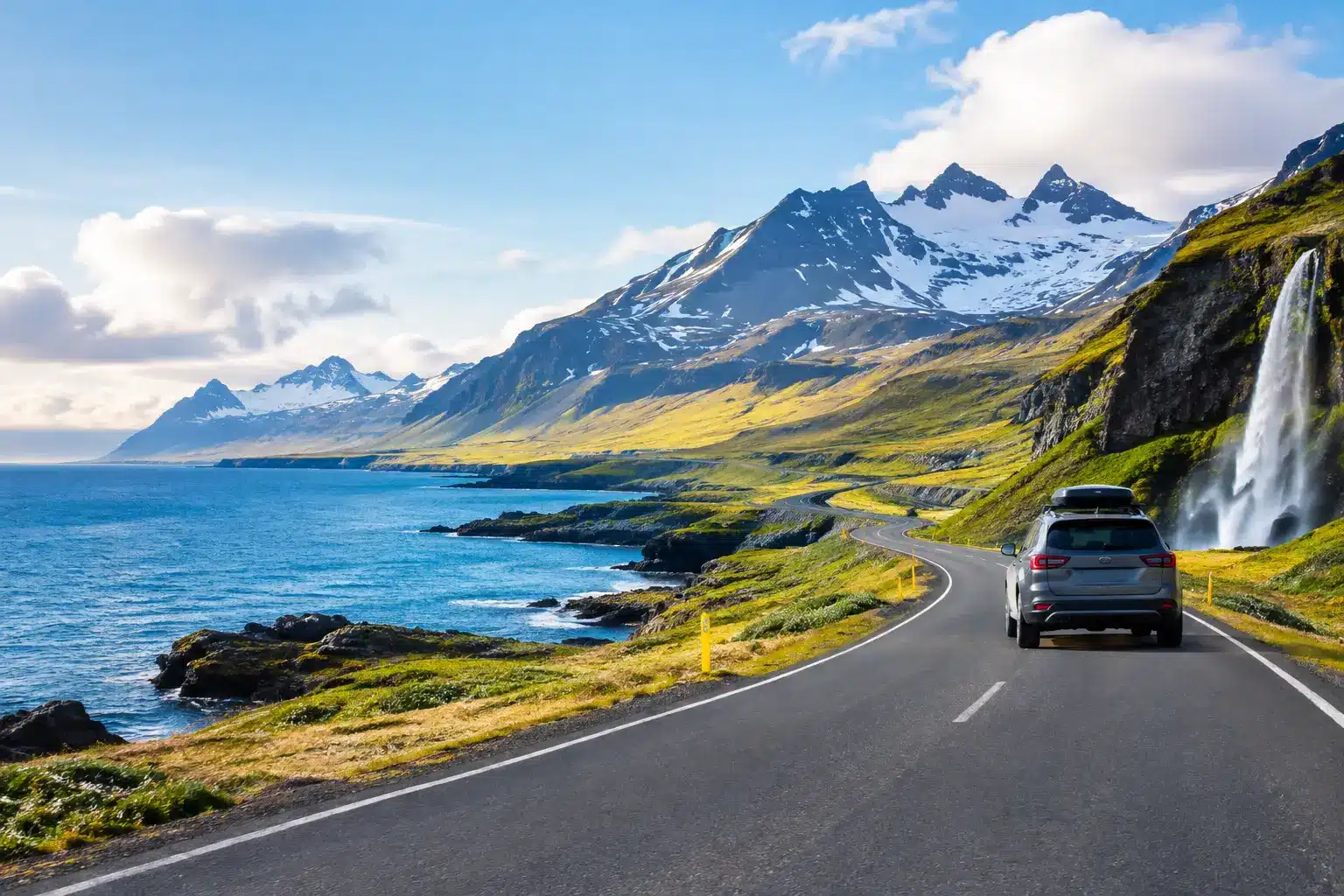
The Iceland ring road is one of those journeys that looks wonderfully simple on a map: one main road, circling an island of waterfalls, black beaches, glaciers and volcanic plains. The reality is more interesting. This is a holiday where the changing weather, the quality of daylight and the location of your overnight stays shape the experience as much as the headline sights.
For first-time visitors, a week is enough to make a rewarding circuit without turning every day into a windscreen marathon. It does, however, require a little discipline. Iceland is not large by international standards, but stopping is the whole point, and distances take longer than they appear once you factor in photo stops, a sudden squall, a slow-moving campervan and the strong temptation to walk towards every waterfall.
Is seven days enough for the Iceland ring road?
Seven days works well for travellers happy to keep moving, cover roughly 1,300 kilometres and prioritise the Ring Road itself. It is not the right timetable for anyone who wants long hikes, several spa days or a serious detour into the Westfjords and Highlands. In that case, allow 10 days or more and accept that Iceland is better treated as a return destination than a checklist.
A small hire car is perfectly adequate in summer if you stay on paved roads. In winter, or if your itinerary includes rougher side roads, choose a larger vehicle with appropriate insurance and winter equipment. Four-wheel drive is not a substitute for judgement: road closures and high winds are taken seriously here, and plans sometimes need to change.
The direction is a matter of taste. Driving anticlockwise puts the South Coast’s familiar drama early in the trip, when enthusiasm is highest. Clockwise can feel quieter at first and saves the most famous stretch for the end. For a first visit, anticlockwise is the easier rhythm.
A seven-day Iceland Ring Road itinerary
Day 1: Reykjavik to Vík via the South Coast
Leave Reykjavik promptly and aim for the south coast, where the scenery wastes no time making its case. Seljalandsfoss is the waterfall you can walk behind when conditions permit, while Skógafoss is the more forceful curtain of water, best appreciated from both the base and the stairway above.
Continue to Reynisfjara, near Vík, for basalt columns, black sand and the sea stacks of Reynisdrangar. It is spectacular and potentially dangerous: never turn your back on the Atlantic, and follow the beach warning system without exception. Stay in or around Vík, where an early booking is worthwhile. Small towns have limited rooms, and the well-located properties disappear first in summer.
Day 2: Vík to Höfn through glacier country
This is a relatively short driving day, which is fortunate because the stops are substantial. Fjaðrárgljúfur canyon may fit if conditions and access allow, but the essential stretch begins around Skaftafell, part of Vatnajökull National Park. A walk towards Svartifoss offers a welcome change from the car, with its dark basalt framing.
Further east, Jökulsárlón Glacier Lagoon is Iceland at its most otherworldly. Icebergs calve from the glacier and drift towards the sea, while neighbouring Diamond Beach scatters fragments of clear and blue ice across black sand. Book a lagoon boat trip in the warmer months if you want a closer view of the ice and wildlife. Overnight in Höfn, a practical base with good views and some excellent seafood.
Day 3: Höfn to Egilsstaðir via the Eastfjords
The Eastfjords introduce a quieter, more human scale of Iceland. The road begins to twist around inlets beneath steep mountains, passing small fishing villages that feel far removed from the busier south coast. Allow time for Djúpivogur or a pause in one of the harbours rather than trying to race through.
Egilsstaðir is more functional than picturesque, but it is a sensible overnight stop with shops, services and access to the forested landscapes around Lake Lagarfljót. If you have energy, take the detour to Seyðisfjörður, whose colourful townscape sits at the end of a deep fjord beneath waterfalls. The mountain road is beautiful, but check conditions outside summer.
Day 4: Egilsstaðir to Mývatn
North Iceland feels elemental in a different way. Dettifoss, reached by a detour from the Ring Road, is often described as Europe’s most powerful waterfall. The scale is less about prettiness than raw force, and the spray can make waterproof layers feel like a very good investment.
Base yourself around Lake Mývatn for two nights if your schedule permits, or at least one. The area is rich in geothermal oddities: bubbling mud pools at Hverir, lava formations at Dimmuborgir and the broad volcanic crater of Hverfjall. Mývatn Nature Baths offer a calmer, less urban alternative to Reykjavik’s larger geothermal pools, particularly welcome after a day in the wind.
Day 5: Mývatn to Akureyri
Use the morning for anything you missed around Mývatn, then travel west via Goðafoss. The waterfall is close to the road and easy to visit, but deserves more than a hurried photograph. Its broad horseshoe shape is especially handsome in soft evening light.
Akureyri, set at the head of Eyjafjörður, has the feel of a proper northern town: cafés, a botanical garden and enough choice in restaurants and hotels to make it a comfortable pause. Whale-watching trips depart from nearby Húsavík and are worth building into the day if sightings are high on your list. Humpbacks are frequent visitors in season, though wildlife, sensibly, does not work to a timetable.
Day 6: Akureyri to Borgarnes or the Snæfellsnes area
This is the longest driving day on the classic route, so start early and keep expectations realistic. The route crosses open northern farmland before turning south-west through landscapes that become increasingly sparse and wide. Stop in Blönduós or at a roadside café rather than attempting to turn every lay-by into an attraction.
Borgarnes makes a convenient overnight choice for a direct final run to Reykjavik. Travellers with an extra night should instead head to the Snæfellsnes Peninsula, where Kirkjufell, coastal cliffs and the glacier-capped Snæfellsjökull make a strong case for slowing down. It is not technically part of the Ring Road, but it is one of Iceland’s best detours.
Day 7: West Iceland to Reykjavik
Return to Reykjavik via the Borgarfjörður region, where Deildartunguhver hot spring and the waterfalls Hraunfossar and Barnafoss offer a graceful final day. Hraunfossar is particularly unusual, with water emerging in countless streams from a lava field into a clear river below.
Arrive in Reykjavik with enough time to enjoy the capital as a city rather than merely an airport stop. A final evening works nicely for a good dinner, a harbour walk and perhaps a swim at a neighbourhood geothermal pool. If your flight departs early the next day, staying near Keflavík Airport may be more practical than driving back from the city before dawn.
When to drive the Iceland ring road
June to August brings the easiest driving, long daylight hours and the fullest choice of tours. It also brings higher accommodation prices and greater demand, especially around Vík, the glacier lagoon and Mývatn. Book hotels well ahead if travelling in July or August, and do not assume you can simply find a room as you go.
May and September offer a compelling compromise: fewer crowds, often better value and a still-generous amount of daylight. Weather is less predictable, but that is true in Iceland in every month. From October to April, the Ring Road can be possible, yet it should be approached as a flexible winter road trip rather than a fixed seven-day promise. Build in contingency time, check road and weather updates daily, and be willing to stay put.
What is worth booking before you go?
Prioritise accommodation first. A neat itinerary on paper can unravel if the only available room is two hours from where you planned to finish. Next, reserve a rental car suited to the season, then book the time-sensitive experiences that matter most to you, such as glacier hiking, an ice cave tour in winter, whale watching or a glacier lagoon boat trip.
Glacier activities deserve particular care. Go with a qualified guide, wear the supplied safety equipment and choose a tour that fits your fitness and confidence level. The views are extraordinary, but this is active terrain, not a decorative patch of ice beside a car park.
For thoughtful trip-planning company, the Destination Unlocked podcast is as useful as a guidebook and as personal as a chat with your most well-travelled friend. Each 40-minute episode gives you the kind of practical, place-specific context that makes a good holiday feel less scripted and more your own.
The best Iceland road trips leave a little blank space between the bookings. Keep an eye on the forecast, take the unplanned turn when the light changes, and let the smaller moments – a fjord-side coffee, a sulphur-scented hillside, an empty stretch of black sand – earn their place alongside the famous stops.