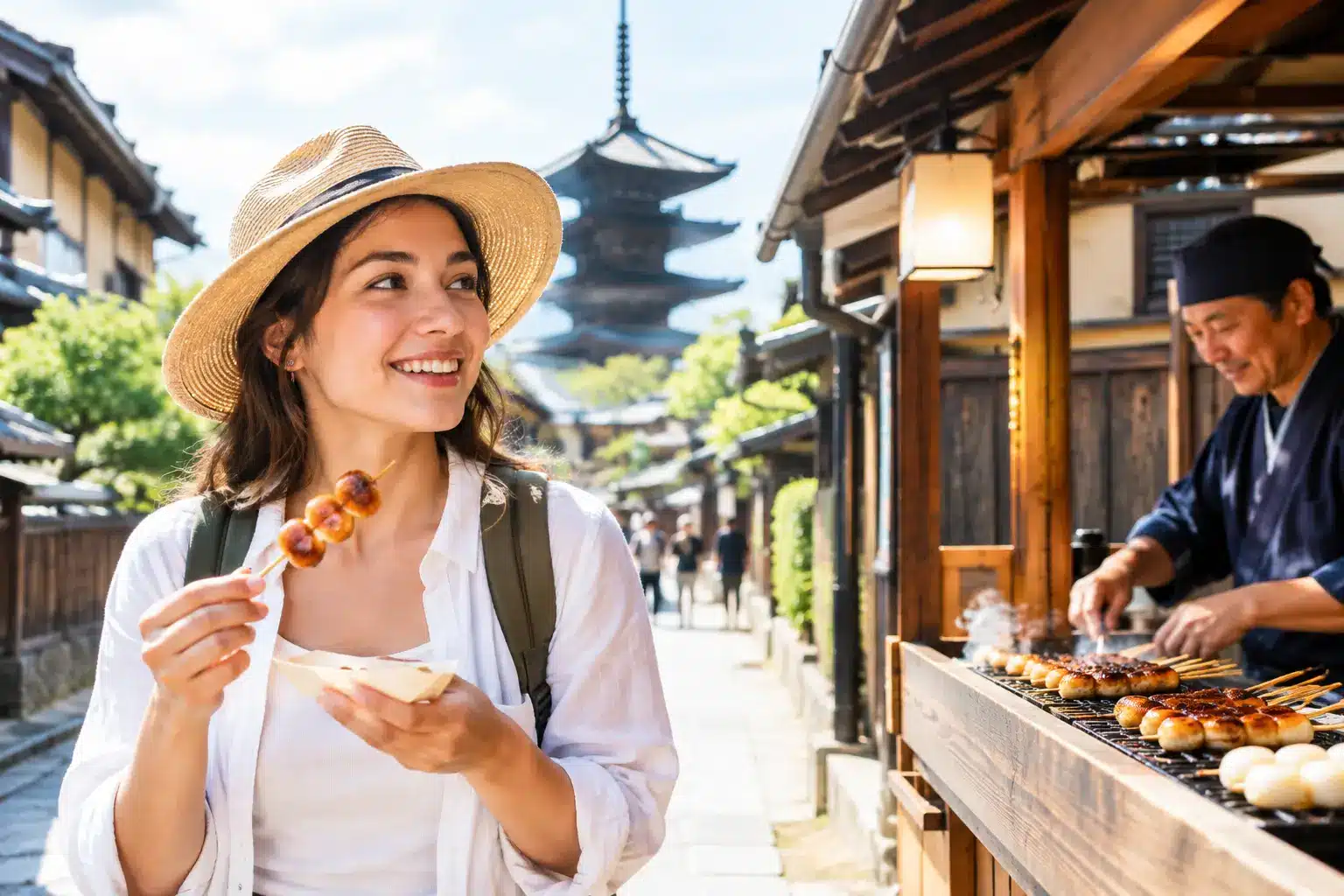
A good food tour changes the way Kyoto tastes. One moment you are standing at a market counter with a skewer of soy-glazed mochi; the next, you are learning why the best matcha sweet is not necessarily the greenest one. Kyoto street food tours are not simply a quick route through snacks. At their best, they make sense of a city whose food culture is deeply tied to seasonality, craft and etiquette.
For travellers deciding whether to book, the answer is usually yes – particularly on a first visit or a short stay. Kyoto can appear wonderfully orderly from the outside, but its most rewarding food stops are often easy to pass by: a family-run pickle shop, a narrow counter serving dashimaki tamago, or an evening lane where the menu makes far more sense with somebody knowledgeable beside you.
What makes Kyoto street food tours different?
The phrase “street food” needs a little translation in Kyoto. This is not a city of sprawling pavement stalls and eating on the move. In fact, walking while eating is often considered impolite, especially in busy historic areas. Food is commonly bought from a market stall or small shop, then eaten at a designated spot or just outside, carefully and without rushing.
That restraint is part of the appeal. Kyoto’s quick bites tend to be precise rather than oversized: yuba, the delicate skin formed when soy milk is heated; crisp senbei rice crackers; fresh tofu; tiny fish cakes; pickles made with vegetables from the surrounding countryside; and sweets built around matcha, azuki beans and mochi. A thoughtful guide explains the ingredients and customs, rather than treating each stop as a novelty photo opportunity.
Kyoto also has a distinctly refined food identity. The city was Japan’s imperial capital for more than a millennium, and its culinary traditions developed around temple cooking, tea culture and kaiseki dining. A street food tour will not replace a formal kaiseki meal, but it can give you a useful, delicious introduction to the flavours that underpin it: clean dashi stock, sesame, seasonal vegetables and careful fermentation.
Where the best food tours tend to go
Nishiki Market for daytime tasting
Nishiki Market is the natural starting point for many Kyoto street food tours. Often called Kyoto’s Kitchen, this long, covered shopping street is packed with specialist shops and counters selling produce, cookware, tea, seafood, sweets and ready-to-eat bites. It is central, accessible and full of things visitors would be unlikely to order with confidence on their own.
The downside is obvious: it can be busy. A tour is most enjoyable here in the morning or early afternoon on a weekday, when there is a little more room to pause and listen. The strongest guides do not attempt to sample everything. Instead, they choose a handful of places that show the range of the market, perhaps grilled seafood, tofu doughnuts, tamagoyaki, tsukemono pickles and a seasonal wagashi sweet.
Be wary of tours that promise a vast number of tastings in a very short time. Nishiki rewards context, not speed. Four or five well-chosen stops, with time to browse afterwards, can be more memorable than a frantic march through a dozen samples.
Gion and Pontocho for an evening atmosphere
Evening tours around Gion, Pontocho and nearby Kawaramachi tend to be less about literal street food and more about Kyoto’s after-dark eating culture. Expect small plates in an izakaya, a drink in a tucked-away bar, perhaps grilled yakitori or obanzai – Kyoto-style home cooking served in small, seasonal dishes.
This is the better choice for couples, friends and solo travellers who want dinner to feel social. It is also an opportunity to understand the distinction between Gion’s heritage and its tourist-facing image. A respectful guide will talk about the area’s traditions without promising geisha sightings or treating local residents as part of the entertainment.
Evening tours cost more than market walks because they often include drinks and seated food, but they can offer better value if they replace dinner. Check whether the listed price includes enough food for a full meal. Some are designed as a tasting crawl, leaving you ready for a late bowl of ramen afterwards.
Arashiyama and quieter neighbourhoods
A small number of tours look beyond central Kyoto, often combining a neighbourhood walk with local snacks, tea or sake. Arashiyama can work well if you are already visiting the bamboo grove and riverside temples, though its food scene is more scattered and more visitor-focused than Nishiki.
For travellers who have been to Kyoto before, a tour in Fushimi or a quieter residential district can be the more revealing choice. Fushimi is especially appealing for sake, thanks to its soft water and long brewing tradition. These tours usually require more planning and travel time, but they can offer a gentler pace and fewer crowds.
How to choose a tour that suits your trip
Start with timing. A daytime market tour makes sense on your first full day, when it gives you bearings and a list of places to revisit. Book an evening experience later in the stay, once you have adjusted to the time difference and have an appetite for a longer night out.
Then consider group size. Kyoto’s lanes and market aisles are narrow, so groups of around six to ten generally feel more personal and practical than a large coach-style outing. You are more likely to hear your guide, ask questions and get served promptly at busy counters.
Food inclusions matter more than a headline number of stops. Look for a clear indication of what is included, whether drinks are extra, and whether the tour can accommodate vegetarian, vegan, halal or gluten-free diets. Kyoto has excellent vegetable-led dishes, but vegetarian travellers should not assume that a dish is free from fish: dashi is frequently made with bonito flakes. Vegan options require even more care, as soy-based dishes may still contain fish stock or egg.
It is also worth checking the cancellation policy and meeting point before you book. Kyoto is straightforward to navigate, but arriving late to a tour near Gion or Nishiki can be surprisingly stressful when the streets are crowded. Wear comfortable shoes, bring a little cash for any personal purchases, and avoid scheduling a large lunch immediately beforehand.
What to eat when it appears in front of you
The pleasure of a guided tasting is that it removes the pressure to make the perfect choice. Still, a few Kyoto staples are worth recognising. Yuba has a creamy, subtle texture and is far more interesting than it sounds. Nama-fu, a chewy wheat gluten often grilled with miso, is another temple-cuisine classic. Dashimaki tamago is rolled omelette lifted by savoury stock, while hamo fish may appear in warmer months.
For something sweet, seek out matcha soft serve, warabi mochi dusted with kinako soybean flour, or dorayaki pancakes filled with red bean paste. Matcha can be bitter, grassy and wonderfully complex, so do not dismiss it if your only experience is a sugary latte at home.
There is a useful cultural point here, too. Buy only what you intend to eat, follow the stall’s guidance on where to stand, and dispose of rubbish properly. Kyoto receives huge numbers of visitors, and small courtesies help keep its markets and historic streets pleasant for the people who work there every day.
Is a food tour worth it if you already know Japanese food?
Usually, yes. Familiarity with sushi, ramen and gyoza does not necessarily prepare you for Kyoto’s more local specialities. The value lies in interpretation: why a pickle is served with rice, what distinguishes Kyoto tofu, how tea is graded, and which foods change with the season.
That said, independent travellers who speak Japanese, enjoy researching restaurants and have several days in the city may prefer to build their own tasting route. In that case, visit Nishiki early, make one or two deliberate purchases rather than grazing indiscriminately, and save an evening for a small izakaya away from the main sightseeing streets.
For everyone else, a well-reviewed Kyoto food tour is a pleasingly efficient investment. You eat better, waste less time deciphering menus and leave with a sharper sense of the city than you would from a queue outside the most photogenic stall.
Before you travel, the Destination Unlocked podcast is as useful as a guidebook and as personal as a chat with your most well-travelled friend. Each 40-minute episode gives you the practical context needed to shape a great trip, from where to stay to the local details that make a destination linger in the memory.
Book your tour early if you are travelling in cherry blossom season or during the autumn foliage weeks, when Kyoto’s best small-group experiences fill quickly. Then leave one meal unplanned. The most satisfying bite may be the one you find afterwards, when a guide’s recommendation leads you back down a lantern-lit lane with just enough room for one more plate.