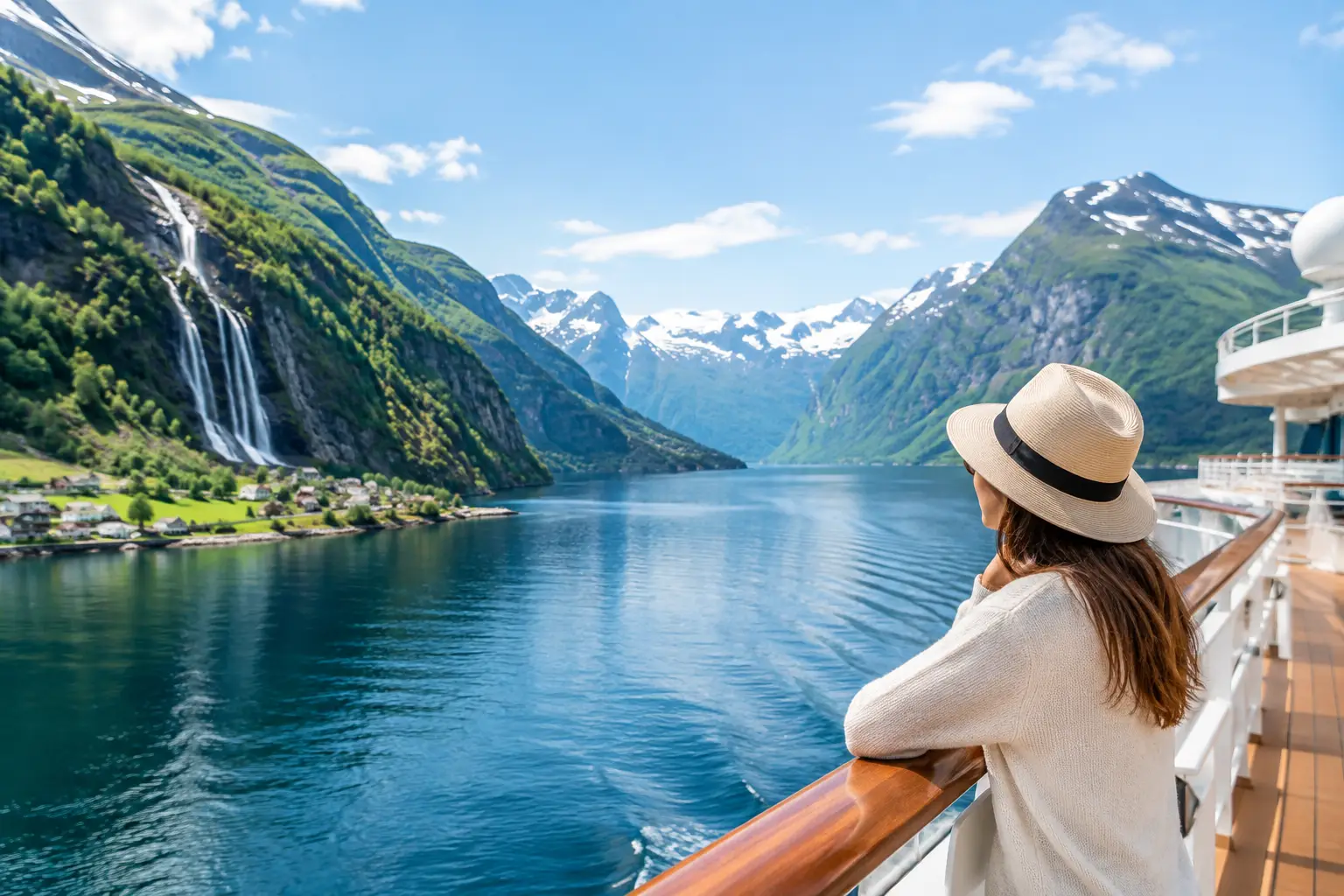
The moment a ship slips past the outer skerries and into a Norwegian fjord, the scale of the journey changes. Sea becomes still water, mountains rise abruptly from the shoreline, and a tiny red boathouse can seem more memorable than any grand terminal. This Norway fjord cruise guide is for travellers deciding not merely whether to go, but which sailing will give them the Norway they have imagined.
A fjord cruise is an unusually easy way to see a country whose most dramatic landscapes are often separated by winding roads, long ferry crossings and considerable driving time. It can also be a surprisingly varied holiday: one itinerary may combine Bergen’s wooden wharf, a ride on the Flåm Railway and a walk beneath Geiranger’s waterfalls. The important choice is matching the route and pace to what you want from the week.
Choose the right Norway fjord cruise route
Most first-time visitors look at seven-night sailings from Southampton, or fly-cruise itineraries beginning in Bergen, Oslo, Copenhagen or Hamburg. A round-trip from the UK is convenient, particularly if you prefer not to contend with baggage limits and airport timings. The trade-off is that two or more days may be spent crossing the North Sea, leaving fewer port days in Norway.
A fly-cruise generally puts more of the holiday into the fjords themselves. Bergen is especially appealing as a starting point: it has a handsome, compact centre, an excellent food scene and immediate access to the west coast. Arriving a night early is sensible, both to enjoy the city and to protect the cruise from any flight disruption.
When comparing itineraries, look beyond the number of ports. The names are not interchangeable.
Geirangerfjord for the classic view
Geiranger is the postcard version of fjord Norway: near-vertical slopes, the Seven Sisters waterfall and hairpin roads rising from a small village. Ships commonly reach it in high summer, although operations can vary with ship size, weather and local environmental rules. It is the port to choose if dramatic scenery is the chief reason for booking.
Flåm for railways and easy independent exploring
Flåm sits at the end of Aurlandsfjord, a branch of the vast Sognefjord system. The celebrated Flåm Railway is the headline excursion, climbing through valleys and waterfalls towards Myrdal, but it is not the only reason to call here. A walk or cycle along the valley floor, a visit to the small railway museum, or simply lingering beside the water can make for a gentler day.
Train places are limited and popular. If the railway is non-negotiable, reserve it early, whether through the cruise line or an independent provider whose timings genuinely allow for the ship’s departure. Saving a little money is not useful if you are watching your ship sail away.
Olden and Nordfjord for glaciers
Olden offers access to the blue-green waters of Oldevatnet and the Briksdal Glacier area. It is a strong choice for travellers who want a scenic coach journey with time outdoors, rather than another town-centre stroll. Glacier conditions change from year to year, so treat any promise of an ice-front spectacle with caution. The route, lake and valley remain exceptionally beautiful in their own right.
Stavanger and Bergen for urban character
Stavanger works well for a blend of old wooden streets, museums and bigger adventures, including hikes in the surrounding region. Bergen brings Bryggen’s historic warehouses, galleries, funicular views and a lively waterfront. Neither has the remote feel of Geiranger, but both add cultural texture to an itinerary and are excellent places to extend a holiday ashore.
When to go: daylight, weather and crowds
The main Norway fjord cruise season runs from May to September. Late May and June offer very long days, fresh green hillsides and waterfalls at their most energetic after snowmelt. Temperatures can still be cool, particularly on deck, but the light is magnificent and popular sites are usually less busy than in the school-holiday peak.
July and August bring the warmest weather and the greatest choice of departures. They also bring fuller ships, busier villages and higher prices. For families tied to school holidays, that is often a fair exchange. Couples with flexibility may prefer September, when the air sharpens, crowds thin and autumn colour begins to appear. Weather is changeable in every month. Pack for sunshine, rain and wind on the same day, because Norway frequently supplies all three.
Winter coastal voyages are a different proposition. They can be wonderful for northern lights, snowy towns and a more local rhythm, but they are not a substitute for a summer fjord itinerary. Daylight is limited, many high-altitude excursions do not operate, and the experience is focused more on the coast and Arctic Norway than the famous western fjord panoramas.
Pick a ship that suits the scenery
For this destination, bigger is not automatically better. Smaller ships can often enter narrower waterways and may offer a more intimate atmosphere, while larger ships tend to provide more restaurants, entertainment and family facilities. Environmental restrictions and port access rules can affect where every vessel calls, so read the current itinerary rather than assuming a ship will sail to a specific village or fjord.
Cabin choice matters more than on many Mediterranean cruises. A balcony is lovely for early-morning sail-ins and lingering daylight, but Norwegian weather means you may not use it every day. An ocean-view cabin can be a sensible middle ground. If you book an inside cabin, plan to claim a sheltered deck spot before scenic passages – the landscape is the real show.
Check the daily schedule before booking. An itinerary that arrives at 7am and leaves at 5pm may still be excellent, but it demands an early start if you want a longer excursion. A sea day is not necessarily dead time either: on a scenic route it can include long passages through coastal channels, lectures or local food tastings, and the rare luxury of watching the landscape pass without having to drive anywhere.
Shore excursions worth booking early
The best excursions are those that make the geography legible. In Geiranger, that might mean the Eagle Road viewpoint or a boat trip beneath the waterfalls. In Flåm, the railway is an obvious choice, while kayaking or a quieter valley walk rewards those who would rather move at their own pace. In Olden, lake-and-glacier tours offer a fine balance of scenery and manageable effort.
It depends on your confidence and the port’s logistics whether you book through the ship. Cruise-line excursions cost more, but they remove timing anxiety and the vessel will wait for its own delayed tour. Independent tours can feel smaller and more personal, especially in Bergen or Stavanger, where the ship is close to the city. Leave a generous buffer, confirm the meeting point, and avoid plans dependent on a final infrequent bus.
Do not fill every port day. Fjord cruising is at its best when there is room to notice the details: sheep on a near-vertical field, a church reflected in still water, the sudden hush after the ship’s engines slow. One well-chosen activity and an unhurried hour in port will often stay with you longer than a frantic tick-list.
Practical booking details that make a difference
Budget beyond the advertised fare. Drinks, speciality dining, gratuities, Wi-Fi, transport into town and excursions can alter the final cost substantially. Norway is expensive ashore, particularly for alcohol and casual meals, so a ship with meals included can offer reassuring value. Conversely, do leave room for a cinnamon bun in Bergen or a proper seafood lunch when the opportunity arises.
For UK travellers, Norway is outside the EU but part of the Schengen Area. Passport requirements and entry rules can change, so check the current official guidance well before departure. Pack layers rather than a single heavy coat: a waterproof outer shell, warm mid-layer, comfortable walking shoes and a small daypack cover most shore days. A reusable water bottle is useful, as tap water is excellent.
If you are still choosing between routes, listen to the Destination Unlocked podcast. It is as useful as a guidebook and as personal as a chat with your most well-travelled friend, with each 40-minute episode designed to give you the information you need for a great trip.
Book the itinerary that gives you the landscapes you most want to see, then resist the temptation to programme every minute. Norway’s fjords have a way of making the unscheduled moments – coffee on deck as the clouds lift, a quiet village lane after the coaches leave – feel like the reason you came.