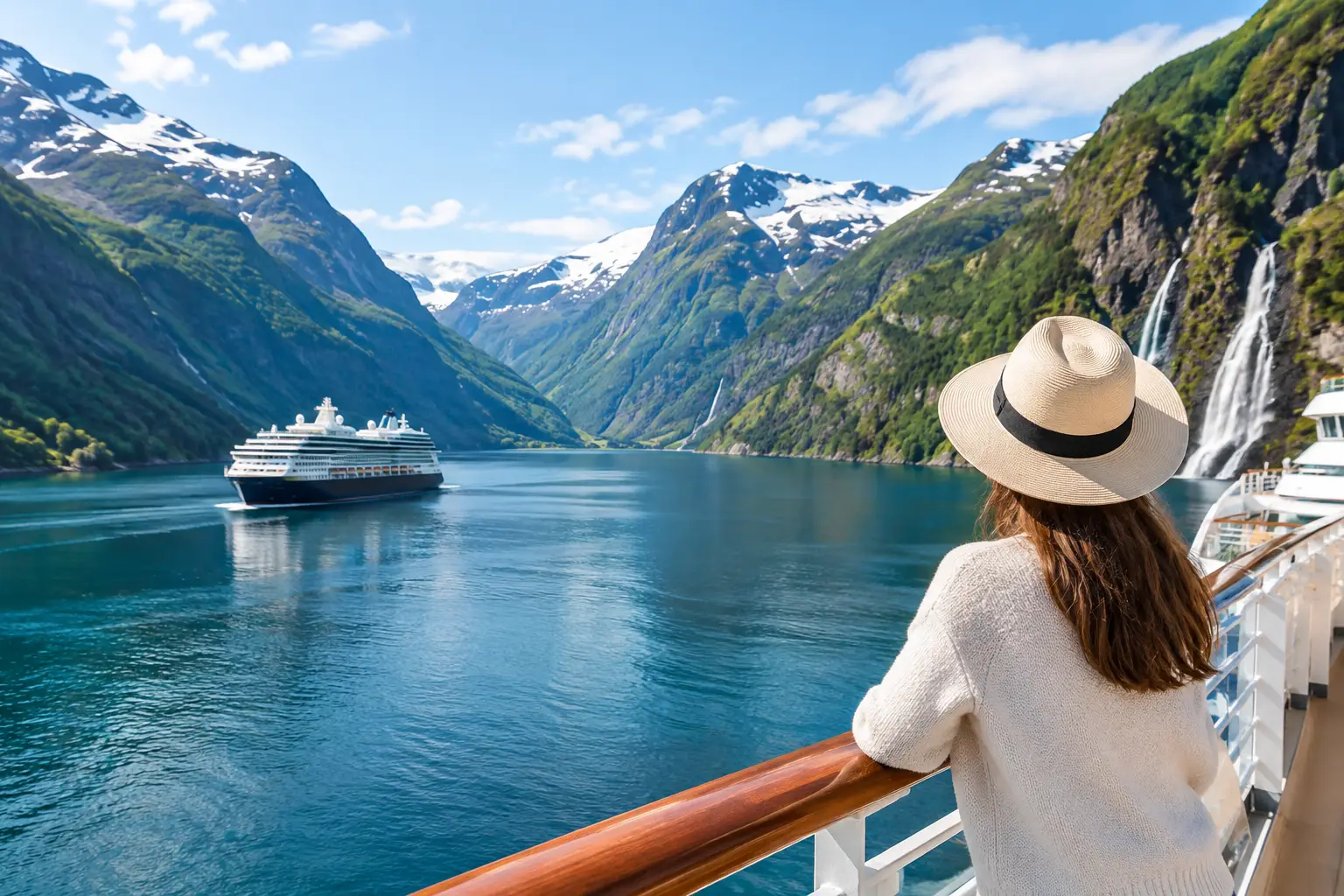
The first time a ship turns into a Norwegian fjord, the scale can feel slightly absurd. Sheer rock walls rise from glassy water, tiny red cabins look like model villages, and waterfalls appear from folds in the mountains with almost theatrical timing. This Norway fjords cruise review looks beyond the postcard moment: whether a sailing is genuinely worth booking, which itinerary decisions matter, and where the compromises lie.
For British travellers, Norway is one of the easiest big-scenery holidays to take. You can sail from Southampton, avoid airports and still wake up deep in landscapes that would otherwise demand a series of flights, trains and car hires. That convenience is the principal argument for a fjords cruise. The crucial question is whether the ship gives you enough time to experience Norway rather than merely admire it from a balcony.
Norway Fjords Cruise Review: The Case for Going
A fjords itinerary does something exceptionally well: it makes the journey part of the holiday. On a city break, travel between places is usually dead time. Here, the hours spent on deck can be as memorable as the ports. Sailing the Geirangerfjord, Nordfjord, Sognefjord or Hardangerfjord offers a constantly changing view, from low green farmland to snow-streaked peaks and improbable cascades.
There is also a pleasing lack of logistical fuss. Your cabin remains your base while Norway comes to you. That suits couples, multigenerational families and anyone who likes an active day but does not fancy repacking every other morning. Norwegian ports are generally compact, clean and easy to navigate, so even independent exploring feels refreshingly straightforward.
The experience is particularly strong in late spring and summer, when long daylight hours stretch the scenic sailing well into the evening. In June and July, it may still be bright enough to read on deck at 10pm. May often brings snow on the higher ground and fuller waterfalls, while September can be quieter, cooler and touched with autumn colour.
A cruise also makes remote locations more accessible. Places such as Olden, Eidfjord and Geiranger are small settlements with far more natural drama than conventional sightseeing infrastructure. They can be awkward to reach independently, but work beautifully as a day ashore from a ship.
The Trade-Off: Norway Is Best at a Slower Pace
The caveat is simple. Norway rewards lingering, while cruise itineraries work to a timetable. A typical call might last eight to 10 hours, enough for a memorable excursion and a walk around the harbour, but not enough to properly settle into a region. If your dream involves hiking all day, taking the Flåm Railway, staying in a waterside cabin and eating slowly in a small town, a land-based trip will give you more freedom.
Some of the most visually famous fjords also receive several ships on the same day. Geiranger, in particular, can feel busy at the height of summer, although the scenery is more than capable of absorbing the crowds. Smaller ships tend to have an advantage, reaching more intimate berths and navigating narrow waterways with a sense of occasion. Larger ships, however, may offer sharper prices, more dining choice and better facilities for families.
Then there is the weather. Rain, low cloud and mist are part of western Norway’s character, not a sign that the holiday has gone wrong. Indeed, rain gives the waterfalls their proper volume. But cloud can obscure the viewpoints you have paid to reach, and a chilly day on an exposed deck calls for layers rather than optimistic resort wear. Pack waterproof outerwear, sturdy shoes and a warm mid-layer, even in July.
Which Fjords and Ports Make a Cruise Worthwhile?
Itinerary should trump almost everything else, including a newer ship or a tempting drinks package. Look closely at the actual ports and sailing route before booking. A cruise marketed as “Norwegian fjords” may call at attractive cities such as Bergen, Stavanger and Kristiansand, but may spend limited time in the deep fjords themselves.
Bergen is a superb starting point, with its old wharf, funicular and easy access to excellent seafood. Stavanger offers colourful wooden streets and a gateway to Lysefjord, where Preikestolen, or Pulpit Rock, is the headline hike. Both are worthwhile, especially for first-time visitors.
For the full fjord effect, seek itineraries that include at least one of Geiranger, Olden, Eidfjord, Flåm or Skjolden. Geiranger is the cinematic classic, with the Seven Sisters waterfall and hairpin-road viewpoints. Olden is an excellent base for the Briksdal Glacier area and the Loen Skylift. Eidfjord gives access to Vøringsfossen, a dramatic waterfall on the Hardangervidda plateau. Flåm is known for its railway journey through a steep, spectacular valley, while Skjolden sits at the far end of the Sognefjord, surrounded by a genuinely wild-looking landscape.
A seven-night cruise can be very good, but it will feel like an introduction. Ten to 14 nights allow more breathing room and often combine the fjords with the Lofoten Islands, the North Cape or a longer stretch of coastal Norway. If scenery is your priority, favour an itinerary with fewer generic sea days and more extended scenic sailings.
Shore Excursions: When to Book Through the Ship
Norway is one of the better destinations for mixing ship excursions with independent time ashore. Public transport is efficient, towns are safe and English is widely spoken. In Bergen or Stavanger, you can confidently explore alone, using the ship’s schedule as your boundary.
For big-ticket experiences, the decision depends on your tolerance for risk. A ship excursion costs more, but the vessel waits if its own coach is delayed. That reassurance matters for a long journey to a glacier, high mountain viewpoint or the Flåm Railway, particularly where there is only one practical route back.
Independent operators can offer smaller groups and more flexibility, especially in Olden, Geiranger and Eidfjord. Before committing, check the total journey time, cancellation terms and how much margin you have before all-aboard. Norway’s roads are beautiful, but tunnels, weather and traffic can alter the best-laid plan.
The most satisfying days usually balance one defining experience with room to absorb the place. Take the Loen Skylift, for example, then leave time for a coffee by Nordfjord rather than filling every minute with stops. In Geiranger, a viewpoint tour can be magnificent, but the fjord-side walk and the ship’s sail-out deserve attention too.
Choosing a Cabin and Ship
A balcony cabin is more valuable in Norway than on many warm-weather routes. The scenery does not wait for your deck-chair slot, and early mornings or late-evening sailings can be extraordinary. A private outdoor space lets you enjoy them in your own time, ideally with a hot drink and several layers.
That said, an inside cabin is not a mistake if it means spending more on excursions or extending your holiday in Bergen or Oslo. Norwegian scenery is best seen outdoors, not through a porthole. A good compromise can be an ocean-view cabin paired with a ship that has generous open decks and a forward-facing lounge.
Consider the ship’s scale, too. Smaller vessels may feel more connected to the landscape and dock closer to town centres. Larger ships provide more restaurants, entertainment and weather-proof spaces, which can be useful on rainy days or when travelling with teenagers. Neither is automatically better. The right choice depends on whether you regard the ship as a floating hotel or part of the entertainment.
Who Will Love a Norwegian Fjords Cruise?
This is an excellent holiday for travellers who want dramatic nature without sacrificing comfort. It is also a strong choice for first-time cruisers, because there is little pressure to spend whole days by the pool or dress for a conventional fly-and-flop break. Bring binoculars, use the deck, and treat scenic sailings as a principal event.
It is less ideal for travellers who want nightlife in every port, long independent hikes, or a deep immersion in one Norwegian region. In that case, combine a shorter cruise with a few nights ashore, or choose a self-drive itinerary. Norway is expensive, and a cruise can make accommodation, transport and meals more predictable, but it should not be mistaken for the most intimate way to travel through the country.
For thoughtful destination planning, the Destination Unlocked podcast is as useful as a guidebook and as personal as a chat with your most well-travelled friend. Each 40-minute episode brings together the practical details and local perspective that turn an attractive itinerary into a genuinely good trip.
A Norway fjords cruise is worth booking when you choose it for what it is: a front-row journey through extraordinary scenery, with just enough time ashore to whet the appetite. Pick the ports carefully, allow room in the budget for one or two standout excursions, and leave some quiet time for watching the mountains slide past.