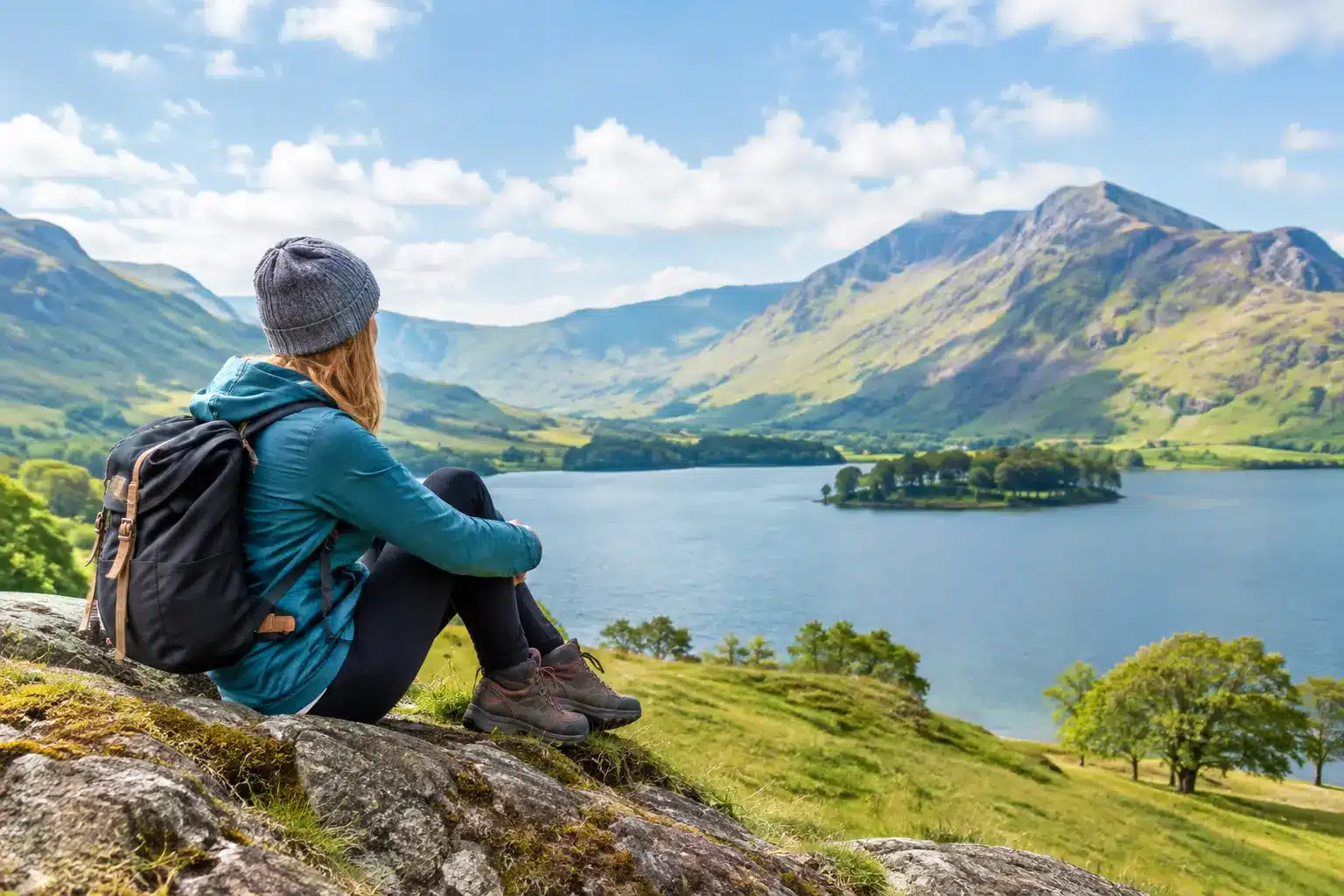
The Lake District can give you a grand hotel above Windermere, a fell walk beginning at your front door, and a pub lunch beside a crackling fire – but rarely all with no compromise. To plan a Lake District escape well, start with the kind of break you want before choosing a village. A two-night reset, a full week of walking, a food-led stay or a first family trip each calls for a rather different corner of Cumbria.
The reward for getting the geography right is considerable. You can spend less time circling narrow roads behind a coach and more time on the water, in a good inn or looking at the view you came for.
Choose a Lake District base before booking
The National Park is compact on a map, but distances can be deceptive. Roads weave around lakes and over passes, parking fills early, and a journey that appears short may take longer than expected. Booking a hotel because it has a handsome photograph, then discovering it is 45 minutes from every plan, is an avoidable Lake District mistake.
For a first-time break: Windermere, Bowness or Ambleside
Windermere and neighbouring Bowness are the easiest options for a first visit. There is a wide choice of hotels, guesthouses, restaurants and boat trips, plus a railway station at Windermere. Bowness is livelier and more visitor-focused, while Windermere village is slightly calmer and set uphill from the lake.
Ambleside makes an excellent alternative for travellers who want more of a walking base without feeling remote. You are well placed for Grasmere, Rydal Water, Coniston and the central fells. It has enough cafés, pubs and places to stay to make a car-free evening straightforward, especially after a day outside.
The trade-off is popularity. In school holidays and on fine weekends, these are the places where parking, dinner reservations and lakeside space require a little forethought. Book accommodation early if you want a particular style of hotel or a room with a view.
For quieter scenery: Grasmere, Coniston or the western lakes
Grasmere has literary associations, handsome stone buildings and immediate access to gentler walks, making it particularly good for a romantic weekend or a slower stay. Coniston feels more purposeful and less polished, with excellent water-based activities and a strong connection to local history.
For real quiet, look west to Wasdale, Eskdale, Ennerdale or the valleys around Borrowdale. These areas place you near some of the Lake District’s most dramatic landscapes: screes, high passes and broad open valleys beneath towering fells. They are ideal if walking is the main event, though choice of restaurants and accommodation is thinner, and driving after dark is less appealing.
Keswick, at the northern end of Derwentwater, deserves special consideration. It combines an attractive market-town centre with access to Derwentwater, Catbells, Borrowdale and the Skiddaw range. It is one of the most versatile bases for an active long weekend, particularly for friends travelling together.
Build the trip around one or two signature days
A Lake District itinerary becomes more enjoyable when it has a rhythm. Rather than trying to tick off three lakes and two villages each day, choose a principal experience and leave room for weather, lunch and the unexpected pull of a viewpoint.
For many visitors, a lake cruise is the easiest way to understand the scale of the landscape. On Windermere, boats connect Bowness with Ambleside and Lakeside, so they can be practical transport as well as a scenic outing. Derwentwater offers a more intimate experience, with wooded shores and fells rising close to the water. Coniston Water tends to suit those looking for a quieter day.
Walking is the other essential. You do not need to attempt Scafell Pike to earn the view. A circuit of Tarn Hows, the walk from Ambleside to Stock Ghyll Force, or the path around Buttermere can provide the lake-and-fell drama without committing to a full mountain day. Catbells, near Keswick, is deservedly popular for its satisfying climb and sweeping Derwentwater views, but it still demands suitable footwear and care in wet or windy weather.
If you are confident on the hills, book a guided hike or activity for your first day. A local guide can choose a route that fits the conditions and your ability, while also taking the pressure off navigation. This is particularly worthwhile in autumn and winter, when low cloud can reduce a famous panorama to a very damp mystery.
For a change of pace, consider a canoe or paddleboard session, a visit to Beatrix Potter’s former home at Hill Top, or time at one of the area’s historic houses and gardens. The Lake District is not merely a backdrop for exercise. Its slate villages, writers’ homes, small museums and excellent independent food producers give a short break texture when the rain arrives – as it very often does.
When to go, and what the weather changes
Late spring and early autumn are often the sweet spots. May and June bring longer days, fresh green valleys and generally fewer crowds than high summer. September can be particularly lovely, with warmer water, softer light and a little more breathing room after the school holidays.
July and August offer the greatest choice of tours, boat services and outdoor activities, but they also bring the highest prices and busiest roads. If you are travelling then, stay at least two nights, reserve key meals, and start walks early. A 9am start can feel like an entirely different Lake District to an 11am arrival.
Winter is for travellers who appreciate atmosphere over certainty. You may have crisp, clear views and a pub to yourself, or persistent rain and low cloud. Choose a comfortable hotel, pack waterproof layers, and treat ambitious walks as optional. Cosy does not have to mean inactive: lakeside strolls, galleries, spas and long lunches all make sense when the fells are hidden.
Whatever the season, bring proper waterproofs rather than relying on an umbrella. Paths become slippery, temperatures drop rapidly on higher ground, and mobile signal can be inconsistent in valleys. Check the forecast for the specific area you are visiting, not simply the word “Cumbria” on a weather app.
Make accommodation part of the experience
The best place to stay depends on how you plan to spend your evenings. A country-house hotel works beautifully for a celebratory escape where dinner, a view and a relaxed breakfast matter as much as the day out. A central inn or smart guesthouse is better if you want to walk to several pubs and restaurants. Self-catering cottages suit families and groups, especially where flexible mealtimes and muddy boots are part of the arrangement.
When comparing hotels, look beyond the headline lake view. Ask whether parking is included, whether the property is walkable to dinner, and whether a room faces the water or simply the general direction of it. In older buildings, room sizes and access can vary considerably. If a peaceful stay matters, a room away from the bar, road or late-arriving guests is worth requesting.
A car gives you the broadest reach, but it is not essential for every itinerary. Windermere is accessible by train, and boats and buses can link several popular locations. Car-free works best when you stay in Windermere, Bowness, Ambleside or Keswick and focus on one area. A car is more useful for the western valleys, early starts and less-connected trailheads.
Leave space for the local version of the Lakes
The most memorable moments are often the least scheduled: a brief detour to a waterfall, a quiet bench above a lake, a chat with the person serving your lunch about where they walk on their day off. Be curious, but be considerate too. Keep to paths, take litter away, respect livestock and avoid blocking narrow lanes or farm entrances.
Before you set off, listen to the Destination Unlocked podcast. It is as useful as a guidebook and as personal as a chat with your most well-travelled friend, with each 40-minute episode designed to give you the information you need for a great trip.
Book the hotel that makes your preferred days easy, choose one standout experience rather than a crowded checklist, and let the Lake District supply the rest. The weather may not follow the plan. The feeling of being properly away almost certainly will.