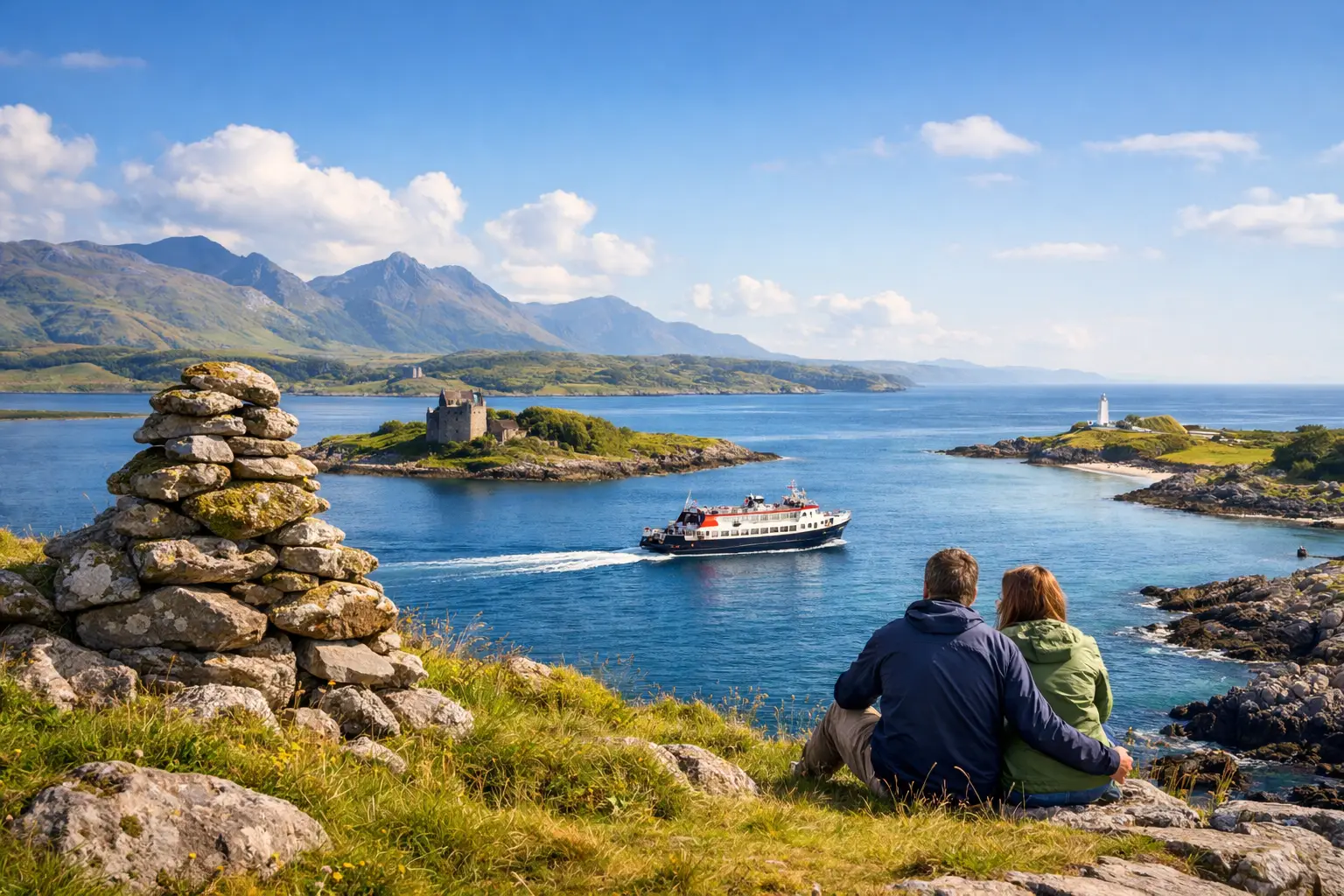
A good Scottish islands itinerary example is not about ticking off the maximum number of dots on a ferry map. It is about allowing enough time for the things that make the Hebrides memorable: a late lunch beside a harbour, a weather window for a boat trip, and the moment a single-track road reveals an empty beach you had not planned to find.
This seven-day route pairs Mull and Iona with Skye and Raasay. It is designed for travellers arriving from Glasgow or Edinburgh with a hire car, and it balances headline scenery with sensible overnight stops. You will need to book accommodation, car ferries and popular boat excursions well ahead for late spring and summer.
Why this Scottish islands itinerary example works
Mull offers wildlife, colourful Tobermory and the contemplative calm of Iona. Skye brings larger-scale drama: the Cuillin, sea stacks, waterfalls and a choice of excellent places to eat and stay. Raasay, reached in minutes from Skye, adds a quieter final note, with a handsome distillery, open views across the Sound and far fewer people on the road.
The trade-off is that this is not a whistle-stop tour of every Hebridean island. You will not reach Harris, Lewis, Islay or the Outer Hebrides in a week, and that is rather the point. Ferries are part of the journey rather than a minor detail to squeeze between attractions. Leaving room around them makes the holiday feel like an island escape, not a logistics exercise.
The seven-day route: Mull, Iona, Skye and Raasay
Day 1: Glasgow or Edinburgh to Oban
Drive to Oban and spend the night here before the morning ferry to Mull. It is a practical choice, but hardly a dull one: the town looks out across the bay towards Kerrera, with seafood restaurants, pubs and the hilltop folly of McCaig’s Tower for a brisk pre-dinner walk.
Book a central hotel or harbour-side guesthouse if you want to leave the car parked and walk to supper. If you are travelling in July or August, an overnight in Oban also protects the itinerary from a delayed start on the day you cross to Mull.
Day 2: Oban to Tobermory, Isle of Mull
Take the ferry from Oban to Craignure and drive north across Mull to Tobermory. The journey is only around an hour in distance terms, but Mull’s roads reward an unhurried approach. Pull into the car parks for Duart Castle, then allow time for viewpoints and passing places rather than treating the drive as a transfer.
Tobermory is the best base for most first-time visitors. Its painted waterfront is cheerful without feeling stage-managed, and there is enough choice of restaurants, cafés and shops to make two or three nights easy. A harbour-view hotel is worth considering if it is within budget; otherwise, self-catering cottages and B&Bs just beyond the centre often offer better parking and more space.
Day 3: North Mull and a wildlife cruise
Use this day for Mull’s wilder north. Drive towards Calgary Bay for white sand and startlingly clear water, then continue through Dervaig or take the road towards the lighthouse at Ardnamurchan Point only if you are comfortable on narrow, winding roads. Give way patiently, use passing places properly and expect sheep to have their own timetable.
A wildlife boat trip from Tobermory is one of the strongest excursions to book. Sightings vary, naturally, but the chance of sea eagles, seals, porpoises and dolphins changes how you see the coastline. Morning sailings can be calmer, while afternoon light is often better for photographs. If marine wildlife matters more than road-tripping, make this the centrepiece of the day.
Day 4: Iona and, if conditions allow, Staffa
Drive back to Fionnphort on the south-west tip of Mull, leave the car and take the short passenger ferry to Iona. The abbey is the obvious draw, but do not rush off once you have seen it. Walk beyond the village towards the white sands of the north end of the island, where the scale of the Atlantic begins to make sense.
In the main season, boat trips to Staffa can be combined with Iona or booked from nearby departure points. Fingal’s Cave is extraordinary when the sea permits landing, but it should be treated as weather-dependent rather than guaranteed. If the boat is cancelled, Iona is more than enough for a rewarding day. Return to Tobermory for a final night on Mull.
Day 5: Mull to Skye via Oban and the mainland
Catch an early ferry from Craignure back to Oban, then drive north towards Fort William and west to Skye. This is the longest travel day of the itinerary, so resist the temptation to add every possible stop. A brief pause at Glenfinnan or on the Road to the Isles is realistic; a major hike is not.
Cross the Skye Bridge and check into a base around Portree, Broadford or Sleat. Portree suits travellers who value restaurants and a livelier evening scene. Broadford is useful for the south of the island and the mainland approach, while Sleat feels more rural and is particularly convenient for the Mallaig ferry. Book the place that suits how you travel, not simply the most photographed postcode.
Day 6: Skye’s Trotternish Peninsula
Set out early for the Trotternish Peninsula, Skye’s most dramatic loop. The Old Man of Storr, the Quiraing, Kilt Rock and the harbour village of Staffin can all fit into a long day, though each deserves more than a quick photograph from the car park.
Choose one proper walk rather than attempting them all. The Quiraing is a brilliant option in settled weather, but its uneven ground and exposure demand suitable footwear and a realistic view of your fitness. The Old Man of Storr is shorter but very busy. For a less crowded alternative, take time around Staffin Bay or linger over lunch in Portree instead of chasing another pin on the map.
Day 7: Raasay, then departure or a final Skye night
Take the short ferry from Sconser to Raasay for a gentler island day. The island’s distillery is a smart stop for whisky drinkers, but Raasay is not only about a tasting. Its quiet roads, the walk to Calum’s Road and the views towards the Cuillin offer precisely the breathing space that Skye can lack in peak season.
Return to Skye in time for your onward drive, or add a final overnight near the bridge if your flight or train leaves early the next morning. Travellers with a little more time should absolutely choose the extra night. A seven-day route is workable; eight days gives the weather, ferries and your own curiosity more room to breathe.
What to book before you go
For this route, prioritise car places on the Oban-Craignure ferry, accommodation in Tobermory and Skye, and any Staffa or wildlife cruise you would be disappointed to miss. Summer weekends, school holidays and bank holidays fill first. Ferry timetables can change by season and weather can disrupt sailings, so build in sensible buffers rather than booking a tightly timed restaurant reservation immediately after a crossing.
A small or medium hire car is usually easier on Mull and Skye than a large SUV. Electric cars are increasingly feasible, but charging availability is less forgiving than on the mainland, particularly if your accommodation does not offer it. Petrol or hybrid remains the simplest option for a short, multi-island route.
When to travel
May, June and September are the sweet spots for longer days, fewer crowds and a better chance of finding rooms at sensible prices. July and August bring the fullest programme of boat trips and events, but also the greatest pressure on ferries, roads and restaurants. April can be wonderfully quiet, although some excursions and seasonal businesses may not yet be operating.
Whatever the month, pack waterproof layers, walking shoes and something warm enough for a boat deck. A cloudless Hebridean day can feel almost Mediterranean in colour; ten minutes later, a squall can make the same bay look distinctly north Atlantic.
Before you set off, listen to the Destination Unlocked podcast. It is as useful as a guidebook and as personal as a chat with your most well-travelled friend, with each 40-minute episode designed to give you the information needed for a great trip.
Leave one afternoon unplanned. On these islands, the best part of the itinerary is often the detour prompted by a handwritten sign, a local recommendation or a patch of unexpected sunshine over the water.