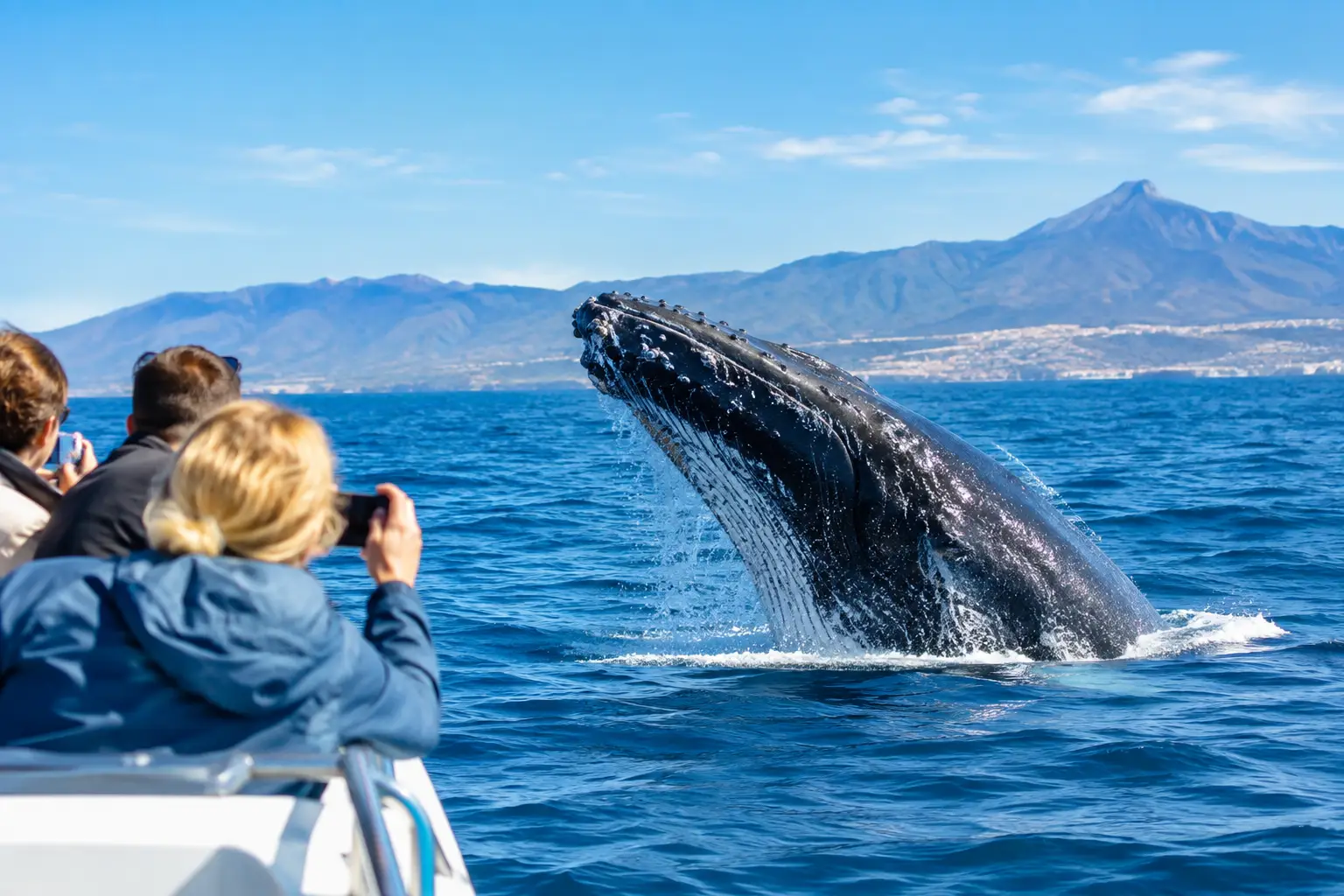
The first sight is often not a spectacular breach but a quiet black curve breaking the Atlantic surface. Then another appears, and another. On Tenerife whale watching trips, that unhurried moment is usually the point: the chance to spend a few hours in the company of wild cetaceans, with the volcanic outline of the island behind you.
Tenerife is one of Europe’s most reliable places to see whales and dolphins, particularly from the south-west coast. But not every excursion offers the same experience. Boat size, route, timing and an operator’s approach to wildlife all change the day considerably. For travellers choosing between a beach morning and a sailing, this is how to book the trip that feels worth getting up for.
Why Tenerife is so good for whale watching
The channel between Tenerife and La Gomera is home to a resident population of short-finned pilot whales. Despite their name, these are members of the dolphin family, recognisable by their rounded heads, dark bodies and sociable groups. Their year-round presence makes sightings far more likely here than on a trip dependent on a brief migration season.
Bottlenose dolphins are also regularly seen, while common dolphins, Atlantic spotted dolphins and larger visitors such as Bryde’s whales may appear at different times of year. Nature has no timetable, of course. A responsible operator should talk about what is likely rather than promise a particular species or turn a wildlife encounter into a guarantee.
The island’s geography helps, too. Deep water lies relatively close to the south-western resorts, so boats can reach cetacean habitat without a marathon journey offshore. That makes this an especially manageable activity for a week’s holiday, including for families or travellers who would rather not devote an entire day to the sea.
Where Tenerife whale watching trips depart from
Most trips leave from the busy resorts on Tenerife’s south coast. Puerto Colón, between Costa Adeje and Playa de las Américas, has the broadest choice of boats and departure times. It is convenient if you are staying around Costa Adeje, Playa de las Américas or Los Cristianos, and transfers are often available from nearby hotels.
Los Cristianos is another popular departure point, particularly practical for those staying in the town itself or around the older, more relaxed southern resort areas. Its harbour is also a useful option if you are mixing your sailing with a day trip to La Gomera, although those are very different experiences.
Some smaller outings leave from the west coast, including Puerto de Santiago and Los Gigantes. These can be attractive if your hotel is near the cliffs or in a quieter corner of the island. The scenery is undeniably more dramatic, but selection and sailing frequency are usually greater around Puerto Colón.
Where you stay should shape the booking. Costa Adeje suits travellers who want polished hotels, good restaurants and the easiest access to morning departures. Los Cristianos has a more lived-in atmosphere and a useful pedestrian seafront. For a quieter base, the area around La Caleta offers a gentler pace while remaining close enough to the main marinas.
Choosing the right boat
The question is not simply catamaran or speedboat. It is what kind of time on the water you would enjoy.
A large catamaran is usually the most sociable and stable option. It often includes swimming time, drinks or lunch, music and space to move around. This works well for families, groups and anyone keen to make the outing part whale watching, part warm-weather cruise. The trade-off is obvious: more people means a less intimate encounter and a busier deck when animals are spotted.
A smaller sailing boat tends to offer a calmer, more personal day. Groups are smaller, guides can speak more easily with guests, and the engine-free moments feel pleasingly quiet. These trips suit couples, wildlife-minded travellers and anyone who prefers a thoughtful experience to a floating party. They can be less suitable for very young children, or for guests who value plenty of shade, seats and onboard facilities.
Rigid inflatable boats and speedboats cover water quickly and can feel exhilarating. They are often best for travellers short on time or those who like an active ride. Yet the open sea can be bumpy, and these vessels are not the natural choice for anybody with back problems, mobility concerns or a tendency towards seasickness.
For most first-time visitors, a two- or three-hour small-group sailing from Puerto Colón is an excellent middle ground. It gives the crew enough time to search respectfully, without turning the trip into an endurance test.
Look for a wildlife-first operator
A good crew keeps a measured distance, reduces speed near animals and allows the pod to decide whether it remains nearby. It should not pursue, surround or separate whales and dolphins. You are watching animals going about their day, not attending a performance.
In the Canary Islands, look for boats authorised for whale-watching activity, often signalled by the Barco Azul flag or certification. Ask how many passengers the boat carries, how long it spends searching, and whether swimming is included. The answers reveal more than glossy photographs ever will.
Avoid operators whose sales pitch centres on touching, feeding or swimming with wild cetaceans. Besides being a poor way to treat wildlife, those claims should make any traveller question the standards behind the trip.
Best time to go and what the sea is like
Pilot whales can be seen throughout the year, so there is no single magic month. Summer generally brings hotter, drier weather and a busier south coast. Winter can be particularly appealing for British visitors seeking sunshine, though wind and swell may occasionally lead to a rougher crossing or a cancellation.
Morning sailings are often a sensible choice. The light is soft, the air less fierce, and the sea can be calmer before afternoon breezes develop. That is a tendency, not a rule. Check the forecast the day before, and let the skipper’s judgement carry more weight than a weather app promising a cloudless day.
If you are prone to seasickness, choose a larger, stable vessel, sit towards the rear or centre rather than right at the bow, and take any medication before boarding as directed. Looking at the horizon helps. So does skipping a large breakfast and the optimistic decision to test how many pastries a catamaran can withstand.
Bring sun cream, a hat, sunglasses and a light layer. Even on a blazing day, the breeze offshore can surprise you. A waterproof phone pouch is useful, but do not spend the whole encounter trying to frame a perfect photograph. Whale watching is one of those occasions when putting the screen down improves the memory.
How long should you book?
A two-hour trip can be enough for a tight itinerary, especially as deep water is close to the coast. Three hours usually feels more relaxed and may include a swimming stop, while longer half-day sailings suit those who genuinely enjoy being at sea rather than simply ticking off a sighting.
Do not assume the longest option is automatically best. If you are travelling with children, have an afternoon table booked in La Caleta, or are unsure how you will handle the motion, two to three hours is often the sweet spot. Conversely, a small-group sailing with time for a quiet cove swim can become one of the strongest days of a Tenerife holiday.
Book early in your stay where possible. If rough conditions mean a cancellation, you have room to move the trip rather than leaving disappointed on your final morning.
Make it part of a better Tenerife day
The best itinerary is not always an overstuffed one. A morning departure from Puerto Colón pairs easily with lunch in La Caleta, a slow afternoon by the pool in Costa Adeje, or a walk along the coastal promenade towards Los Cristianos. From Los Gigantes, follow your sailing with time to admire the cliffs from land rather than rushing straight into another activity.
Whale watching also adds welcome contrast to Tenerife’s familiar pleasures. After days of beaches, water parks and resort dinners, the Atlantic reminds you that this is a volcanic island with a serious ocean at its edge. The encounter can feel especially meaningful when approached with a little patience and a crew that gives the animals space.
For more destination planning, the Destination Unlocked podcast is as useful as a guidebook and as personal as a chat with your most well-travelled friend. Each 40-minute episode brings together the practical details and local perspective that make a great trip easier to shape.
Book a boat that respects the water it works on, leave a little flexibility in your plans, and treat a sighting as a privilege rather than a prize. Tenerife’s pilot whales have been here far longer than any holiday itinerary – which is precisely why meeting them should be done on their terms.