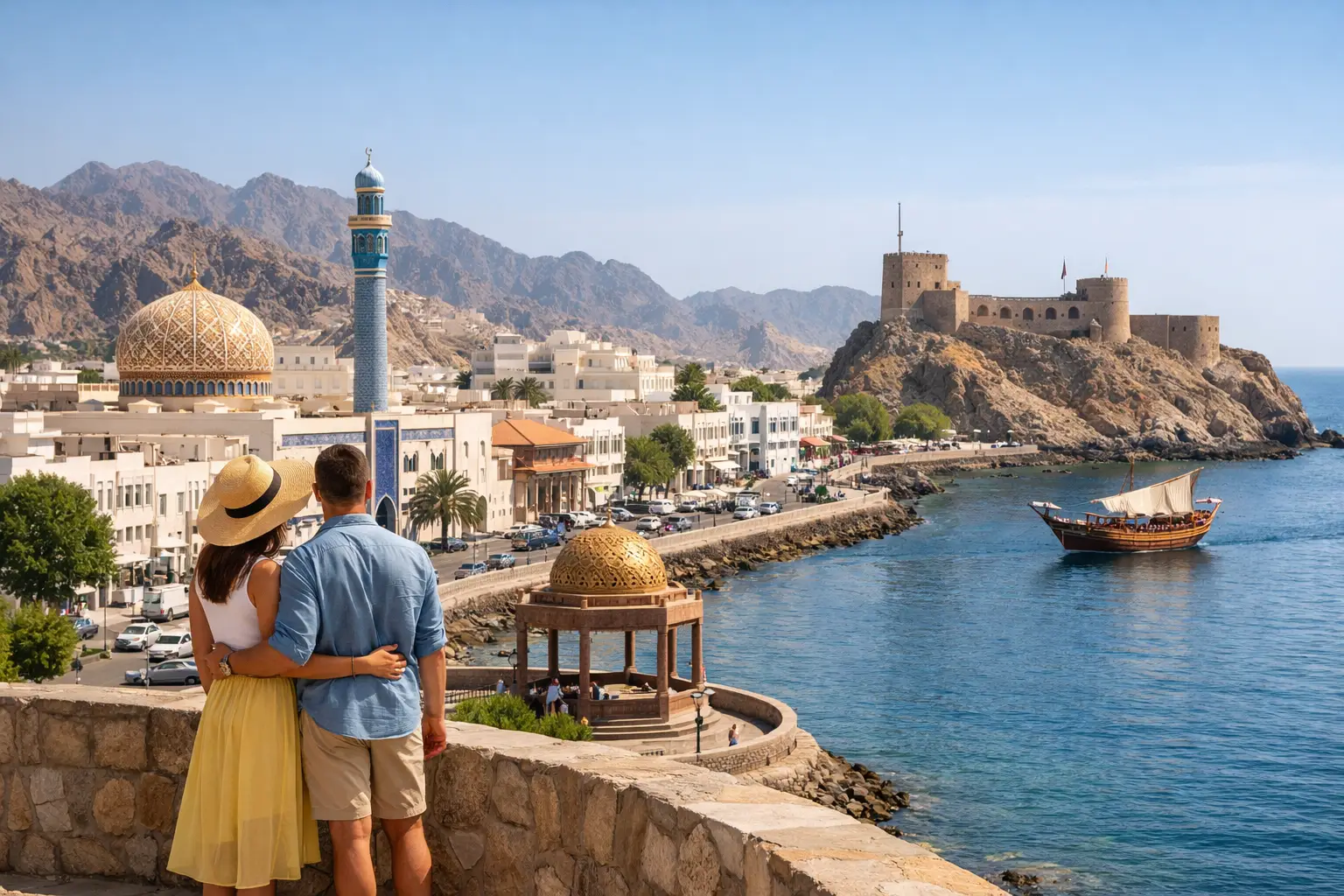
Muscat makes a quietly persuasive first impression. White buildings sit low against craggy brown mountains, the Gulf of Oman flashes beyond long corniche roads, and the air carries a faint mix of salt, incense and cardamom coffee. For travellers who prefer character to a hectic tick-list, the best things to do in Muscat reveal a capital that is both polished and deeply rooted in Omani tradition.
This is a city best approached at an unhurried pace. Give it at least three nights if you can, combining old quarters, galleries and markets with a day beyond the city for wadis, desert or the mountains. Muscat is spread out, so choosing the right base and grouping sights by area will make a noticeable difference.
Start with Sultan Qaboos Grand Mosque
The Sultan Qaboos Grand Mosque is Muscat’s defining landmark and worth seeing early in your stay, before the heat and coach groups arrive. Completed in 2001, it is a vast but remarkably calm place: pale sandstone arcades, clipped gardens, intricate tilework and a prayer hall of exceptional scale.
The enormous chandelier and hand-woven Persian carpet draw most attention, but do not hurry through them. Look instead at the detail in the carved wood, the geometric patterns and the soft quality of the light across the courtyard. Non-Muslim visitors are generally welcomed in the morning, apart from Friday, but opening arrangements and dress requirements can change. Women should bring a headscarf, and everyone should wear clothing that covers shoulders and knees.
Wander Mutrah Corniche and Souq
Mutrah is the most atmospheric part of the city for a late afternoon wander. Its waterfront curves around a natural harbour, with old merchant houses, a small fish market and the mountains rising sharply behind. Walk the Corniche as the sun lowers, when families come out, dhows rock in the marina and the white façades take on a warm glow.
Behind the waterfront, Mutrah Souq is a proper tangle of covered lanes rather than a sanitised shopping arcade. Frankincense is the classic purchase, sold in pale gold-green tears that have been traded from Oman for centuries. You will also find pashminas, silver jewellery, khanjars – the traditional curved Omani dagger – perfume oils and sweets flavoured with rosewater and saffron.
Bargaining is expected, though it is usually gentle. Take time to compare quality, particularly for silver and textiles, and treat the conversation as part of the visit rather than a contest to win.
See Old Muscat and the ceremonial heart of Oman
A short drive east of Mutrah, Old Muscat feels more formal and more theatrical. The route passes through dramatic rock gates into a district of immaculate government buildings, carefully tended gardens and broad, quiet streets. At its centre is Al Alam Palace, the ceremonial residence of the Sultan, recognisable by its blue and gold columns.
You cannot enter the palace, but it is still worth visiting for the setting. Portuguese forts, Al Jalali and Al Mirani, guard the harbour on opposing rocky outcrops, a reminder of Muscat’s strategic importance on old Indian Ocean trading routes. The nearby National Museum is an excellent next stop, offering useful context on Omani maritime history, tribal dress, fortifications and the country’s rapid modern development.
Make time for the Oman Across Ages Museum
For a deeper understanding of the country, the Oman Across Ages Museum is one of the strongest cultural visits near Muscat. It lies inland at Nizwa-side distance rather than in the capital itself, so it works best if you are hiring a car or combining it with a longer excursion. Its architecture is striking, but the real strength is the storytelling: Oman before oil, its seafaring links, its rulers and its ambitions for the future.
If your itinerary is limited to Muscat, prioritise the National Museum instead. If you have a spare day and enjoy museums that do more than display objects in cases, this is the more ambitious choice.
Go dolphin watching on the Gulf of Oman
A morning boat trip is one of the most rewarding things to do in Muscat, particularly between autumn and spring when the weather is pleasantly warm. Spinner dolphins are frequently seen in the waters off the coast, often travelling in energetic groups, and boats typically pass the cliffs and old forts of Muscat on their way out.
Sightings are never guaranteed, which is precisely why operators should not sell the outing as a certainty. Even without dolphins, the view back towards the mountains and city is a fine reason to be on the water. Choose an operator with a small-group feel and ask whether snorkelling is included if that matters to you. Some trips head towards the Dimaniyat Islands, whose clearer water and reefs make the longer journey especially worthwhile.
Take a day trip to Wadi Shab or Wadi Bani Khalid
Muscat is an easy launch point for Oman’s famous wadis, dry river valleys that can conceal startling pools of turquoise water. Wadi Shab is the better-known option from the capital, around two hours south-east by road. Reaching the pools involves a short boat crossing, then a rocky walk and swimming through sections of the wadi. The final cave and waterfall are memorable, but it is not a casual stroll. Wear water shoes, carry dry bags and be realistic about your confidence in water.
Wadi Bani Khalid is farther inland and often feels more accessible around its main pools, though the journey is longer. Both are beautiful, and both can be busy on weekends and public holidays. A private driver or small-group trip removes the navigation issue, while a rental car gives you freedom to set your own pace. Do not enter a wadi if rain is forecast upstream: flash floods are a serious risk, even under blue skies at the car park.
Drive the mountain road to Jebel Akhdar
If you can spare an overnight stay, Jebel Akhdar offers a dramatic contrast to the coast. The name means Green Mountain, though the main appeal is the high plateau, deep ravines, stone villages and cooler air. In spring, terraces can be scented by the Damask roses used to make Omani rosewater.
A four-wheel-drive vehicle is required for the steep ascent, so this is not the day to improvise with a standard hire car. Stay in a mountain hotel if your budget allows, or join a guided excursion from Muscat. The balcony walk at Al Aqor and Al Ayn gives you the best sense of the landscape, with old villages clinging to the cliffside far below.
Eat Omani food beyond the hotel buffet
Muscat has good international dining, but seek out Omani dishes at least once. Shuwa, lamb or goat slow-cooked in an underground oven, is the celebratory speciality and especially common around weekends. Majboos is a fragrant rice dish, while mashuai pairs grilled kingfish with lemon rice. For something simple, try khubz rakhal, an extremely thin bread cooked on a domed griddle, often served with honey, cheese or curry.
Omani halwa is also worth trying, although it bears little resemblance to the crumbly sweet sold in British seaside towns. It is glossy, perfumed with rosewater and saffron, and often served with coffee and dates. A meal is not only about the food here: hospitality is a point of pride, so accept the coffee when offered and enjoy the slower rhythm.
Choose your Muscat hotel area carefully
Where you stay shapes the city you experience. Mutrah and Old Muscat suit travellers who want heritage, waterfront walks and a more local sense of place, though accommodation options are relatively limited. Qurum is a strong all-round choice, with a beach, restaurants and easy access to central sights. Al Mouj, near the airport, has a marina, smart cafés and contemporary resorts, making it convenient for a short luxury break or a late arrival.
Beachfront hotels are ideal if you plan to build in pool time after sightseeing, while a city hotel can offer better value for travellers spending most days on excursions. Muscat is not particularly walkable between districts, so taxis, hotel transfers or a rental car should be part of the plan whichever area you choose.
Plan the small details that make Muscat easier
The cooler period from October to April is the most comfortable time for sightseeing, hiking and boat trips. Summer brings formidable heat and humidity, although hotels can be attractively priced and air-conditioned museums remain viable. Dress modestly in public places, especially around mosques and traditional neighbourhoods, and save swimwear for beaches and hotel pools.
For a trip shaped by local perspective rather than generic recommendations, the Destination Unlocked podcast is as useful as a guidebook and as personal as a chat with your most well-travelled friend. Each 40-minute episode brings together the practical details and distinctive stories that turn a good holiday into a well-chosen one.
Muscat does not demand that you race from monument to monument. Leave room for a second coffee at the souq, an unplanned stop beside the harbour and one night beyond the city. Oman’s capital is at its best when you let its measured pace set your own.