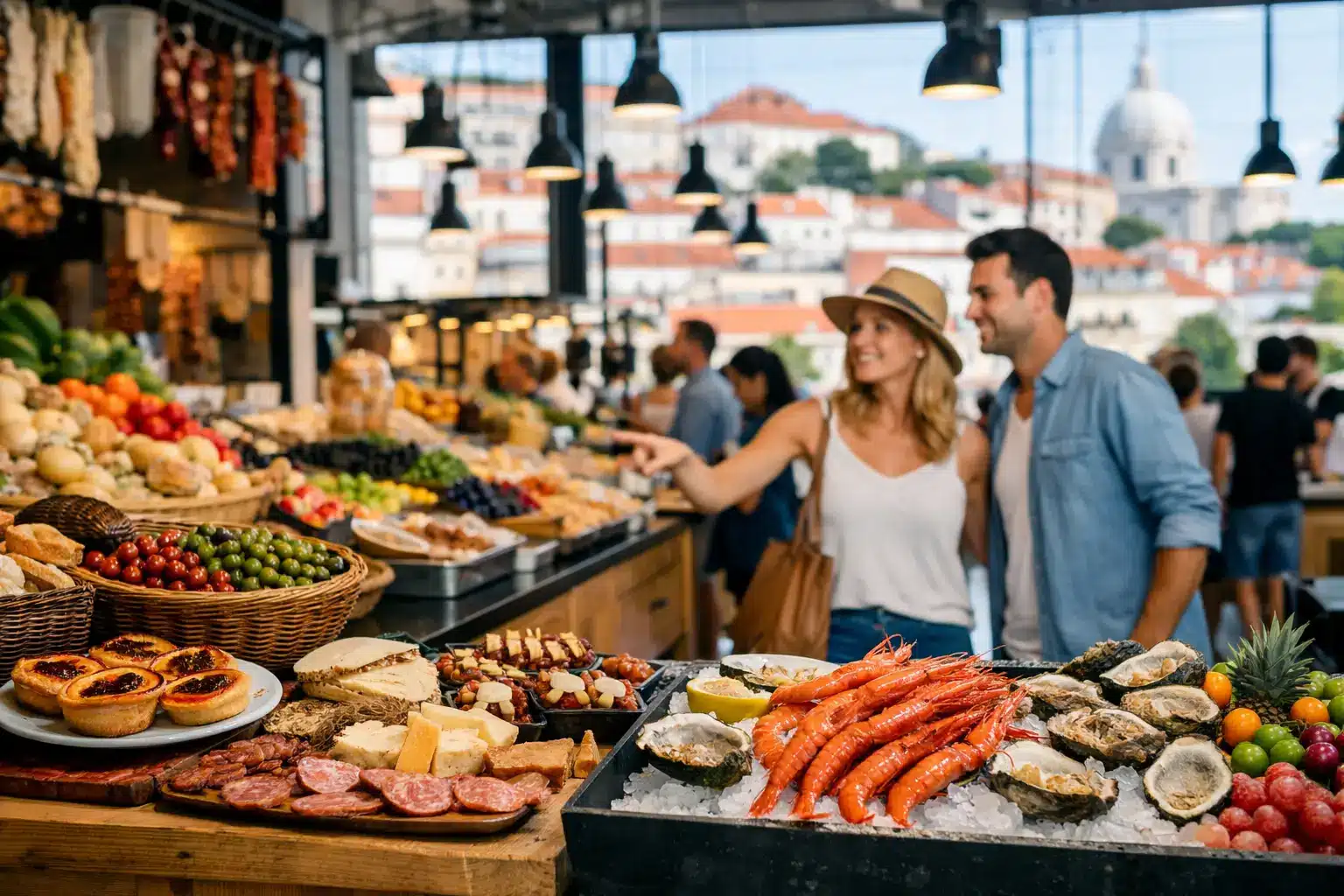
Lisbon’s best meals are not always found behind a reservation-only door. Sometimes they are served at a counter beside a fishmonger, over a paper napkin with a cold glass of vinho verde, or bought warm from a bakery stall before the city has quite got going. The top Lisbon food markets offer a useful shortcut into the city’s everyday appetite – and, with a little planning, can shape an entire food-led weekend away.
There is a choice to make. Some markets are polished, busy and designed for a leisurely lunch between sights. Others remain firmly local, best visited in the morning with room in your plans for an unhurried wander. The clever approach is to do both: use a central market for a memorable meal, then head into a residential neighbourhood for the Lisbon that has not been arranged around your itinerary.
Mercado da Ribeira: Lisbon’s classic market stop
Mercado da Ribeira, by Cais do Sodré, is the obvious starting point and for good reason. The historic market building is home to a traditional produce market as well as the better-known Time Out Market food hall. Its location makes it particularly easy to fold into a first afternoon in Lisbon, after a walk along the riverfront or before taking the train towards Belém or Cascais.
Visit earlier in the day if you want the old market atmosphere: fish displayed on ice, fruit and vegetables in season, florists and the purposeful pace of people shopping rather than sightseeing. It is a worthwhile corrective to the idea that this handsome building exists only for its food hall. Portugal’s Atlantic cooking starts with excellent ingredients, and here they are very much in evidence.
The traditional market is not the place for a grand sit-down meal, but it is ideal for a glimpse of daily life and for picking up picnic supplies. If your Lisbon hotel has a balcony, terrace or even just a minibar, good bread, cheese, fruit and a bottle of wine can make a very civilised early evening.
Time Out Market: variety when everyone wants something different
In the same building, Time Out Market is Lisbon’s most convenient answer to the question, “Where shall we eat?” It gathers restaurants, chefs, bars and specialist counters under one large roof. Expect dishes such as bacalhau, prego steak sandwiches, croquettes, seafood rice and custard tarts, alongside international options and cocktails.
It is a strong choice for a first-night dinner, particularly if you have arrived late or are travelling with companions whose appetites have not aligned. The compromise is character: it can be noisy, busy and more visitor-facing than the city’s neighbourhood markets. Go at an off-peak hour for lunch or an early dinner, and treat it as an excellent introduction rather than your sole culinary experience of Lisbon.
Cais do Sodré is also a practical base for a short break. Staying nearby puts you within walking distance of Baixa, Chiado and the waterfront, while keeping trains, trams and ferries close at hand. That matters after a long, food-filled evening when Lisbon’s hills suddenly feel rather more theatrical.
Mercado de Campo de Ourique: the market worth travelling for
For many visitors, Mercado de Campo de Ourique is the most satisfying all-round food market in Lisbon. Set in a handsome residential district west of the centre, it has the food-stall energy of a modern market hall but feels more connected to its neighbourhood. There are still produce sellers alongside places to eat, and the overall mood is relaxed rather than relentlessly performative.
This is where to come for a long lunch or an informal supper when you want choice without the scale of Time Out Market. Order a plate of grilled fish, petiscos to share, a glass of Portuguese wine, then leave room for something sweet. The pleasure is not simply in any one stall. It is in lingering over the decision, watching families and friends gather around communal tables, and realising you have no need to rush back towards the postcard centre.
Combine a visit with nearby Estrela. A stroll through Jardim da Estrela and a look inside the basilica make a gentle counterpoint to lunch, while the elegant streets around Campo de Ourique reward an aimless hour. It is a particularly good area for travellers who prefer local cafés, smart independent shops and a quieter night’s sleep to the bustle around Rossio.
Mercado de Alvalade Norte: a look at everyday Lisbon
Mercado de Alvalade Norte is less likely to appear on a first-time visitor’s must-see list, which is precisely part of its appeal. Alvalade is a lived-in, largely residential district north of the centre, and its market offers the unfiltered rhythm of people buying fish, meat, bread, fruit and flowers for home.
Come in the morning, when the market is most purposeful. This is not primarily a polished dining destination, so it rewards curiosity rather than a checklist mentality. Look closely at the seasonal produce, listen to the easy back-and-forth at the counters and stop for a coffee nearby afterwards. It provides context for the seafood, vegetables and pastries you will encounter in Lisbon’s restaurants all weekend.
Alvalade works best for travellers with three or more days in the city, or for repeat visitors who have already covered the central sights. It also makes sense if you are staying near the airport, Saldanha or Avenidas Novas and want a more local breakfast-and-market excursion without crossing town.
Mercado de Benfica: a local market with proper range
Further west, Mercado de Benfica is another strong choice for seeing a working Lisbon market beyond the tourist trail. Benfica has its own identity and a proud local following, especially on football days, but the market is not just for match-going crowds. Its stalls reflect the ingredients that underpin Portuguese home cooking: fresh fish, salted cod, charcuterie, cheese, vegetables and bakery goods.
The key here is expectation. Visit Mercado de Benfica for shopping, snacking and neighbourhood atmosphere, not for a curated chef-led meal. It is the sort of place that makes a useful morning activity before a more formal lunch elsewhere, especially if you enjoy photographing food displays or bringing edible souvenirs back to a self-catering flat.
If you are building your holiday around a Benfica match, allow time for the market before the stadium crowds arrive. On a non-match day, it offers a calmer reason to see a part of Lisbon many short-break visitors miss entirely.
Mercado de Santa Clara and the case for timing your visit
Mercado de Santa Clara sits beside the Feira da Ladra flea market in Alfama. While it is not the city’s strongest choice for a full market meal, its setting earns it a place on a food-minded itinerary. The surrounding streets are full of atmosphere, and a morning browsing antiques, tiles, books and oddities can be paired with a simple coffee, pastry or light bite in the area.
Think of this as a market-adjacent stop rather than a substitute for Ribeira or Campo de Ourique. That distinction saves disappointment, and it is one of the most useful rules when planning Lisbon: a market’s appeal may lie in its produce, its food stalls, its location or its community role. They do not all do the same job.
How to plan Lisbon’s food markets around your stay
For a two-night city break, keep it simple. Start with Mercado da Ribeira and Time Out Market on your arrival day, then make Campo de Ourique your dedicated food-market outing. If you have a third day, choose Alvalade Norte or Benfica for a more local perspective. Markets are generally liveliest in the morning, while the food-hall style venues come into their own over lunch and dinner. Check current opening days and hours shortly before travelling, as stall schedules and public-holiday trading can change.
Where you stay should follow the rhythm you want. Cais do Sodré and Baixa suit travellers who want to walk to major sights and late-night dining. Campo de Ourique and Estrela offer a more residential, elegant base, with excellent food close by. Alfama provides character in abundance, though its cobbled slopes are less forgiving with shopping bags – or after a second helping of petiscos.
A guided food tour can be worthwhile on your first full day, particularly if you want help navigating Portuguese wines, pastries and regional specialities beyond the familiar pastel de nata. Afterwards, use the markets to order more confidently and follow up on what you liked. It is a better strategy than trying to sample everything in one heroic sitting.
For the wider picture before you book, the Destination Unlocked podcast is as useful as a guidebook and as personal as a chat with your most well-travelled friend. Each 40-minute episode is designed to give you the information you need for a great trip, with the kind of local perspective that turns a good plan into a more memorable one.
Leave space in your Lisbon schedule for a market meal that runs longer than expected. The city is at its most generous when lunch becomes an afternoon, and the next stop can wait.