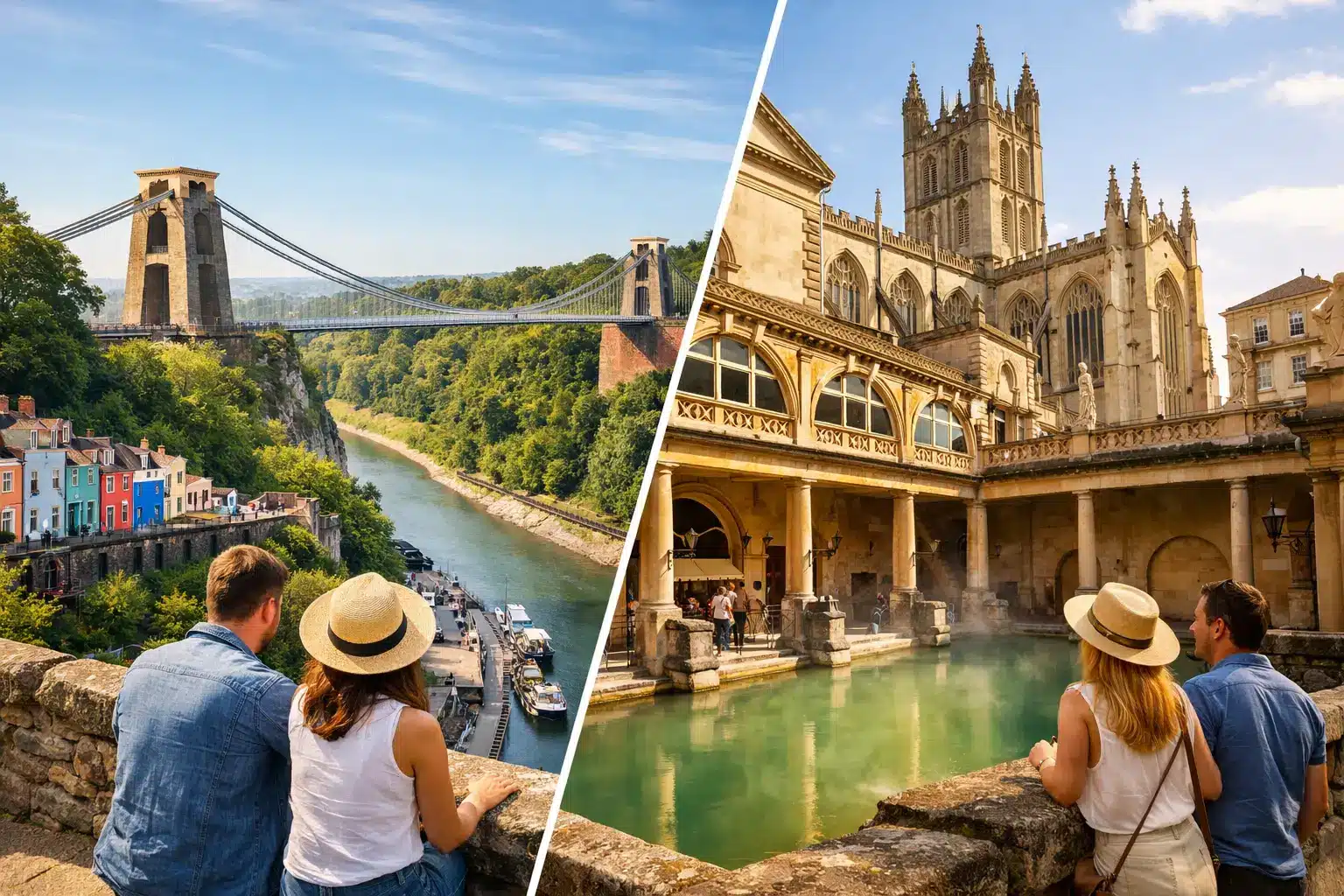
Bath begins with a honey-coloured postcard moment: the sweep of the Royal Crescent, steam rising from the thermal waters, the Abbey bells carrying across compact Georgian streets. Bristol tends to reveal itself more gradually, through a mural down a side street, a waterside table in the sun, or a brilliant little restaurant in a former warehouse. Choosing a weekend in Bristol or Bath is less about finding the better city and more about deciding what sort of break you want.
Bath is polished, walkable and wonderfully easy to absorb in two days. Bristol is larger, livelier and full of neighbourhood character, with more room for spontaneity. They are connected by frequent trains in around 15 minutes, so there is no wrong decision here. But choosing one as your base will make booking accommodation, dinners and activities much simpler.
Weekend in Bristol or Bath: the quick answer
Book Bath if you want grand architecture, Roman history, a memorable spa session and the pleasure of doing most things on foot. It is the stronger choice for a romantic break, a first visit to the south-west, or a weekend built around lingering lunches, galleries and handsome independent hotels.
Book Bristol if you are drawn to creative neighbourhoods, excellent food, street art, live music and a little more edge. It suits friends, couples who prefer a city with late-night options, and repeat visitors who would rather spend a morning in a market than queue for a major monument.
The practical difference is pace. In Bath, a well-planned 48 hours can cover the essentials without ever feeling rushed. Bristol rewards a looser itinerary. There is plenty to see around the Harbourside, Clifton and Stokes Croft, but its appeal lies as much in its changing mood as in ticking off landmarks.
Choose Bath for a compact, elegant escape
Bath feels purpose-built for a short break. From Bath Spa station, the historic centre is a short walk away, and many of the best places to stay sit within easy reach of the Roman Baths, Pulteney Bridge and the Assembly Rooms. That compactness matters when you only have two nights: you can arrive on a Friday evening, check in, and be at a good restaurant within minutes.
The Roman Baths are the obvious starting point, and rightly so. They provide the historical context for the entire city, from its ancient foundations to its later Georgian reinvention. Book a timed visit in advance for a Saturday morning, particularly in school holidays and warmer months, then continue towards Bath Abbey and the riverside.
For the more restorative version of Bath, reserve a session at Thermae Bath Spa. Its rooftop pool, with views across the city’s stone rooftops, is one of those rare flagship experiences that earns its reputation. Evening sessions can be especially appealing after a day walking uphill to the Circus and Royal Crescent, though popular slots go quickly.
Bath is also unusually good for people who like to build a weekend around food and a well-chosen hotel. Stay central for heritage character and the ability to stroll everywhere, or look around the quieter streets near Henrietta Park if you would like a more residential feel. A hotel with parking is worth considering only if you are arriving by car – central Bath’s narrow streets and limited parking can be more hindrance than freedom.
There are trade-offs. Bath can feel busy, especially on Saturdays, and its best-known streets are firmly on the visitor trail. Its evening scene is more dinner-and-drinks than late-night city energy. If your ideal break involves craft beer, gig venues and a different restaurant every night, Bristol may feel more natural.
How to spend two days in Bath
Start Saturday with the Roman Baths before the busiest part of the day, then take your time around the Abbey and Pulteney Bridge. In the afternoon, walk up to the Royal Crescent via the Circus and pause in Royal Victoria Park. Leave room for tea, cocktails or an unhurried browse in the independent shops around Walcot Street.
On Sunday, choose between the spa and a walk along the Kennet and Avon Canal towards Bathampton. If the weather is good, the view from Alexandra Park is a fine final look at the city. Bath works best when you resist trying to turn it into a checklist.
Choose Bristol for character, culture and a better night out
Bristol has several distinct centres rather than one neat historic core. The Harbourside is ideal for first-time visitors, with museums, boat trips and waterside restaurants close together. Clifton has Georgian terraces, the Suspension Bridge and a more refined village atmosphere. Stokes Croft and Gloucester Road bring independent shops, murals and a grittier, creative pulse.
That variety makes Bristol a stronger choice if two people travelling together have different priorities. One can spend an afternoon at the harbourside museums while the other hunts down street art or browses the shops of Wapping Wharf. You can meet later for dinner without either feeling they have compromised their day.
For a first weekend, begin at the Harbourside. The SS Great Britain is a substantial and genuinely engaging visit, particularly for anyone interested in maritime history and Victorian engineering. Bristol’s boat trips offer another useful perspective on the floating harbour, and are an easy activity to book ahead in the busier months.
Then make time for Clifton. Walk across the Clifton Suspension Bridge, look down into the Avon Gorge and return through Clifton Village for coffee or a long lunch. The bridge is free to cross on foot, which makes it one of the city’s best-value experiences, but the walk is exposed in poor weather. Have a second indoor plan if the forecast is unkind.
Bristol’s hotel choice is broader than Bath’s. Stay around the Harbourside or Old City for easy sightseeing, restaurants and access to Temple Meads station. Choose Clifton for a quieter, more handsome setting, especially for a couples’ weekend. If nightlife and food are at the top of the list, areas around St Nicholas Market, Wapping Wharf and the city centre put you close to the action, though ask about room location if you are a light sleeper.
How to spend two days in Bristol
Spend Saturday at the Harbourside, combining the SS Great Britain or M Shed with a harbour cruise and dinner in Wapping Wharf. On Sunday, head to Clifton, cross the Suspension Bridge, then allow time to explore Park Street and the streets around Stokes Croft. Bristol is a city where leaving an hour unplanned often leads to the best find of the weekend.
The food question: Bath’s occasion versus Bristol’s choice
Both cities eat well, but they do it differently. Bath is particularly suited to an occasion meal: candlelit dining rooms, seasonal British cooking, afternoon tea and bars that take their surroundings seriously. It is the place to book one standout dinner and make an evening of it.
Bristol has greater range and a more casual rhythm. Its independent food scene is one of the city’s chief assets, from market lunches to inventive small plates, natural wine bars and excellent vegetarian options. If eating somewhere new at every meal matters to you, Bristol has the advantage.
In either city, reserve Saturday dinner before you travel. The places visitors most want to try are rarely the places with empty tables at 8pm. For Bath, look just beyond the main streets as well as in the centre; for Bristol, choose your neighbourhood first, because a cross-city taxi can blunt the convenience of an otherwise excellent booking.
Could you do both in one weekend?
Yes, but only if you are realistic. The short train journey makes a day trip entirely feasible, and it is a good solution if you have booked a hotel in Bristol but want to see the Roman Baths, or are staying in Bath and fancy Bristol’s restaurants and harbourside. Travel time is not the issue; deciding what to leave out is.
For a first visit, stay in Bath and take one early train to Bristol only if you are most interested in the Harbourside and Clifton. Base yourself in Bristol and day-trip to Bath if you want a more energetic evening scene but still want the Roman Baths and Georgian architecture. Avoid changing hotels for a two-night break unless the accommodation itself is part of the experience.
Before you book, listen to the Destination Unlocked podcast – it is as useful as a guidebook and as personal as a chat with your most well-travelled friend, with each 40-minute episode offering the detail needed for a great trip.
The deciding image is simple. If you picture yourself in a rooftop thermal pool before dinner, book Bath. If you picture yourself following a mural-lined street towards a restaurant someone local has tipped you off about, book Bristol. Either way, leave a reason to return: these neighbouring cities are far more enjoyable when you stop trying to fit one into the other.