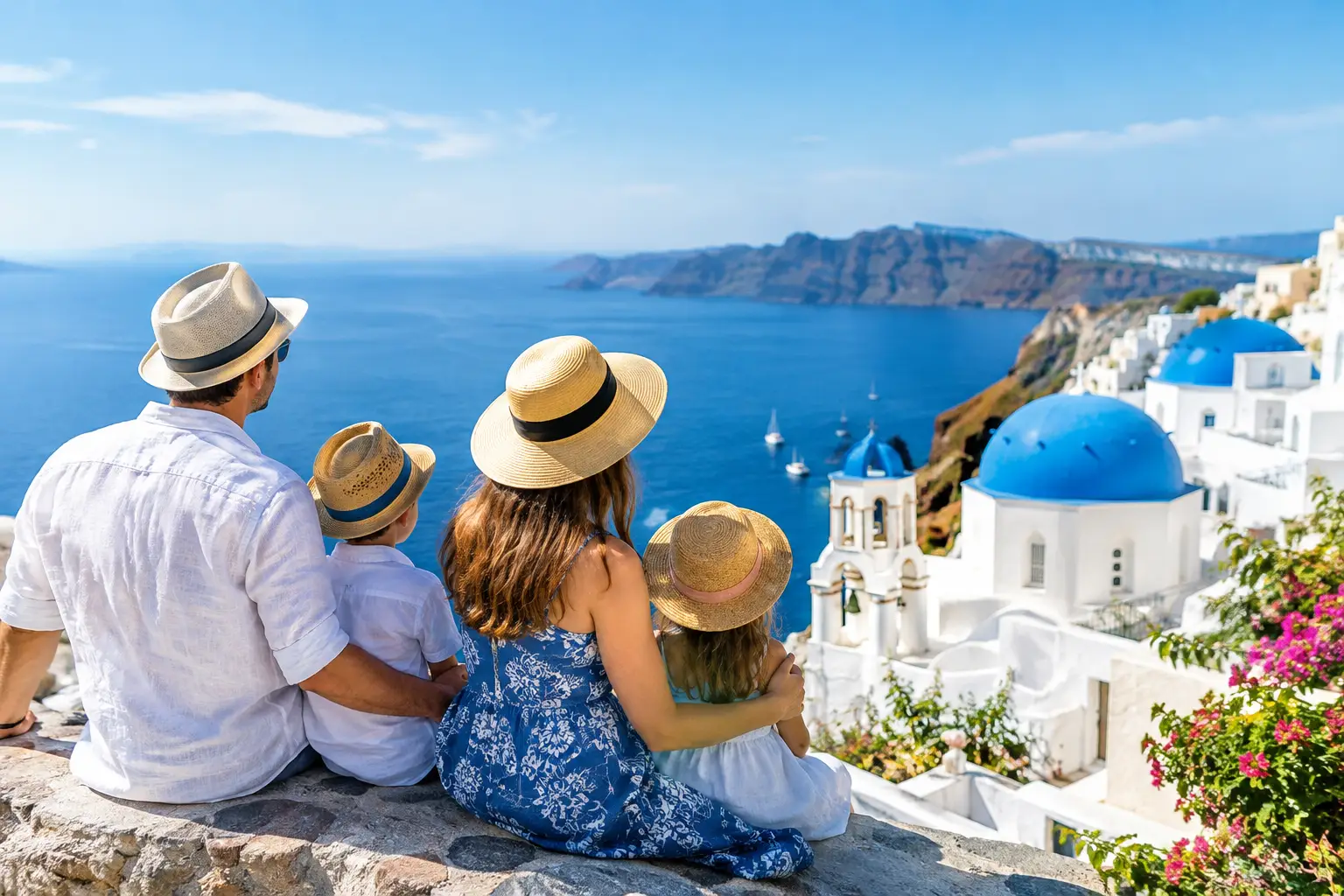
A Greek family holiday can mean two very different things. It might be a week spent walking from a family suite to a sandy beach, with a taverna and ice cream within easy reach. Or it might mean winding mountain roads, long lunches in stone villages and a ferry timetable that requires a little more patience. The answer to which Greek island suits families depends less on finding one universally ‘best’ island and more on choosing the rhythm that works for your children, your budget and your appetite for exploring.
For most families travelling from the UK, direct flights, short airport transfers, swimmable beaches and accommodation with enough space are the practical essentials. Greece has all of those in abundance, but each island delivers them differently. These are the strongest contenders for an easy, characterful holiday that still feels like Greece rather than a resort anywhere.
Which Greek island suits families who want it easy?
Crete for choice, space and proper variety
Crete is the sensible answer, but that should not be mistaken for a dull one. Greece’s largest island has a remarkable range of family bases: lively beach resorts, quieter fishing villages, Venetian old towns, water parks, archaeological sites and mountain scenery. It is particularly good for mixed-age groups, where teenagers may want activities and independence while younger children need a pool, a beach and a straightforward supper.
The north coast is the most convenient place to start. Around Chania, families can combine a charming old harbour with good beaches and day trips. Further east, the resorts around Rethymnon and Heraklion offer a broad choice of hotels, including flat-style stays and larger properties with kids’ clubs. Book close to the sea if beach time is the priority, as a handsome hotel in an inland village can make every swim a car journey.
Crete’s trade-off is its scale. A map can make a day trip look simple, but distances are longer than they appear and roads are not always quick. Rather than trying to see the whole island, choose one region and allow room for slower days. A boat trip, a visit to Knossos for school-age children, and a morning at a sheltered beach will usually be more memorable than a heroic itinerary.
Corfu for green scenery and short-hop exploring
Corfu suits families who like their beach holiday with a little texture. The island is green, elegant and relatively compact, with olive groves, shuttered villages and a capital that rewards a wander. Corfu Town is a genuine highlight, not merely somewhere to pass through on the way to a resort, and its old fortresses and gelato stops make culture feel manageable.
For a classic family base, look towards the calmer east coast or the north-east, where small bays and pebbly beaches are common. The west coast has some of Corfu’s most dramatic sand beaches, but it can feel more exposed and transfers may take longer. Families with confident swimmers and older children may relish this side of the island; those travelling with toddlers might favour shallower, more sheltered water.
Corfu works especially well for a week of low-effort variety. A rented boat for a gentle day on the water, a beach-hopping drive and an evening in Corfu Town are enough to give the holiday shape. It can be busy in peak school-holiday weeks, so a hotel just outside the headline resorts often offers better value and a quieter night.
Naxos and Kos for relaxed beach days
Naxos for families who prefer an unhurried Cycladic feel
Naxos has the whitewashed beauty people hope for from the Cyclades, without the constant bustle and premium prices of Santorini or Mykonos. Its big advantage for families is the long, sandy west-coast beaches, where shallow water and plenty of room make the day feel uncomplicated. Agios Prokopios, Agia Anna and Plaka are popular for good reason, with accommodation and tavernas close enough to avoid logistical theatre before lunch.
Naxos Town is also an appealing base. Its maze of lanes, castle district and waterfront restaurants are atmospheric but relaxed, while the Portara gateway is a fine place for an early-evening walk. Inland, villages such as Halki offer a change of scene and a glimpse of a more agricultural island life.
The compromise is access. Naxos does not generally offer the same breadth of direct international flights as Crete, Corfu, Rhodes or Kos, and many visitors arrive by ferry via Athens or another island. That can be part of the adventure with older children, but it is less appealing after a very early flight with a buggy, beach gear and a tired four-year-old. Once there, however, Naxos makes a persuasive case for staying put.
Kos for flat terrain and an active holiday
Kos is one of the easiest Greek islands for families who like to be out and about. It is relatively flat, making cycling genuinely practical rather than a holiday aspiration abandoned after ten minutes. The island has long beaches, established family hotels and a useful range of water-based activities, from paddleboarding to boat excursions.
Kos Town combines ancient remains, a handsome harbour and enough restaurants to make evening choices simple. Resorts such as Tigaki and Marmari are particularly handy for sandy beaches and family-focused accommodation, while Kardamena is livelier and better suited to families with older teenagers than those seeking quiet evenings.
It is not Greece at its most remote or undiscovered, and that is precisely the point for many parents. Kos is organised for a straightforward holiday, with direct flight options in season and a manageable airport transfer. Choose a hotel with a good pool and walkable food options, then use a bike ride or short boat trip to add the sense of occasion.
Rhodes for sunshine, history and resort choice
Rhodes is a strong all-rounder, especially for families travelling in the shoulder seasons when dependable warmth matters. Its medieval old town has enough drama to draw children away from the pool: enormous walls, gateways and cobbled lanes that seem made for making up stories. Beyond the city, the island offers beach resorts in almost every style, from self-catering studios to polished all-inclusive properties.
For families seeking an active but easygoing base, Faliraki’s wider area can work well if you stay slightly away from its busiest centre. The water park is an obvious draw, while Lindos offers a more scenic excursion, though the climb to the acropolis is better tackled early in the day and with older children. On the east coast, sea conditions are often calmer than on the windier west.
Rhodes can feel thoroughly developed, particularly in July and August. If your ideal holiday involves empty coves and a feeling of serendipity, look elsewhere or travel in May, June, September or October. If you want sun, a generous hotel choice and days that require very little negotiation, it earns its popularity.
How to choose the right island and hotel
The age of your children should shape the decision. Babies and toddlers benefit from a short transfer, shade, shallow water and a room layout that lets adults still enjoy the evening after bedtime. Primary-school children tend to thrive where there is a pool, a beach and one exciting excursion every few days. Teenagers usually value watersports, independent strolls, reliable Wi-Fi and a town or resort with a little life after dark.
Accommodation matters as much as the island. An all-inclusive hotel can be a very good investment when you want predictable costs, a children’s pool and no nightly restaurant research. A self-catering flat or small family-run hotel makes more sense for families who enjoy trying tavernas and want a less enclosed experience. In either case, inspect the map rather than relying on a description that says ‘near the beach’. On Greek islands, that phrase can cover a surprising amount of uphill road.
Avoid packing every day with an attraction. Greece is at its best when there is time for a slow breakfast, a swim before the heat rises, and a late lunch beneath a vine-covered terrace. Pre-book one or two headline experiences in high season, particularly boat trips and water parks, but leave room for the accidental pleasures: a bakery stop, a harbour-side sunset or the beach your children insist on visiting twice.
The Destination Unlocked podcast is as useful as a guidebook and as personal as a chat with your most well-travelled friend. Each 40-minute episode is designed to give you the practical detail and local perspective needed to turn a promising destination into a great trip.
For a first Greek island holiday, Crete, Corfu, Rhodes and Kos remove many of the practical hurdles. For a slower, sandier escape with Cycladic character, Naxos is hard to beat. Choose the island that leaves everyone with enough energy to enjoy the small moments, because those are usually the ones that follow you home.