Explora I – Monte Carlo to Barcelona
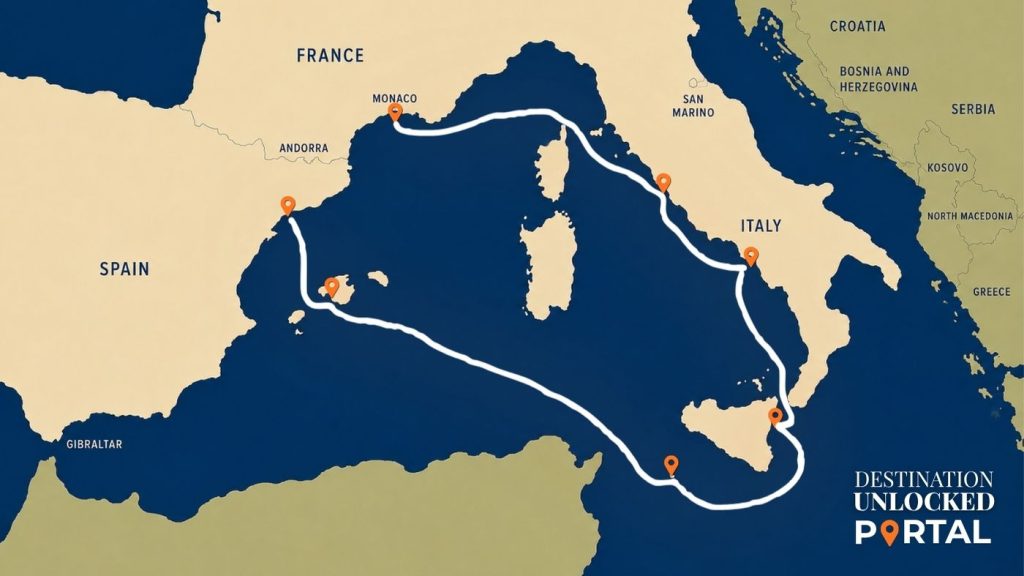
Our Itinerary
- Civitavecchia (9 June)
- Sorrento (10 June)
- Giardini Naxos (11 June)
- Valletta (12 June)
- Palma de Mallorca (14 June)
- Barcelona (15 June)

Built as the port of ancient Rome under Emperor Trajan, Civitavecchia remains the principal gateway to the Eternal City today, where cruise passengers, pilgrims, traders and travellers all follow in the wake of countless predecessors.
Key information about Civitavecchia
Currency: Euro (€)
Population: 51,000 (59 million Italy)
Emergency #: 112
Tap Water: Safe to drink
Time Zone: GMT+1 (GMT+2 summer)
ID Requirements: Non-EU citizens must carry their passport in Italy
ATM and Payment: ATMs available. Card payment widely accepted. USD not accepted.
Languages: Italian (good English in tourist areas)
Drive on the: Right
Pharmacy: Farmacia Comunale n.1
Protection: Sun protection recommended in summer
Wi-Fi: Available in cafes and hotels
Post Office: Poste Italiane, Via Guglielmo Marconi
Tourism Office Website: www.visitlazio.com, www.italia.it
Weather Forecast:
CIVITAVECCHIA WEATHERPort Location in Civitavecchia
Ships dock at the Port of Civitavecchia (Porto di Civitavecchia), approximately 1.5 km (0.9 miles) from the historic centre (20-min walk or 5-min shuttle ride).
Facilities: Tourist information, cruise shuttle buses, taxis, cafés, ATMs, toilets, luggage storage, car hire, Wi-Fi and tour operators.
Port Address: Largo della Pace, 00053 Civitavecchia, Italy.
Getting Around: The historic centre is easily walkable. A free port shuttle normally operates between the ship and Largo della Pace visitor centre. Local buses connect the town, while trains provide excellent access to Rome and other destinations along the coast.
Public Transport: Regional trains from Civitavecchia station to Rome Termini run frequently throughout the day (approximately every 15–30 minutes). Journey time is typically 45–75 minutes depending on service. Tickets cost approximately €4.60–€5 each way and can be purchased from station machines, ticket offices, or via the Trenitalia app.
Taxis: Taxis are readily available at the Civitavecchia cruise port terminal. Local journeys are generally metered. A taxi to Civitavecchia railway station typically costs €10-15. A private transfer to Rome usually costs €140-180. Important: agree your fare before departure for longer journeys (such as to Rome). Uber is limited; licensed private transfer services are more common.
Tourist Bus: There is no Hop-On Hop-Off bus service in Civitavecchia itself. Of course, there are several hop on hop off bus tours in Rome.
What to see in Civitavecchia
Forte Michelangelo: One of the finest coastal fortresses in Italy, begun under Pope Julius II and partially designed by Michelangelo himself. Limited access; exterior view anytime | Free exterior viewing | 0.8 km (0.5 miles) from port (10-min walk)
Trajan’s Baths (Terme Taurine): Roman thermal baths dating back nearly 2,000 years, once enjoyed by emperors. Visitor centre explains the history of Roman baths and the importance of the area in antiquity. 9a-7p (seasonal) | Approx. €5 | 5 km (3.1 miles) from port (10-min drive)
Cathedral of St Francis of Assisi: A graceful Baroque cathedral at the heart of town. 7a-7p | Free | 1.2 km (0.7 miles) from port (15-min walk)
National Archaeological Museum: Small but excellent collection of Roman and Etruscan treasures recovered from the surrounding region. 8:30a-7:30p | Approx. €6 | 1 km (0.6 miles) from port (15-min walk)
The Historic Waterfront: A pleasant promenade where fishing boats, ferries and cruise ships share the same waters. 24 hours | Free | Adjacent to port
Market of Civitavecchia: A chance to see everyday Italian life away from Rome’s crowds. 7a-2p | Free entry | 1.3 km (0.8 miles) from port (15-min walk)
Vanvitelli Fountain: Built in the 18th century and still welcoming arrivals to the harbour. 24 hours | Free | 1 km (0.6 miles) from port (15-min walk)
Old Harbour of Trajan: The ancient Roman harbour remains visible beneath the modern port. You are quite literally walking through Roman history. 24 hours | Free | Within port area
Piazza Leandra: One of the oldest corners of the city, where medieval Civitavecchia still peeks through. 24 hours | Free | 1.4 km (0.9 miles) from port (18-min walk)
Beaches near Civitavecchia
La Marina Beach: Small urban beach ideal for a quick dip if you are staying local. 24 hours | Free | 1.5 km (0.9 miles) from port (20-min walk)
Santa Marinella Beach: Long regarded as ‘Rome’s seaside resort’. 24 hours | Free | 10 km (6.2 miles) from port (15-min train)
Sabbie Nere: Unusual volcanic black-sand beach north of town. 24 hours | Free | 8 km (5 miles) from port (15-min drive)
Regional Highlights

Tarquinia: One of Italy’s finest Etruscan towns, with UNESCO-listed tombs and a beautiful medieval centre. 8:30a-7:30p | Approx. €6 entry | 20 km (12 miles) from port (25-min drive)
Lake Bracciano: A volcanic lake surrounded by attractive villages and dominated by a magnificent castle. 24 hours | Free lakeside access | 50 km (31 miles) from port (1-hour drive)
Cerveteri: Home to one of the most important Etruscan necropolises in Europe. 8:30a-7:30p | Approx. €6 | 45 km (28 miles) from port (45-min drive)
Rome: Quite possibly the greatest day trip in Europe. 80 km (50 miles) from port (45–75 min by train)
A day trip to Rome from Civitavecchia
For many, Civitavecchia is really ‘Rome’s port’. Fortunately, reaching the Italian capital is straightforward.
The cruise shuttle usually drops passengers at Largo della Pace. From there, a local bus or taxi can take you to Civitavecchia train station. Regional trains run frequently to Roma Termini, taking about 45-75 minutes.
The most important thing to remember is Rome wasn’t built in a day – and so don’t expect to see it all in one day either. To avoid too much time trudging between places, it’s a good idea to focus on attractions that are close to each other, or take a city-wide hop-on-hop-off bus tour for an overview.
For a first visit, these have to be considered:
Colosseum & Roman Forum: The heart of Ancient Rome. Allow 2-3 hours.
Trevi Fountain: Rome’s most famous fountain. Throw a coin (over your shoulder) and tradition says you’ll return.
Pantheon: Nearly 2,000 years old and still astonishing.
Piazza Navona: One of Europe’s great public squares.
St Peter’s Basilica and the Vatican Museums: The spiritual heart of Catholicism. Allow extra time for security queues.
Aim to be back at Civitavecchia station no later than two hours before all aboard. Italian trains are pretty good, but train delays do occasionally happen.
Tipping customs in Civitavecchia
Service is often included in restaurants. If not included, rounding up or leaving 10% is appreciated. Taxi drivers generally appreciate ‘keep the change’ tips.
The very Italian ‘coperto’ charge in a restaurant is not a service charge – that’s a cover charge for the use of cutlery, tablecloth, and bread. You can’t decline it!
Food & drink to try in Civitavecchia
Cacio e Pepe: Rome’s deceptively simple masterpiece of pecorino cheese and black pepper.
Carbonara: The authentic Roman version contains egg, pecorino and guanciale – no cream.
Supplì: Deep-fried rice balls with a molten mozzarella centre.
Frascati Wine: Crisp white wine from the hills southeast of Rome.
Souvenir suggestions for Civitavecchia
If you’re heading into Rome, look for handmade leather goods, artisanal olive oil, Roman mosaics, or food products featuring truffle, pecorino or guanciale. In Civitavecchia itself, maritime-themed gifts and ceramics are common.
Useful Italian phrases for cruise tourists
Hello: Ciao / Buongiorno
Goodbye: Ciao / Arrivederci
Please: Per favore
Thank you: Grazie
Toilet: Bagno
Cruise Ship Port: Porto delle crociere

Perched on dramatic cliffs above the Bay of Naples, Sorrento is a town of lemon groves, elegant piazzas and spectacular views. Beneath the postcard scenery lies a proud maritime community with a remarkable tradition of craftsmanship that still thrives today.
Key information about Sorrento
Currency: Euro (€)
Population: 16,000 (59 million Italy)
Emergency #: 112
Tap Water: Safe to drink
Time Zone: GMT+1 (GMT+2 summer)
ID Requirements: Non-EU citizens must carry their passport in Italy
ATM and Payment: ATMs available. Card payment widely accepted. USD not accepted.
Languages: Italian (good English in tourist areas)
Drive on the: Right
Pharmacy: Farmacia Internazionale, Piazza Tasso
Protection: Sun protection recommended in summer
Wi-Fi: Available in cafes and hotels
Post Office: Poste Italiane, Corso Italia 210
Tourism Office Website: www.aboutsorrento.com
Weather Forecast:
SORRENTO WEATHERPort Location in Sorrento
Ships anchor offshore in Sorrento and passengers are transferred ashore by tender to Marina Piccola, immediately below the historic centre. A public lift connects the waterfront with the historic centre (2-min walk from tender pier, 5-min walk at the top to Piazza Tasso).
Facilities: Tourist information, cafés, restaurants, ferry ticket offices, taxis, toilets and souvenir shops.
Port Address: Marina Piccola, Via Luigi de Maio, Sorrento.
Getting Around: Sorrento is highly walkable. Most highlights are within a 15-minute walk of Piazza Tasso.
Public Transport: Public buses operate throughout the peninsula, while Circumvesuviana trains connect Sorrento with Pompeii and Naples. Local buses generally cost around €1.50-2.00 per journey. Tickets can be purchased from tabacchi shops, stations and ticket machines. To book train tickets in advance, visit the Campania Express website.
Taxis: Taxis are readily available at the harbour and Piazza Tasso. Fares are not always metered for tourist routes, so agree the fare before departure. A typical journey from the harbour to central Sorrento costs approximately €15-20. Uber is not widely used; local taxis dominate.
Tourist Bus: There is no Hop-On Hop-Off bus service in Sorrento.
What to see in Sorrento
Piazza Tasso: The bustling heart of Sorrento where cafés, churches and daily life converge. The perfect starting point for exploring the town.
Open 24 hrs | Free | 1 km (15-min uphill walk) from tender pier.
Sorrento Cathedral: A fascinating cathedral blending Romanesque, Renaissance and Baroque influences.
8a-12p, 4p-7p | Free | 1.3 km (15-min walk) from tender pier.
Museo Bottega della Tarsia Lignea: A fascinating museum dedicated to Sorrento’s world-famous marquetry tradition. Learn how artisans assemble hundreds of tiny pieces of wood into intricate works of art.
10a-6p | Approx. €10 entry | 1.5 km (20-min walk) from tender pier.
Villa Comunale: A cliff-top terrace offering one of the most spectacular views of the Bay of Naples and Mount Vesuvius.
Open daily | Free | 1.2 km (15-min walk) from tender pier.
Chiostro di San Francesco: A peaceful medieval cloister where weddings, concerts and art exhibitions frequently take place.
8a-7p | Free | 1.2 km (15-min walk) from tender pier.
Museo Correale: A treasure house of paintings, furniture and decorative arts housed in an elegant villa.
9:30a-5:30p | €15 entry | 1.5 km (20-min walk) from tender pier.
Sedile Dominova: One of the few surviving noble meeting halls in southern Italy, decorated with beautiful frescoes.
Daytime (Tue-Sun) | Free | 1.3 km (15-min walk) from tender pier.
Marina Grande: The old fishing harbour where Sorrento still feels like a working coastal town rather than a resort.
Open 24 hrs | Free | 1.8 km (25-min walk) from tender pier.
Vallone dei Mulini: A dramatic abandoned mill hidden within a deep ravine in the middle of town. One of Sorrento’s most unusual sights.
Viewpoint always accessible | Free | 1 km (15-min walk) from tender pier.
Basilica di Sant’Antonino: Dedicated to Sorrento’s patron saint and filled with maritime votive offerings.
7a-7p | Free | 1.1 km (15-min walk) from tender pier.
Villa Fiorentino: Historic villa hosting temporary exhibitions, cultural events and beautiful gardens.
Typically 10a-7p | Usually free | 1.4 km (20-min walk) from tender pier.
Beaches near Sorrento
Marina Piccola Beach: The nearest beach to the tender pier, with views across the bay towards Naples.
Open 24 hrs | Free access sections available | At port.
Marina Grande Beach: A small local beach beside the fishing harbour, full of character.
Open 24 hrs | Free access sections | 1.8 km (25-min walk) from tender pier.
Bagni Regina Giovanna: A stunning natural swimming lagoon beside Roman villa ruins. One of the peninsula’s true hidden gems.
Daylight hours | Free | 4 km (10-min drive) from tender pier.
Regional Highlights near Sorrento
Pompeii: One of the world’s most extraordinary archaeological sites, frozen in time by the eruption of Vesuvius in AD 79.
9a-7p | Approx. €18 entry | 28 km (45-min train ride) from Sorrento. Get a skip-the-line ticket for Pompeii in advance
Positano: The Amalfi Coast’s most famous village, tumbling down steep cliffs towards the sea.
Open 24 hrs | Free | 17 km (40-min drive) from Sorrento.
Herculaneum: Smaller than Pompeii but often better preserved, with remarkable surviving buildings and mosaics.
8:30a-7:30p | Approx. €16 entry | 45 km (50-min train ride) from Sorrento. Get your official tickets in advance
Amalfi: Historic maritime republic and home to the magnificent Cathedral of St Andrew.
Open 24 hrs | Free to visit town | 31 km (75-min drive) from Sorrento.
A day trip to Naples from Sorrento
Naples is one of Europe’s great cities – at one point the capital of the Kingdom of the Two Sicilies, and the third largest city in the continent. It lies about 50 km from Sorrento, across the Bay of Naples.
How to get to Naples from Sorrento: The quickest way to get to Naples from Sorrento is to take the Hydrofoil Ferry, which runs every 40-minutes or so and departs directly from Marina Piccola. Hydrofoil tickets cost approximately €20 each way. The Circumvesuviana Train offers a cheaper (€4 one-way) though slower (65-75-mins) option, arriving into Napoli Garibaldi Station.
Once in Naples, popular highlights include: walking along Spaccanapoli – the historic street that slices through the old city; visiting the Naples Cathedral, dedicated to the city’s patron saint, San Gennaro; and visiting the National Archaeological Museum, which boasts one of the world’s finest collections of Roman artefacts from Pompeii and Herculaneum. The medieval fortress (Castel Nuovo) overlooking the port is worth a moment too.
For shopping, explore Via Toledo – the city’s main shopping street – and visit Galleria Umberto I, which is a gorgeous example of a 19th Century shopping arcade.
Tipping customs in Sorrento
Service is often included in restaurants. If not included, rounding up or leaving 10% is appreciated. Taxi drivers generally appreciate ‘keep the change’ tips.
The very Italian ‘coperto’ charge in a restaurant is not a service charge – that’s a cover charge for the use of cutlery, tablecloth, and bread. You can’t decline it!
Food & drink to try in Sorrento
Limoncello: The region’s famous lemon liqueur, made using giant Sorrento lemons.
Gnocchi alla Sorrentina: Potato gnocchi baked with tomato sauce, mozzarella and basil.
Delizia al Limone: A lemon sponge dessert that has become a local icon.
Provolone del Monaco: A distinctive local cheese produced in the nearby hills.
Souvenir suggestions for Sorrento
If you only buy one thing in Sorrento, make it something crafted from wood. The town’s inlaid wooden boxes, jewellery cases, chessboards and furniture represent generations of skill and remain uniquely tied to local identity. Beyond that, locally produced limoncello, lemon preserves and handmade leather goods make excellent reminders of your time on the Sorrentine Peninsula.
Useful Italian phrases for cruise tourists
Hello: Ciao / Buongiorno
Goodbye: Ciao / Arrivederci
Please: Per favore
Thank you: Grazie
Toilet: Bagno
Cruise Ship Port: Porto delle crociere

The first Greek settlers arrived here almost 2,800 years ago, making Giardini Naxos the oldest Greek colony in Sicily. Today, it offers something rather different – a relaxed seaside resort framed by the smoking silhouette of Mount Etna and the elegant hilltop town of Taormina perched above the bay.
Key information about Giardini Naxos
Currency: Euro (€)
Population: 10,000 (4.8 million Sicily)
Emergency #: 112
Tap Water: Safe to drink
Time Zone: GMT+1 (GMT+2 summer)
ID Requirements: Non-EU citizens must carry their passport in Italy
ATM and Payment: ATMs available. Card payment widely accepted. USD not accepted.
Languages: Italian (moderate English in tourist areas)
Drive on the: Right
Pharmacy: Farmacia Schisò
Protection: Sun protection recommended; sturdy footwear for Taormina’s steep streets
Wi-Fi: Available in cafes and hotels
Post Office: Poste Italiane, Via Umberto I
Tourism Office Website: www.italia.it, www.taormina.it
Weather forecast:
GIARDINI NAXOS WEATHERPort Location in Giardini Naxos
Ships anchor in Giardini Naxos Bay and use tender boats to bring guests ashore at the waterfront harbour. The tender ride is typically 10–15 minutes. Once ashore, you are already in the heart of Giardini Naxos.
Facilities: Tourist information, taxis, cafés, restaurants, public toilets, beach clubs, excursion operators.
Port Address: Porto di Giardini Naxos, Via Schisò, 98035 Giardini Naxos, Sicily.
Getting Around: Giardini Naxos is very walkable. Taormina sits 200m above sea level and is best reached by local bus, taxi, or via the Mazzarò–Taormina cable car. Taormina itself is largely pedestrianised and best explored on foot.
Public Transport: Interbus services run frequently between Giardini Naxos and Taormina. Most tickets can be purchased onboard or at kiosks. The cable car to Taormina runs every 15 minutes (€6 one-way for tourists).
Taxis: Metered or fixed-price. Expect approximately €20–30 to Taormina depending on traffic and season. Uber is not generally available.
Tourist Bus: There is no Hop-On Hop-Off bus operating in Giardini Naxos or Taormina.
What to see in Giardini Naxos
Archaeological Park of Naxos: Sicily’s first Greek colony was founded here in 734 BC. Walking among the ruins, you are standing where Greek Sicily began.
9a-7p | Approx. €6 entry | 1 km (15-min walk) from tender pier
Museum and Archaeological Area of Naxos: A compact museum displaying finds from the ancient colony, helping bring the ruins outside to life.
9a-7p | Included with archaeological park ticket | 1 km (15-min walk) from tender pier
Schisò Castle: A private castle occupying a strategic position above the ancient settlement. While generally not open to visitors, it remains a prominent local landmark.
Exterior views only | Free | Adjacent to archaeological park
Lungomare Tysandros: The seafront promenade is perfect for a gentle stroll, gelato in hand, while watching fishing boats and Etna dominate the skyline.
24 hours | Free | At port
Church of Santa Maria Raccomandata: A small church linked to centuries of maritime traditions and prayers for safe voyages.
Variable hours | Free | 1 km (15-min walk) from tender pier
Beaches near Giardini Naxos
Giardini Naxos Beach: A long sweep of sand and pebbles directly beside the town. Ideal if you want a beach day without travelling far. Free | Adjacent to port
Isola Bella: Sicily’s most photographed beach, overlooked by Taormina and connected to a tiny island nature reserve. Free access | 4 km (15-min drive)
Mazzarò Beach: A picturesque cove below Taormina, popular for swimming and boat trips. Free | 5 km (15-min drive)
Spisone Beach: A larger beach favoured by locals, offering more space than Isola Bella. Free | 6 km (20-min drive)
Regional Highlights
Mount Etna: Europe’s highest active volcano. Depending on conditions, visitors can reach volcanic landscapes by cable car and 4×4 excursions.
Tours from approx. €50 | 45 km (1-hour drive) from port
Castelmola: A hilltop village above Taormina where the views somehow become even better. A wonderfully Sicilian place to escape the crowds.
Free | 10 km (30-min drive) from port
Alcantara Gorges: Dramatic volcanic canyons carved by the Alcantara River through ancient lava flows.
Approx. €8-15 entry | 15 km (25-min drive) from port
Savoca: One of the filming locations used in The Godfather. The famous Bar Vitelli still welcomes visitors.
Free | 20 km (35-min drive) from port
A day trip to Taormina from Giardini Naxos
Perched dramatically on a mountainside, Taormina has been attracting travellers for centuries. Goethe admired it. D.H. Lawrence lived here. Today, visitors arrive for much the same reasons – spectacular scenery, elegant streets, ancient ruins and perhaps the finest view in Sicily.
Getting to Taormina from Giardini-Naxos
The easiest option is the local bus from Giardini Naxos. Taxis are plentiful. Another popular route is to travel to Mazzarò and take the cable car up to Taormina. The cable car operates every 15 minutes throughout the day, from 8am–1:30am. Tickets are €6 one-way for tourists.
Must See in Taormina
Teatro Antico (Ancient Theatre): One of the most spectacular Greek theatres in the Mediterranean. Built by the Greeks and expanded by the Romans, it combines history with astonishing views of Mount Etna.
Usually open from 9am until around one hour before sunset. Adult ticket approximately €16.
Palazzo Corvaja: A fascinating blend of Arab, Norman and Gothic architecture, reflecting Sicily’s multicultural past.
9a-7p | Approx. €6
Odeon Romano: Small Roman theatre hidden beside Palazzo Corvaja.
9a-7p | Free
Badia Vecchia: Medieval tower containing archaeological exhibits and historic artefacts.
Variable hours | Approx. €4
Duomo di Taormina: A fortress-like medieval cathedral built from local stone.
Church of San Giuseppe: One of Taormina’s most beautiful Baroque churches overlooking Piazza IX Aprile.
Corso Umberto: Taormina’s elegant pedestrian street lined with cafés, boutiques, churches and hidden courtyards.
Public Gardens (Villa Comunale): A peaceful oasis created by English aristocrat Florence Trevelyan, filled with exotic plants and extraordinary Victorian follies.
Piazza IX Aprile: One of Sicily’s most famous viewpoints. The panorama stretches across the Ionian Sea to Mount Etna.
Porta Messina to Porta Catania: Simply walking the length of town is one of Sicily’s great pleasures.
Tipping customs in Sicily
Service is often included in restaurants. Leaving a few euros for particularly good service is appreciated but not expected.
The very Italian ‘coperto’ charge in a restaurant is not a service charge – that’s a cover charge for the use of cutlery, tablecloth, and bread. You can’t decline it!
Food & drink to try in Giardini Naxos
Arancini: Deep-fried rice balls filled with ragù, cheese or pistachio.
Pasta alla Norma: Sicily’s beloved pasta dish of aubergine, tomato and salted ricotta.
Granita: Sicily’s answer to ice cream. Try lemon, almond or coffee with brioche.
Cannoli: Crisp pastry tubes filled with sweet ricotta cream. Make sure they pipe it in front of you for freshness.
Souvenir suggestions for Giardini Naxos
Look for Etna volcanic stone jewellery, hand-painted Sicilian ceramics, almond products, and locally produced pistachio delicacies. Taormina’s artisan shops also sell beautifully decorated Teste di Moro ceramic heads, one of Sicily’s most distinctive crafts.
Useful Italian phrases for cruise tourists
Hello: Ciao / Buongiorno
Goodbye: Ciao / Arrivederci
Please: Per favore
Thank you: Grazie
Toilet: Bagno
Cruise Ship Port: Porto delle crociere

Malta is an island-state in the Mediterranean to the south of Italy. It is made up of three islands: Malta, Gozo and Comino, of which Malta is the largest. Valletta (on the island of Malta) is the capital, with the distinction of being the smallest capital city in the European Union.
Key information about Valletta
Currency: Euro (€)
Population: 5,700 (565,000 Malta)
Emergency #: 112
Tap Water: Safe to drink
Time Zone: GMT+1 (GMT+2 summer)
ID Requirements: Government-issued photo ID
ATM and Payment: ATMs available. Card payment widely accepted. USD not accepted.
Languages: Maltese & English
Drive on the: Left
Pharmacy: Chemimart City Gate, Valletta City Gate 1-24
Protection: Sun protection essential in summer
Wi-Fi: Available in cafes and hotels
Post Office: MaltaPost
Tourism Office Website: www.visitmalta.com
Weather Forecast:
VALLETTA WEATHERPort Location in Valletta
Ships dock at Valletta Cruise Port, about 1 km (25-minute steep walk) to the Old City. The Barrakka Lift offers an easier alternative for reaching the fortified city. Traditional horse-drawn carriages are also sometimes available.
Facilities: Tourist information, toilets, ATMs, cafés, restaurants, shops, taxis, excursion operators, free Wi-Fi
Port Address: Valletta Cruise Port, Valletta Waterfront, Floriana FRN 1913, Malta
Getting Around: The historic centre is easily walkable. A free port shuttle normally operates between the ship and Largo della Pace visitor centre. Local buses connect the town, while trains provide excellent access to Rome and other destinations along the coast.
Public Transport: At a total of 316km2, everywhere on Malta island is within easy reach. For public transport, the Tallinja smartphone app has a useful journey planner. Water taxis run frequently from the harbor to Sliema Harbor and Senglea. Bike and e-bike rentals are readily available
www.publictransport.com.mt for public transport routes and timetables
Taxis: Metered taxis are available at the terminal. Expect approximately €15–20 to Sliema and €25–35 to Mdina. Uber, Bolt and eCabs all operate in Malta and are often cheaper than traditional taxis. Visit www.visitmalta.com/en/book-your-trip/ to book a taxi in advance, or download the Malta Taxi App
Tourist Bus: Valletta offers several Hop-On Hop-Off services with multilingual commentary. Tickets can be purchased online, at stops, or onboard. The southern route is particularly useful for first-time visitors wanting to see Mdina, Mosta and the south of the island. CitySightseeing operates a tour, or for something more unusual go for a vintage bus tour instead.
What to see in Valletta
If this is your first visit, begin with Upper Barrakka Gardens. The view across Grand Harbour is one of the great Mediterranean panoramas. Below you lies the waterway that made Malta strategically important for centuries. If your timing works, stay for the Saluting Battery, where historic cannons are fired daily at noon and 4pm.
Then spend time wandering Valletta itself. The city is a UNESCO World Heritage Site, but unlike many historic centres it still feels lived in. St John’s Co-Cathedral, the Grand Master’s Palace area, Republic Street and the quieter side streets all reveal different layers of Malta’s story – from crusading knights to British naval officers and modern independent Malta.
The Malta Multi-Pass gives you access to many attractions, plus some ferries, harbour cruises and hop-on hop-off buses. It’s ideal for maximising what you see in a short visit.
Many visitors focus entirely on the Knights, but Malta played a crucial role in the Second World War. Hidden deep beneath the city are the underground operations rooms where Allied commanders coordinated Mediterranean naval campaigns and planned Operation Husky, the invasion of Sicily. It is one of Europe’s most important surviving wartime command centres, yet many visitors walk straight past it. Three levels beneath the bastions, it feels remarkably untouched by time.
Upper Barrakka Gardens: The finest viewpoint in Malta, overlooking Grand Harbour and the Three Cities. Daily cannon firing ceremonies add extra drama.
7a-10p | Free | 1 km (15-min walk) from port.
St John’s Co-Cathedral: Plain outside, astonishing inside. Home to Caravaggio’s masterpiece The Beheading of Saint John the Baptist.
9:30a-4:30p | €15 entry | 1.2 km (15-min walk) from port.
National Museum of Archaeology: Discover Malta’s prehistoric temples, which pre-date Stonehenge and the pyramids.
9a-5p | €5 entry | 1.2 km (15-min walk) from port.
Grand Master’s Palace: Headquarters of the Knights and now home to the Office of the President.
10a-6p | €12 entry | 1.3 km (15-min walk) from port.
Lascaris War Rooms: Connect with Malta’s pivotal role in the Second World War, and beyond. Having served as General Eisenhower and Field Marshal Montgomery’s base in 1943, these tunnels underneath the Upper Barrakka Gardens are worth a visit. Access via Castille Place (follow the signs).
10a-5p | €16 entry | 0.8 km (10-min walk) from port.
Casa Rocca Piccola: A lived-in aristocratic palace offering a glimpse into Maltese noble life.
10a-5p | €9.50 entry | 1.5 km (20-min walk) from port.
Manoel Theatre: One of Europe’s oldest working theatres, dating from 1731.
Tours daily | €5 entry | 1.5 km (20-min walk) from port.
Fort St Elmo and National War Museum: Malta’s military history from the Great Siege to WWII.
9a-5p | €10 entry | 2 km (25-min walk) from port.
MUŻA National Community Art Museum: Malta’s national art collection housed within a historic auberge.
9a-5p (closed Tuesdays) | €10 entry | 1.2 km (15-min walk) from port.
The Malta Experience: A multimedia experience designed for tourists. Useful overview of Maltese history for first-time visitors.
10a-4p | €16 entry | 1.8 km (20-min walk) from port.
Republic Street: Valletta’s main shopping street with cafés, churches and historic buildings.
24 hours | Free | 1 km (15-min walk) from port.
Valletta Waterfront: Restored 18th-century warehouses now housing restaurants and bars directly beside the cruise terminal.
Daily | Free | Adjacent to port
Beaches near Valletta
Tigné Point Beach: Small rocky swimming area popular with locals.
Free | 3 km (15-min drive) from port.
Fond Għadir: Traditional Maltese bathing spot with ladders into clear water.
Free | 4 km (15-min drive) from port.
St George’s Bay: Sandy beach with facilities and restaurants nearby.
Free | 8 km (20-min drive) from port.
Golden Bay: One of Malta’s finest sandy beaches.
Free | 20 km (35-min drive) from port.
120+ Dive Sites: Shore dives, boat dives and shipwreck dives are all available on the island. Check out the century-old shipwreck SS Margit at Kalkara Creek in the heart of the Grand Harbour. Or take a boat-dive to the Bristol Beaufighter – a WWII Airplane wreck
Regional Highlights
Mdina: Malta’s ancient capital. A silent city of noble palaces and honey-coloured streets.
24 hours | Free to enter | 12 km (30-min drive) from port.
The Three Cities: Vittoriosa, Senglea and Cospicua offer a more authentic glimpse of maritime Malta than Valletta itself. Reachable by ferry.
24 hours | Free | 2 km (10-min ferry) from port.
Mosta Rotunda: Home to the famous WWII bomb miracle.
9a-5p | €5 entry | 10 km (25-min drive) from port.
Ħaġar Qim & Mnajdra Temples: Remarkable prehistoric temples older than Stonehenge.
9a-5p | €10 entry | 14 km (25-min drive) from port.
Tipping customs in Malta
Service is sometimes included, but not always. Rounding up or leaving around 5–10% for good service is appreciated but not obligatory.
Food & drink to try in Valletta
Pastizzi: Flaky pastry filled with ricotta or mushy peas.
Ftira: Traditional Maltese bread sandwich, particularly good with tuna.
Rabbit Stew (Stuffat tal-Fenek): Malta’s best-known national dish.
Kinnie: Malta’s uniquely bittersweet soft drink made from bitter oranges and herbs.
Souvenir suggestions for Valletta
Look out for Maltese filigree silver jewellery, a craft perfected over centuries. Mdina glass remains one of Malta’s most distinctive souvenirs, with colourful hand-blown pieces produced on the island. Food lovers often take home sun-dried tomato paste, capers, sea salt, or a bottle of Maltese prickly pear liqueur. If you’re interested in the Knights of St John, several shops sell high-quality reproductions of historic maps and engravings.
Useful Maltese phrases for cruise tourists
Hello: Bonġu
Goodbye: Saħħa
Please: Jekk jogħġbok
Thank you: Grazzi
Toilet: Toilet
Cruise Ship Port: Terminal tal-Kruċieri

Dominated by a cathedral that seems to rise directly from the sea, Mallorca’s capital combines medieval streets, elegant squares, excellent food, and enough history to fill several holidays – all wrapped around one of the Mediterranean’s most beautiful natural harbours.
Key information about Palma de Mallorca
Currency: Euro (€)
Population: 435,000 (1.2 million Balearic Islands)
Emergency #: 112
Tap Water: Safe to drink
Time Zone: GMT+1 (GMT+2 summer)
ID Requirements: Government-issued photo ID
ATM and Payment: ATMs available. Card payment widely accepted. USD not accepted.
Languages: Spanish and Catalan (English in tourist areas)
Drive on the: Right
Pharmacy: Farmacia Porto Pi
Protection: Sun protection recommended in summer
Wi-Fi: Available in cruise terminal, cafes and hotels
Post Office: Correos, Passeig del Born
Tourism Office Website: www.visitpalma.com
Weather Forecast:
PALMA WEATHERPort Location in Palma de Mallorca
Ships dock at the Palma Cruise Port (Estació Marítima), approximately 4 km (2.5 miles) from Palma Cathedral and the historic centre. Depending on your berth, it is around a 10–15 minute taxi ride or 45-minute walk along the waterfront.
Facilities: Tourist information, toilets, Wi-Fi, taxis, shuttle buses, cafés, souvenir shops and ATM facilities.
Port Address: Estació Marítima (Poniente and Paraires Quays, Terminals 1–4): Avinguda de Gabriel Roca, 44E, 07015 Palma, Balearic Islands, Spain.
Dique del Oeste (Terminal 5 and 6): Carretera Dic de l’Oest, 07015 Palma, Balearic Islands, Spain
Getting Around: Palma is highly walkable once you reach the old town.
Public Transport: EMT public bus routes connect the cruise port with the cathedral area and city centre. A typical bus fare is around €2–3, payable by contactless card. The journey takes approximately 10–15 minutes.
Taxis: Metered. Expect approximately €12–20 to the cathedral area depending on traffic and terminal location. Uber is limited, but local taxi apps are available.
Tourist Bus: Palma offers a Hop-On Hop-Off Bus with multilingual commentary. (19 stops incl. cruise port | approx. 90-min loop | 10a-5:30p | approximately €25-30 for a 24-hour ticket). Tickets can be purchased online, at stops, or onboard
What to see in Palma de Mallorca
What are the Must Sees in Palma de Mallorca?
If this is your first visit, make a beeline for La Seu Cathedral (you can buy skip-the-line tickets online) Standing beside the waterfront, this Gothic masterpiece is impossible to miss. Begun in 1229 after the Christian reconquest of Mallorca, it contains one of the world’s largest rose windows and later received design contributions from Antoni Gaudí. The views from the surrounding Parc de la Mar are among the finest in the Mediterranean.
Afterwards, wander into the old town, where narrow streets reveal hidden courtyards, grand merchant houses, lively cafés and centuries of Mallorcan history. Palma rewards aimless wandering. You are never far from a bakery selling ensaïmadas, a shaded square, or a building with a fascinating story attached to it.
The second essential experience is Bellver Castle. Perched on a pine-covered hill overlooking the city, it is one of the very few perfectly circular castles in Europe. The views across Palma, the harbour and the mountains beyond explain why every civilisation that arrived here wanted to stay.
Don’t Overlook…
Santa Catalina Market
Many visitors rush between the cathedral and the shopping streets and miss Palma’s most enjoyable neighbourhood. Santa Catalina began life as a fishing district and has evolved into a lively area filled with food markets, bakeries, wine bars and independent shops. Spend half an hour browsing the market and you’ll gain a much better sense of everyday Mallorcan life than you will from any souvenir shop. It’s also one of the best places in town to sample local cheeses, olives and cured meats.
Highlights in Palma de Mallorca
La Seu Cathedral: One of Europe’s great Gothic cathedrals, dramatically positioned beside the sea and enhanced by Gaudí’s later interventions.
10a-5:15p (seasonal variations) | Approx. €10 entry (skip-the-line tickets available online) | 4 km (2.5 miles) from port (10-min drive)
Bellver Castle: A rare circular castle with panoramic views over Palma Bay. 10a-7p | Approx. €4 entry | 5 km (3.1 miles) from port
Royal Palace of La Almudaina: Former Moorish fortress turned royal residence, still used by the Spanish royal family.
10a-6p | Temporarily closed for refurbishment | 4 km (2.5 miles) from port
Es Baluard Museum: Contemporary and modern art with outstanding harbour views.
10a-8p | Approx. €6 entry | 4 km (2.5 miles) from port
Plaça Major: Palma’s grand central square, surrounded by cafés, artists and historic buildings.
Open 24 hrs | Free | 5 km (3.1 miles) from port
Passeig del Born: Palma’s elegant shopping boulevard, lined with trees, boutiques and cafés.
Open 24 hrs | Free | 4 km (2.5 miles) from port
Mercat de l’Olivar: Palma’s premier food market, ideal for sampling local produce.
7a-2:30p | Free entry | 5 km (3.1 miles) from port
Santa Catalina Market: A lively market district known for food and local life.
7a-5p | Free entry | 3.5 km (2.2 miles) from port
Banys Àrabs (Arab Baths): One of the few surviving reminders of Mallorca’s Islamic period.
10a-6p | Approx. €3 entry | 4.5 km (2.8 miles) from port
Poble Espanyol: An open-air architectural museum showcasing famous Spanish buildings.
9a-6p | Approx. €10 entry | 4 km (2.5 miles) from port
Beaches near Palma de Mallorca
Can Pere Antoni: Palma’s city beach, located closest to the cathedral and old town.
Free | 5 km (3.1 miles) from port.
Cala Major: Small sandy bay popular with locals.
Free | 3 km (1.9 miles) from port.
Illetas: Crystal-clear water and a more exclusive atmosphere.
Free | 8 km (5 miles) from port.
Playa de Palma: Long stretch of sand extending east of the city.
Free | 12 km (7.5 miles) from port.
Regional Highlights
Valldemossa: A beautiful mountain village where Frédéric Chopin and George Sand spent a famous winter.
Free | 20 km (12 miles) from port (30-min drive).
Sóller: Historic town linked to Palma by a vintage wooden railway.
Free | 30 km (19 miles) from port (45-min drive).
Port de Sóller: One of Mallorca’s prettiest harbours, surrounded by mountains and sea.
Free | 35 km (22 miles) from port.
Cap de Formentor: Spectacular cliffs and lighthouse at Mallorca’s northern tip.
Free | 80 km (50 miles) from port (90-min drive).
Tipping customs in Palma de Mallorca
Tipping in Spain is appreciated but not expected. Leaving a euro or two in cafés and around 5–10% for particularly good restaurant service is perfectly adequate. Taxi drivers generally do not expect tips, though rounding up the fare is common.
Food & drink to try in Palma de Mallorca
Ensaimada: Mallorca’s famous spiral pastry, traditionally dusted with icing sugar.
Sobrasada: Soft paprika-spiced cured sausage unique to the Balearic Islands.
Tumbet: A delicious vegetable dish featuring potatoes, aubergines and peppers.
Pa amb Oli: Rustic bread topped with olive oil, tomatoes and local ingredients.
Souvenir suggestions for Palma de Mallorca
Mallorca produces some genuinely distinctive souvenirs. Look for pearls from Manacor, olive wood crafts, Mallorcan glassware, sobrasada, and locally produced sea salt. Food lovers should consider taking home a traditional ensaimada, available in specially designed travel boxes at bakeries throughout the city.
Useful Spanish phrases for cruise tourists
Hello: Hola
Goodbye: Adiós
Please: Por favor
Thank you: Gracias
Toilet: Baño
Cruise Ship Port: Puerto de Cruceros

The vibrant capital of Catalonia, Barcelona, is renowned for its stunning architecture, rich cultural heritage, and Mediterranean charm. One of Europe’s largest cruise ports, and with good reason.
Key information about Barcelona
Currency: Euro (€)
Population: 1.6 million (47.5 million Spain)
Emergency #: 112
Tap Water: Safe to drink
Time Zone: GMT+1 (GMT+2 summer)
ID Requirements: Government-issued photo ID
ATM and Payment: ATMs available. Card payment widely accepted. USD not accepted.
Languages: Catalan, Spanish (English widely spoken)
Drive on the: Right
Pharmacy: Farmacia del Mar, Port Vell, 08039
Protection: Sun protection recommended in summer
Wi-Fi: Available in cruise terminal, cafes and hotels
Post Office: Correos, Plaça d’Antonio López, 08002
Tourism Office Website:
Weather Forecast:
BARCELONA WEATHERPort Location in Barcelona
Ships usually dock at one of Barcelona’s cruise terminals on Moll Adossat, approximately 4 km (2.5 miles) from the foot of La Rambla and the city centre (10-15 min drive). Some smaller ships may use the World Trade Center terminals closer to town. The port provides shuttle buses.
Facilities: Tourist information, toilets, taxis, shuttle buses, luggage services, limited shopping, waiting areas, Wi-Fi in terminal areas
Port Address: Port of Barcelona, Moll de Barcelona S/N, 08039 Barcelona, Spain
Getting Around: Most attractions are accessible via foot, metro, or buses. Taxis and ride-sharing apps are widely available.
Public Transport: The official PortBus (T3) connects the Adossat cruise terminals with the World Trade Center near the Columbus Monument and lower La Rambla. Single tickets cost €3 and return tickets €4.50. From there, most of the Gothic Quarter is walkable and Drassanes Metro Station (Line 3) is only a few minutes away. Standard metro tickets start at €2.90. Contactless payment is widely accepted.
Visit https://www.tmb.cat for more information on routes, schedules, and pricing.
Taxis: Metered. Typical fare to Plaça Catalunya is approximately €15-20 depending on traffic and terminal location. Uber, Cabify and FreeNow all operate in Barcelona.
Tourist Bus: Barcelona has two main Hop-On Hop-Off Bus operators with audio guides. (35 stops (incl. port) | 2 hr loop | 9a-8p | €30 day pass/€40 2-day pass | Buy tickets online, at stops, or on bus.) City Sightseeing | Gray Line
What to see in Barcelona
What are the must sees in Barcelona?
Barcelona is a big city and the highlights aren’t necessarily right on top of each other. For an ideal overview of the city, its architecture and history, this is a city where a hop-on hop-off bus makes good sense.
It’s then a good idea to plan a day in Barcelona by theme so that you’re not just rushing randomly between landmarks. Arguably the most iconic theme to consider on a first time visit to the city is Gaudi’s Barcelona – and there’s plenty to see.
The key landmarks to visit if you’re doing a Gaudi themed day in Barcelona are the Sagrada Família – Gaudi’s true masterpiece, 144 years in the making – Casa Batlló and Park Güell, on the hillside outside the main centre.
If you’re staying in the centre, the Barri Gòtic (Gothic Quarter) is the medieval heart of Barcelona – within the walls of the old city. It’s great for history as well as shopping.
Don’t Overlook…
Montjuïc
Most visitors head up Montjuïc for the views, and admittedly they’re hard to beat. From the battlements of Montjuïc Castle, you can look down on the entire port, trace the sweep of Barcelona’s beaches, and appreciate just how important this harbour has been to the city’s fortunes.
But the castle itself tells a more complicated story. Built in the 17th century to defend Barcelona, it later became a tool for controlling the city. Political prisoners were held here, dissidents were executed here, and during the Spanish Civil War it became one of the most controversial symbols of state power in Catalonia. Few places offer such a clear reminder that Barcelona’s history has not always been as carefree as its sunny image suggests. Come for the panorama; stay for the perspective.
Highlights in Barcelona
Sagrada Família: Gaudí’s unfinished masterpiece is perhaps the world’s most extraordinary building site – under construction since 1882 and still astonishing visitors today.
9a-8p | From €26 | 5 km (20-min drive) from port | Book online
Barri Gòtic (Gothic Quarter): The medieval heart of Barcelona, where Roman walls, hidden squares and narrow lanes tell stories spanning two thousand years.
24 hrs | Free | 2 km (15-min walk) from port
Barcelona Cathedral: Often overshadowed by the Sagrada Família, this magnificent Gothic cathedral was the city’s spiritual centre long before Gaudí was born.
8:30a-6:30p | Entry varies | 2 km (15-min walk) from port | Book online
La Rambla: Barcelona’s most famous promenade remains a fascinating people-watching parade of flower stalls, artists, cafes and street performers. *Beware pickpockets
24 hrs | Free | 1 km (10-min walk) from port
Passeig de Gràcia: Barcelona’s grand boulevard lined with luxury shops and some of the finest modernist architecture in Europe.
24 hrs | Free | 3 km (15-min drive) from port
Mercat de la Boqueria: A feast for the senses where local shoppers and visitors mingle among fruit, seafood, jamón and tapas counters.
8a-8:30p | Free entry | 1.5 km (15-min walk) from port
Park Güell: Gaudí transformed a hillside into a dreamscape of mosaics, curves and imagination.
9:30a-7:30p | From €18 | 7 km (25-min drive) from port | Book online
Casa Batlló: Gaudí’s extraordinary reimagining of an ordinary apartment building, inspired by nature and legend.
9a-8p | From €29 | 3.5 km (15-min drive) from port | Book online
Casa Milà (La Pedrera): A building that seems to ripple like waves frozen in stone.
9a-8:30p | From €29 | 4 km (15-min drive) from port | Book online
Palau de la Música Catalana: One of the world’s most beautiful concert halls, hidden behind a relatively modest street façade.
Tours daily | From €18 | 2.5 km (15-min drive) from port | Book online
Picasso Museum: A museum dedicated to Pablo Picasso’s early works, housed in a series of medieval palaces.
10a-7p | 12 EUR | 4 km (12-min drive) from port | Fast track entry
Joan Miró Foundation: Dedicated to the works of Catalan artist Joan Miró, with a vast collection of his paintings, sculptures, and drawing.
10a-6p | 13 EUR entry | 6 km (15-min drive) from port | Fast track entry
Montjuïc: A hill packed with cable car access, gardens, museums, Olympic venues and panoramic views over the city and harbour.
Daily | Various prices | 4 km (15-min drive) from port
Beaches near Barcelona
Barceloneta Beach: Barcelona’s classic urban beach – lively, accessible and only minutes from the city centre.
24 hrs | Free | 3 km (15-min drive) from port
Sant Sebastià Beach: A broad sandy beach popular with locals and close to the old city.
24 hrs | Free | 3 km (15-min drive) from port
Bogatell Beach: Usually a little calmer than Barceloneta and popular with residents.
24 hrs | Free | 5 km (20-min drive) from port
Ocata Beach: Golden sand and considerably less crowded than the city beaches.
24 hrs | Free | 20 km (30-min train ride) from port
Regional Highlights
Montserrat: A dramatic mountain monastery where Catalonia’s spiritual heart meets one of Spain’s most spectacular landscapes.
Monastery daily | Free monastery / museum extra | 60 km (1 hr drive) from port
Sitges: A stylish seaside town known for beaches, whitewashed streets and a relaxed atmosphere.
24 hrs | Free | 40 km (40-min train) from port
Colònia Güell: Home to Gaudí’s crypt, which many consider the laboratory for ideas later used in the Sagrada Família.
Daily | From €10 | 20 km (30-min drive) from port
Girona: A beautifully preserved medieval city of walls, bridges and narrow lanes. 24 hrs | Free | 100 km (1 hr high-speed train) from port
Tarragona: A historic city featuring Roman ruins, including an amphitheatre and aqueduct.
9a-8p | Free | 100 km (1.5-hour drive) from port
Tipping customs in Barcelona
Service is often included, but many locals simply round up the bill or leave a few euros for good service. Tipping is appreciated rather than expected.
Food & drink to try in Barcelona
Pa amb Tomàquet: Toasted bread rubbed with tomato, olive oil and salt – deceptively simple and utterly Catalan.
Bombas: Deep-fried potato balls traditionally associated with Barceloneta.
Escalivada: Roasted vegetables, often served with olive oil and anchovies.
Cava: Catalonia’s sparkling wine, produced mainly around nearby Sant Sadurní d’Anoia.
Souvenir suggestions for Civitavecchia
Take home hand-painted ceramics, Catalan textiles, Gaudí-inspired souvenirs, and Cadager figurines (shitting farmer, a quirky Catalan tradition). Spanish olive oil and local wines also make excellent gifts.
Useful Spanish/Catalan phrases for cruise tourists
Hello: Hola/Bona dia
Goodbye: Adios/Adéu
Please: Por favor/Si us plau
Thank you: Gracias/Gràcies
Toilet: Baño/Lavabo
Cruise Ship Port: Puerto de Cruceros/Port de Creuers
Latest Episode
Support Destination Unlocked
Book flights, hotels and activities using our affiliate links and you’ll support the podcast with your next trip.