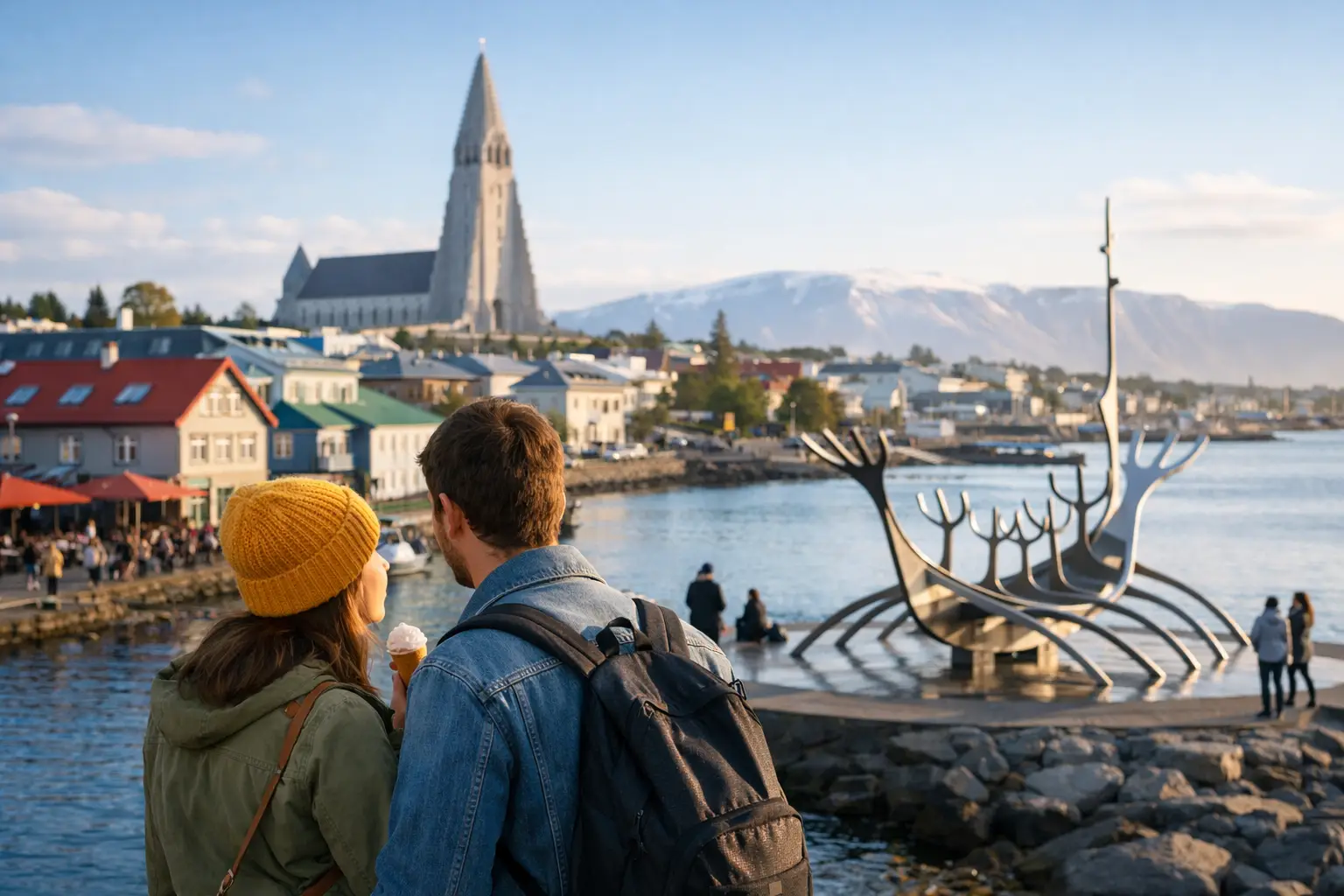
Reykjavik reveals itself in small rituals rather than grand set pieces. Yes, there’s Hallgrimskirkja on the skyline and the usual coach tours idling near the harbour, but if you really want to know how to explore Reykjavik like a local, start with the ordinary pleasures Icelanders actually make time for – a geothermal swim, a long coffee, a browse in a design shop, a stroll that is more about weather and light than ticking off sights.
This is a city that rewards a slower rhythm. It’s compact enough to cover on foot, but not so tiny that every street feels interchangeable. One neighbourhood can feel polished and central, the next quietly residential, with corrugated houses in soft colours and a bakery doing a brisk trade before noon. If you give Reykjavik a little room, it stops feeling like a stopover and starts feeling like somewhere people genuinely live.
How to explore Reykjavik like a local starts with routine
The quickest way to make the city feel less performative is to borrow its habits. Reykjavik locals do not spend every waking hour chasing landmarks. They meet for coffee, pop into the swimming pool, walk by the sea, linger over lunch and make evenings feel civilised rather than frantic.
That means your first morning probably should not begin with a race across every major sight. Instead, choose one district and let it unfold. Central Reykjavik is still the easiest base for a short break because you can walk almost everywhere, but there is a difference between staying near Laugavegur and actually understanding the city beyond its busiest strip. Dip into the side streets around Thingholt or Vesturbaer and you’ll get a better sense of daily life – less souvenir-shop energy, more local pace.
If you’re deciding where to book, it helps to think about your trip style. A hotel in the centre is ideal if you want restaurants, bars and museums within a few minutes’ walk. Vesturbaer suits travellers who want somewhere a touch calmer, with the old harbour and sea paths close by. If you are hiring a car for day trips, a slightly less central stay can be more practical, but for a weekend in the capital, walkability matters more than shaving a few pounds off the room rate.
Begin at the pool, not the museum
This may sound counterintuitive, but one of the most local things you can do in Reykjavik is go to a public swimming pool. Not the Blue Lagoon, not a luxury spa on the edge of town – an actual neighbourhood pool. These are social spaces, part wellness ritual, part community hub, and they tell you more about Icelandic life than many formal attractions.
Bring swimwear, pay attention to the shower rules and settle into the hot pots. You’ll notice people chatting quietly before work, after school, in all weather. The appeal is not theatrical. It is everyday. That is precisely why it matters.
For visitors used to treating spa time as an indulgence, this can be one of Reykjavik’s most refreshing cultural adjustments. It is affordable, unshowy and easy to fit around the rest of your day. If your instinct is to save this sort of thing for later, reverse the order. Start here, and the city will make more sense afterwards.
Coffee culture matters more than you think
Reykjavik is not a city where you should rush from breakfast to lunch with military efficiency. Its cafés are part refuge, part social theatre, especially when the weather is doing what Icelandic weather does. Good coffee is easy to find, but the real pleasure is the pause itself.
Pick an independent café, order something sweet alongside your flat white and stay a little longer than planned. Watch who comes in. Students with laptops, parents with prams, friends catching up in knitwear that would overwhelm a lesser nation. This is where the city’s mood becomes legible.
The same applies to bakeries. Iceland’s baking tradition is one of the easiest ways into local life because it is both familiar and slightly distinct. Cinnamon buns, dense rye bread and pastries that make bad weather feel not only tolerable but useful – they all deserve a place in your Reykjavik schedule.
See the centre, but don’t let it trap you
Most first-time visitors spend a lot of time around Hallgrimskirkja, Laugavegur, Austurvollur and the waterfront. Fair enough. These are the postcard parts of the city and they are worth seeing. Hallgrimskirkja is still one of the best orientation points in Reykjavik, and the walk down towards the harbour gives you a proper sense of the city’s shape.
But local-feeling Reykjavik tends to emerge just beyond the obvious route. Walk west towards Vesturbaer and the pace shifts. Head along the Sculpture and Shore Walk rather than darting from one attraction to another. Browse the smaller streets where design shops, bookshops and food spots feel chosen rather than mass-produced.
If you want culture without the coach-group atmosphere, balance one major museum with time outside. Reykjavik is a city where the light, wind and sea are part of the experience. Indoors tells you the history; outdoors explains the temperament.
Eat where locals actually eat
Reykjavik’s food scene has become one of its strongest reasons to stay longer than a single night. The catch is that not every memorable meal needs to be formal or expensive. If you’re trying to work out how to explore Reykjavik like a local, think in terms of casual quality rather than culinary spectacle.
Food halls are particularly useful. They let you try several things in a lively setting and they attract a mix of residents and visitors, which is often the sweet spot. You might have one meal centred on Icelandic fish, another on excellent lamb, and a third that is not Icelandic at all but simply very good. Reykjavik eats internationally, and pretending otherwise would be a strange version of authenticity.
That said, it is worth seeking out a few clearly Icelandic flavours. Fresh seafood is the obvious starting point. Skyr appears everywhere for good reason. A proper hot dog is less a gimmick than a democratic snack, and one that locals genuinely eat. Fermented shark, on the other hand, is the sort of thing people talk about more than they crave. Try it if you’re curious, but don’t confuse dare-food with daily life.
Spend an evening properly
A local-style evening in Reykjavik need not involve staying out until 4am, though the city is certainly capable of that. What matters more is understanding that evenings here often begin gently. People meet for drinks later than in Britain, and the atmosphere can move from calm to lively in a surprisingly short stretch of time.
Start with a good dinner, then head somewhere for a drink that feels intimate rather than obvious. Wine bars, craft beer spots and relaxed cocktail places all have their place. On weekends, Reykjavik can become much louder and looser, which may be exactly what you want. Midweek, though, there is a quieter charm to the city after dark – streets lit against the cold, conversations carrying from doorways, the sense that everyone has decided to make a proper occasion of the evening.
If live music is available, take it. Reykjavik’s music scene is one of the city’s strongest cultural threads, and small venues often offer a better night than any heavily marketed tourist option.
Use Reykjavik as a base, but not an excuse to ignore it
A common mistake is treating Reykjavik as a bed between Golden Circle excursions and airport transfers. Day trips absolutely have their place. If this is your first Iceland trip, you will probably want at least one. The problem comes when travellers give the capital none of their best energy.
Reykjavik works best when you pair one or two excursions with real city time. Go whale watching or take a geothermal day trip if that is part of your wish list, but keep space for an unplanned afternoon in town. The city is not trying to overpower you. It is asking to be noticed properly.
That also means paying attention to season. In winter, local-style Reykjavik is all about pools, cafés, warm interiors and making peace with darkness. In summer, it stretches out – longer walks, brighter evenings, more time by the water. Neither is better, but they feel like different versions of the same personality.
The local version of Reykjavik is the most memorable one
The best city breaks are rarely the ones where you did the most. They are usually the ones where you got the rhythm right. In Reykjavik, that means resisting the urge to turn every hour into an event. Walk more. Sit down often. Let the weather interrupt. Swap one big-ticket attraction for a neighbourhood pool or a second coffee.
That is when the capital starts to feel less like a gateway to Iceland and more like a reason to come in the first place. And once you have seen Reykjavik at local speed, the polished version of the city still looks good – it just no longer tells the whole story.