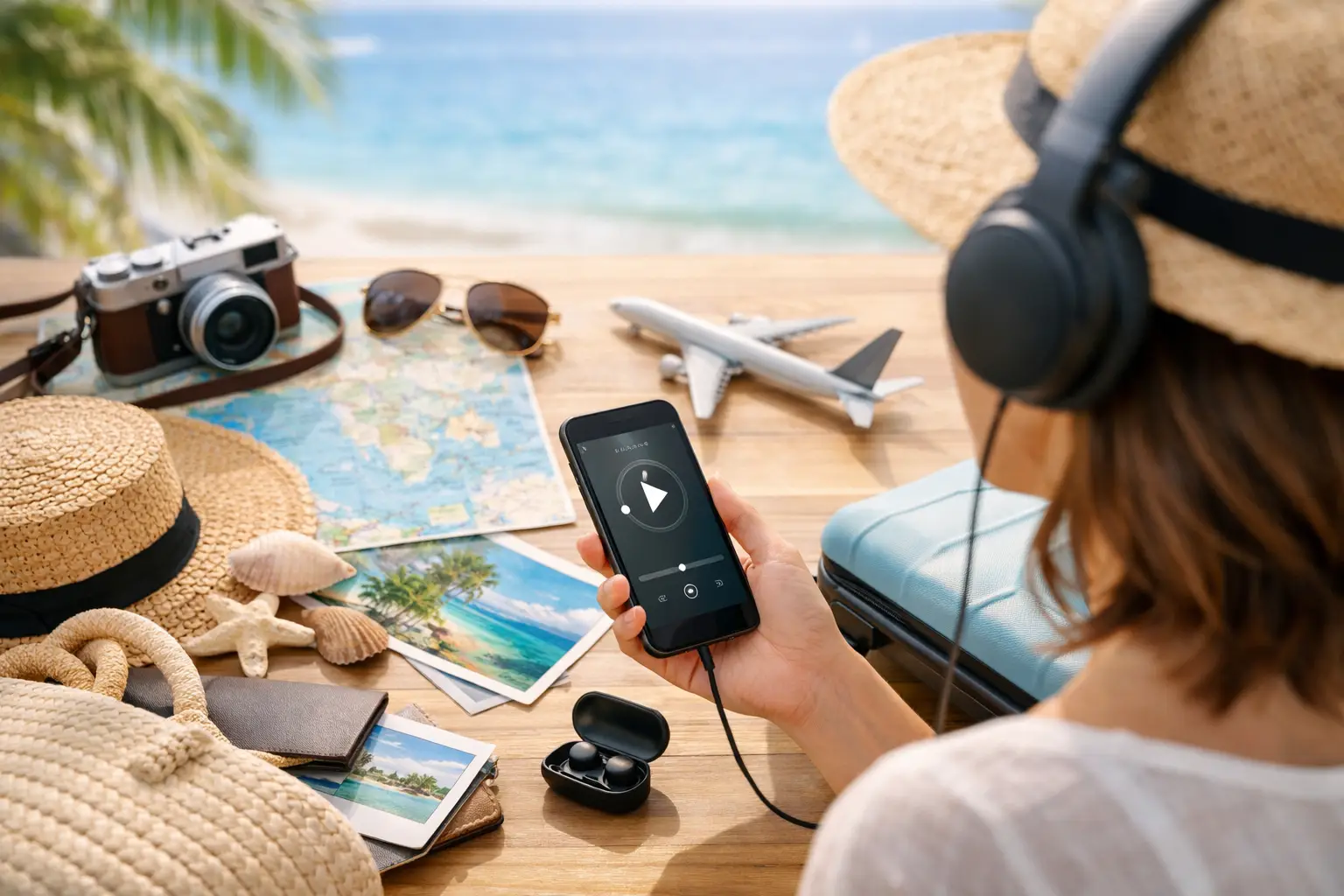
A destination can rise or fall in your imagination on the strength of a voice. Not glossy drone footage, not a list of ten must-sees, but a well-placed anecdote from someone who knows the place properly. That is why audio travel content trends are worth paying attention to just now. They reveal a shift in how people want to discover places – less like browsing a brochure, more like being let in on a good recommendation.
Travel content has been visually led for years, often to its own detriment. Plenty of people can now recognise a photogenic alleyway in Lisbon or a rooftop in Barcelona without having the faintest idea what either city actually feels like. Audio changes the balance. It slows the pace, makes room for context, and gives personality back to destination coverage. For travellers who want more than postcard highlights, that is not a small change.
Why audio travel content trends matter now
The obvious appeal of audio is convenience. People listen while commuting, cooking, packing, walking the dog, or pretending to answer emails. But convenience alone does not explain the growth of destination-led podcasts, spoken guides, travel newsletters with audio elements, and voiced editorial content. The bigger story is trust.
Travellers are a little weary of content that sounds as if it was assembled by committee and polished by search data. They want recommendations with a point of view. Audio is good at delivering that because you can hear judgement, humour, hesitation and enthusiasm. A host who asks the right follow-up question, or a local guest who gently punctures a cliché, tells you far more than a generic article promising hidden gems.
There is also a practical reason. Travel planning is becoming more layered. People are not only asking where to go, but why now, for how long, and whether a destination suits the sort of trip they actually want. A long weekend in Muscat requires a different sort of framing from a food-driven week in Emilia-Romagna or a curious first visit to Kazakhstan. Audio handles that nuance well because conversation allows for trade-offs. You can hear someone say, essentially, this is brilliant if you like X, less so if you need Y. That kind of honesty is useful.
The biggest audio travel content trends shaping discovery
Human voices are beating generic destination copy
One of the clearest trends is the move towards named expertise. Listeners respond better when travel advice comes from a person with a reason to be there – an author, guide, journalist, chef, resident or long-time visitor. The authority is not abstract. It is attached to lived experience.
That matters because destination content has long suffered from interchangeability. Too many city guides could swap place names and carry on regardless. Audio makes that harder. A conversation with a local in Seville should sound different from a conversation with a travel writer on Reykjavik, not just because the weather changes, but because the pace, humour, food, history and social codes do too. The best travel audio leans into those differences rather than ironing them out.
Travel podcasts are becoming planning tools, not just inspiration
There was a time when travel audio was treated as escapism – something to enjoy from a rainy sofa while vaguely promising yourself a future trip. That still exists, and happily so. But one of the more useful audio travel content trends is the rise of episodes designed to help people make decisions.
This means tighter destination framing, clearer recommendations, and conversations that answer the questions listeners are already carrying around. Which neighbourhood works best for a first stay? What is worth booking ahead? What do people get wrong about this place? Where should you spend time if you only have three days? These are not glamorous questions, but they are the ones that convert daydreaming into action.
The clever bit is that planning-focused audio does not need to sound transactional. In fact, it works better when it does not. A well-structured conversation can remain warm and companionable while still giving the listener enough substance to sketch out an itinerary.
Niche destinations are getting a fairer hearing
Audio is particularly kind to places that do not have instant visual shorthand. Not every destination can rely on an Eiffel Tower effect. Some places are more atmospheric than iconic. They make sense through explanation, memory and local detail.
That is why lesser-covered destinations often perform well in audio. A listener may not click on a generic article about Kyrgyzstan if they are not already considering the trip. But they may happily spend forty minutes listening to someone explain why the country works so well for mountain travel, what the hospitality is like, and how the landscapes compare with better-known alternatives. The barrier to curiosity is lower when the format feels like a conversation rather than a sales pitch.
For publishers and creators, this is encouraging. It suggests that audio can broaden destination interest rather than merely amplifying the usual favourites.
Audio travel content trends in format and style
Conversation is winning over narration
The strongest travel audio increasingly sounds like informed company. That does not mean rambling. It means structure without stiffness. Listeners enjoy hosts who know where a discussion is going, but they also want the little detours that reveal character.
A solo narrated guide can still work, especially for highly practical subjects, but conversational formats tend to feel more alive. They create space for disagreement, caveat and spontaneity. When a guest says, actually, everyone tells you to do this, but I would send you somewhere else, the listener perks up. That moment feels earned.
Editorial curation matters more than volume
There is no shortage of travel content. The real challenge is selection. Audio brands are doing better when they act like editors rather than content mills. In practice, that means choosing destinations with intent, matching guests carefully, and giving audiences useful ways to browse archives by place, theme or person.
This is a subtle but important shift. People do not want infinite choice; they want confidence that someone has already done the filtering. A travel brand that says here is our most thoughtful conversation on Bristol, and here is the guest you should hear on Jerusalem, is doing a more valuable job than one simply flooding the feed.
Tone is becoming more grounded
The era of breathless travel hype is wearing thin. Listeners still want excitement, of course, but they are more responsive to grounded enthusiasm than to relentless boosterism. If a place is expensive, crowded in August, or better for food than nightlife, say so. Balanced recommendations build loyalty.
This is where British travel audiences in particular tend to be quite sensible. They appreciate wit, understatement and clear-eyed judgement. They do not need every piazza described as magical.
What these trends mean for travellers
For listeners, the upside is straightforward: better decisions and better anticipation. Good travel audio can help you narrow a shortlist, shape a route, or spot the angle that makes a destination click. It can also save you from making the wrong trip for the wrong reasons.
There is, however, a trade-off. Audio is immersive, but it is not always quick. If you want a visa rule in ten seconds, text still wins. If you want to understand whether Lagos is best approached through its food scene, music, neighbourhood energy or business culture, audio has the edge. The formats do different jobs.
The smartest travellers will use both. They will listen for judgement and atmosphere, then read for specifics.
What these trends mean for travel brands
For travel publishers, audio is no longer a side project for people who happen to own a microphone. It has become a serious editorial format with distinct strengths. It rewards consistency, clear positioning and hosts who can guide a conversation without making it all about themselves.
It also favours brands that know what they are for. A destination-led platform such as Destination Unlocked works because the proposition is clear: help people understand places through voices worth hearing. That sort of focus travels well across podcasts, newsletters, archive pages and guest directories because each format supports the same core promise.
The brands likely to do well over the next few years will not simply produce more audio. They will produce better-shaped audio. They will think carefully about discoverability, episode framing, searchable themes, and how a listener moves from one destination to another without getting lost in a content warehouse.
Where audio travel content trends go next
Expect travel audio to become more integrated into the planning journey, but not in a clumsy way. Listeners will want episode collections built around trip types, seasons and interests. They will want sharper archive navigation. They will want trusted hosts and recurring experts. Some will welcome short companion formats, but longer conversations are unlikely to disappear because they provide what fast content often cannot: texture.
That, really, is the point. The future of travel media is not just faster recommendations or prettier images. It is richer interpretation. If audio keeps moving in this direction, it will not replace other travel formats. It will do something more interesting – remind us that the best way into a place often starts with someone saying, let me tell you what it is actually like.

[yarpp]