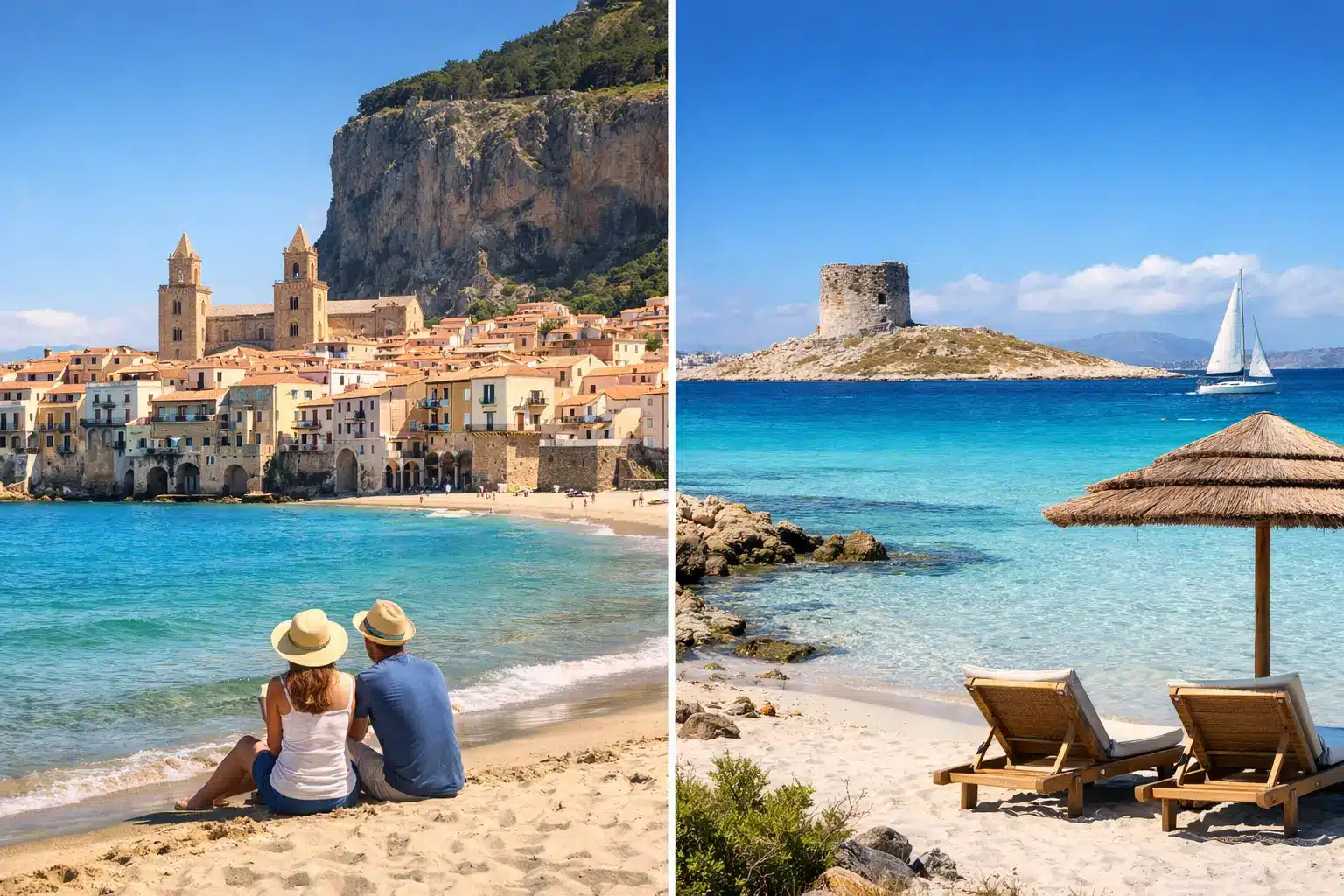
Landing in Sicily feels like arriving at a great Mediterranean crossroads: Norman cathedrals, Greek temples, Arab-influenced markets and volcanic black sand all compete for your attention. Sardinia makes a different first impression – granite headlands, improbably clear water and a slower, more self-contained island rhythm. A Sicily or Sardinia holiday is not a choice between a good island and a better one. It is a choice between two very different versions of Italy.
For travellers close to booking, the useful question is not simply which island has the best beaches or food. It is how you want your days to feel. Do you want a holiday built around characterful cities, history and restaurant-hopping, with a beach day woven in? Or do you want to swim, drive coastal roads and linger over long lunches, with just enough culture to give the week shape?
Choose Sicily for culture, cities and serious eating
Sicily is the stronger choice if you like a holiday with a sense of movement. Palermo, Catania, Syracuse, Noto, Taormina and Cefalù each offer a distinct base, and travelling between them is part of the appeal. You could spend a morning in a baroque town, eat pistachio granita for breakfast, visit a Greek theatre by afternoon and be beside the sea by sunset.
Its cultural depth is extraordinary, but it rarely feels like a museum. In Palermo, Arab-Norman architecture sits alongside bustling street food stalls. Around Agrigento, the Valley of the Temples gives a proper jolt of ancient-world drama. On the east coast, Mount Etna is not just a distant view: a guided walk, winery visit or sunset excursion on its slopes can become the day everybody talks about afterwards.
Food is another decisive advantage. Sicily has the kind of regional cooking that rewards curiosity: pasta alla Norma in Catania, arancine in Palermo, swordfish along the coast, caponata almost everywhere, and cannoli when there is a good bakery in sight. It is an island made for booking a hotel near the historic centre and walking out each evening without a plan beyond dinner.
Sicily does require a little more patience. Traffic can be lively, parking in old towns is often awkward, and the island is larger than first-time visitors expect. Public transport works well enough for a city-focused trip, particularly between Palermo, Cefalù, Catania, Taormina and Syracuse, but a car is valuable for rural corners and smaller beaches. Pick one coast or a compact route rather than trying to conquer the whole island in seven days.
Best Sicily bases
For a first visit, Palermo suits travellers who want markets, architecture, nightlife and day trips. Cefalù is an easier blend of handsome old town and beach. Taormina delivers theatrical views, polished hotels and access to Etna, although it comes with correspondingly higher prices. Syracuse, particularly the atmospheric island of Ortigia, is one of the most rewarding bases for couples who favour elegant streets, good restaurants and a more relaxed pace.
Choose Sardinia for beaches, space and wild landscapes
Sardinia is where to go if the sea is central to the holiday rather than an occasional diversion. Its best beaches have bright white sand, shallow turquoise water and a clarity that can make the rest of the Mediterranean look as though it needs its glasses cleaned. The Costa Smeralda is famous for a reason, but it is far from the only beautiful stretch of coast.
The north-east is ideal for glamorous bays, boat trips and easy access to the Maddalena archipelago. The south around Chia and Villasimius has wide sands and striking water, while the Gulf of Orosei on the east coast rewards those willing to take a boat to secluded coves beneath limestone cliffs. Cala Goloritzé, Cala Luna and Cala Mariolu are the names that appear on everyone’s saved lists, and for once the enthusiasm is justified.
Yet Sardinia is not merely a beach resort with better scenery. Inland, the landscape becomes mountainous and quiet, dotted with nuraghi – Bronze Age stone towers found nowhere else in quite the same way. A drive through the Barbagia region, a visit to a family-run agriturismo, or time in Alghero’s Catalan-influenced old town adds texture to an otherwise sea-led stay.
The trade-off is that Sardinia is less convenient for a city break. Cagliari is lively and attractive, and Alghero is a fine compact base, but neither offers the relentless cultural layering of Palermo or Syracuse. The island also rewards hiring a car more strongly than Sicily. Buses can cover the basics, but the beaches that make Sardinia special are often reached most easily on your own schedule.
Best Sardinia bases
Stay in Cagliari for a city-and-beach combination, especially if you want restaurants, a historic quarter and Poetto beach nearby. Alghero works beautifully for a long weekend or a northern road trip, with sunset walks along its walls and good access to coral coast beaches. For a classic summer escape, look around San Teodoro, Santa Teresa Gallura or the Gulf of Orosei. Porto Cervo and the Costa Smeralda offer exceptional hotels and handsome marinas, but there are better-value stays just beyond the headline resorts.
Sicily or Sardinia holiday: beaches, cost and timing
If beaches are your main criterion, Sardinia wins. Sicily has lovely options – Mondello near Palermo, San Vito Lo Capo, the beaches around Noto and the Aeolian Islands are all appealing – but Sardinia has greater consistency and more of those genuinely startling, swim-all-day coves.
For culture, food and urban atmosphere, Sicily wins with room to spare. It is the island to choose when a rainy afternoon would still feel well spent in a market, gallery, church or family-run trattoria. Sardinia is more about being outdoors, whether that means a coastal hike, a boat excursion, snorkelling or a long, unhurried drive.
Budget depends heavily on season and location. Sicily can be better value for food, guesthouses and independent hotels, particularly outside Taormina and the most popular summer resorts. Sardinia has a reputation for high prices, deserved in Costa Smeralda during July and August, but self-catering properties, inland stays and lesser-known coastal towns can make it surprisingly manageable. In both places, book early for school-holiday dates if you want a well-located hotel rather than the leftovers.
May, June, September and early October are the sweet spots for either island. The sea is warmest in September, crowds are calmer than high summer, and sightseeing in Sicily is far more pleasant without the fierce heat of August. Sardinia’s beaches are at their best from late spring through September, while Sicily remains compelling into autumn, when Etna walks, city stays and food-focused trips come into their own.
The practical choice for your itinerary
Choose Sicily for a first Italian island trip if you enjoy a packed but rewarding itinerary, want history at every turn and care as much about the evening meal as the afternoon swim. A week could comfortably combine Palermo and Cefalù, or Syracuse, Noto and Taormina. Ten days allows for a more satisfying east-to-west route, though restraint remains wise.
Choose Sardinia if you want to settle into one or two excellent hotels, hire a car and let the coastline dictate the day. It suits families wanting calm water, couples after memorable beach restaurants and travellers whose ideal excursion is a small-boat trip rather than a guided city walk. Split a week between Alghero and the north, or Cagliari and the south, rather than attempting an ambitious island circuit.
Before you book, make time for the Destination Unlocked podcast. It is as useful as a guidebook and as personal as a chat with your most well-travelled friend, with each 40-minute episode designed to give you the information needed for a great trip.
Whichever island you choose, leave a little white space in the plan. Sicily repays the detour to an unassuming pasticceria; Sardinia repays the unscheduled stop when a strip of blue water appears beyond the bend. Those are the moments that make an Italian island holiday feel properly your own.