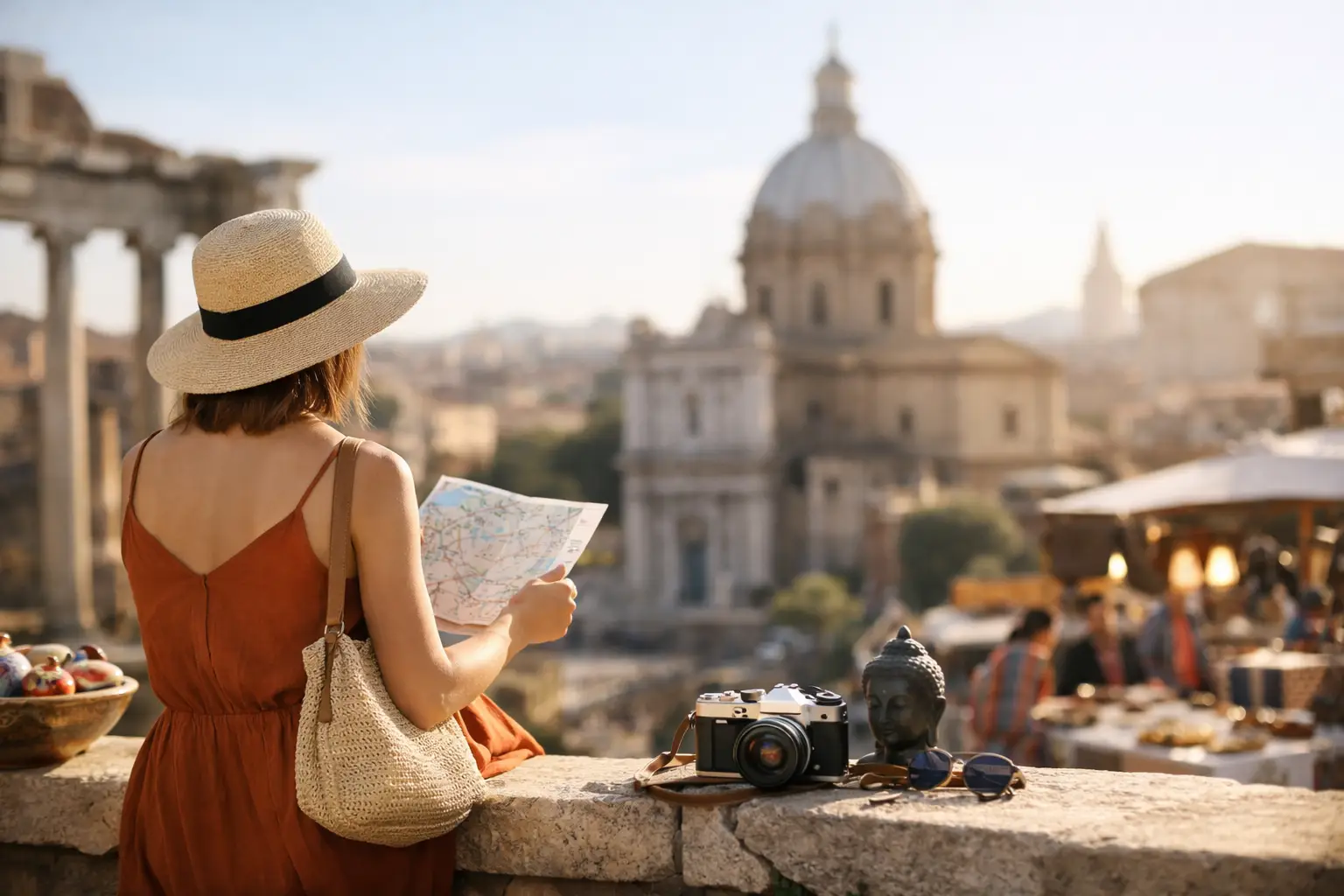
A good cultural break rarely starts with a list of top sights. It starts with a feeling. Perhaps you want a city that still seems to argue with itself in public squares, or a region where food, history and landscape are so entangled that lunch becomes part of the sightseeing. If you are wondering how to plan a cultural getaway, the trick is not to cram in more museums. It is to build a trip around context, rhythm and the kind of local perspective that makes a place feel less like a backdrop and more like a living story.
What makes a cultural getaway worth taking?
The phrase can sound faintly worthy, as if culture means doing your homework in a gallery gift shop. In practice, a cultural getaway is simply a trip where the character of the place leads the itinerary. That may mean architecture, music, religion, language, craft, food, literature or political history. More often, it is a mix of all of them.
The best trips of this kind do not treat culture as a box to tick between brunch and cocktails. They give you enough time to notice how a city sounds in the morning, what people queue for, which neighbourhoods feel polished and which still feel gloriously themselves. That is often where the memorable detail lives.
Start with the right destination, not the loudest one
When people think about how to plan a cultural getaway, they often begin with fame. Paris, Rome and Barcelona are famous for good reason, but popularity does change the experience. If your idea of a rewarding long weekend involves wandering into conversations, family-run restaurants and small institutions with room to breathe, a slightly less obvious choice may suit you better.
A useful question is this: what kind of cultural experience are you actually after? If you want layered history and serious museum time, a capital city may be ideal. If you are more interested in culinary identity, local traditions and a slower sense of place, a smaller city or region might serve you better. Seville offers a very different cultural rhythm from Madrid. Emilia-Romagna tells a different story from Rome. Muscat will satisfy a different kind of curiosity from Dubai.
It also helps to be realistic about your available time. For a two or three-night break, choose somewhere with a compact centre or straightforward transport. Culture becomes much less romantic when you have spent half the trip wrestling with connections from one distant landmark to another.
Do a little homework, but do the right kind
Research can make a trip richer, but there is a fine line between being informed and turning yourself into a harassed project manager. The best preparation is selective.
Read enough to understand the broad shape of the place. Learn a few key moments in its history. Find out whether one district is known for galleries, another for independent shops, another for nightlife or immigrant food cultures. Look for the names of a few writers, artists, musicians or historical figures tied to the destination. Once you have those reference points, what you see on the ground starts to connect.
This is also the stage where local voices matter most. Generic round-ups tend to produce generic trips. A conversation with a journalist, guide, author or long-time resident usually reveals something more useful: the market that locals still use, the church with the surprising interior, the district everyone ignored ten years ago, the museum that is small but excellent. That sort of advice changes the texture of a trip.
How to plan a cultural getaway without overplanning it
A packed itinerary looks efficient on paper and exhausting in real life. Cultural travel needs slack in the schedule. You need time to linger in a bookshop, sit in a square, follow a side street, or stay longer than expected in one part of a museum because something unexpectedly catches you.
A sensible approach is to anchor each day with one major visit and one lighter cultural experience. The major visit might be a museum, palace, archaeological site or guided walk. The lighter one could be a neighbourhood food market, an evening concert, a literary café, a local festival or simply an hour spent exploring a district known for its architecture. That gives shape without suffocation.
It also helps to think in terms of energy. Do the concentration-heavy things when you are fresh. Save scenic wandering, casual eating and people-watching for later in the day. There is no medal for attempting a national museum, a cathedral tower climb and an opera in one breathless stretch.
Pick where you stay with culture in mind
Your hotel or flat is not just somewhere to sleep. It is where the trip begins and ends each day, which means location matters enormously.
If your priority is atmosphere, staying in a central historic district can be worth the premium. You step outside and the city is already happening around you. That said, the prettiest quarter is not always the most interesting one. Some heavily visited centres become stage sets after dark, lovely but slightly emptied out. In many destinations, the more rewarding base is just beyond the postcard core, in a neighbourhood with everyday life, good cafés and easy access to transport.
Look for somewhere that lets you walk to at least a few of your planned stops. The less time you spend commuting, the more room you have for the useful unplanned moments.
Build your itinerary around themes, not just attractions
One of the easiest ways to make a trip feel coherent is to choose a few themes and follow them through the city. You might decide that this trip is about modernist architecture, religious history, local food traditions and contemporary art. Or perhaps it is about maritime heritage, political change and live music.
This does two things. First, it stops you from bouncing randomly between unrelated sights just because they appear on every list. Second, it helps you notice connections. A market, a monument and a meal can all end up telling the same story about migration, trade or regional identity.
This is often how places become memorable. Not because you saw everything, but because what you did see began to speak to each other.
Leave room for everyday culture
Grand institutions matter, but so do the smaller signals. A neighbourhood bakery can tell you as much about local life as a formal exhibition. So can a football crowd, a public garden, a ferry crossing, or the way families use a promenade in the evening.
If you want a place to feel real, give some time to ordinary routines. Go to a food market in the morning. Sit at a café at an unfashionably quiet hour. Browse a second-hand bookshop even if your language skills are patchy. Pay attention to noticeboards, menus, posters and overheard fragments. None of this replaces the headline sights, but it often deepens them.
Accept the trade-offs
Not every destination delivers every kind of cultural reward equally well. Some cities are superb for museums but weaker for street life. Others are thrilling to wander yet light on big-ticket institutions. Some places are culturally rich but expensive. Others are more affordable but require more effort to navigate.
Season matters too. Festival season can make a city feel electric, but it can also mean crowds and steeper prices. Off-season travel may offer more breathing room, though opening hours can be limited and weather may change how much time you want to spend outdoors. The right choice depends on whether you value atmosphere, ease, savings or access most.
That is why the best planners are not necessarily the most obsessive ones. They are the ones who know their priorities.
Use conversation as part of the trip
A cultural getaway becomes more interesting when you hear how other people read the place. That may mean booking a walking tour with a specialist guide, chatting to a bookseller, asking a museum volunteer what not to miss, or listening to a well-researched destination podcast before you go. At its best, travel is part observation, part conversation.
For a brand like Destination Unlocked, that idea sits at the heart of the experience. Places become clearer when someone who knows them well points out what others overlook.
Spend on insight, not just access
If your budget has limits, it is worth spending carefully. You do not need to pay for every attraction, but one excellent guided experience can be more valuable than three mediocre entry tickets. The same applies to food. One thoughtfully chosen meal that tells you something about the region is often more rewarding than several forgettable ones grabbed in transit.
Buy the ticket that removes friction where it matters, but do not assume more spending automatically means more meaning. Often, what improves a cultural trip is not luxury. It is focus.
A well-planned cultural getaway should leave you with more than photos and restaurant receipts. It should sharpen your sense of how a place became itself, and perhaps make you a little more attentive on the next journey too.