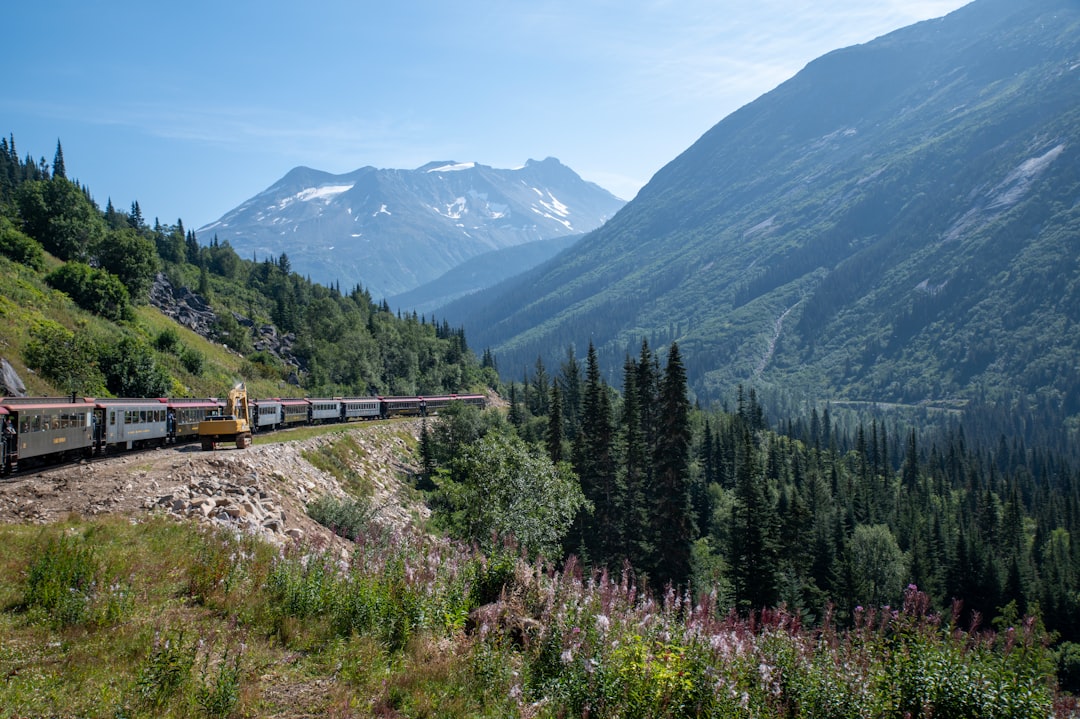
The White Pass & Yukon Route is not merely a scenic train placed beside a cruise terminal. It is one of Skagway’s great pieces of storytelling: a narrow-gauge railway built through mountains, gorges and punishing weather during the Klondike Gold Rush.
For many passengers it becomes the defining excursion of an Alaska cruise. It is also expensive enough to deserve a careful answer to the obvious question: is the White Pass railway worth it?
The short answer
Yes, if you enjoy railway journeys, mountain scenery or Gold Rush history. The classic summit trip is particularly well suited to a first visit because it begins close to the ship, requires little physical effort and reveals terrain that cannot be appreciated from Skagway’s streets.
It may be less compelling if low cloud has removed most of the views, if someone in your group dislikes sitting for long periods or if your budget would be better used on a wildlife experience elsewhere in Alaska. Skagway itself remains worthwhile without the train.
Why was the railway built?
After news of Klondike gold reached the wider world in 1897, thousands of would-be prospectors travelled north. Skagway became a gateway to the White Pass route, while nearby Dyea served the Chilkoot Trail.
The railway was built from 1898 to provide a more efficient route towards the interior. Its engineers had to force a narrow-gauge line through steep and unstable terrain, crossing ravines and climbing rapidly from tidewater. The railway later carried freight associated with mining and the Yukon before closing in 1982. It reopened as a visitor railway in 1988, according to the White Pass & Yukon Route’s history.
The line makes far more sense after visiting the Klondike Gold Rush National Historical Park in Skagway. The park preserves historic buildings and explains the hopes, hardships and consequences of the Gold Rush.
What happens on the summit excursion?
The classic White Pass Summit Excursion leaves Skagway and climbs towards the United States-Canada border. The return journey covers roughly 40 miles and takes about two hours and forty-five minutes. The published 2026 season runs from late April into early October, with morning and afternoon departures and several date exceptions.
As the train climbs, commentary connects the landscape with the railway and the stampeders’ route. Views may include waterfalls, steep gorges, historic bridges, mountain slopes and sections of the old trail. The weather can change quickly between Skagway and the summit.
Some longer excursions continue beyond the summit or combine rail and road. These can provide more variety, but they require a larger part of the port day. Read the exact itinerary rather than assuming every “White Pass” tour follows the same route.
Which side of the train should you sit on?
Travellers often seek a definitive answer, but operating direction, carriage arrangements and whether passengers change sides can vary. Ask the crew when boarding.
On the climb from Skagway, many of the broadest valley views are generally on the left-hand side, but you should not turn seat selection into a military operation. The train moves slowly at important points, passengers can see across the carriage, and some services allow access to outdoor platforms between carriages when the crew permits it.
Do not block the platform for the entire journey. Take your photographs, then make room for others.
What should you bring?
- A waterproof outer layer
- A warm layer, even when Skagway feels mild
- A camera or phone with enough storage
- Binoculars for distant details
- Any medication or water you may need during the journey
The summit can be colder, windier and cloudier than the port. Dress for the journey’s highest point, not the weather beside the ship.
Should you book through the cruise line or independently?
A cruise-line booking may provide direct boarding arrangements and the reassurance of coordination with the ship. An independent booking can sometimes offer a different departure time, route or price.
Whichever route you choose, compare:
- The precise train journey and turnaround point
- Total duration
- Whether the trip is rail-only or rail-and-road
- Passport requirements if the itinerary enters Canada
- Cancellation terms
- The time between your scheduled return and the ship’s all-aboard time
For a straightforward summit return, booking direct with the railway or through the ship can both work. For a longer journey involving road transport, border crossings or several suppliers, the cruise line’s coordination may be worth the additional cost.
You can also compare White Pass and Skagway excursions.
What if the weather is poor?
Low cloud can hide the largest views, but the railway does not become meaningless. The engineering, waterfalls, forests and Gold Rush story remain. Heavy rain against the windows, however, may reduce photography and distant visibility.
If the train is your absolute priority, book a time that fits comfortably within the port call. Do not rely on changing departures at the last moment, because popular services can sell out.
What else should you do in Skagway?
Allow at least an hour for the town rather than walking directly between ship and train. Begin at the National Park Service visitor centre, then explore Broadway and the preserved historic district. Ranger programmes, films and building access vary by season, so check the day’s schedule on arrival.
For a fuller day, consider:
- A short walk to Yakutania Point
- The Gold Rush Cemetery and Lower Reid Falls
- A guided history walk through the town
- A longer journey towards the Yukon, if your port time permits
Skagway’s streets can become crowded around the middle of the day. Exploring early or after the main excursion period often feels calmer.
How does White Pass compare with Alaska’s inland railway?
The White Pass line and the Alaska Railroad offer different experiences. White Pass is a concentrated mountain climb rooted in Gold Rush history. The inland railway between Anchorage, Talkeetna and Denali is a long-distance journey through Southcentral and Interior Alaska.
If your holiday includes both, they will not feel repetitive. Read our guide to combining an Alaska cruise with a Denali rail journey to understand the wider route.
Final verdict
The White Pass railway is worth it because the journey could only belong to Skagway. It combines landscape, engineering and history in a form that is accessible to a wide range of travellers.
Go first to the National Park Service visitor centre if timing allows. Understand why the railway was built, dress for the summit and then let the route reveal itself. The scenery is impressive, but the story turns it into more than a pleasant train ride.
For more planning advice, explore our guide to Ketchikan, Juneau and Skagway, listen to Alaska by land and sea with Derek Mooneyham, or return to the Alaska destination hub.
Featured photograph: Trac Vu via Unsplash.