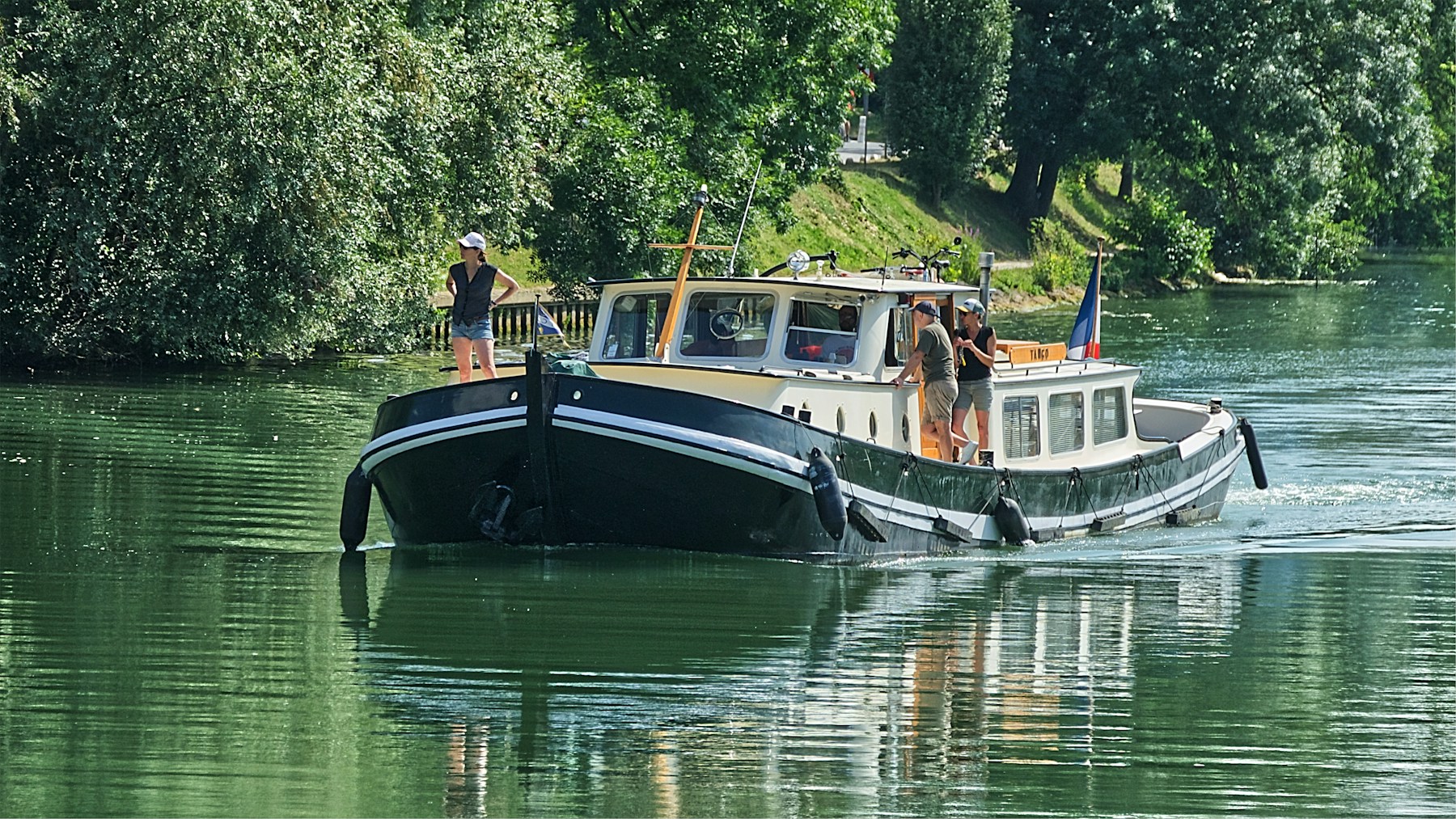
A hotel barge and a river cruise can travel through the same region of France while delivering two very different holidays.
The easiest distinction is size. A European river ship may carry 80 to 200 guests. A French hotel barge commonly carries between two and 12, with a handful of larger vessels accommodating up to 22. That difference affects almost everything else: the waterways each vessel can enter, the places it can moor, the style of service and the number of fellow travellers sharing each excursion.
Choose a river cruise for range
River ships are designed to cover greater distances. They can link major towns and sometimes several countries within one itinerary. If you want a broad introduction, a choice of onboard spaces and the sociability of a larger group, the river-cruise model makes sense.
The trade-off is that the vessel must remain on waterways deep and wide enough to carry it. Visits to famous attractions may also coincide with other ships and coach groups, particularly when several itineraries follow the same river timetable.
Choose a hotel barge for depth
A hotel barge is built for the narrow canals, shallow water and low bridges of inland France. It may travel only a short distance in a day, but that is the point. The route explores one region in detail, using the canal as a thread between nearby villages, vineyards and makers.
At roughly four kilometres an hour, the boat can be accompanied on foot. Step ashore at a lock, walk or cycle along the towpath, then rejoin at the number agreed with the captain. Few cruise experiences make the relationship between vessel and landscape feel so direct.
Dining and service
Both styles can provide excellent food, but a hotel barge offers a more domestic rhythm. A private chef cooks for one small group. The crew learns your preferences, dinner is served around one table, and local cheeses and wines can be explained as part of the evening rather than presented as a large dining-room choice.
River ships offer more scale and often more choice. A larger vessel may include several public rooms, entertainment and a broader range of cabin categories. Travellers who enjoy meeting many people may prefer that energy.
Cabins and facilities
Hotel-barge cabins vary considerably. Some are compact, reflecting the dimensions of a historic working vessel. Others are suites larger than many city hotel rooms. Decks may include outdoor dining, loungers and a spa pool, but every barge has its own layout.
A river ship is more standardised. You will usually have a clearer expectation of cabin categories and public facilities across the fleet. That predictability can be reassuring, while the individuality of a converted barge can be part of its charm.
Excursions
River-cruise excursions are designed for larger groups and headline sights. Hotel-barge excursions are usually more flexible and local. A dedicated guide and vehicle stay with the barge, with additional experts joining for specialist visits. Drive times are kept short because the itinerary advances through the region rather than commuting from one central hotel.
Which should you book?
Choose a river cruise if you want to cover more ground, enjoy a larger social setting and prefer a familiar ship-style operation. Choose a hotel barge if you want privacy, regional immersion, personalised service and the pleasure of travelling slowly with a small group.
For a birthday, family gathering or trip with close friends, chartering a barge can turn the holiday into a private house party on water. For a first cruise taken as a couple, booking a cabin may provide the intimacy without requiring you to assemble the guest list.
Listen to Luxury Barge Cruising in France for Rosie Mansfield’s first-hand comparison.