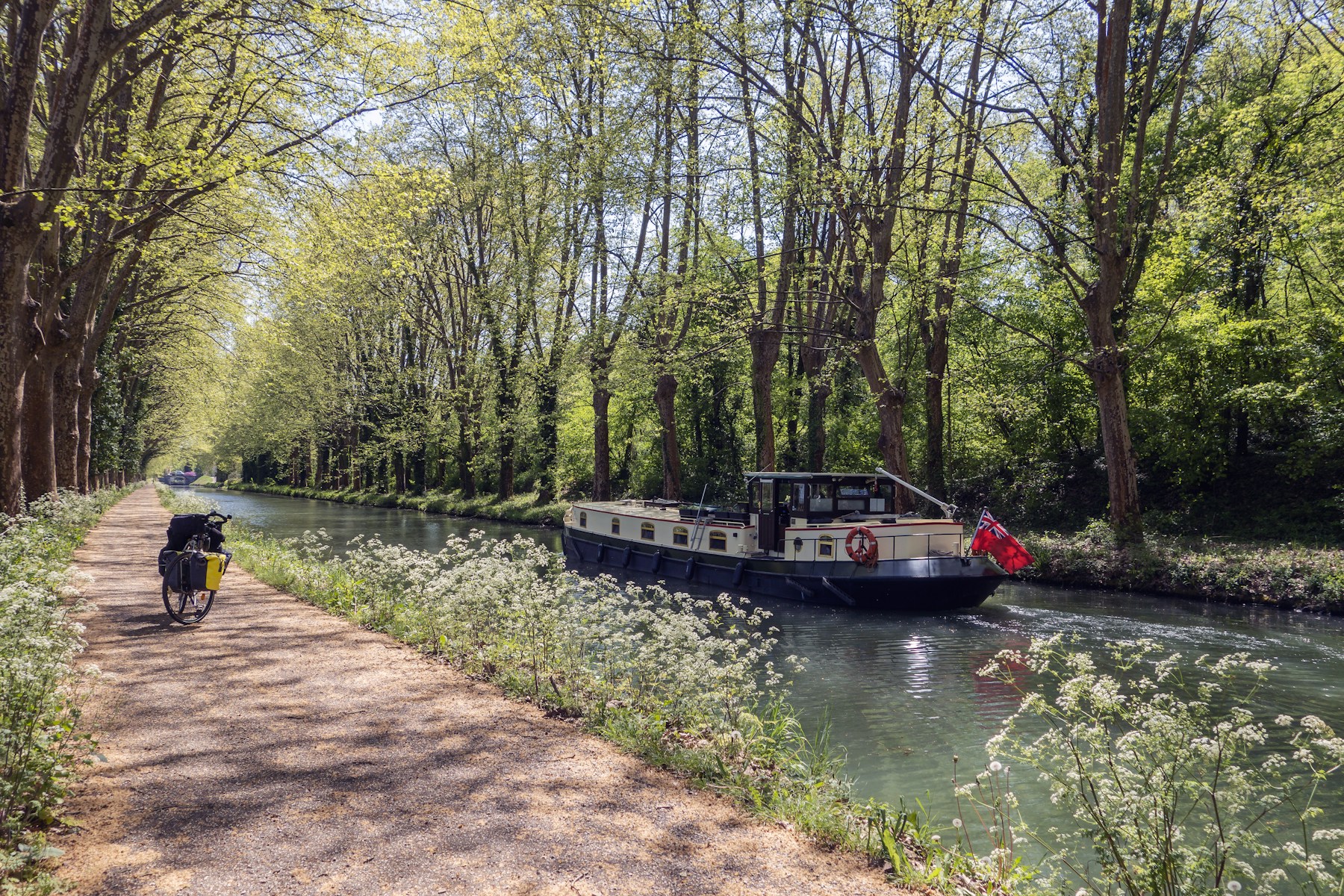
The defining luxury of a French hotel barge is not marble or formality. It is the feeling that an entire day has arranged itself around you.
Behind that ease sits a small crew, a detailed plan and a vessel moving through the landscape at little more than walking pace. No two barges are identical, but the rhythm described by French Waterways Chief Executive Rosie Mansfield gives a useful picture of what to expect.
Arrival feels personal
Most six-night cruises begin on a Sunday afternoon. A chauffeured transfer reaches the mooring, where the crew is waiting on the bank. Luggage disappears into the cabins while guests cross the gangway for champagne and canapés.
The first surprise is often how quickly the shoulders drop. The barge feels less like a small ship than a private residence. There is a salon, a dining table, comfortable deck furniture and, on some vessels, an outdoor dining area or spa pool.
Breakfast, then a choice
The boat usually cruises for two or three hours. You can stay aboard with coffee and a book, watch the banks pass from the sun deck, or step ashore to walk or cycle. The captain explains which numbered lock the boat will reach, removing the need to keep pace with it.
Because the barge may travel at around four kilometres an hour, an ordinary walker can move ahead, explore a village or pause beside the canal, then wait for the vessel to glide back into view.
One principal excursion
The second half of the day centres on a carefully chosen visit. In Burgundy that could mean the Hôtel-Dieu at the Hospices de Beaune, Dijon, a château or a wine producer. On the Canal du Midi it might be Carcassonne, a market or a local maker.
The guide uses the barge’s own vehicle, and drive times are usually kept to 30 or 40 minutes. When a subject needs deeper knowledge, a local specialist joins the visit. With only a few guests, timings can be adjusted to avoid the busiest part of the day.
Lunch and dinner are part of the journey
A private chef prepares the meals. Lunch may be served outside when the weather cooperates. Dinner is often four courses or more, with local produce, carefully paired wine and a succession of French cheeses across the week.
The menu is not simply decorative luxury. Food locates the barge in its region. Burgundy, Champagne, Bordeaux and the south each bring different ingredients and bottles, while the small group allows dietary needs and preferences to be discussed in advance.
The crew makes it look effortless
A barge may carry a captain or pilot, chef, host, guide and deckhand, with roles overlapping on smaller vessels. They coordinate the locks, moorings, vehicle, housekeeping, meals and excursions while keeping that machinery out of the guest’s way.
By the time dinner finishes, the cabin may have been turned down. The next morning begins in a new stretch of canal, even if the boat moved only a few miles.
Who enjoys it most?
Hotel barging suits travellers who value food, conversation and a strong sense of place more than constant activity. It also works well for groups. Friends can charter a boat, families can request more active excursions, and milestone birthdays become a week rather than one meal.
The pace is gentle, but it need not be passive. Cycling, walking, horse riding, caves, markets and tastings can all enter the programme. The best itinerary is the one matched to the people aboard.