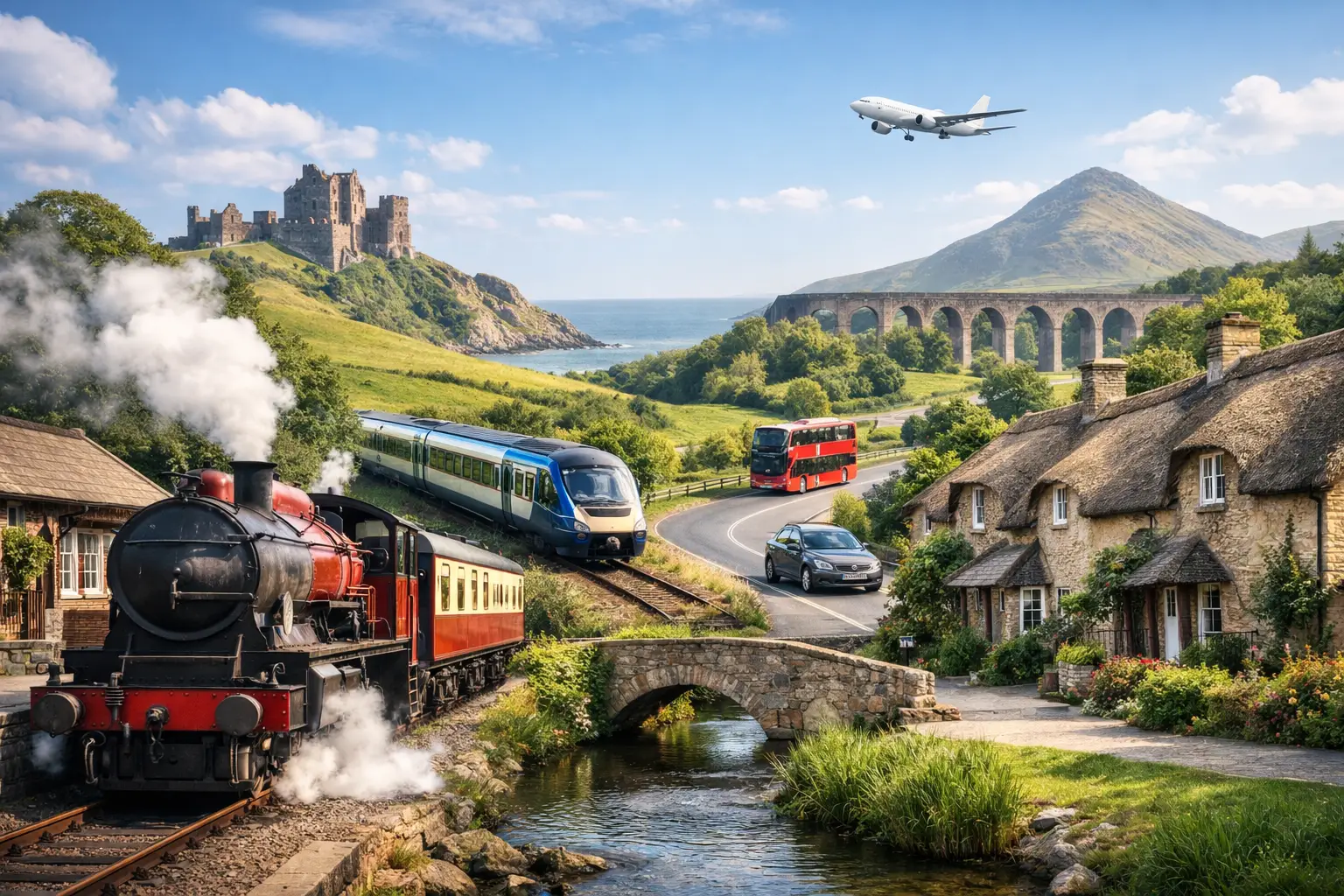
Britain becomes far more interesting once you stop treating London, Edinburgh and the usual headline cities as the whole story. This guide to regional travel in Britain is for travellers ready to book a break with a stronger sense of place: a harbour town with excellent seafood, a handsome northern city with galleries and pubs in equal measure, or a coastal peninsula where the day’s main decision is which beach to claim before lunch.
The pleasure of travelling regionally is not simply that it can cost less than a capital-city weekend. It is that a smaller area gives you time to notice the details: the local accent, the changing landscape beyond the train window, the café everyone seems to know, and the walk that makes sense only once you are there. The best trips tend to have one clear base, a little room in the diary, and a reason to stay after the day-trippers have gone home.
Choose a region, not a long checklist
A common mistake is trying to cover too much ground. Britain is compact on a map, but a trip from Cornwall to the Lake District or from the Cotswolds to the Highlands is not a casual detour. Trains may be frequent on the main lines, yet rural connections and scenic roads take time. A region-first plan will usually feel more like a holiday and less like an audit of railway platforms.
For a long weekend, choose one city and its surrounding countryside, coast or market towns. York works well with the North York Moors or the Yorkshire Dales; Bath pairs naturally with Somerset villages and Bristol; Cardiff can be the starting point for the Wye Valley or the Gower Peninsula. For four to seven nights, think in broader geographical pockets: Northumberland, Pembrokeshire, the Peak District, the Scottish Borders, East Anglia or north Wales.
Your interests should lead the choice. Food-focused travellers may prefer Fife’s fishing villages, the Cotswolds’ country inns or the independent restaurants of Bristol and Manchester. Walkers should look towards the Lakes, Snowdonia, the Brecon Beacons, the Mournes or the South West Coast Path. If museums, architecture and live music matter most, Liverpool, Glasgow, Newcastle, Sheffield and Dundee reward a few unhurried days.
Getting there without making travel the holiday
Regional travel is increasingly practical by rail, particularly if your break centres on a well-connected city. Direct services from London reach York, Bath, Bristol, Manchester, Liverpool, Newcastle, Durham, Edinburgh and Inverness, while Birmingham is an excellent interchange for much of England and Wales. Booking advance tickets can make a considerable difference, especially for Friday departures and Sunday returns.
That said, rail is not automatically the best answer. A car is worthwhile when you are staying in remote villages, carrying walking gear, travelling with children, or planning several rural stops. It is less useful in historic cities, where parking can be expensive and narrow streets are not an invitation to test your nerves. Consider collecting a hire car after your first night rather than driving straight into a city centre.
Regional airports also deserve a place in the calculation. Flying into Bristol, Manchester, Newcastle, Edinburgh, Glasgow or Inverness can turn a short break into a realistic option for travellers arriving from elsewhere in the UK or Europe. The trade-off is usually onward transport: check the actual journey from airport to hotel before booking the cheapest flight. A low fare loses its shine if it leaves you waiting for a late bus with a suitcase in the rain.
A sensible rhythm for a short break
Arrive early enough to enjoy your base on the first afternoon, then give each full day a single anchor. That might be a guided food tour, a coastal walk, a castle visit, a boat trip or a museum. Build everything else around it. Over-planning means you see Britain through a timetable; leaving a little space means you can follow a recommendation from a bartender, gallery attendant or fellow walker.
Where to stay for a more local trip
Your hotel location shapes the entire break. In a compact city such as York, Durham or Bath, staying centrally lets you step out for dinner and wander back without thinking about taxis. In coastal and rural areas, a village or small town can be more useful than an isolated property, particularly if you want a pub within walking distance and somewhere to buy breakfast supplies.
Choose accommodation according to the trip you actually want. A smart city hotel suits a theatre break or restaurant-led weekend. A pub with rooms can make a walking holiday feel easy, especially after a wet afternoon on the fells. A self-catering cottage gives families and groups flexibility, but it can be a false economy if it requires a car for every meal and activity.
Read recent reviews with a practical eye. Look for comments on noise, parking, room temperature and breakfast timings rather than only photographs of the view. In popular areas such as the Lake District, Cornwall, the Cotswolds, Edinburgh during festival season and much of the Scottish Highlands, book accommodation well ahead. In quieter months, staying Sunday to Thursday can offer better value and a more relaxed atmosphere.
Build days around experiences worth booking
Regional Britain is at its best when you have a reason to look beyond the high street. Bookable experiences can provide that structure, particularly on a first visit. A small-group walking tour brings a city’s stories into focus; a distillery visit or vineyard tasting makes an excellent rainy-day plan; and guided kayaking, wildlife cruises or e-bike tours can open up coastlines and countryside that are awkward to reach alone.
In places where the weather matters, reserve your most weather-dependent activity for the first suitable day, not necessarily the day printed in your original plan. Boat trips in the Hebrides, whale-watching off the Welsh coast, open-water paddling and exposed hill walks may be cancelled or altered for good reason. Have a museum, historic house, food market or spa session in reserve and the change will feel like good judgement rather than bad luck.
For peak periods, book the activity that would genuinely disappoint you to miss. This often means timed entry to a major attraction, a sought-after restaurant, a guided hike with limited places or a ferry crossing to a small island. Leave ordinary sightseeing flexible. Britain has a rather fine supply of churches, bookshops, pubs and views that do not require a confirmation email.
Let regional food set the pace
The most memorable meals are often the ones rooted in the immediate landscape. In coastal towns, eat fish where boats are still part of the working harbour. In the north of England, seek out independent bakeries, proper curry houses and restaurants using produce from nearby farms. In Wales, look for lamb, laverbread and local cheeses; in Scotland, treat seafood, venison and whisky as starting points rather than a complete itinerary.
Avoid judging a place by one famous dish. Good regional eating is as much about rhythm as it is about specialities: a bakery stop after a morning walk, a long lunch in a market town, a pint beside the fire, dinner somewhere small enough that booking ahead is sensible. Ask your hotel reception or activity guide where they would take a visiting friend. It is a more useful question than asking for the ‘best’ restaurant.
A guide to regional travel in Britain that leaves room for surprise
The strongest itineraries combine a little planning with a willingness to be diverted. Start with a well-located stay, confirm the transport that matters, and book one or two experiences that make the trip feel specific. Then give the region space to introduce itself. A misty morning might send you to a gallery rather than a summit; a conversation in a village pub might change tomorrow’s route entirely.
For the human context behind a destination, the Destination Unlocked podcast is as useful as a guidebook and as personal as a chat with your most well-travelled friend. Each 40-minute episode brings together the practical details and local perspective needed for a great trip.
Britain’s regions are not side notes to the big cities. They are where a weekend can become a story you will still be telling when the photographs have disappeared beneath the next hundred images on your phone.