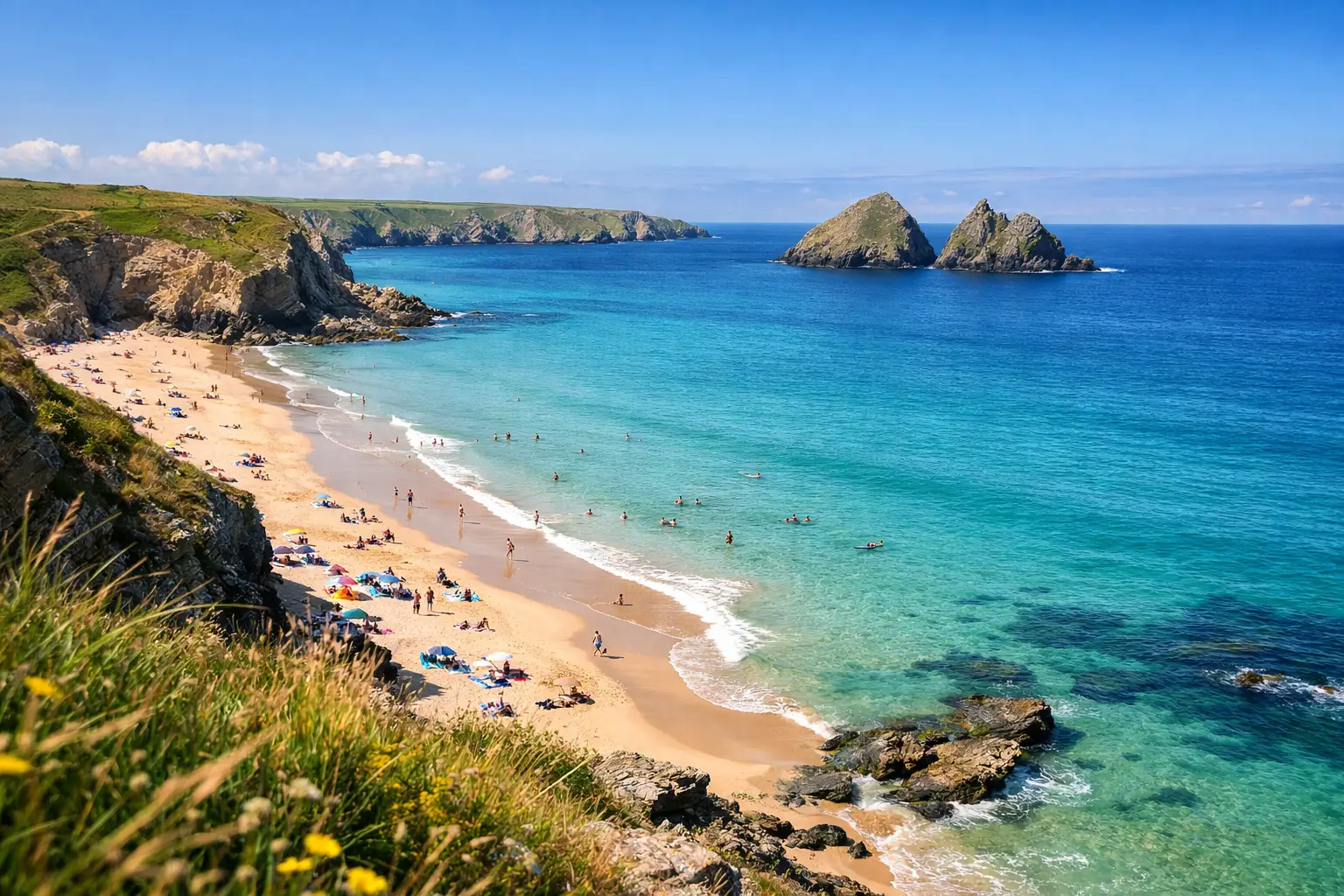
Cornwall’s coastline does not do one-size-fits-all. The best Cornwall beaches range from broad Atlantic bays made for surfboards and sandy sandwiches to tucked-away coves where the water looks almost improbably clear. The trick is choosing a beach that suits the holiday you actually want, rather than attempting to chase every photogenic patch of sand between Bude and the Lizard.
For a first visit, it pays to pair your beach with the right base. Stay near St Ives for art, restaurants and north-coast drama; choose Falmouth for a livelier harbour town and access to the south coast; or look towards Padstow and Rock for food-focused breaks with handsome beaches close by. Cornwall’s roads can turn a short distance into a surprisingly long drive in summer, so a well-chosen hotel can be worth more than an ambitious itinerary.
The best Cornwall beaches for every kind of day
Porthcurno Beach, near Land’s End
Porthcurno is the beach that tends to stop conversation mid-sentence. A crescent of pale sand sits below high granite cliffs, while clear shallows give it a distinctly Mediterranean appearance on a bright day. It is close to the Minack Theatre, so this is one of Cornwall’s best combinations for a memorable day out: swimming and sunbathing below, then an open-air performance above the sea if the schedule aligns.
Its beauty brings crowds, particularly in school holidays. Arrive early, use the facilities in the village and be realistic about parking. Porthcurno is best for travellers who want a classic Cornish scene rather than a quiet escape.
Sennen Cove, near Land’s End
Just north of Land’s End, Sennen Cove has the generous sweep and rolling Atlantic surf many people picture when they book a Cornish beach holiday. It works brilliantly for beginners’ surfing lessons, bodyboarding and long walks along the sand. The village is small, but there are places to eat and enough practical infrastructure to make a full beach day straightforward.
The sea here is beautiful but powerful. Conditions can change quickly, so swim only where it is safe to do so and follow local lifeguard advice when services are operating. For coastal walkers, the path towards Land’s End adds a rewarding extra chapter to the day.
Porthminster Beach, St Ives
Porthminster makes a persuasive case for staying in St Ives. It is an easy walk from the station and town centre, with soft sand, generally calmer water than the exposed north-coast surf beaches and an excellent view across the bay. Families appreciate its accessibility; couples may find the setting particularly appealing in the early evening, when the harbour town begins to glow across the water.
St Ives is not a bargain base in peak season, and parking can be a nuisance. Booking accommodation with a space, or arriving by train, removes much of the friction. Build in time for galleries, harbour wandering and a meal after the beach rather than treating Porthminster as a quick stop.
Porthmeor Beach, St Ives
On the other side of the headland, Porthmeor is St Ives at its more energetic. This is the beach for surfers, sea swimmers and travellers who like their sandy afternoons with a little action. The Tate St Ives rises just behind it, creating one of those rare holiday combinations where you can move from waves to modern art in a matter of minutes.
It is more exposed than Porthminster, which is precisely its appeal on a breezy day. If you are travelling with young children or simply prefer quieter water, look across town instead. If you want a surf lesson close to cafés, culture and an excellent choice of places to stay, Porthmeor is difficult to beat.
Kynance Cove, The Lizard
Kynance Cove is one of Cornwall’s great visual spectacles: white sand, serpentine rock formations and sea colours that shift between turquoise and deep blue. At low tide, caves and smaller pockets of sand emerge, making it especially rewarding for curious walkers and photographers.
Timing is everything here. Check tide times before setting out, as the shape and size of the beach change dramatically, and expect a walk from the car park. This is less convenient than a town beach, but that is part of its character. Stay around the Lizard Peninsula or nearby Mullion if you want to see Kynance in the softer light of morning or late afternoon.
Poldhu Cove, near Mullion
Poldhu Cove is a fine choice for a relaxed south-coast beach day. The bay is sandy, family-friendly in feel and backed by a café, while its position gives it enough Atlantic character to remain interesting when the sun is not performing. It also has a small but significant place in communication history: Marconi’s early transatlantic wireless experiments took place nearby.
For travellers based around the Lizard, Poldhu is often the beach you return to after more dramatic outings at Kynance. It is practical, attractive and pleasantly unfussy. That balance counts for a lot on a holiday with children, or when the weather forecast suggests a day of mixed plans.
Gyllyngvase Beach, Falmouth
Gyllyngvase is one of the most convenient beaches in Cornwall for visitors who want town life within easy reach. A short walk from central Falmouth, it offers a broad sandy bay, watersports options and a sociable atmosphere without requiring a dedicated expedition by car. It is a strong choice for a long weekend, particularly if your group has different ideas about how much time should be spent on the sand.
Falmouth also makes an excellent base for boat trips on the Fal estuary, harbour-side dining and visits to Pendennis Castle. Choose Gyllyngvase when you want the beach to be part of a varied break, rather than the whole point of it.
Maenporth Beach, near Falmouth
A little further south of Falmouth, Maenporth feels more sheltered and residential than Gyllyngvase. The small bay is well suited to a gentler swim, paddleboarding or simply reading with a view of the boats moving across Falmouth Bay. Its scale is modest, which makes it feel intimate outside busy periods.
It is particularly useful if you are staying in a cottage or hotel outside the town and want easy access to both coastal walks and Falmouth’s restaurants. The path from Maenporth towards Swanpool gives you a handsome stretch of cliff scenery without committing to an all-day hike.
Watergate Bay, near Newquay
Watergate Bay has space, surf and a distinctly contemporary beach-break feel. At low tide, its two-mile expanse seems to go on forever, giving walkers, families and surfers room to spread out. It is also well placed for visitors staying around Newquay who want a more open, less built-up setting than the town’s central beaches.
This is a sensible choice for booking a surf lesson or hiring equipment, especially for those who want instructors and facilities close at hand. Windy weather is common, so pack an extra layer even in summer. Cornwall’s sunshine has a habit of arriving with a breeze attached.
Fistral Beach, Newquay
Fistral is Cornwall’s best-known surfing beach, and it earns the reputation. It is where newcomers can take their first lesson and experienced surfers can find more serious conditions, all within easy reach of Newquay’s hotels, restaurants and nightlife. Even if you never pick up a board, it is entertaining to watch the line-up from the sand or clifftop.
The trade-off is obvious: Fistral can feel busy and commercial in high season. It suits travellers who want atmosphere and easy access to surf culture, not those searching for solitude. A morning session followed by a walk around the headland is a better use of the beach than battling for the last patch of sand at midday.
Holywell Bay, near Newquay
Holywell Bay is the answer for those who like a beach with a little wilderness left in it. Dunes rise behind the sand, the twin offshore rocks make a striking focal point, and the beach is large enough to feel spacious beyond the busiest summer hours. It has appeared on screen more than once, but its real appeal is elemental rather than cinematic.
There can be strong currents, so sea safety matters here. Choose Holywell for coastal walking, wide-open views and a more relaxed day than central Newquay provides. The nearby village offers a quieter alternative for accommodation, while keeping Newquay’s activities within reach.
Polzeath Beach, north Cornwall
Polzeath is a friendly, dependable surf beach with a broad appeal. Its relatively gentle waves make it popular with learners, while the village has the practical rhythm of a place built around beach days: surf schools, cafés and easy post-swim provisions. Rock and Padstow are nearby, adding attractive options for dinner and day trips.
The beach is especially good for families with older children who want to spend their day in and out of the water. For a quieter contrast, walk the coast path towards Daymer Bay or Pentire Point. A little effort quickly changes the mood from sociable surf spot to expansive coastal escape.
Daymer Bay, near Rock
Daymer Bay sits on the Camel Estuary and offers calmer, shallower water than many north-coast favourites. It is a smart choice for paddleboarding, windsurfing and families who want a less surf-led beach day. The sweeping sand, dunes and views towards Padstow give it a quietly polished feel.
It can become busy, especially when the weather is kind, but it remains a useful counterpoint to Cornwall’s wilder Atlantic beaches. Stay in Rock, Wadebridge or Padstow if a holiday of watersports, good food and estuary walks sounds more appealing than chasing the biggest waves.
How to choose your Cornwall beach base
If surfing is central to the trip, Newquay, Watergate Bay, Polzeath and Sennen are the most straightforward choices. For culture alongside coast, St Ives has the strongest mix, though it needs early booking and patience with crowds. Falmouth works beautifully for couples, friends and families wanting beaches, boat trips and an actual town to explore after sunset.
For dramatic coves and slower days, look south to the Lizard Peninsula. The distances may look manageable on a map, but Cornwall rewards restraint. Pick one coast, reserve one or two activities in advance, and leave room for a beach you did not plan to love.
Before you go, check the tide, weather and local swimming guidance on the day. Many of Cornwall’s most attractive beaches are shaped by the sea as much as the land, and that unpredictability is part of the pleasure.
For trip planning that feels less like research and more like a useful conversation, the Destination Unlocked podcast is as practical as a guidebook and as personal as a chat with your most well-travelled friend. Each 40-minute episode brings together the details that make a holiday work.
Choose one beach for the first swim, another for the last walk, and let the weather decide the rest. Cornwall is at its best when the plan has a little sand in it.