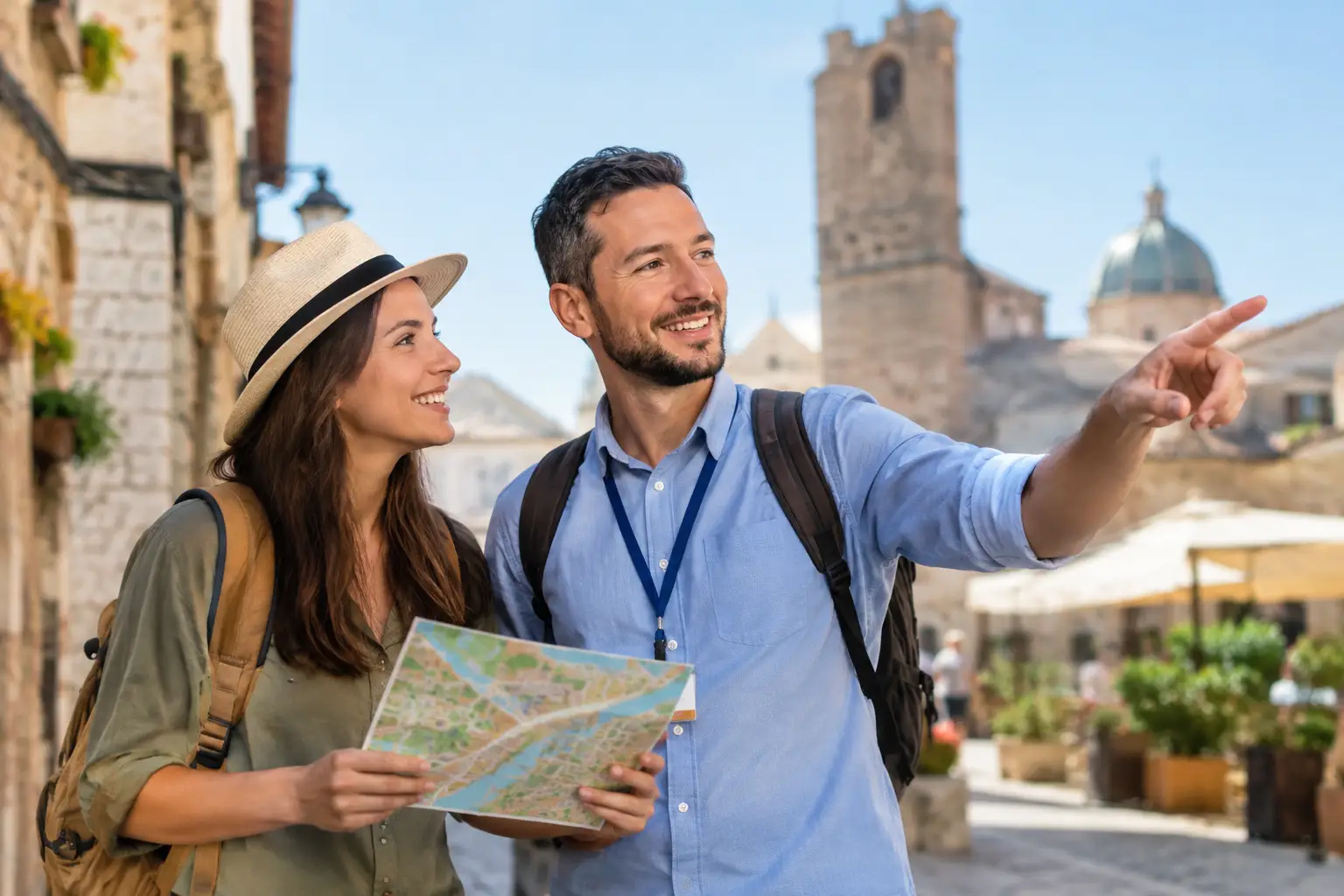
The difference between seeing a city and properly meeting it can come down to one person. A brilliant guide knows which market stall has been run by the same family for decades, why a church façade has a strange missing corner, and when to avoid the queue everyone else has blindly joined. But when you are trying to find trusted local guides, the choice can feel oddly opaque – particularly when a booking page promises an ‘authentic experience’ in rather breathless terms.
A good guide is not simply someone who can recite dates or lead a group from one photo stop to the next. They are a skilled interpreter of a place: knowledgeable, considerate, organised and generous with their perspective. Finding one is worth a little research, especially if you are planning a special meal, a private day out or an excursion that may shape your whole holiday.
Start with the experience, not the generic search
‘Local guide’ can mean rather different things. For a first visit to Rome, you may want an accredited art historian who can make sense of the Vatican Museums without making it feel like a lecture. In Kyoto, a guide who understands etiquette and neighbourhood traditions may matter more than ticking off famous temples. For a food-focused afternoon in Lisbon, someone with genuine culinary knowledge and a small-group format could be the better fit.
Be specific about what you want before comparing tours. Search for the district, subject and type of day you have in mind: street food in a particular neighbourhood, a walking tour for architecture lovers, a family-friendly wildlife guide, or a private driver-guide for a rural region. This makes reviews more useful because you are comparing like with like, rather than choosing the tour with the largest number of five-star ratings.
It also helps to decide how much structure you want. A group tour is often good value, sociable and easy to book at short notice. A private guide costs more, but can adjust the pace, route and depth of conversation around your interests. Neither is automatically superior. The right choice depends on your budget, confidence and whether you want a broad introduction or a more personal day.
How to find trusted local guides before you book
Start with established activity platforms and recognised local tour operators, then read beyond the headline rating. Hundreds of glowing reviews are encouraging, but recent comments tell you more about the experience you are likely to have this season. Look for details: did the guide manage the group well, answer questions intelligently, adapt in bad weather, and give practical advice without steering people into unwanted shops?
Names are useful, too. If reviewers repeatedly praise a particular guide, try to book that person rather than simply the company. A well-run operator can still have a mixed team, and the individual leading your walk is the one who will turn a promising itinerary into a memorable afternoon.
Pay attention to how the guide is described. Words such as warm, funny and passionate are lovely, but the most persuasive reviews tend to mention specifics: clear storytelling, thoughtful historical context, sensitivity around local customs, or the ability to navigate a crowded site calmly. For a food tour, look for comments on hygiene, portion sizes and whether dietary requirements were handled properly. For outdoor activities, check that reviewers mention equipment, safety briefings and sensible pacing.
Professional credentials can be significant, particularly for museums, archaeological sites, national parks and protected heritage areas. In some destinations, official licences are required to guide in certain places. A licence is not the sole measure of quality, but it signals training and local accountability. If the tour claims specialist expertise, such as archaeology, wine or wildlife, look for a clear explanation of the guide’s background rather than accepting vague promises of ‘insider knowledge’.
Read the itinerary for what it does not say
A polished description can hide a surprisingly rushed day. Check the meeting point, duration, transport, group size and what is included in the price. A six-hour tour may sound generous until you discover that two hours are spent collecting guests from hotels and entry tickets are extra.
For private experiences, ask whether the itinerary can be tailored and what that actually means. A guide who welcomes your interests but gives honest advice about what is realistic is usually a better prospect than one who agrees to everything. You do not want to spend a day racing between landmarks merely because a booking form allowed you to select them all.
Shopping stops deserve a little scrutiny. In some places, they are a customary part of tourism and can introduce excellent craftspeople. In others, they can eat into valuable sightseeing time and create uncomfortable pressure to buy. Reviews will usually reveal the balance. If it matters to you, message the operator before booking and ask directly whether commercial stops are part of the itinerary.
Use local knowledge without treating locals as a commodity
The best guides offer access to a place, not ownership of it. Be wary of experiences that advertise neighbourhoods or communities as though residents are part of the scenery. Responsible tours explain the context of a place, work with local businesses fairly and encourage visitors to behave respectfully.
This is particularly relevant in residential districts, religious sites and places dealing with difficult histories. A trusted guide should be able to set expectations around dress, photography, noise and appropriate questions. They should also be comfortable saying that some spaces are not for visitors. That is not a limitation of the experience. It is evidence of good judgement.
Small local operators can offer remarkable depth, but smaller does not automatically mean more ethical or more expert. Check that there is a clear booking process, a working contact method, transparent cancellation terms and recent independent feedback. If the price seems dramatically lower than every comparable tour, consider what may have been left out – insurance, fair wages, safe vehicles, entrance fees or simply enough time to do the day properly.
Questions worth asking before you pay
For a straightforward city walk, the answers will often be evident from the listing. For a private guide, a remote excursion or an activity involving water, wildlife or driving, it is sensible to ask a few direct questions. Confirm the maximum group size, language of the tour, mobility considerations and what happens if weather disrupts the plan.
If a guide is taking you beyond a city centre, ask who provides transport and whether the price includes fuel, parking and admission. For hiking, boating or adventure activities, ask about safety equipment, insurance and the experience level expected. Clear, prompt answers are reassuring. Evasive ones are a reason to look elsewhere.
Do not be embarrassed to ask about cancellation terms either. Travel plans shift, flights run late and weather has other ideas. Flexible conditions may cost a little more, yet they can be good value if your itinerary is tight. Booking a key excursion for the first morning after a long-haul arrival is tempting, but it leaves little room for disruption.
Make space for serendipity
A guide can transform the first day of a trip. Book a neighbourhood walk early and you may come away with a useful mental map, restaurant suggestions and the confidence to explore independently for the rest of your stay. It is one of the few travel purchases that can improve every subsequent decision, from where to linger for lunch to which area to choose for an evening drink.
That said, do not schedule every hour around organised experiences. Leave time to return to the bookshop, bakery or overlooked square your guide mentioned in passing. The point is not to collect local secrets as souvenirs. It is to understand a place well enough to follow your own curiosity.
Before booking, the Destination Unlocked podcast is as useful as a guidebook and as personal as a chat with your most well-travelled friend. Each 40-minute episode brings together the sort of practical local insight that helps you choose the right area to stay, the experiences worth reserving and the details that make a trip feel less generic.
When you do find a guide who is knowledgeable, considerate and properly matched to your plans, book with confidence – then arrive curious, on time and ready to listen. The most rewarding local insight is rarely the line from a script. It is often the answer to the question you had not thought to ask.