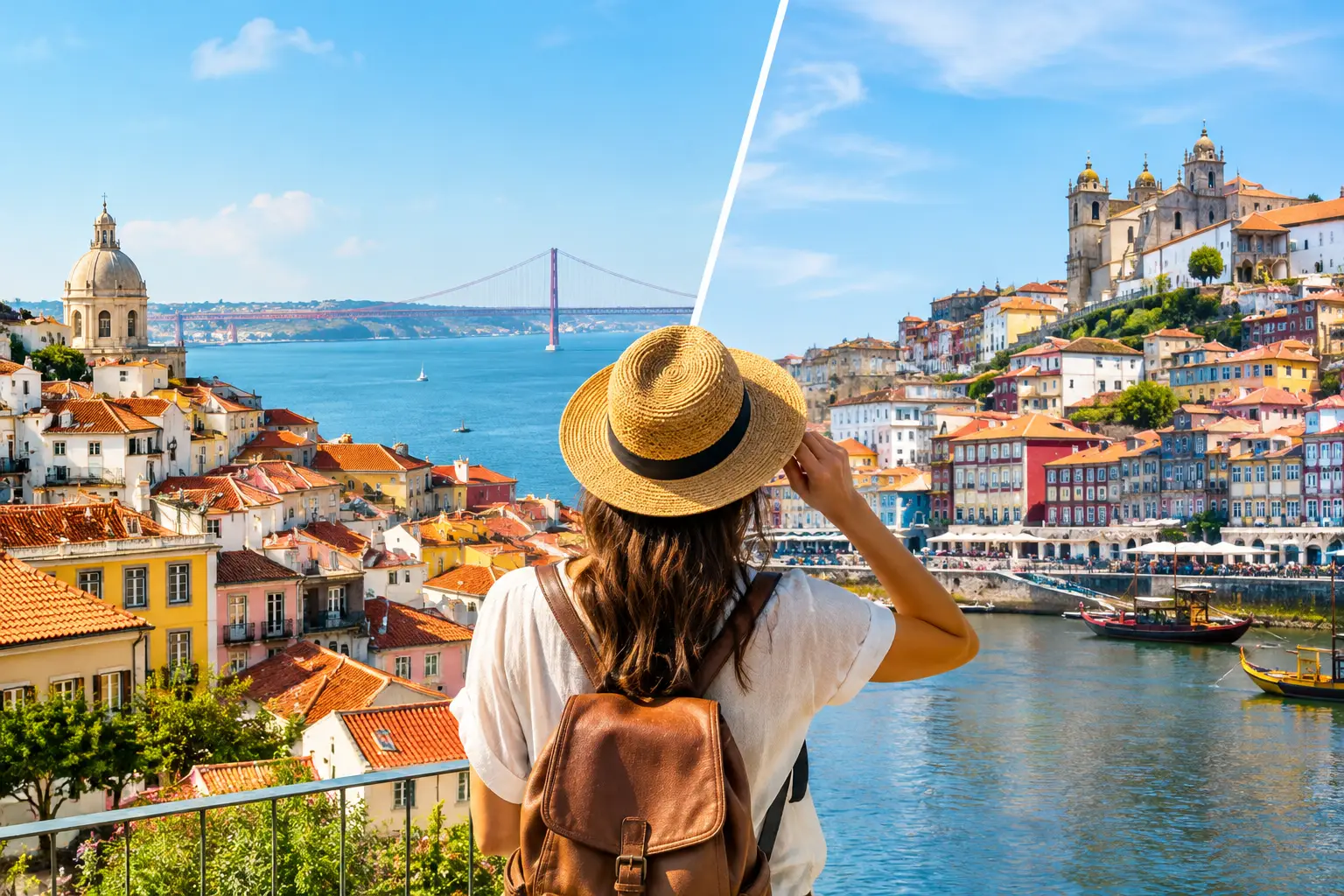
A Lisbon or Porto weekend is not a choice between a good city and a better one. It is a choice between two very different Portuguese moods. Lisbon arrives in sunlight, viewpoints and the rattle of yellow trams climbing improbably steep streets. Porto is more compact, more granite-grey, and wonderfully atmospheric, with tiled façades, steep riverbanks and a glass of port waiting at the end of the day.
For a first short break in Portugal, Lisbon offers more variety and a bigger-city buzz. Porto is the more immediately manageable choice, particularly if your ideal weekend involves long lunches, excellent wine and wandering without a timetable. The right answer depends on what you want from 48 hours away.
Lisbon or Porto for a weekend: the quick answer
Choose Lisbon if you want a lively capital with landmark sights, a wide choice of neighbourhoods, late dinners and easy access to the coast. It suits travellers who like to fill a weekend with galleries, rooftop drinks, historic districts and a day trip to Sintra or Cascais.
Choose Porto if you want a more intimate city break with a strong sense of place. The old centre is dense with character, the Douro makes every walk more scenic, and the food and wine experience feels built into the city rather than added as an attraction. It is particularly good for couples, friends travelling for a food-led break, and anyone who would rather explore deeply than tick off a long list.
Neither city is flat. Lisbon’s hills are broader and more relentless, while Porto’s slopes can feel sharper, especially around Ribeira. Comfortable shoes are not a suggestion in either place.
The feel of each city
Lisbon is a capital that constantly changes pace. In Baixa, grand squares and formal streets create a handsome introduction. A few minutes away, Alfama is all narrow lanes, laundry lines and the sound of fado drifting from a restaurant doorway. Bairro Alto and Príncipe Real bring bar life, boutiques and a more contemporary edge, while Belém provides the space for riverside walks and major monuments.
That range is Lisbon’s great advantage on a weekend. You can spend the morning with azulejo tiles and historic trams, have seafood by the river, then find yourself in a smart wine bar by evening. The trade-off is that it takes longer to move between areas, and some of the most famous streets can feel busy year-round.
Porto feels more concentrated and, in places, more dramatic. The city tumbles down towards the Douro, with the Dom Luís I Bridge connecting old Porto to Vila Nova de Gaia. Its historic streets have a raw, lived-in beauty: faded shopfronts, churches faced in blue-and-white tile, and balconies overlooking the river.
It is a city for looking up, slowing down and occasionally accepting that the most sensible route is the funicular. Porto is less polished than Lisbon in parts, but that is central to its appeal. It feels confident without performing for you.
Where to stay for the best city break
In Lisbon, stay in Baixa or Chiado if this is your first visit and you want to walk to major sights, restaurants and transport. Chiado feels a little more refined, while Baixa puts you close to the river and the central squares. Príncipe Real is a strong choice for design-conscious hotels, independent shops and a quieter evening atmosphere. Alfama is undeniably evocative, though luggage wheels and cobbled hills are a poor combination, so choose it for romance rather than convenience.
For a weekend with beach plans, consider Cais do Sodré. It is lively and well connected, with trains along the coast to Cascais. If sleep is a priority, book a hotel set back from the busiest bars.
In Porto, Baixa is the best all-round base. It gives you easy access to São Bento station, the Clérigos area, restaurants and the historic centre. Ribeira offers the postcard view, especially from a river-facing room, but it can be noisy and is at the bottom of a serious hill. Cedofeita is a useful alternative for galleries, cafés and a more local rhythm, while Vila Nova de Gaia works beautifully for travellers who want Douro views and port lodges on the doorstep.
Book early for spring weekends and September, when both cities are busy but conditions are ideal for walking. In summer, Lisbon’s bigger stock of hotels gives it an edge, although prices rise sharply. Porto can feel better value, particularly outside peak dates, but its most characterful small hotels have fewer rooms.
Food, drink and the pleasure of booking a table
Lisbon is the more varied dining city. You can eat traditional grilled fish, petiscos to share, excellent modern Portuguese cooking and food shaped by the city’s long connections with Brazil, Africa and Asia. A pasteis de nata stop in Belém is deservedly popular, but it should not be your only edible plan. Make room for a long seafood lunch and one evening where you reserve a table rather than relying on the nearest menu board.
Porto has a more direct, hearty style. Start with a crisp glass of vinho verde, order bacalhau or grilled fish, and try a francesinha if you are ready for a sandwich that has no interest in being restrained. The city’s great drinking experience, however, is on the Gaia side of the river. A cellar tour and tasting gives useful context to port, whether you prefer tawny, ruby or the idea of working that out over a second glass.
For food-first travellers, Porto may win by a narrow margin because its best experiences sit so naturally within a compact itinerary. Lisbon offers greater choice, but you need to be slightly more deliberate about where and when to eat.
What to do with two days
Lisbon rewards a loose plan. On your first day, combine Baixa, Chiado and the older lanes of Alfama, allowing time for viewpoints such as Miradouro de Santa Luzia or Senhora do Monte. In the evening, hear fado in Alfama or go to Bairro Alto and nearby Príncipe Real for drinks. On day two, choose between Belém and its museums, a train to Cascais, or a day trip to Sintra’s palaces and gardens.
Sintra is spectacular but deserves an early start and pre-booked entry for major sites. Trying to do it casually at midday can turn a relaxed weekend into a queue with scenery. If you only have two nights, staying in Lisbon and treating Sintra as a focused excursion is usually easier than changing hotels.
Porto makes a satisfying two-day city break without leaving town. Spend the first day around São Bento, Clérigos, the cathedral and Ribeira, crossing the upper deck of the Dom Luís I Bridge for wide Douro views. Dedicate part of the second day to Gaia: choose a port lodge, linger over lunch by the water, then take the cable car or walk back across the bridge.
If you have a third day, the Douro Valley is Porto’s standout excursion. It is a longer commitment than Cascais from Lisbon, but vineyards stepping down to the river are worth the early alarm. A guided tour is particularly useful if you want to taste wines without turning the logistics into a puzzle.
Weather, flights and practical trade-offs
Lisbon is generally warmer and sunnier, particularly from late spring into autumn. That makes it the better choice for travellers hoping to pair city sightseeing with a beach walk or an alfresco lunch. It can also be very hot in July and August, when the hills become more of a sporting event than a stroll.
Porto is cooler and wetter, especially outside summer, but it has a romantic quality in changeable weather. Its compact centre means a rainy afternoon can still be well spent moving between cafés, wine bars, churches and museums. For a winter weekend, choose Porto for cosiness and dining, Lisbon for brighter light and more outdoor options.
From the UK, both cities are well served by direct flights, and both airports are straightforward for reaching the centre. Lisbon is often the easier choice if you want a wider selection of flight times and a later Sunday departure. Porto’s smaller scale can make the whole break feel calmer from touchdown onwards.
If you enjoy a destination through the people who know it best, the Destination Unlocked podcast is as useful as a guidebook and as personal as a chat with your most well-travelled friend. Each 40-minute episode gives you the information needed to shape a great trip.
So, which should you book?
Pick Lisbon when you want energy, variety and the freedom to build a weekend around culture, food, nightlife and a possible escape to the coast. Pick Porto when you want a handsome, walkable city with memorable views, exceptional wine and fewer decisions to make.
The best choice may simply be the one that matches the kind of Monday you want to return from: Lisbon leaves you invigorated and slightly sun-drunk; Porto leaves you well fed, quietly impressed and already considering another glass by the Douro.