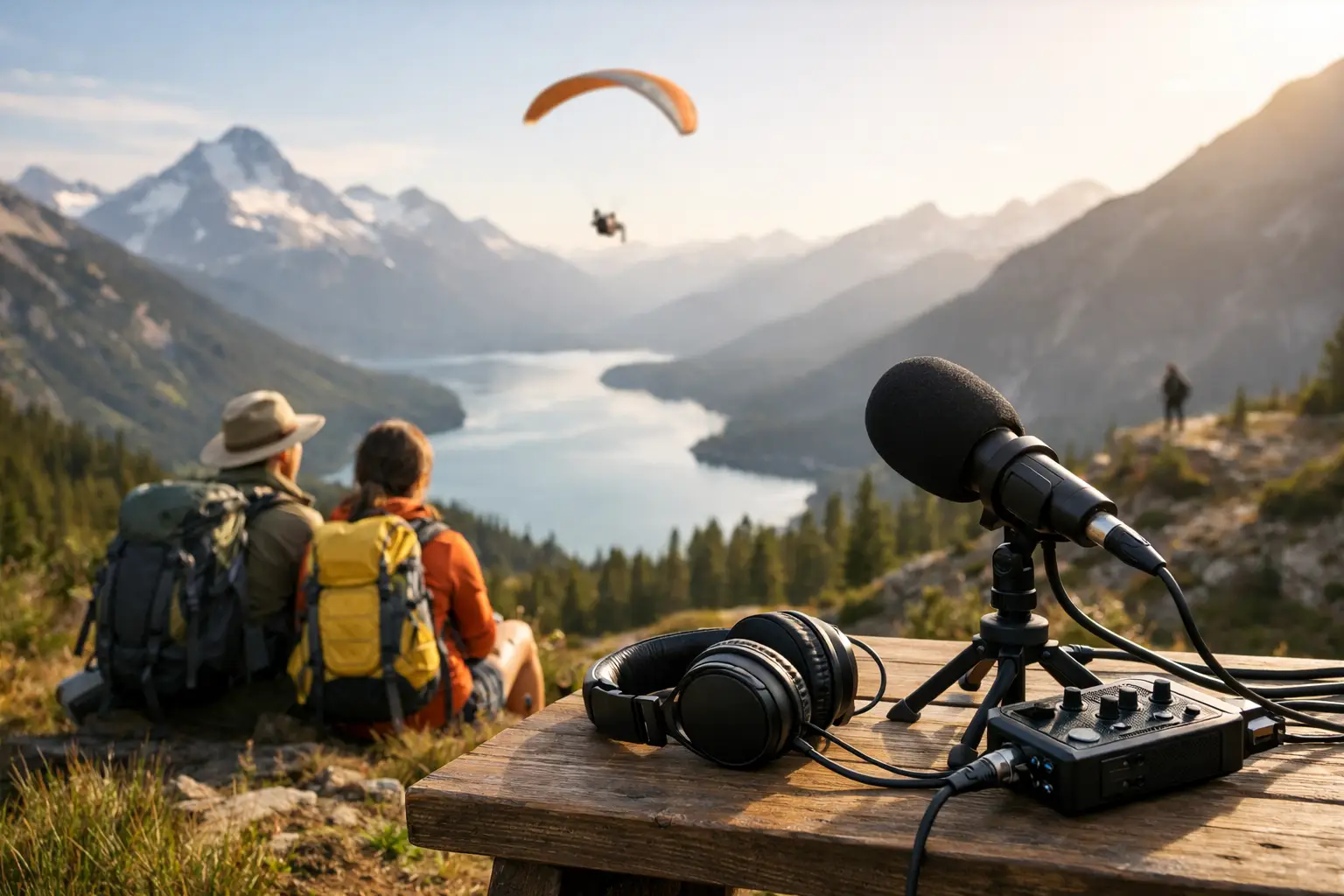
The best adventure travel podcasts do not all define adventure in the same way. One takes you into an expedition through sound and story. Another helps you judge whether you could actually manage the hike, cycle route or paddling trip yourself. The useful question is not simply which show is biggest, but what kind of adventure you want from your headphones.
This guide compares seven programmes with distinct strengths, all checked for current activity or an actively maintained archive on 5 August 2026.
Best adventure travel podcasts at a glance
| Podcast | Best for | Style |
|---|---|---|
| Outside Podcast | Outdoor culture and major personalities | Interviews and reported stories |
| The Dirtbag Diaries | Human stories from wild places | Community-led narrative |
| Active Travel Adventures | Planning achievable active holidays | Practical destination guides |
| Tough Girl Podcast | Women in endurance and exploration | Long-form interviews |
| Armchair Explorer | Immersive expeditions | Cinematic first-person storytelling |
| Wander Woman | Responsible adventure and place | Field reporting |
| Amateur Traveler | Active destination itineraries | Guest-led planning |
1. Outside Podcast: best for the breadth of outdoor life
Outside Podcast ranges across adventure, endurance, outdoor culture, science and the people drawn to life beyond four walls. In 2026 its episodes have included athletes, explorers, scientists, chefs and artists, so it is broader than a pure expedition programme.
That breadth works when you enjoy the psychology and culture around adventure as much as route details. For practical trip planning, choose a more destination-specific show.
Best for: outdoor ideas, personalities and well-produced conversation.
2. The Dirtbag Diaries: best for human stories from wild places
The Dirtbag Diaries has been telling stories about climbers, skiers, hikers, cyclists, paddlers and outdoor communities since 2007. Its strength is not heroic posturing, but the campfire quality of people explaining what an experience meant, including the mistakes and uncertainty.
The archive is large and the programme remains active in 2026. Episodes are most rewarding when you want companionship, character and a reason to care about a landscape or pursuit.
Best for: authentic outdoor storytelling and a deep archive.
3. Active Travel Adventures: best for planning an achievable active trip
Kit Parks’s Active Travel Adventures covers multi-day hiking, cycling, paddling, horseback and walking holidays around the world. The emphasis is on trips a reasonably fit traveller can prepare for, rather than elite feats.
Episodes discuss destinations, training, equipment and common problems. In 2026, subjects have included the Annapurna Base Camp, cycling Vietnam, the Inca Trail, Belgium by bike and barge, and hiking, cycling and kayaking in Croatia.
Best for: listeners who want to turn an active holiday idea into a plan.
4. Tough Girl Podcast: best for women in endurance and exploration
Hosted by Sarah Williams, the Tough Girl Podcast is built around long-form conversations with women taking on physical, exploratory and personal challenges. Guests include endurance athletes, adventurers, travellers and people whose first major challenge began without a professional sporting background.
The detail and honesty are useful if you want to understand preparation, confidence and the less glamorous parts of a demanding goal.
Best for: motivation, representation and detailed personal journeys.
5. Armchair Explorer: best for cinematic expeditions
Armchair Explorer gives adventurers room to tell one journey as a story, supported by polished editing and sound. It is more likely to transport you across an ocean, desert or mountain range than to tell you which boots to buy.
The production makes it easy to enter an unfamiliar expedition, while the first-person structure preserves the judgement and emotion of the traveller.
Best for: immersive listening and ambitious journeys.
6. Wander Woman: best for adventure with a strong sense of place
Phoebe Smith’s Wander Woman records in the field and brings local people into the journey. It combines outdoor adventure with culture, conservation and responsible travel, which helps the destination remain more than a backdrop to the presenter.
Best for: listeners who want landscape, local voices and thoughtful reporting together.
7. Amateur Traveler: best for active itineraries within a wider trip
Amateur Traveler is not exclusively an adventure show, but its destination archive includes many active routes and road trips. Episodes can combine hiking, wildlife, food, history and transport in one realistic itinerary, making it useful when adventure is part of the holiday rather than the whole identity of it.
Best for: building an active, culturally varied destination itinerary.
How to choose the right adventure podcast
Choose by the decision in front of you:
- For a compelling story: The Dirtbag Diaries or Armchair Explorer
- For an achievable active holiday: Active Travel Adventures
- For outdoor culture and big conversations: Outside Podcast
- For women’s endurance stories: Tough Girl Podcast
- For field reporting and responsible travel: Wander Woman
- For a mixed itinerary: Amateur Traveler
For any episode involving risk, check whether the speaker distinguishes personal experience from general advice. Conditions, permits, weather and required skills change. Use a podcast to understand the challenge, then verify the current details with official sources and qualified local operators.
Where Destination Unlocked fits
Destination Unlocked is not an outdoor-sports podcast, so it has not been ranked among the specialist shows above. It is useful when you want to understand the wider destination around an adventure, including culture, food, neighbourhoods and what to do before or after the active part of the trip.
For more formats, see The Best Travel Podcasts to Listen to in 2026. If you prefer programmes built around individual places, compare the best destination podcasts.
Our selection method
We looked for a clear editorial purpose, a useful or distinctive archive, trustworthy hosts and evidence of continued activity in 2026. We favoured programmes that acknowledge preparation, risk and trade-offs over those that treat adventure as spectacle alone. No show paid to be included.